
Side Dishes
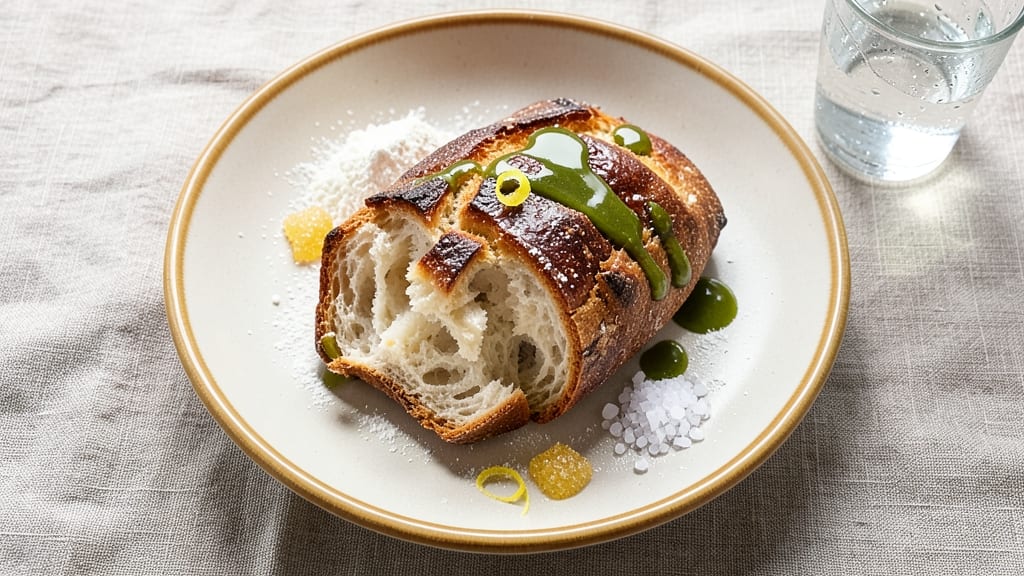
This airy crusty bread recipe delivers the perfect balance of light interior and shatteringly crisp exterior—no kneading required. The secret lies in a long, slow fermentation that develops gluten naturally while creating that signature open crumb structure.
I’ve perfected this method after years of testing, and it consistently produces a loaf with a golden, crackling crust and an interior so tender it practically melts in your mouth.
What sets this recipe apart is the no-knead technique, which simplifies the process without sacrificing texture or flavor. By using high-gluten flour and a precise water-to-flour ratio, we create dough that’s easy to handle yet capable of achieving that iconic oven spring.
The key to the crust? Generating steam in the oven, which locks in moisture while promoting rapid browning and crispness.
Once baked, you’ll have a loaf with a perfectly golden crust that shatters at the touch, revealing an interior with an open, airy crumb structure. This bread is ideal for sandwiches, dipping in olive oil, or serving alongside soups—its versatility makes it a staple in any kitchen.
The best part? It requires minimal effort but delivers professional-quality results every time.
Ready to master this technique? The process involves just a few simple steps—mixing, resting, shaping, and baking—but the payoff is a loaf that rivals artisanal bakery bread. Let’s get started with the ingredients and instructions that will transform your kitchen into a bread-making powerhouse.
Ingredients for airy crusty bread
High-gluten flour and precise hydration create that signature open crumb and shattering crust.
| Ingredient | Amount | Notes |
|---|---|---|
| High-Gluten Bread Flour 🌾 | 5 cups | King Arthur or Bob's Red Mill recommended |
| Instant Yeast 🍞 | ¾ tsp | Active dry yeast works too |
| Granulated Sugar 🍚 | ½ tsp | Feeds yeast for activation |
| Diamond Crystal Kosher Salt 🧂 | 2 tsp | Adjusts to Morton's half the amount |
| Olive Oil 🫒 | 1 tbsp | Extra-virgin for flavor |
| Warm Water 💧 | 3 cups | 105-110°F for ideal yeast activation |
| Ice Water ❄️ | 1 cup | Cools dough for handling |
| Cornmeal 🌽 | ¼ cup | For dusting baking surface |
| Coarse Sea Salt 🧂 | 1 tbsp | For final crust enhancement |
| Egg Wash 🥚 | 1 whole | Optional for golden finish |
| Steam Booster 📄 | 1 sheet | Parchment or aluminum foil |
The high-gluten flour is non-negotiable here—King Arthur or Bob's Red Mill deliver the protein structure needed for that iconic oven spring. Avoid all-purpose flour unless you're willing to sacrifice texture. For yeast, instant yeast dissolves faster, but active dry works if you proof it first. The warm water should feel like bathwater (105-110°F)—too hot kills the yeast, too cool slows activation. Diamond Crystal kosher salt is the professional standard, but if you've got Morton's, halve the measurement. Pro tip: Toast your flour in a dry pan for 2 minutes before mixing to deepen flavor without affecting gluten development.
No high-gluten flour? Substitute with 4 cups bread flour plus 1 cup all-purpose—though results won't be identical. Instant yeast expired? Test it first by mixing with warm water and sugar—if it doesn't foam in 5-10 minutes, replace it. The ice water is crucial for controlling fermentation speed—skip it at your peril. For the cornmeal, semolina works too but costs more. Egg wash adds shine but isn't mandatory—olive oil spray works in a pinch. The steam booster can be parchment paper, aluminum foil, or even a metal tray with boiling water in the oven. Never skip steam generation—it's what creates that crackling crust.
Store unbaked dough in the fridge for up to 24 hours—this actually improves flavor through cold fermentation. Baked loaves keep at room temperature for 3 days wrapped in a towel, or freeze for 3 months. For reheating, wrap in foil and warm at 300°F for 10 minutes. Day-old bread reheated this way tastes even better—the crust crisps while the interior stays soft. Portion your flour before starting to avoid mid-recipe scrambling, and measure water precisely—this dough is unforgiving about hydration balance.
Why You'll Love This Recipe
- No-Knead, No-Fuss: I swear by this dough—just mix, let it rise, and bake. The high-gluten flour does all the heavy lifting while I sip my coffee.
- Crispy-Creamy Magic: That olive oil brush? Chef’s kiss. The crust shatters like glass, but inside? Pillowy, buttery perfection. The sugar just takes it to another level.
- Weeknight to Weekend: Toss a loaf in the freezer for lazy mornings or pull it out for a fancy dinner. It’s my go-to for sandwiches, dipping, or just tearing into with butter.
- Budget-Friendly Staple: A single batch feeds my family for days—leftovers toast up just as good. Kosher salt and sugar stretch my grocery budget without sacrificing flavor.
Step-by-step instructions for no-knead airy crusty bread
Here's the method for achieving that coveted combination of airy interior and perfectly golden, crispy crust.
Mix the Dough with Precision
In a large mixing bowl, combine the 5 cups high-gluten bread flour, 0.75 tsp instant yeast, 0.5 tsp granulated sugar, and 2 tsp diamond crystal kosher salt. Mix these dry ingredients together using a whisk or your hands until evenly distributed. This ensures the yeast and salt are uniformly dispersed throughout the flour.
Next, create a well in the center of the dry ingredients and add the 1 tbsp olive oil and 3 cups warm water (between 105-110°F). Using a wooden spoon or silicone spatula, gradually incorporate the wet ingredients into the dry, mixing just until a shaggy dough forms. Avoid overmixing at this stage—you want to preserve the gluten development for later. The dough should be sticky but manageable.
Rest and Hydrate the Dough
Cover the bowl with plastic wrap or a damp kitchen towel and let the dough rest at room temperature for 1 hour. This initial rest allows the flour to fully hydrate and the gluten to begin relaxing, making the dough easier to handle later. During this time, the dough will become more cohesive and slightly less sticky.
After the 1-hour rest, add the 1 cup ice water to the bowl. The cold water will shock the dough slightly, creating a more stable structure and enhancing the final texture. Mix gently with a spatula until the ice water is fully incorporated. The dough should now be smooth, elastic, and slightly tacky to the touch. If it feels too stiff, add 1-2 teaspoons of warm water to adjust the consistency.
Shape and Prepare for Final Rise
Lightly dust a clean work surface with 0.25 cup cornmeal to prevent sticking. Transfer the dough to the surface and gently shape it into a loose round loaf, about 8 inches in diameter. Avoid pressing too hard—you want to maintain an airy, open crumb structure. Place the shaped dough seam-side up on a parchment-lined baking sheet.
Cover the dough loosely with plastic wrap or a damp towel and let it rise at room temperature for 1-2 hours, or until it has nearly doubled in size. The dough should feel springy when pressed gently with your finger, and you should see noticeable expansion around the edges. This final rise is critical for achieving that light, airy interior. If your kitchen is very warm, reduce the rise time to 45-60 minutes to avoid overproofing.
Create Steam and Bake to Golden Perfection
Preheat your oven to 425°F with the steam booster (parchment or aluminum foil) placed on the bottom rack. This creates a steam environment that promotes oven spring and a crispy crust. Once the oven reaches temperature, carefully transfer the risen dough to the preheated baking sheet.
Brush the top of the dough generously with 1 whole egg wash for a golden finish. Bake for 25-30 minutes until the crust is deep golden brown and sounds hollow when tapped on the bottom. The internal temperature should reach 190-200°F at the center. If the crust browns too quickly, tent the loaf with foil to prevent over-browning while it continues to bake.
Enhance the Crust and Serve
Remove the bread from the oven and immediately sprinkle 1 tbsp coarse sea salt evenly over the top while it's still hot. This step adds a final layer of flavor and texture contrast. Let the bread cool on a wire rack for at least 30 minutes before slicing. This resting period allows the crust to firm up and the crumb to set, ensuring clean slices and maximum crispiness.
The result should be a loaf with a thin, crispy crust that gives way to a light, airy interior with an open crumb structure. Slice it fresh for the best texture—each bite should deliver that satisfying combination of crunch and softness. Store any leftovers in an airtight container at room temperature for up to 3 days, or freeze for longer storage.
Pro Tips For Making Airy Crusty Bread
- Measure Salt by Weight: Diamond Crystal kosher salt clumps like a liar at a poker table—use a kitchen scale for 2% of your flour weight (about 12g per 600g flour). I learned this the hard way when my bread tasted flat because I eyeballed it and ended up with half the salt I thought I added.
- Autolyse Before Kneading: Mix just flour and water (no yeast yet) for 20-30 minutes before adding yeast and sugar. This relaxes the gluten, making kneading easier and giving you a lighter, more extensible dough—no fancy equipment needed, just patience.
- Skip the Overproofing: Your dough is ready when it springs back slowly (not instantly) when poked, and the volume has roughly doubled. Overproofing turns your airy dream into a dense brick—set a timer for 1-1.5 hours max, depending on your kitchen’s warmth.
- Oil the Dutch Oven Lid: Brush the inside of your lid with olive oil before baking. The crust will rise higher and stay crisp longer—no more soggy tops or bread that collapses when you lift it out. (Yes, even if your recipe doesn’t mention it.)
Creative variations of this recipe
Herb-Infused Variations
Add 1-2 tbsp finely chopped fresh rosemary or thyme directly to the dough during mixing for an aromatic twist. I like using 2 tbsp rosemary with 1 tsp lemon zest for a bright, Mediterranean-inspired loaf.
For a savory garlic version, mix 3 minced garlic cloves into the olive oil before combining with the flour. 🌿
Seeded Crust Options
Sprinkle 1 tbsp poppy seeds, sesame seeds, or everything bagel seasoning on top before baking for added texture. For a rustic touch, press ½ cup chopped walnuts or pecans into the dough surface before the final rise. These seeds add crunch while complementing the bread's natural sweetness.
Sweet Twist Adaptations
Replace ½ cup water with ½ cup honey or maple syrup for a lightly sweetened loaf. Add ½ tsp cinnamon and ¼ tsp nutmeg for a subtle spiced bread perfect with butter.
For a richer version, fold in ¼ cup melted butter during the initial mixing stage instead of olive oil.
Global Style Adaptations
For a French baguette-style version, shape the dough into a long oval and bake in a hotter oven (450°F) for 15-20 minutes. For an Italian focaccia twist, press the dough into a shallow pan, dimple with your fingers, and drizzle with 2 tbsp olive oil before baking.
Both versions benefit from extra steam during baking.
Whole Grain Substitutions
Replace 1 cup high-gluten flour with whole wheat flour or spelt flour for a nuttier, heartier bread. For a seed blend, substitute 1 cup flour with ½ cup ground flaxseeds and ½ cup almond flour.
These substitutions reduce the open crumb slightly but add excellent nutritional benefits and earthy flavor.
Gluten-Free Adaptation
For a gluten-free version, use a 1:1 gluten-free bread flour blend (like King Arthur's) and add 1 tsp xanthan gum. Reduce the water by 2 tbsp and increase the olive oil to 2 tbsp** to compensate for the different absorption.
Expect a denser crumb but still achieve that satisfying crust with proper steam generation. 💫
Nutrition facts
Frequently asked questions
Why does my crusty bread turn out dense instead of airy?
This usually happens from over-kneading or underproofing. The no-knead method relies on slow gluten development—mix just until combined, then let the dough rest fully. If your kitchen is warm, reduce the final rise time to 45-60 minutes to prevent overproofing. Also ensure you're using high-gluten flour (not all-purpose) for proper structure.
Can I make this bread without a steam booster?
Yes, but your crust won't be as crispy. Place a metal tray on the oven rack and pour 1 cup boiling water into it when you put the bread in. The steam will build naturally. For best results, use parchment paper or foil as a steam booster—it's the secret to that signature crackly crust.
How do I know when the bread is fully baked?
Look for three signs: deep golden brown crust, a hollow sound when tapped on the bottom, and an internal temperature of 190-200°F. The crust should pull away from the sides slightly. If it browns too quickly, tent with foil to prevent burning while it finishes baking.
Can I use this dough for dinner rolls?
Divide the dough into 8 equal pieces and shape into balls. Let them rise on a baking sheet until puffy (1 hour), then bake at 425°F for 12-15 minutes with steam. For extra flavor, brush with garlic butter after baking. The same dough works beautifully for rolls, just adjust the shape and baking time.
What's the best way to reheat stale crusty bread?
Wrap the bread in foil and warm at 300°F for 10 minutes. This restores the crust's crispiness while keeping the interior soft. For extra crunch, broil for 1-2 minutes at the end. Never microwave—it turns the crust rubbery and the interior gummy.