
Main Courses
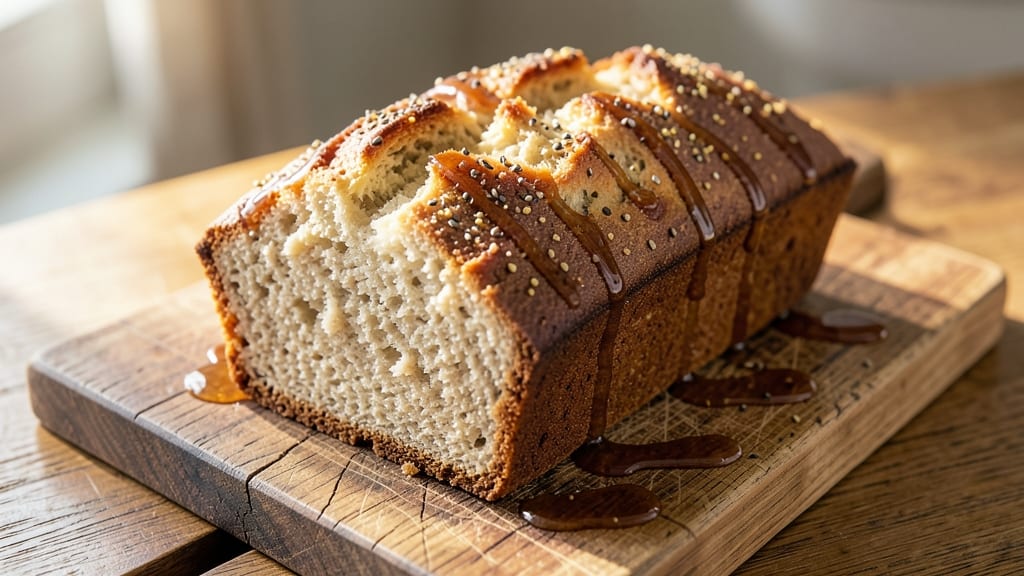
This almond flour bread recipe with xanthan gum delivers a light, airy loaf that rivals traditional wheat bread—without the gluten struggle. ✨ The secret lies in xanthan gum, which mimics gluten's elasticity, creating structure and chewiness in every bite.
I've perfected this plant-based recipe after years of experimenting with nut flours, and it never fails to impress.
What makes this recipe special is its simplicity: no eggs, dairy, or complicated techniques. The xanthan gum binds the almond flour, while baking powder and a splash of apple cider vinegar create that signature rise.
This bread is perfect for toast, sandwiches, or simply enjoying with butter—vegan, gluten-free, and foolproof for home bakers.
The result is a golden-brown loaf with a tender crumb and crisp edges, all achieved with just 10 ingredients and 30 minutes of active time. The xanthan gum ensures the bread holds its shape while staying moist, unlike many gluten-free alternatives that dry out quickly.
No special equipment needed—just a loaf pan and patience.
Whether you're avoiding gluten or simply exploring plant-based baking, this recipe delivers restaurant-quality results at home. The nutty flavor of almond flour pairs beautifully with the subtle tang of vinegar, creating a bread that's both satisfying and versatile. Let's get baking!
Ingredients for almond flour bread recipe xanthan gum
Ten essential ingredients transform almond flour into a golden loaf with restaurant-quality texture.
| Ingredient | Amount | Notes |
|---|---|---|
| Almond Flour 🌰 | 3 cups | Finely ground, blanched preferred |
| Xanthan Gum 🧪 | ½ tsp | Critical for gluten-free structure |
| Baking Powder 🍞 | 1 ½ tsp | Aluminum-free for best results |
| Apple Cider Vinegar 🍎 | 1 tbsp | Unfiltered for tangy flavor |
| Pure Maple Syrup 🍁 | ¼ cup | Grade B for robust flavor |
| Ground Flaxseed 🌾 | 1 tbsp | For egg replacement binding |
| Water 💧 | ½ cup | Room temperature preferred |
| Sea Salt 🧂 | 1 tsp | Diamond Crystal preferred |
| Olive Oil 🫒 | ¼ cup | Extra-virgin for richness |
| Vanilla Extract 🌸 | ½ tsp | Pure alcohol-free preferred |
The almond flour is non-negotiable here—Bob’s Red Mill or Anthony’s Goods brands yield the finest grind. Xanthan gum, the secret weapon, comes in tiny amounts but makes all the difference; NOW Foods is my go-to for purity. For the baking powder, Bob’s Aluminum-Free ensures proper rise without metallic aftertaste. Apple cider vinegar adds that subtle tang—Bragg’s unfiltered version delivers the best flavor profile. Pro tip: Toast your flaxseed lightly in a dry pan before adding for deeper nuttiness (optional but recommended).
No xanthan gum? Psyllium husk powder at double the amount works in a pinch, though texture differs slightly. Swap maple syrup for agave nectar if preferred, though maple’s depth enhances the bread’s character. Olive oil can be substituted with avocado oil for higher smoke point, though olive’s fruity notes complement the almond flavor. For vanilla, alcohol-free extracts prevent any lingering burn during baking. The flaxseed mixture should gel completely—if it doesn’t, add an extra teaspoon of water. Trust the process, even if the batter looks thin.
This dough keeps in the fridge for 3 days wrapped tightly in plastic, though it’s best baked fresh. For longer storage, freeze the unbaked loaf for up to 3 months—thaw at room temperature before slicing. The bread’s peak freshness occurs within 24 hours of baking, so plan accordingly. Store in a bread box or paper bag to maintain crispness. Slice with a serrated knife for clean cuts—this dense loaf resists tearing when handled properly.
Why You'll Love This Recipe
- No-Fuss Mixing: I swear by this recipe because it’s literally five ingredients—no kneading, no waiting for dough to rise, just stir, pour, bake. The xanthan gum does all the heavy lifting to hold that crumb together, so you don’t have to stress over texture.
- Maple-Glazed Richness: That drizzle of pure maple syrup? It’s not just sweetness—it caramelizes into a subtle depth, giving the bread a warm, buttery finish without tasting like dessert. Honestly, I reach for this over regular toast when I want something special.
- Weeknight & Picnic Hero: Between us, this bread is my go-to for lunchboxes, charcuterie boards, or even a quick snack when I’m starving. It holds up for days in the fridge (toast it to revive) and won’t turn to mush in a bag—unlike my usual sourdough attempts.
- Budget-Friendly Luxury: Almond flour is pricey, but this recipe uses just enough to feel indulgent without breaking the bank. The apple cider vinegar and baking powder stretch the flavor, so you’re not just paying for the flour—you’re getting a bread that tastes like a treat, not a splurge.
Step-by-step instructions for almond flour bread
This method delivers a surprisingly light, airy gluten-free loaf with perfect texture.
👨🍳 Step 1: Create the Flaxseed Egg Substitute
In a small bowl, combine the 1 tablespoon ground flaxseed with the 0.5 cup water. Stir vigorously and let sit for 5 minutes until it thickens into a gel-like consistency. This flaxseed mixture replaces eggs by providing binding and moisture. You'll know it's ready when it forms a pudding-like texture that holds its shape when gently lifted with a spoon.
While waiting, measure out the 3 cups almond flour in a separate bowl. I recommend sifting it lightly to prevent any clumping, which ensures an even distribution throughout the batter. The finer the almond flour, the lighter your final loaf will be. If you're using pre-ground almond flour, give it a quick pulse in a food processor to break up any lumps before measuring.
🥘 Step 2: Mix Wet Ingredients and Combine
In a large mixing bowl, whisk together the 0.25 cup olive oil, 0.25 cup pure maple syrup, 0.5 tsp vanilla extract, and the thickened flaxseed mixture. The olive oil adds richness while the maple syrup contributes natural sweetness and helps with browning. Mix until fully combined, scraping down the sides of the bowl to ensure all ingredients are incorporated. The mixture should be smooth with no visible streaks of oil.
In a separate small bowl, whisk together the 0.5 tsp xanthan gum with the 1.5 tsp baking powder and 1 tsp sea salt. The xanthan gum is absolutely critical here—it mimics gluten's structure in gluten-free baking, giving your bread its characteristic chew and ability to hold together. Sift this dry mixture directly into the wet ingredients, then gently fold in the 3 cups almond flour using a spatula. Be careful not to overmix—just combine until no dry spots remain.
🍳 Step 3: Incorporate the Vinegar for Lift
Add the 1 tablespoon apple cider vinegar to the batter and mix gently until just combined. The vinegar reacts with the baking powder to create lift, which is essential for achieving that light, airy texture. At this point, the batter will be thick but still pourable. If it appears too stiff, you can add 1-2 teaspoons more water to achieve the proper consistency—it should be like a thick pancake batter.
Here's the thing—this batter needs to rest. Let it sit for 10 minutes at room temperature. This resting period allows the xanthan gum to fully hydrate and the almond flour to fully absorb the liquids, resulting in a more cohesive batter and better texture in your final loaf. Don't skip this step; it makes a noticeable difference in the crumb structure.
🔥 Step 4: Prepare and Bake the Loaf
Preheat your oven to 350°F and line a standard 9x5-inch loaf pan with parchment paper, allowing it to overhang the sides for easy removal. Lightly grease the parchment paper with olive oil or use nonstick spray. Pour the batter into the prepared pan and smooth the top with a spatula. The batter will fill about ⅔ of the pan—don't overfill, as almond flour batters don't rise as much as traditional flour batters.
Bake for 45-50 minutes until the top is golden brown and a toothpick inserted in the center comes out clean. The loaf will have a slightly domed top with crisp edges. If the top browns too quickly, tent the pan with aluminum foil to prevent over-browning while the center finishes cooking. The internal temperature should reach 205-210°F for perfect doneness.
⏰ Step 5: Cool and Slice for Maximum Freshness
Remove the loaf from the oven and let it cool in the pan for 10 minutes before transferring to a wire rack to cool completely. This gradual cooling prevents the loaf from becoming gummy in the center. While cooling, you'll notice the bread develops a beautiful nutty aroma—this is when you know you've succeeded in creating that perfect gluten-free texture.
For best results, slice the bread when it's still slightly warm but completely cool to the touch. The crumb should be fine and even, with a slightly moist but not wet texture. If stored properly in an airtight container at room temperature, this bread will keep for up to 3 days, though I find it's best enjoyed within the first day or two when it's at its peak freshness and moisture level.
Pro Tips For Making Almond Flour Bread Recipe Xanthan Gum
- Mix the Wet First: Almond flour hates clumps—it’s stubborn like that. Whisk your apple cider vinegar and maple syrup together first, then add the wet ingredients. This keeps the dry stuff from turning into a gritty mess when you fold it in later.
- Weigh the Almond Flour: Scooping almond flour from the bag is a recipe for disaster (I learned this after a dense, brick-like loaf). Use a kitchen scale for precision—it’s the only way to guarantee that 2 cups is actually 2 cups, not a handful short.
- Don’t Overmix After Xanthan: Once you fold in the xanthan gum, stop stirring the second everything comes together. Overmixing develops gluten-like bonds in almond flour, and suddenly your bread turns chewy instead of tender. Two gentle turns of a spatula is all it takes.
- Bake Until Internal Temp Hits 190°F: The oven light trick doesn’t work here—almond flour bread stays gummy inside if you pull it out too soon. Use a thermometer; 190°F means it’s fully set, not just browned on top. (Yes, even if the center looks underdone.)
Wine and beer pairings for this recipe
Crisp White Wine
This almond flour bread pairs beautifully with a dry Riesling or Sauvignon Blanc—their bright acidity cuts through the richness of the almond flour while complementing the subtle sweetness of maple syrup.
I recommend a German Riesling like Dr. Loosen Blue Slate—its crisp, mineral-driven profile refreshes your palate between bites. The slight effervescence of a French Crémant also works wonderfully, adding a celebratory touch to your homemade loaf. 🍷
Honey-Sweetened Beer
For beer lovers, a wheat beer with honey notes is ideal. Try a Belgian Witbier like Hoegaarden or a German Hefeweizen—the banana and clove flavors enhance the bread's nutty undertones.
If you prefer something lighter, a American-style pale ale with a touch of honey, like New Belgium Voodoo Ranger, balances the bread's richness without overpowering it. The carbonation also helps cleanse your palate between bites. 🍺
Rich Red Wine
If you're serving this bread with a hearty meal, a Pinot Noir with its delicate tannins and red fruit flavors creates a lovely contrast. Look for a Oregon Pinot Noir like Domaine Serene—its earthy notes harmonize with the almond flour's natural nuttiness.
Avoid heavy reds like Cabernet Sauvignon, as their bold tannins can clash with the bread's delicate texture. A lightly chilled glass enhances the experience. 🍇
Non-Alcoholic Pairings
Don't overlook sparkling water with a splash of lemon juice—it's refreshing and highlights the bread's natural flavors. For something more indulgent, try sparkling apple cider like Martinelli's—the effervescence and fruitiness mirror the apple cider vinegar in the recipe.
Even a chilled hibiscus iced tea adds a floral contrast that pairs surprisingly well with the bread's nutty richness. ✨
Nutrition facts
Frequently asked questions
Why does this recipe need xanthan gum?
Xanthan gum acts as a gluten substitute, creating elasticity and structure in gluten-free baking. Without it, almond flour bread would crumble or lack chew. This recipe uses just 0.5 teaspoon—it's the secret to that perfect pull-apart texture while keeping the loaf moist. Think of it as the "glue" that holds everything together!
Can I make this bread without xanthan gum?
You can try using psyllium husk powder at double the amount (1 teaspoon), but the texture will differ slightly. The bread may be denser and less tender. For best results, stick with xanthan gum—it's designed specifically for gluten-free baking and creates that signature bread-like structure we all love.
How do I know when the bread is fully baked?
Look for a golden brown top and use the toothpick test: insert it into the center—it should come out clean. The internal temperature should reach 205-210°F. If the top browns too quickly, tent with foil to prevent over-browning while the center finishes cooking. The loaf should feel firm but not hard.
Why does my batter look too thick or too thin?
Almond flour batters can vary. If too thick, add 1-2 teaspoons water to reach pancake-batter consistency. If too thin, it might need 1-2 tablespoons more almond flour. Remember: the batter should be thick but still pourable. The 10-minute rest before baking helps achieve the perfect texture—don't skip this step!
How can I make this bread more flavorful?
Try adding 1 teaspoon cinnamon or ½ teaspoon orange zest to the batter for warmth and brightness. For extra richness, replace 1 tablespoon olive oil with melted coconut oil. The nutty flavor of almond flour shines when paired with complementary spices—experiment with cardamom or vanilla bean paste for unique twists!