
Main Courses
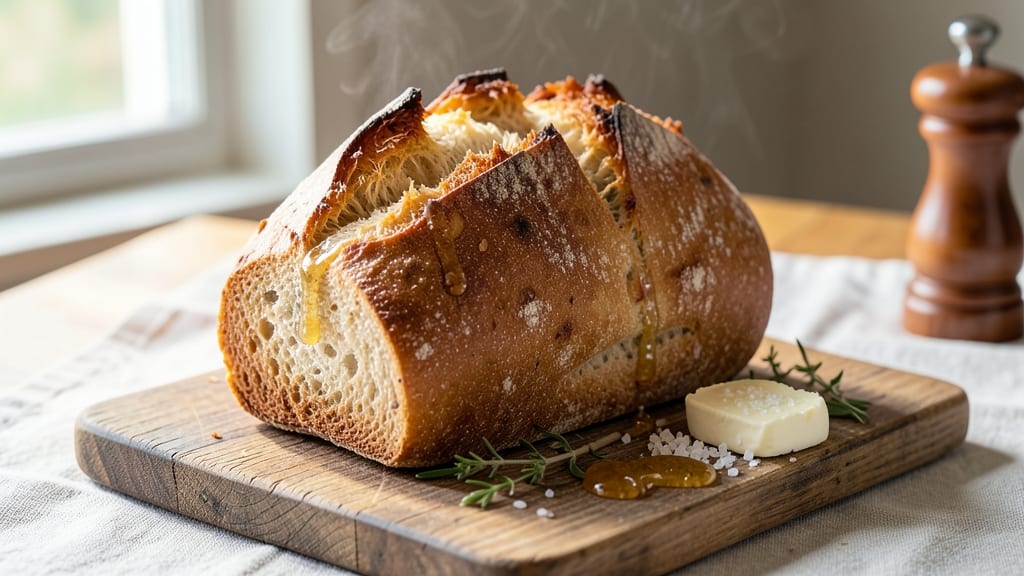
This artisan sourdough bread recipe using King Arthur flour delivers the golden crust and open crumb structure that define true bakery-quality bread. 🌟 The secret lies in patient fermentation and high-protein flour, which creates that signature tangy flavor and airy texture.
I’ve refined this process over years to balance traditional techniques with modern convenience—no specialized equipment required, just time and attention.
The magic begins with a 24-hour starter that captures wild yeast and lactic acid bacteria, giving your bread its distinctive sour flavor. King Arthur’s high-gluten flour provides the structure for that perfect open crumb, while proper hydration and bulk fermentation develop gluten strands for an airy, light texture.
This isn’t just bread—it’s a foolproof method that rewards patience with restaurant-worthy results.
By the time you pull it from the oven, you’ll have a loaf with a deep golden crust, crisp yet tender, and a crumb so open it practically melts in your mouth. The aroma alone—warm, yeasty, with hints of caramelized sugar—will transform your kitchen into a bakery.
This recipe scales perfectly for beginners and experts alike, with options for overnight cold proofing to fit any schedule.
The beauty of this method is its adaptability. While King Arthur flour is ideal, you can substitute other high-protein flours like bread flour or even a mix of whole wheat for added nutrition.
Whether you bake once a week or experiment daily, this recipe builds confidence with every loaf. Let’s get started on your first perfect batch.
Ingredients for artisan sourdough bread recipe king arthur
King Arthur flour and active starter create the perfect golden crust and open crumb structure.
| Ingredient | Amount | Notes |
|---|---|---|
| King Arthur Bread Flour 🌾 | 3 ½ cups | High-protein, unbleached preferred |
| Active Sourdough Starter 🍞 | ½ cup | 100% hydration, bubbly and active |
| Warm Water 💧 | 1 ¼ cups | 100-105°F, not boiling |
| Unsalted Butter 🧈 | ¼ cup | Cold, cubed for flavor |
| Diamond Crystal Kosher Salt 🧂 | 1 ½ tsp | Fine grain preferred |
| Honey 🍯 | 1 tbsp | For crust color and sweetness |
| White Whole Wheat Flour 🌾 | ½ cup | Optional for added nutrition |
| Cornmeal 🌽 | ¼ cup | For dusting and texture |
| Ice Water ❄️ | ¼ cup | For final shaping |
King Arthur’s high-gluten flour is non-negotiable here—it’s what gives that signature open crumb and chewy texture. Buy it from King Arthur’s website or any well-stocked grocery store, but avoid pre-mixed bread flours with added ingredients. For the starter, you want it bubbly and active—like a mini volcano when you poke it. If yours isn’t, feed it extra flour and water 12 hours before baking. The unsalted butter should be cold when you add it; if it’s melted, chill it first. This isn’t just fat—it’s what creates that rich, bakery-style flavor. For the honey, raw, unprocessed works best—it caramelizes beautifully for that golden crust.
No King Arthur flour? Bread flour or a 90/10 mix of bread flour and whole wheat works in a pinch, but expect slightly denser results. If your starter isn’t ready, instant yeast at half the starter amount gets you close—though the flavor won’t be as tangy. For the honey, maple syrup or agave works in a bind, but it won’t caramelize as dramatically. The cornmeal? Semolina is a great swap—it’s got that same gritty texture. And if you’re short on time, skip the overnight cold proof, but bake immediately after bulk fermentation for best results.
This dough is a beast—it needs time. The bulk fermentation can take 8-12 hours at room temp, or overnight in the fridge for better flavor. Store your starter in a glass jar with a loose lid to allow it to breathe. If you’re not baking right away, wrap the shaped loaf in a damp towel and refrigerate for up to 24 hours. The bread keeps well at room temp for 3-4 days, but it’s best fresh out of the oven. For leftovers, slice and toast—it reheats beautifully in a 350°F oven for 5-10 minutes.
Why You'll Love This Recipe
- No-Knead Magic: I swear by this method—just mix the King Arthur Bread Flour, active starter, and warm water, then let it do the work. No stand mixer, no arm workout, just a bowl and patience (which, honestly, is the hardest part).
- Buttery Tang Perfection: That little pat of unsalted butter in the dough? It turns "good" into "I’ll drive 20 minutes for this." The saltiness of the kosher salt cuts through the tang, and the crust? So crisp it’s almost a crunchy hug for your sandwich.
- Weeknight Hero: I freeze half the batch right after baking—toss it in toast the next morning, or pop it in the oven for dinner rolls. It’s my go-to for lazy nights when I still want something that feels special (and doesn’t require a grocery run).
- Budget-Friendly Staple: A single batch costs less than two store-bought loaves, and it lasts forever. Feed the family for days, gift it to neighbors, or save slices for future toast. Plus, the starter? It’s free once you’ve got it going—just feed it scraps.
Step-by-step instructions for artisan sourdough bread
Here's how to transform simple ingredients into a loaf with a crackly crust and airy crumb.
👨🍳 Step 1: Mix the Dough with Precision
In a large bowl, combine the 3.5 cups King Arthur Bread Flour and 0.5 cup White Whole Wheat Flour. Create a well in the center and add the 0.5 cup Active Sourdough Starter, 1.25 cups Warm Water (100-105°F), 1 tbsp Honey, and 1.5 tsp Diamond Crystal Kosher Salt. Mix with a wooden spoon until just combined—you'll see dry bits remain.
Once the dough begins to come together, switch to your hands and knead for 5 minutes until smooth and elastic. The dough should be tacky but not sticky. If it feels too dry, add 1 teaspoon of ice water at a time until it reaches the perfect consistency. Here's the thing—this dough needs time to develop gluten, so don't rush this step.
🍳 Step 2: Bulk Ferment for Maximum Flavor
Transfer the dough to a lightly oiled bowl, cover with a damp towel, and let it rise at room temperature for 4-6 hours until it has nearly doubled in size. You'll know it's ready when the dough springs back slowly when poked and has developed plenty of bubbles on the surface and sides.
I like to do this on my countertop where it's warm. If your kitchen is cool, extend the time to 8 hours. This long fermentation develops the complex flavors that make sourdough special. Don't skip this—it's where the magic happens. Every 30 minutes or so, gently stretch and fold the dough to strengthen the gluten structure.
🔥 Step 3: Shape and Proof for Structure
Turn the dough onto a lightly floured surface and gently shape it into a round ball. This is called a boule shape. Dust your work surface with 0.25 cup Cornmeal and use it to help shape the dough while preventing sticking. The goal is to create surface tension that will give you that beautiful open crumb.
Place the shaped dough seam-side up in a banneton or bowl lined with a floured towel. Cover and refrigerate for 12-16 hours (overnight works perfectly). This cold proof slows fermentation and allows flavors to develop fully. When ready, the dough should have puffed noticeably and feel firm to the touch.
🔥 Step 4: Bake for Crispy Crust and Open Crumb
Preheat your oven to 450°F with a Dutch oven inside for 45 minutes. This ensures maximum heat transfer. Turn the dough out onto a piece of parchment paper, score the top with a sharp razor at a 45-degree angle about ¼-inch deep. This controlled cut allows the dough to expand beautifully.
Carefully transfer the dough and parchment to the preheated Dutch oven. Bake covered for 20 minutes, then remove the lid and bake for another 20-25 minutes until the crust is deep golden brown. You'll smell that incredible sourdough aroma—it's worth the wait. The internal temperature should reach 205-210°F when done.
⏰ Step 5: Cool and Enjoy the Rewards
Remove the bread from the Dutch oven and transfer it to a wire rack to cool completely. This can take 1-2 hours, but resist the temptation to cut into it sooner. The bread will continue to set as it cools, developing its final texture and flavor profile.
Once fully cooled, slice with a serrated knife to reveal that beautiful open crumb structure. The crust should be crispy with a satisfying snap, while the interior should be tender and slightly chewy. Here's where it gets fun—pair it with your favorite butter or olive oil for dipping. This bread tastes even better the next day as the flavors continue to develop.
Pro Tips For Making Artisan Sourdough Bread Recipe King Arthur
- Measure Salt by Weight: Diamond Crystal kosher salt clumps like a liar at a poker game—always use a scale for the 2% hydration step. I learned this after my first loaf tasted flat; the recipe assumes precision, and eyeballing it won’t cut it.
- Stretch and Fold Like a Surgeon: During bulk fermentation, perform stretch-and-folds every 30 minutes for the first 2 hours—gently, but with purpose. Rushing this step creates weak gluten; think "tuck and release," not "yank and pray."
- Skip the Butter Until Proof: Add the unsalted butter after shaping, not during autolyse or bulk fermentation. It melts unpredictably and weakens structure—save it for the final fold or lamination if you’re doing a butter-rich version.
- Dutch Oven Lid Off Last 10: Leave the lid slightly ajar during the last 10 minutes of baking—this prevents a soggy bottom while still letting the crust blister. I used to bake with it sealed tight, and my crusts ended up either raw or gummy.
Serving suggestions for this recipe
Classic Pairings
Freshly baked sourdough pairs perfectly with cultured butter—try Plugrá or Kerrygold for that rich, creamy flavor. I love slathering it on warm slices with a sprinkle of flaky sea salt for a simple yet elegant bite.
For a sweet touch, drizzle with local honey or fig jam—the tangy crumb balances the sweetness beautifully. 🧈
Breakfast Magic
Turn your sourdough into a French toast masterpiece by slicing thick portions and dipping them in a mix of 2 eggs, ½ cup milk, and 1 tsp vanilla extract.
Pan-fry in unsalted butter until golden and crisp. Top with powdered sugar and berries for a restaurant-worthy breakfast. This combo is a game-changer for lazy mornings.
Cheese Board Essentials
Your sourdough is the perfect vessel for aged cheeses like Comté or Pecorino Romano. Pair it with cured meats such as prosciutto or salami, and add olives, nuts, and dried fruit for texture.
The bread’s open crumb soaks up flavors beautifully, making every bite rich and satisfying. A drizzle of extra virgin olive oil ties everything together. 🧀
Sandwich Game-Changer
Use your sourdough as the base for gourmet sandwiches—think grilled chicken, avocado, and bacon with a smear of garlic aioli. For a vegetarian option, layer roasted red peppers, feta, and arugula with a balsamic glaze.
The bread’s chewy texture holds up perfectly to hearty fillings, making it ideal for lunch or dinner. Toast lightly before assembling for extra crispiness.
Dessert Reinvention
Crusty sourdough makes an unexpected but delicious dessert bread pudding. Tear the bread into chunks, soak in a custard of 2 eggs, 1 cup milk, ½ cup sugar, and 1 tsp vanilla, then bake until golden.
Serve with vanilla ice cream or whipped cream for a comforting treat. The tangy crumb adds depth to sweet dishes—trust me, it’s a crowd-pleaser. 🍮
Wine and Beer Matches
A dry Riesling or Sauvignon Blanc complements the sourdough’s tangy notes beautifully. For beer lovers, a Belgian witbier or German Helles enhances the bread’s crusty texture without overpowering its flavor.
Avoid heavy reds—they’ll clash with the bread’s brightness. A crisp white or light lager is your best bet for a balanced pairing. 🍷
Nutrition facts
Frequently asked questions
Can I substitute King Arthur flour with regular bread flour?
You can use bread flour, but expect a slightly denser crumb since King Arthur's higher protein content (13.3%) creates that signature open structure. For best results, use a 90/10 mix of bread flour to whole wheat flour to mimic the texture. The tangy flavor will still develop, but the crust may be less crisp.
How do I know when my sourdough starter is ready?
Your starter should be bubbly, have doubled in size within 4-6 hours after feeding, and pass the "float test"—drop a small spoonful in water and watch it float. If it sinks, feed it more flour and wait another 12 hours. A mature starter smells tangy (like yogurt or vinegar) with no harsh alcohol odor.
Why did my bread come out dense instead of open and airy?
Dense bread usually means underproofed dough or insufficient gluten development. Try extending bulk fermentation to 8-12 hours at room temp, or do more stretch-and-folds (every 30 minutes for 2 hours). Also check your flour—King Arthur's high protein is key for that open crumb. If using substitutes, add 1 tsp vital wheat gluten per cup of flour.
Can I bake this without a Dutch oven?
Yes! Use a heavy oven-safe pot with a lid, or create a makeshift steam chamber by placing a metal bowl filled with boiling water on the lower rack. The steam helps develop that crackly crust. Bake at 475°F instead of 450°F to compensate for the lack of Dutch oven heat retention. The bread will still be delicious, just with slightly less oven spring.
How long will this bread last, and can I freeze it?
Freshly baked sourdough stays best for 3-4 days at room temp wrapped in a cloth. For longer storage, freeze the cooled loaf in slices (separated by parchment) for up to 3 months. To revive, toast frozen slices directly in the toaster or warm in a 350°F oven for 5 minutes. The flavor actually improves slightly after freezing!