
Side Dishes
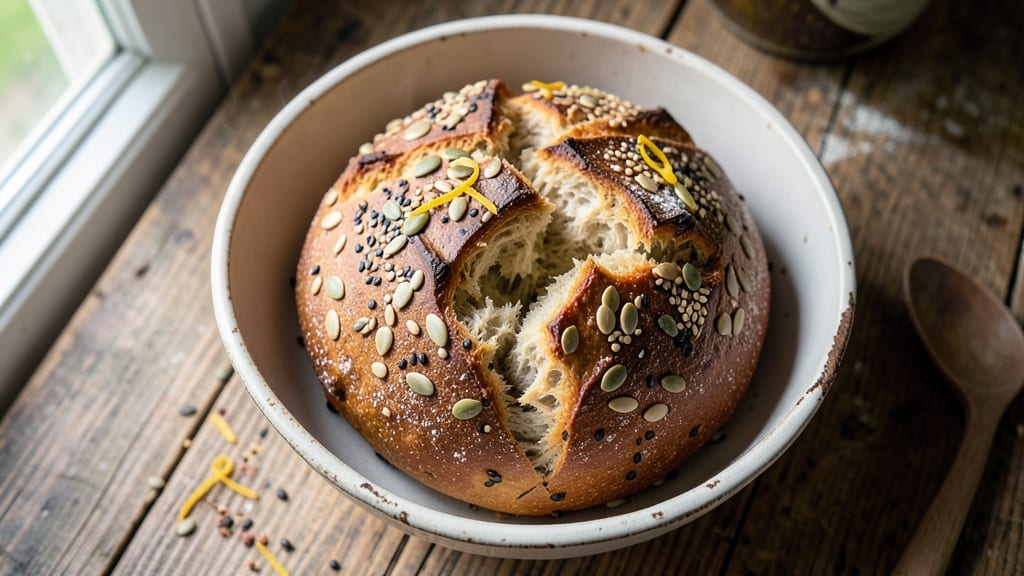
This artisan seed bread recipe delivers a textured masterpiece with a honeyed crust and nutty crunch from toasted grains—perfect for sandwiches or toast. The secret lies in slow hydration and precise seed incorporation, transforming simple ingredients into a loaf with restaurant-quality depth.
I developed this after years of experimenting with seed breads, and the difference between store-bought and homemade is night and day.
The dough begins with a foolproof mix of flour, water, and a touch of honey for caramelized flavor, then incorporates seeds in stages to prevent sinking. Proofing at room temperature ensures proper oven spring, while scoring the crust before baking creates that signature artisan look.
Every bite delivers a perfect balance of crispy crust, chewy interior, and satisfying crunch from seeds like flax, sunflower, and pumpkin.
What makes this recipe stand out is its versatility—use it for breakfast toast, sandwiches, or even as a side for soups. The seeds add not just texture but also nutritional value, while the honeyed crust adds a subtle sweetness that pairs beautifully with savory toppings.
This isn’t just bread; it’s a textural experience that elevates any meal.
For best results, let the dough rest overnight for deeper flavor development, and store the bread in a cloth-lined bag to maintain freshness. Whether you’re baking for a crowd or treating yourself, this recipe delivers professional-quality results with minimal fuss. Let’s get started!
Ingredients for artisan seed bread
Transform simple pantry staples into a restaurant-worthy seed bread with crispy crust and nutty crunch.
| Ingredient | Amount | Notes |
|---|---|---|
| Bread Flour 🌾 | 4 cups | High-protein for chewy texture |
| Filtered Water 💧 | 2 ½ cups | Lukewarm for optimal hydration |
| Raw Flaxseeds 🌰 | ½ cup | Toasted for nutty depth |
| Sunflower Seeds 🌻 | ½ cup | Lightly toasted for crunch |
| Pumpkin Seeds 🎃 | ½ cup | Toasted until fragrant |
| Raw Sesame Seeds 🌿 | ¼ cup | For sesame flavor |
| Raw Honey 🍯 | 2 tbsp | Substitute maple syrup for vegan |
| Active Dry Yeast 🍞 | ½ tsp | Instant yeast preferred |
| Kosher Salt 🧂 | 1 ½ tsp | Diamond Crystal preferred |
| Olive Oil 🫒 | 1 tbsp | Extra-virgin for richness |
| Ground Flaxseed 🌰 | 2 tbsp | For egg replacement |
| Water 💧 | 6 tbsp | For flax egg mixture |
The flour is the foundation—King Arthur or Caputo deliver that perfect chewy crumb. For seeds, bulk bins at Whole Foods or Trader Joe's offer the freshest options. Toast them in a dry pan until fragrant—5 minutes max—or they’ll burn. The honey (or maple syrup for vegan) caramelizes beautifully during baking, creating that signature golden crust. If using yeast, check the expiration date—old yeast won’t activate properly. For the flax egg, mix the ground flaxseed and water first, then let it sit for 5 minutes to thicken before adding to the dough.
No sesame seeds? Poppy or chia seeds work beautifully. Running out of flaxseeds? Chia seeds at half the amount give a similar texture. For the yeast, instant yeast dissolves directly into the dough, but if you’ve got active dry, bloom it in warm water first. The olive oil adds richness—avoid vegetable oil, which can make the crust too soft. If your seeds are pre-toasted, toast them again for maximum flavor. The dough will feel sticky, but don’t over-knead—just mix until combined. For a nut-free version, swap seeds for toasted oats or chopped nuts like walnuts.
This dough is best when rested overnight—cover it tightly and let it sit in the fridge for 8-12 hours for deeper flavor. Store the baked bread in a cloth-lined bag to keep it fresh for 4-5 days. For longer storage, slice and freeze—it reheats beautifully in a toaster or oven. The crust stays crisp for 24 hours if kept sealed, but the interior softens after a day. Double the recipe—it’s worth the extra effort, and leftovers disappear fast.
Why You'll Love This Recipe
- No-Knead Magic: I swear by this—just mix, let it rise, and bake. No stand mixer, no fancy tools, just you, a bowl, and 10 minutes of hands-on time. The seeds do all the heavy lifting.
- Nutty Crunch Perfection: That first bite? Warm, chewy bread with a serious crunch from the sunflower and pumpkin seeds—like a toasted seed trail mix in every slice. Honestly, my kids fight over the crust pieces.
- Weeknight Superstar: Toss a loaf in the oven while dinner simmers. It’s my go-to for sandwiches, toast, or even a quick charcuterie base. (Yes, even on a Tuesday night when I’m exhausted.)
- Budget-Friendly Staple: A single batch feeds us for days—think breakfast toast, lunch wraps, or dinner sides. The seeds add protein and fiber, so it’s cheaper than buying pre-packaged bread and healthier. Win-win.
Step-by-step instructions for artisan seed bread
This method transforms simple ingredients into a loaf with irresistible nutty crunch and golden crust.
Prepare the Flax Egg and Toast the Seeds
In a small bowl, whisk together the 2 tablespoons ground flaxseed and 6 tablespoons water. Let this mixture sit for 5 minutes until it thickens into a gel-like consistency—this replaces eggs in our vegan-friendly dough. Meanwhile, toast the seeds in a dry skillet over medium heat for 3-4 minutes, stirring constantly until they release their nutty aromas and turn light golden brown. Transfer the toasted seeds to a plate to cool while you prepare the dough.
Here's the thing—properly toasted seeds make all the difference. You'll know they're ready when they smell intensely nutty and their edges begin to crisp slightly. Don't walk away during this step; seeds can burn quickly if left unattended. The toasted seeds will add both texture and flavor that raw seeds simply can't match.
Mix the Dough with Honeyed Richness
In the bowl of a stand mixer fitted with the dough hook, combine the 4 cups bread flour, 1.5 teaspoons kosher salt, and 0.5 teaspoon active dry yeast. Mix on low speed for 30 seconds to distribute the ingredients evenly. Add the 1 tablespoon olive oil, 2 tablespoons raw honey, and the flax egg mixture. With the mixer running on low, slowly pour in the 2.5 cups lukewarm filtered water while scraping down the sides of the bowl as needed.
Once all ingredients are incorporated, increase the speed to medium and knead for 5-7 minutes until the dough becomes smooth and elastic, pulling away from the sides of the bowl. The dough should be slightly tacky but not sticky—if it's too wet, add 1 tablespoon flour at a time until it reaches the perfect consistency. This kneading develops gluten, which gives our bread its signature chewy texture.
Incorporate Seeds and First Rise
Switch off the mixer and add the 0.5 cup toasted flaxseeds, 0.5 cup toasted sunflower seeds, 0.5 cup toasted pumpkin seeds, and 0.25 cup raw sesame seeds to the dough. Using a silicone spatula, gently fold these seeds into the dough by hand until evenly distributed. The seeds should be visible throughout but not concentrated in clumps—this ensures each slice has that satisfying crunch.
Transfer the dough to a lightly oiled bowl, cover with a damp kitchen towel, and let it rise in a warm place for 1-2 hours, or until it has doubled in size. I like to place my bowl near the oven with the light on to create a consistent warm environment. The dough should spring back slowly when poked with a finger—this indicates proper fermentation and is crucial for that light, airy crumb we're after.
Shape and Second Rise for Maximum Flavor
Turn the risen dough out onto a lightly floured surface and gently shape it into a 12-inch round loaf by pulling the edges toward the center. Place the shaped dough seam-side up in a 9-inch round cake pan that's been lightly greased with olive oil. Cover the pan with a damp towel and let it rise again for 30-45 minutes until it's just slightly puffed above the pan's edge. This second rise ensures our bread has that perfect open crumb structure.
Here's where precision matters: the dough should be just barely puffed, not fully doubled like in the first rise. Over-rising can cause the bread to collapse during baking. I press down gently on the center of the dough—if it springs back slowly, it's ready for the oven.
Bake to Golden Perfection with Honeyed Crust
Preheat your oven to 375°F with a baking stone or inverted baking sheet on the middle rack. Once preheated, brush the dough with an additional 1 tablespoon olive oil and sprinkle with a pinch of kosher salt for extra flavor. Bake for 25-30 minutes until the crust is deep golden brown and the internal temperature reaches 190°F when measured with an instant-read thermometer.
The bread is done when it sounds hollow when tapped on the bottom and pulls away cleanly from the sides of the pan. For that signature honeyed crust, I like to brush the warm bread with a mixture of 1 tablespoon melted butter and 1 teaspoon honey while it's still hot from the oven. Let it cool on a wire rack for at least 30 minutes before slicing—this resting period allows the crumb to set properly and prevents a gummy texture.
Pro Tips For Making Artisan Seed Bread
- TOAST SEEDS FIRST: Toss your flax, sunflower, and pumpkin seeds in a dry pan over medium heat for 3-4 minutes until fragrant. I learned this the hard way—raw seeds can make the bread taste bitter, and toasting brings out their nutty depth. Skip this, and your bread will still rise, but it’ll lack that warm, toasted flavor.
- WEIGH YOUR FLOUR: Bread flour is tricky—scooping leads to air pockets and uneven hydration. Use a kitchen scale for precision, especially since this recipe relies on tight dough control. I used to eyeball it, and my loaves would either turn out dense or collapse in the oven.
- STRETCH NOT FOLD: When shaping the dough, resist the urge to fold—gently stretch the surface instead. This builds tension without overworking the gluten, which can make the bread tough. It looks messy, but it guarantees a better crumb and oven spring.
- STEAM THE FIRST 15: Place a metal tray of boiling water in the oven before baking, then slide it out after 15 minutes. The steam keeps the crust from darkening too fast, giving you that perfect open crumb. I was skeptical until I tried it—now it’s non-negotiable for me.
Creative variations of artisan seed bread
Sourdough Twist
For a tangy, artisanal depth, replace the yeast with a sourdough starter (¼ cup active starter). Mix it into the dough after the initial flour and salt blend, then proceed with the recipe.
The fermentation time will extend to 8-12 hours for the first rise, but the flavor transformation is worth it. Brush the baked loaf with a mix of 1 tbsp olive oil and 1 tsp apple cider vinegar for extra tang. 💫
Whole Grain Boost
Swap 1 cup of bread flour for whole wheat flour or spelt flour to add heartier texture and nuttier flavor. For extra fiber, add ½ cup rolled oats to the dough during the final kneading stage. These variations create a denser crumb perfect for hearty sandwiches or toast with avocado.
Sweet Variations
For a dessert-style loaf, replace the honey with ½ cup maple syrup and add ½ cup dried cranberries or chopped dates during the final fold. Sprinkle the top with coarse sugar before baking for a caramelized crust. This version pairs beautifully with Greek yogurt or whipped coconut cream for breakfast.
Herb-Infused Crust
Boost the crust with 1 tbsp chopped rosemary or thyme mixed into the olive oil before brushing on the dough. For a Mediterranean twist, add ½ cup chopped Kalamata olives to the dough during the final fold. The herbs create an aromatic contrast that elevates the nutty seeds.
Gluten-Free Adaptation
Replace the bread flour with a 1:1 gluten-free flour blend (like Bob’s Red Mill) and add 1 tbsp xanthan gum to improve elasticity. Reduce the water by ¼ cup to prevent stickiness. This version maintains the seed crunch but yields a slightly denser crumb—perfect for those with gluten sensitivities.
Seed Swaps for Allergies
For nut-free versions, replace seeds with toasted quinoa, poppy seeds, or chia seeds. For a sunflower-free option, use hemp seeds or buckwheat groats (toasted). Always toast the alternatives to enhance flavor—raw seeds won’t provide the same satisfying crunch. ✨
Nutrition facts
Frequently asked questions
Why does my seed bread dough feel too sticky?
The dough should be slightly tacky but not gluey. If it's too wet, add 1 tablespoon flour at a time while kneading until it reaches the right consistency. Over-hydration happens when water temperature isn't lukewarm (80-85°F) or if you've added too many seeds—reduce seeds by 2 tablespoons if needed. The goal is a dough that's cohesive but not sticky.
Can I make this bread without a stand mixer?
Use a large mixing bowl and develop the gluten by hand-kneading for 8-10 minutes on a lightly floured surface. Work the dough vigorously until it becomes smooth and elastic. The kneading process is what creates that signature chewy texture—don't skip it even if using your hands. For extra strength, use a dough scraper to help fold and turn the dough.
How do I prevent the seeds from sinking to the bottom?
Incorporate seeds gently after kneading by folding them in with a silicone spatula. The key is to distribute them evenly throughout the dough without overmixing. For extra insurance, add 1 tablespoon vital wheat gluten to the flour—it helps the dough hold the seeds better during baking. Also, avoid over-proofing, as a fully risen dough can cause seeds to separate.
What's the best way to store homemade seed bread?
Wrap cooled bread tightly in a cloth bag or beeswax wrap to maintain freshness for 4-5 days at room temperature. For longer storage, slice and freeze—it reheats beautifully in a toaster or oven. Avoid plastic bags, which trap moisture and make the crust soggy. If storing, keep the bread in its pan until ready to serve to preserve that perfect oven-spring.
Can I use this recipe for a baguette-style seed bread?
Yes, but you'll need to adjust the shape and baking method. Form the dough into a 12-inch log and bake on a baking sheet at 425°F for 20-25 minutes. For extra crispiness, score the top with a razor blade before baking. Reduce the seeds by ¼ cup to prevent sinking in the longer loaf. Brush with olive oil and sprinkle with coarse sea salt after baking for that classic French touch.