
Side Dishes
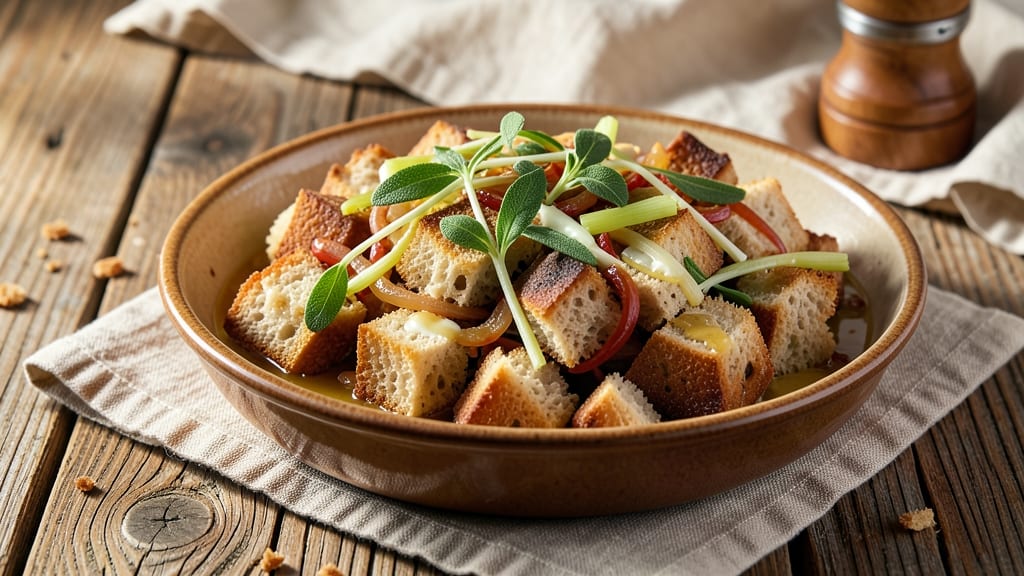
This artisan bread stuffing recipe transforms simple ingredients into a moist, golden masterpiece with crispy crust bits and fragrant herb layers. The secret lies in toasting bread cubes to perfection and balancing them with rich broth and aromatic herbs—no dry, crumbly texture here.
Perfect for holidays or weeknight dinners, this version delivers restaurant-quality results with minimal effort.
What sets this recipe apart is the foolproof method for achieving ideal texture: toast the bread just until golden, then bake it with butter and broth until tender yet crisp at the edges.
Sautéed onions, celery, and fresh herbs infuse every bite with savory depth, while a touch of poultry seasoning elevates the flavor profile. The result? A stuffing so good, it becomes the star of the meal.
By the time it emerges from the oven, you’ll have a luxuriously moist center with crispy, caramelized edges—no soggy bits in sight. The aroma alone will have everyone gathering around the table, and the first bite will prove why this stuffing deserves a spot at every gathering.
Whether you’re hosting Thanksgiving or a casual Sunday dinner, this recipe delivers consistent, crowd-pleasing perfection.
For versatility, adjust the herb blend to suit your taste—thyme, rosemary, and sage work beautifully, or swap in fresh parsley for a brighter twist. Leftovers reheat wonderfully, making this the ultimate make-ahead dish. Ready to master stuffing that impresses every time? Let’s get started.
Ingredients for artisan bread stuffing
Toasted bread cubes, rich butter, and aromatic herbs create this restaurant-quality stuffing masterpiece.
| Ingredient | Amount | Notes |
|---|---|---|
| Day-Old Artisan Bread 🍞 | 12 cups | Cubed, crusts included for texture |
| Unsalted Butter 🧈 | ¾ cup | Cold, cubed for even distribution |
| Chicken Broth 💧 | 2 cups | Low-sodium preferred for flavor control |
| Yellow Onion 🧅 | 1 ½ cups | Finely diced, sautéed until translucent |
| Celery Stalk 🧄 | 3 cups | Finely diced, sautéed with onions |
| Fresh Sage Leaves 🌿 | ½ cup | Chopped, stems removed |
| Fresh Thyme Leaves 🌿 | ¼ cup | Chopped, stems removed |
| Fresh Rosemary Sprigs 🌿 | ¼ cup | Chopped, finely minced |
| Poultry Seasoning 🌶️ | 1 ½ tsp | High-quality blend for depth |
| Salt 🧂 | 1 ½ tsp | Diamond Crystal preferred |
| Black Pepper 🌶️ | 1 tsp | Freshly ground for best flavor |
| Garlic Cloves 🧄 | 4 cloves | Minced, sautéed with vegetables |
The bread is everything here. Day-old artisan loaves from Whole Foods or your local bakery work best—they’re sturdier than fresh bread and hold up to toasting. Look for loaves with a thick crust; those crispy bits are what give this stuffing its signature texture. If you’re using a baguette, slice it into 1-inch cubes before toasting. For extra flavor, consider adding a few crusty croutons to the mix. The butter should be cold when you add it—this ensures even distribution and prevents sogginess. If you’re short on time, pre-toast the bread cubes while you sauté the vegetables.
No fresh herbs? Dried sage and thyme work at one-third the amount, but fresh is ideal for that vibrant flavor. Swap rosemary for fresh parsley if you prefer a brighter note. The onions and celery form the aromatic base, so don’t skip sautéing them—this step is non-negotiable for building flavor. Short on chicken broth? Vegetable broth works just as well, or even a mix of both. The poultry seasoning can be tricky to find, but a blend of salt, pepper, paprika, and thyme makes a solid substitute. For extra richness, add a splash of white wine when sautéing the vegetables—it cooks off quickly but adds depth.
This stuffing reheats beautifully—just add a splash of broth or water to revive it. Store leftovers in an airtight container for up to 5 days in the fridge, or freeze for 3 months for future meals. To make ahead, assemble the stuffing (without baking) and refrigerate overnight. The flavors meld beautifully, and you’ll save time on the big day. For a crispier texture, broil the stuffing for the last 2-3 minutes of baking. And if you’re serving a crowd, double the recipe—this stuffing disappears fast!
Why You'll Love This Recipe
- No Crumbs, No Stress: I toss in day-old artisan bread cubes—no toasting, no drying out—and just let the broth soak it up. The crusty texture stays intact, but the inside gets tender without a single crumb escaping my fingers.
- Rich, Savory Depth: That melted butter and onion base? It’s the secret—caramelized just enough to give it a warm, almost sweet contrast to the herby broth. Honestly, the first bite makes me want to skip the main dish.
- Leftovers? No Problem: Stuffing reheats like a dream—moist but not soggy, thanks to the bread’s structure. I make double batches for Thanksgiving and freeze half; by Christmas, it’s still fresh enough to serve.
- Budget-Friendly Luxury: Artisan bread on sale? Grab it. Butter’s the only splurge, but it transforms simple onion and celery into something restaurant-worthy. My wallet and taste buds both win.
Step-by-step instructions for artisan bread stuffing
Transform your day-old bread into a rich, herb-infused stuffing with perfect texture and moisture.
Cube and Dry the Artisan Bread
Break the 12 cups day-old artisan bread into 1-inch cubes, including the crusts for added texture and flavor. Spread the cubes evenly on a baking sheet in a single layer. Bake at 350°F for 15-20 minutes, stirring once halfway through, until the cubes are completely dry and crisp.
This drying step is crucial—it prevents a soggy stuffing. The crusts add a delightful crunch, so don't skip them. You'll know they're ready when they're uniformly golden and crisp to the touch. Let them cool completely before proceeding.
Sauté the Vegetables and Aromatics
In a large skillet, melt the 0.75 cup cold unsalted butter over medium heat. Add the 1.5 cups finely diced yellow onion and 3 cups finely diced celery stalk, cooking for 8-10 minutes until the onions are translucent and the celery is softened. Stir in the 4 cloves minced garlic and cook for an additional 1 minute until fragrant.
Remove the skillet from heat and let it cool slightly. This step builds the flavor foundation for your stuffing. If the vegetables start to brown too quickly, reduce the heat to maintain even cooking. The garlic should be aromatic but not burnt.
Combine All Ingredients
In a large mixing bowl, combine the cooled bread cubes, sautéed vegetable mixture, 0.5 cup chopped fresh sage leaves, 0.25 cup chopped fresh thyme leaves, and 0.25 cup finely minced fresh rosemary sprigs. Sprinkle in the 1.5 tsp poultry seasoning, 1.5 tsp salt, and 1 tsp freshly ground black pepper, mixing gently to distribute evenly.
This is where the magic happens—the herbs and seasonings infuse the bread with layers of flavor. Be careful not to overmix; just enough to combine everything so the bread retains its texture. The stuffing should look rich and aromatic at this stage.
Add the Moisture
Pour the 2 cups low-sodium chicken broth over the bread mixture, stirring gently until the broth is evenly distributed. The stuffing should be moist but not wet—it should hold its shape when pressed lightly. If it feels too dry, add 1-2 tablespoons more broth as needed.
This step ensures the stuffing stays moist during baking. The broth should be absorbed quickly, but don't worry if it looks a bit uneven at first. The heat of the oven will help it come together perfectly. Let the mixture sit for 10 minutes to allow the flavors to meld.
Bake to Golden Perfection
Transfer the stuffing to a greased 9x13-inch baking dish and spread it evenly. Bake at 375°F for 25-30 minutes, until the top is golden brown and the edges are crispy. For extra browning, broil for 2-3 minutes at the end, watching closely to avoid burning.
The stuffing is done when it's heated through and has a beautiful golden crust. If the top seems too dry, drizzle a little extra broth over it before baking. Serve warm, straight from the oven, for the best texture and flavor.
Pro Tips For Making Artisan Bread Stuffing
- CRUMBLE FIRST, THEN SOAK: Artisan bread’s crust is tough—don’t fight it. Tear the bread into 1-inch chunks, then pulse half of them in a food processor until they’re fine crumbs (like coarse sand). Mix these into the wet ingredients first—they’ll soak up broth instantly and keep the stuffing from turning to mush later.
- SAUTE ONIONS UNTIL SOFT, NOT BROWN: I used to rush this step, and the onions would taste raw. Cook them low and slow in the butter until they’re translucent and just starting to soften—about 8-10 minutes. If they darken, you’ve overdone it, and the stuffing will taste bitter.
- DON’T SKIP THE BROTH BATH: After mixing the bread and broth, let the stuffing sit for 10 minutes before baking. This gives the bread time to absorb the liquid evenly—no soggy bottoms, no dry pockets. Cover it loosely with foil while it rests; it’s not steaming, just chilling out.
- UPGRADE WITH A LITTLE SALT: Unsalted butter + homemade chicken broth can leave the stuffing tasting flat. Toss in ½ teaspoon of salt per cup of broth while mixing—it brightens the flavors without overpowering. Trust me, even if the recipe doesn’t call for it.
Make-ahead tips for artisan bread stuffing
Prep Ahead Timeline
Plan your stuffing prep like a pro by breaking it into stages. Start by toasting the 12 cups artisan bread cubes up to 3 days in advance—store them in an airtight container with a paper towel to absorb excess moisture.
This keeps them crispy and ready to use whenever you need them. I always prep the dried bread cubes first because they’re the foundation of the texture. 💡
For maximum flavor development, mix all ingredients—except the broth—up to 24 hours ahead and refrigerate in an airtight container. The herbs and seasonings will meld beautifully overnight, saving you time on the day of cooking.
When you're ready to bake, simply add the broth and proceed with the final baking step.
Freezer-Friendly Assembly
This stuffing freezes exceptionally well, making it perfect for holiday prep. Assemble the stuffing completely (including broth) in a 9x13-inch baking dish or airtight container, then cover tightly with plastic wrap followed by aluminum foil.
Freeze for up to 3 months. When ready to bake, thaw overnight in the refrigerator, then bake as directed—just add 5-10 minutes to the baking time since it starts cold. 🧊
Reheating Leftovers
Leftover stuffing reheats beautifully in the oven for the best texture. Spread it on a baking sheet and cover with foil, then bake at 350°F for 15-20 minutes until heated through.
For a quick fix, microwave individual portions covered with a damp paper towel on 70% power for 1-2 minutes, stirring halfway. Always add a splash of broth or water to revive the moisture if needed.
Make-Ahead Garnish
Fresh herbs like parsley or chopped rosemary make excellent garnishes, but they’re best added after baking. Store them separately in a small container in the fridge for up to 5 days or freeze them in an ice cube tray with a bit of water for easy portioning.
A sprinkle of toasted breadcrumbs or extra herbs right before serving adds a restaurant-quality finish. 🌿
Broth Substitutions
Don’t have chicken broth? No problem. Use vegetable broth for a vegetarian version, or mix equal parts broth and water with 1 tsp soy sauce for extra umami depth.
For a richer flavor, substitute ½ cup of the broth with white wine or even chicken stock—just adjust seasoning as needed. I’ve even used tomato juice in a pinch (though it changes the color slightly).
Nutrition facts
Frequently asked questions
Can I use any type of bread for this recipe?
Artisan bread is ideal because its sturdy texture holds up to toasting and baking beautifully. However, you can substitute with baguettes, sourdough, or even Italian bread—just cube them uniformly. Avoid soft breads like brioche or white sandwich bread, as they'll turn mushy. For extra flavor, use a mix of crusty and soft breads!
Why does my stuffing turn out dry or crumbly?
Most likely, your bread wasn't toasted enough before baking or you overmixed the ingredients. Always dry the bread cubes thoroughly at 350°F for 15-20 minutes until crisp. Also, mix just until combined—overworking breaks down the bread's structure. For extra moisture, add 1-2 tablespoons more broth if needed.
Can I make this stuffing vegetarian?
Simply swap the chicken broth for vegetable broth and omit poultry seasoning. Boost flavor with 1 tsp soy sauce or 1 tbsp nutritional yeast in the broth. For extra richness, add sautéed mushrooms or roasted garlic. The texture and baking method remain exactly the same!
How do I make this stuffing gluten-free?
Use a gluten-free artisan bread or substitute with gluten-free bread cubes (like Schär or Canyon Bakehouse). For binding, add 1 tbsp cornstarch or arrowroot powder to the broth mixture. Also include 1 extra egg (lightly beaten) when combining ingredients to help hold the texture together during baking.
What's the best way to reheat leftovers?
For perfect texture, spread leftovers on a baking sheet and cover with foil. Bake at 350°F for 15-20 minutes until heated through. For quick reheating, microwave covered with a damp paper towel on 70% power for 1-2 minutes, stirring halfway. Always add a splash of broth or water to revive moisture—never microwave dry!