
Side Dishes
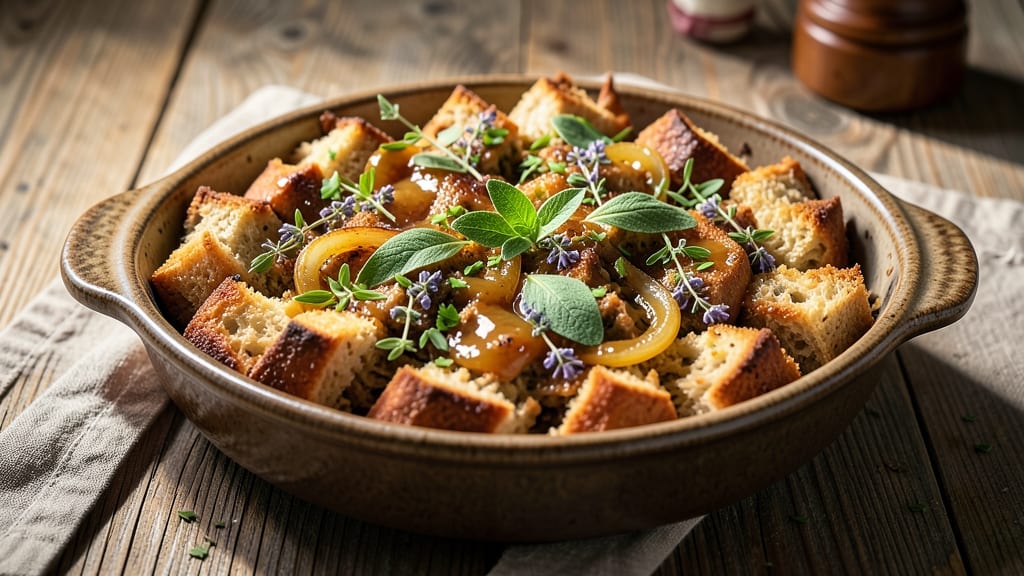
This Amish bread stuffing recipe transforms simple ingredients into a savory, herb-infused centerpiece that belongs at any holiday table. The secret lies in perfectly cubed bread, rich butter, and a blend of sage, thyme, and parsley that creates layers of aromatic depth.
Unlike traditional recipes, this version delivers a moist, golden-brown texture without drying out—ideal for both baking and frying methods.
What sets this stuffing apart is the balance of technique and tradition. Sautéing onions and celery in butter until tender builds a flavorful base, while the bread absorbs just enough broth to stay juicy without turning soggy.
The optional addition of sausage adds hearty protein, making it a satisfying side or even a main dish on its own.
By the time it emerges from the oven or skillet, you'll have a stuffing with crispy edges and a tender, herby interior that pairs perfectly with roasted turkey or ham.
The aroma alone will have everyone anticipating the first bite. This recipe delivers restaurant-quality results with minimal effort—just the right amount of rustic charm and modern convenience.
Whether you're hosting a holiday feast or simply craving a comforting side, this stuffing is versatile enough to adapt to any occasion. The key is in the details: proper bread cubing, even cooking, and the right ratio of broth to butter.
Let's get started on creating a stuffing that will become a family tradition.
Ingredients for amish bread stuffing
Simple, aromatic ingredients that create restaurant-quality stuffing with crispy edges and tender interior.
| Ingredient | Amount | Notes |
|---|---|---|
| Day-Old Bread Cubes 🍞 | 8 cups | Stale bread preferred, crusts removed |
| Unsalted Butter 🧈 | ¾ cup | Cold, cubed for even cooking |
| Fresh Sage Leaves 🌿 | ½ cup | Chopped, stems removed |
| Fresh Thyme Leaves 🌿 | ¼ cup | Chopped, stems removed |
| Fresh Parsley Leaves 🌿 | ¼ cup | Chopped, stems removed |
| Yellow Onion 🧅 | 1 whole | Medium size, finely diced |
| Celery Stalks 🥬 | 4 whole | Trimmed, finely diced |
| Chicken Broth 💧 | 2 cups | Low-sodium preferred |
| Salt 🧂 | 1 ½ tsp | Kosher or sea salt |
| Ground Black Pepper 🌶️ | ½ tsp | Freshly ground preferred |
| Garlic Cloves 🧄 | 4 cloves | Minced for depth of flavor |
| Optional Smoked Sausage 🍖 | ½ lb | Kielbasa or breakfast sausage, diced |
The bread is non-negotiable—day-old works best for texture. Artisan sourdough or rye adds depth, but French bread or cornbread from the bakery section at Whole Foods or Trader Joe's are foolproof. Look for loaves with a sturdy crust but soft interior. For the herbs, fresh is essential—dried thyme and sage work in a pinch (use half the amount), but nothing beats the aroma of freshly chopped. The butter should be cold when cubed—this creates crispy edges while keeping the center moist. If you're short on time, Trader Joe's pre-cubed bread saves effort without sacrificing quality.
No fresh sage? Dried sage at one-third the amount works, but the flavor won't be as vibrant. The onion and celery should be finely diced—about 1/4-inch pieces—for even cooking. For the sausage, kielbasa or breakfast sausage brown beautifully, but Italian sausage adds a smoky kick. Short on broth? Low-sodium beef or vegetable broth works equally well. The garlic can be minced with a knife or pulsed briefly in a food processor—just don't overdo it. For extra richness, add 1/4 cup grated Parmesan to the finished stuffing, but omit if serving alongside cheese-heavy dishes.
This stuffing reheats beautifully—3-4 minutes at 350°F until heated through. For best results, store leftovers in an airtight container for up to 5 days. Freeze portions for up to 3 months by wrapping tightly in foil. The bread cubes will dry out if exposed to air, so re-seal containers with fresh bread cubes between uses. For a crispier texture, spread the stuffing on a baking sheet before reheating. If making ahead, assemble the stuffing (without baking) and refrigerate for up to 24 hours before cooking.
Why You'll Love This Recipe
- No-Waste Magic: I swear by using day-old bread—it’s the secret to that perfect, sturdy texture without a gummy bite. Plus, no one will guess you’re just repurposing yesterday’s loaf.
- Herb-Packed Punch: That trio of fresh sage, thyme, and parsley? It’s like a little aromatic hug in every bite. Toss them in whole, then snip them at the end—easier than chopping, and the flavor? Ridiculously good.
- Holiday or Weeknight: Make it ahead for Thanksgiving, or toss it in the oven while you roast a chicken on a Tuesday. Same recipe, zero stress—just swap the occasion.
- Budget-Friendly Staples: Butter, herbs, and stale bread? This stuffing costs next to nothing but tastes like you spent hours. Honestly, it’s my go-to for feeding a crowd without breaking the bank.
Step-by-step instructions for Amish bread stuffing
This traditional recipe transforms simple ingredients into hearty, aromatic stuffing with perfect texture.
Preheat and Prepare the Bread
Preheat your oven to 375°F and position a rack in the middle position. Spread the 8 cups day-old bread cubes evenly on two rimmed baking sheets, ensuring they form a single layer. Bake for 10-12 minutes until the bread is completely dry and lightly golden around the edges.
This step is crucial—drying the bread thoroughly prevents a soggy stuffing. You'll know it's ready when the cubes feel crisp to the touch and have lost all moisture. If any pieces remain damp, return them to the oven for another 2-3 minutes until fully dry. Let the bread cool completely before proceeding.
Sauté the Aromatics and Sausage
In a large skillet, melt the 0.75 cup unsalted butter over medium heat. Add the 0.5 lb optional smoked sausage (if using) and cook for 5-6 minutes, breaking it into small pieces, until browned and crispy. Remove the sausage with a slotted spoon and set aside.
In the same skillet, add the finely diced yellow onion and trimmed celery stalks. Cook for 8-10 minutes until the vegetables are tender and most of their moisture has evaporated. Stir in the minced garlic cloves and cook for an additional 30 seconds until fragrant. This foundational step builds deep flavor that carries through the entire dish.
Combine Ingredients and Season
In a large mixing bowl, combine the cooled bread cubes, cooked vegetables, and reserved sausage. Add the 0.5 cup chopped fresh sage leaves, 0.25 cup chopped fresh thyme leaves, and 0.25 cup chopped fresh parsley leaves. Sprinkle evenly with the 1.5 teaspoons salt and 0.5 teaspoon ground black pepper, tossing gently to distribute the seasonings.
This is where the magic happens—the herbs should be evenly distributed throughout the bread mixture. The sage adds earthy depth, thyme brings warmth, and parsley brightens the overall flavor. Don't overmix; just enough to combine everything evenly. The texture should remain light and airy rather than compacted.
Moisten and Bake to Perfection
Pour the 2 cups chicken broth evenly over the bread mixture, tossing gently until every cube is moistened. The stuffing should hold together when pressed lightly, but still maintain a crumbly texture. Transfer the mixture to a greased 9x13-inch baking dish and spread evenly.
Bake uncovered at 375°F for 25-30 minutes until the top is golden brown and the edges are crisp. If the top browns too quickly, tent loosely with aluminum foil. The stuffing is done when it reaches an internal temperature of 165°F and has a firm, golden crust on top. For extra crispiness, broil for 2-3 minutes at the end, watching closely to prevent burning.
Rest and Serve
Remove the stuffing from the oven and let it rest for 10 minutes before serving. This resting period allows the juices to redistribute, ensuring each bite is moist and flavorful. The stuffing should be golden brown on top with crisp edges and tender, herby bread throughout.
Serve immediately while warm, accompanied by your favorite main dish. The combination of toasted bread, crispy sausage, and aromatic herbs creates a stuffing that's both comforting and sophisticated. For best results, serve within 30 minutes of baking while the flavors are at their peak.
Pro Tips For Making Amish Bread Stuffing
- Dry the Cubes Right: Spread those day-old bread cubes on a baking sheet in a single layer and let them sit for at least 30 minutes before baking. I learned this the hard way—skipping this step means soggy stuffing, no matter how much butter you add.
- Butter in Stages: Don’t dump all the unsalted butter in at once. Mix in half before baking, then add the rest after it comes out of the oven—this keeps the texture light and prevents greasy clumps. (Yes, even if you’re impatient like me.)
- Herbs Need Chopping: Tear sage and thyme leaves by hand, but finely chop the parsley—it’s the only herb that actually distributes flavor evenly. I was skeptical until I tried it; now I double-check this step.
- Bake Until Crisp: Stuffing’s done when the top is golden and the edges pull away from the pan—usually 30-35 minutes at 350°F. Covering with foil too early traps steam, and you’ll end up with a sad, damp mess. (Your future self will thank you.)
Creative variations of this recipe
Herb Variations
Swap the classic herb trio for regional favorites. In the Midwest, try rosemary and marjoram with a pinch of nutmeg for warmth—this combo pairs beautifully with ham. For a Southern twist, add collard greens (finely chopped) and smoked paprika for depth.
My go-to? Fresh dill replaces parsley for a bright, tangy note that cuts through rich turkey gravy. 🌿
Protein Swaps
Skip the sausage for shredded rotisserie chicken (about 1 cup) to make this a complete meal. For vegetarians, fold in wild mushrooms (sautéed with the onions) and toasted pecans (about ½ cup) for crunch.
I’ve also used crumbled feta cheese (about ½ cup) for a Mediterranean-inspired version—it adds a salty tang that balances the herbs beautifully. 🍖
Bread Alternatives
Use cornbread for a Southern-inspired stuffing—its natural sweetness complements the savory herbs.
For a gluten-free option, swap in gluten-free bread cubes (like Canyon Bakehouse) and add 1 extra tablespoon of butter to compensate for dryness. Pumpernickel works too, but increase the broth to 2.5 cups—its dense texture soaks up more liquid. 🍞
Cooking Methods
For a skillet version, spread the stuffing in a 10-inch cast-iron pan and cook over medium-low heat for 20-25 minutes, stirring occasionally, until golden and crispy.
To fry it, shape into small patties (about 3-inch diameter), chill for 30 minutes, then pan-fry in ¼ inch of oil at 350°F for 3-4 minutes per side until golden. My favorite? Baking in a Dutch oven—it traps steam for extra moisture. 🔥
Seasonal Twists
In fall, add roasted butternut squash (about 1 cup, diced) to the sautéed veggies for a sweet contrast. For summer, swap sage for fresh basil and use lemon zest (about 1 teaspoon) in the broth for brightness.
Winter calls for cranberries (about ½ cup, dried) mixed in at the end—they add a tart pop against the richness. 🍂
Make-Ahead Tips
Assemble the stuffing up to 24 hours ahead and refrigerate in an airtight container. Bake straight from the fridge—just add 5-7 extra minutes to the cooking time. For freezer prep, bake the stuffing, cool completely, then freeze in single-serving portions wrapped in parchment paper.
Reheat covered at 350°F for 15-20 minutes until warmed through. Pro tip: Spritz frozen portions with 1 teaspoon of broth before reheating to restore moisture. ❄️
Nutrition facts
Frequently asked questions
Why does the recipe call for day-old bread?
Day-old bread is essential because it's drier and absorbs the broth better than fresh bread. Fresh bread releases too much moisture, which can make your stuffing soggy. If you only have fresh bread, spread the slices on a baking sheet and dry them in the oven at 300°F for 10-15 minutes before cubing.
Can I make this stuffing ahead of time?
Assemble the stuffing (without baking) in an airtight container and refrigerate for up to 24 hours. When ready to bake, simply add 5-7 extra minutes to the cooking time. For freezing, bake the stuffing first, then cool completely and store in portions wrapped in parchment paper for up to 3 months.
What's the best way to crisp up the edges?
For extra crispiness, spread the stuffing in a baking dish and bake at 375°F for 25-30 minutes. Then, broil for 2-3 minutes at the end, watching closely to prevent burning. Alternatively, transfer to a baking sheet and broil for 1-2 minutes after baking. The key is quick, high heat at the end!
Can I use this stuffing for Thanksgiving?
This stuffing is perfect for Thanksgiving! Its rich, herby flavor pairs beautifully with roasted turkey. For extra holiday appeal, add ½ cup dried cranberries or ½ cup chopped pecans to the mix. Serve warm with gravy for a classic centerpiece.
What if I don't have fresh herbs?
No problem! Use ⅓ the amount of dried herbs (e.g., ⅓ teaspoon dried sage instead of ½ cup fresh). For best results, toast the dried herbs in a dry skillet for 30 seconds before adding to release their flavor. The texture will be slightly different, but the taste will still be delicious.