
Desserts
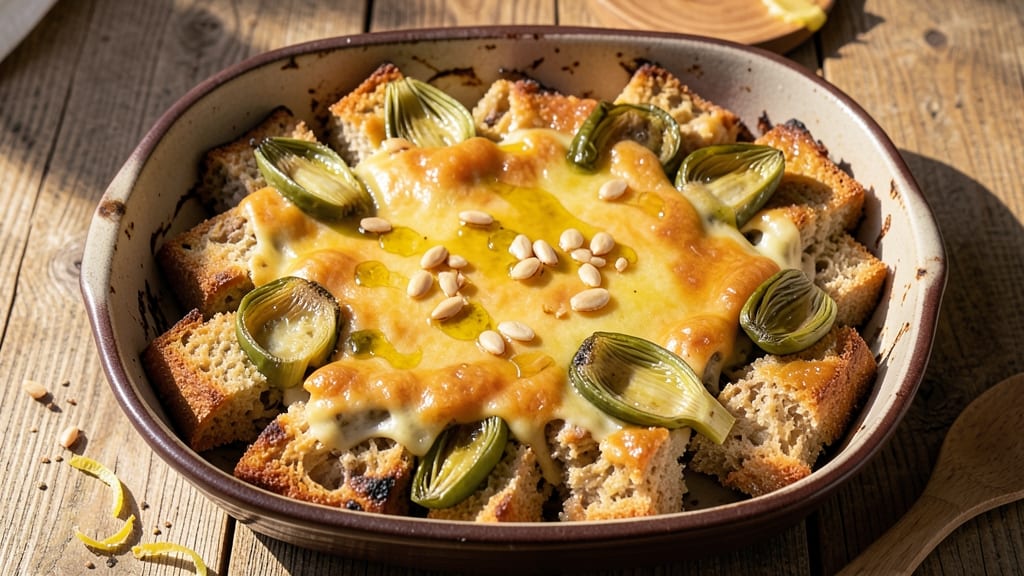
This artichoke bread pudding recipe transforms a simple dessert into a savory masterpiece with herbed artichokes and gooey cheddar. The secret lies in perfectly prepped artichokes—steamed until tender, then folded into a custardy bread mixture that bakes to golden perfection.
Every bite delivers crispy edges, creamy centers, and bursts of artichoke flavor that elevate this classic dish beyond traditional sweetness.
What makes this recipe stand out is the balance of textures: tender bread soaked in rich custard, melty cheddar pulling slightly, and artichokes that stay vibrant yet soft.
The savory twist comes from fresh herbs like thyme and rosemary, which infuse the dish with aromatic depth while keeping the profile sophisticated. Unlike traditional bread pudding, this version skips sugar entirely, relying instead on the natural umami of artichokes and the sharpness of aged cheddar for complexity.
Baking at 350°F for 40-45 minutes ensures a crispy top while keeping the interior custardy and golden. The artichokes are prepped ahead of time—steamed until fork-tender and chopped into bite-sized pieces—so they release their briny sweetness throughout the bake.
This isn’t just dessert; it’s a restaurant-worthy side or light main that pairs beautifully with roasted meats or a crisp green salad.
Once out of the oven, the pudding develops a caramelized crust that cracks slightly, revealing the creamy layers beneath. Serve warm with a sprinkle of flaky salt and extra herbs, or drizzle with a tangy aioli for contrast.
The leftovers reheat perfectly, making this an ideal make-ahead dish for gatherings or a cozy weeknight dinner that feels unexpectedly gourmet.
Ingredients for artichoke bread pudding
Six servings of savory indulgence await with these carefully selected ingredients.
| Ingredient | Amount | Notes |
|---|---|---|
| Stale Sourdough Bread 🍞 | 8 cups | Cubed into 1-inch pieces, crust removed |
| Marinated Artichoke Hearts 🍃 | 1 ½ cups | Steamed, chopped, with marinade |
| Large Eggs 🥚 | 6 whole | Room temperature for even baking |
| Whole Milk 🥛 | 2 cups | Full-fat for creamy texture |
| Heavy Cream 🥛 | 1 cup | 36% fat for richness |
| Sharp Aged Cheddar 🧀 | 2 cups | Shredded, 2-year aged preferred |
| Fresh Thyme Leaves 🌿 | ¼ cup | Finely chopped, stems removed |
| Fresh Rosemary 🌿 | ¼ cup | Needles finely chopped |
| Garlic Cloves 🧄 | 4 cloves | Minced, for depth of flavor |
| Unsalted Butter 🧈 | ½ cup | Cold, cubed for custard |
| Diamond Crystal Kosher Salt 🧂 | 1 ½ tsp | Adjust to taste |
| Ground Black Pepper 🌶️ | ½ tsp | Freshly cracked |
| Extra-Virgin Olive Oil 🫒 | ¼ cup | For bread soaking |
The bread forms the foundation, so sourdough is ideal for its sturdy texture and tangy depth—stale or day-old works best. For artichokes, marinated hearts from a jar save time, but fresh steamed artichokes (halved, trimmed, and steamed 20 minutes) deliver superior texture. Whole Foods or Trader Joe's carry excellent pre-marinated options, but if you're using fresh, look for artichokes with tightly packed leaves and vibrant green color. The cheddar should be aged at least 2 years—Cabot or sharp white cheddar brands work exceptionally well. Fresh herbs are non-negotiable here; dried simply won't provide the aromatic complexity this dish demands.
No sourdough? Brioche or challah work beautifully—their richness complements the savory profile. Substituting canned artichokes? Drain thoroughly and pat dry to prevent a watery custard. For the dairy, half-and-half can replace heavy cream if needed, though the texture will be slightly lighter. The herbs can be swapped—tarragon or sage add interesting variations—but thyme and rosemary are the classic pairings. If you're short on time, pre-minced garlic from a jar works, though freshly minced has superior flavor. For the olive oil, avoid light or refined varieties—stick with extra-virgin for authentic flavor.
Prep the artichokes and bread first—they can sit at room temperature for up to 4 hours before baking. The custard mixture keeps in the fridge for 24 hours, though it's best baked fresh. Once baked, leftovers reheat beautifully in a 350°F oven for 15-20 minutes, covered with foil. For make-ahead gatherings, assemble the pudding in a baking dish, refrigerate overnight, then bake straight from the fridge—this prevents over-browning. Store baked pudding in an airtight container for 3 days in the fridge or 3 months frozen. The flavor actually improves after the first day as components meld together.
Why You'll Love This Recipe
- No Stale Bread Wasted: I swear by this trick—toss in that dense, slightly dry sourdough you’ve been meaning to use, and it soaks up the creamy milk-egg mix like a dream. No crusty bits left behind, just pure, tender pudding.
- Umami Bomb in Every Bite: Between the briny marinated artichokes and the rich, tangy sourdough, this isn’t your basic custard. The heavy cream ties it all together—creamy, salty, and just a little luxurious without trying too hard.
- Weeknight Magic: Throw it together while dinner simmers, pop it in the oven, and forget about it. Twenty minutes later, you’ve got a golden, bubbling dessert that feels like a restaurant finish—no fancy plating required.
- Budget-Friendly Luxury: Eggs, milk, and artichokes on sale? This is the dish to make. It stretches into leftovers that reheat beautifully, and honestly? The second day is even better—crispier edges, deeper flavor, and zero guilt.
Step-by-step instructions for artichoke bread pudding
Transform stale sourdough into a rich, savory bread pudding with bold herb notes and melty cheddar.
Prepare the Bread Base
Preheat your oven to 350°F and grease a 9x13-inch baking dish with the 0.25 cup extra-virgin olive oil. Spread the 8 cups stale sourdough bread (cubed to 1-inch pieces) evenly in the dish, ensuring no gaps. This creates a sturdy foundation that won't fall apart during baking.
In a small bowl, whisk together the 1.5 cups marinated artichoke hearts (chopped), 0.25 cup fresh thyme leaves, 0.25 cup fresh rosemary, and 4 cloves minced garlic. Sprinkle this mixture evenly over the bread cubes, pressing gently to distribute. The marinade from the artichokes adds moisture and depth while the herbs infuse the bread with aromatic complexity.
Make the Custard Mixture
In a large bowl, whisk together the 6 whole large eggs, 2 cups whole milk, and 1 cup heavy cream until just combined—no need to overbeat. The room-temperature eggs will blend smoothly without creating lumps. Gradually whisk in the 2 cups shredded sharp aged cheddar until fully incorporated, ensuring no cheese clumps remain.
In a separate small bowl, combine the 1.5 tsp kosher salt and 0.5 tsp ground black pepper. Sprinkle this evenly over the bread mixture, then pour the custard evenly over the top. The salt enhances the cheddar's sharpness while the pepper adds a subtle warmth that balances the artichokes' briny flavor. Let the mixture rest for 10 minutes—this allows the bread to absorb some of the liquid before baking.
Bake Until Golden and Set
Place the baking dish on the middle rack of your preheated oven and bake for 45-50 minutes. The pudding is done when the top is golden brown and the center jiggles slightly when shaken—it should still have a slight wobble, as it continues setting as it cools. Avoid overbaking, or the custard will become rubbery.
During the last 10 minutes of baking, sprinkle 0.5 cup cold cubed unsalted butter evenly over the top. The butter will melt and create a luscious, golden crust while adding richness. If the top browns too quickly, tent loosely with aluminum foil to prevent over-browning while allowing the center to finish cooking.
Rest and Serve Warm
Remove the pudding from the oven and let it rest for 15 minutes before serving. This resting period allows the custard to fully set and the flavors to meld. The internal temperature should reach 160°F—probe the center to confirm it's just set but still creamy.
Slice into 6 equal portions (as promised in the ingredients) and serve immediately. Each bite should deliver a perfect balance of crispy bread edges, creamy custard, and the bold flavors of artichokes, herbs, and sharp cheddar. For an extra touch, garnish with additional fresh thyme leaves and a sprinkle of flaky sea salt to elevate the presentation.
Pro Tips For Making Artichoke Bread Pudding
- SOAK THE BREAD LONG: Toss your sourdough cubes in the milk-cream mix and let them sit for at least 20 minutes—30 if you’re using thick, dense loaves. I learned this the hard way when my first attempt came out dry; the bread needs time to drink up the liquid and soften properly.
- DRAIN AND PAT DRY: Those marinated artichoke hearts? Drain them well, then blot them with a paper towel to remove excess moisture. Wet artichokes make the pudding soggy, and nobody wants a watery dessert—especially when you’ve put in this much effort.
- BAKE UNTIL GOLDEN: Don’t pull it out at 190°F (88°C). Keep it in until the top is deep golden brown, around 205–210°F (96–99°C)—that’s when the custard sets and the crust gets crisp. I used to rush this, and the center would stay too soft, like a sad, undercooked soufflé.
- ADD A LITTLE YOGURT: Swap 2 tablespoons of the heavy cream for plain Greek yogurt—it makes the pudding richer and prevents a gummy texture. Sounds weird, but it works: the acidity balances the richness, and the protein helps the custard firm up better. (Yes, even if you’re impatient like me.)
Troubleshooting perfect results
Artichokes Too Watery?
If your marinated artichoke hearts release too much liquid into the custard, drain them thoroughly before chopping. Pat them dry with a paper towel to absorb excess moisture. For fresh steamed artichokes, squeeze them gently to remove any remaining water before mixing into the bread.
This prevents a soggy, watery pudding and keeps the texture perfectly creamy. 💧
Bread Not Absorbing Enough?
If your bread feels dry after mixing, let the custard sit over the bread for 20-30 minutes before baking. This gives the bread extra time to soak up the liquid.
Alternatively, add 1-2 tablespoons of warm milk or cream to the custard mixture to help bind everything together. Just don’t overdo it—too much liquid will make the pudding runny. 🥛
Cheese Clumping in Custard?
To avoid cheese lumps, shred your cheddar finely and whisk it into the custard gradually. Use a box grater for even shreds, then pulse in a food processor for a few seconds to break up any clumps.
If you notice lumps while mixing, strain the custard through a fine-mesh sieve before pouring it over the bread. This ensures a silky, smooth texture throughout. 🧀
Top Browning Too Fast?
If the top browns too quickly, tent the baking dish loosely with aluminum foil during the last 15-20 minutes of baking. This traps heat while allowing the center to finish cooking.
For an extra insurance, reduce the oven temperature to 325°F for the final 10 minutes to slow down browning without drying out the pudding. 🔥
Pudding Not Setting Properly?
A rubbery or undercooked center usually means the pudding wasn’t baked long enough. Ensure the internal temperature reaches 160°F—use a thermometer to check the center. If it’s still wobbly after 50 minutes, cover it with foil and bake for another 10 minutes.
Avoid overmixing the custard, as this can create air pockets that prevent proper setting. 🌡️
Artichoke Flavor Too Mild?
Boost the artichoke flavor by adding 1 teaspoon of lemon zest to the custard mixture. The acidity brightens the briny notes of the artichokes. For extra depth, stir in 1 tablespoon of capers or a pinch of smoked paprika while baking.
These additions enhance the savory profile without overpowering the dish. 🌿
Nutrition facts
Frequently asked questions
Can I use fresh artichokes instead of marinated hearts?
Yes! Fresh artichokes work beautifully—just steam them until tender (20-25 minutes), then chop the hearts and squeeze out excess moisture. For best results, marinate the chopped artichokes in 1 tablespoon olive oil, lemon juice, and salt for 30 minutes before using. This enhances their flavor and prevents a watery pudding.
How do I make this recipe vegan?
Replace the eggs with 6 tablespoons flaxseed meal mixed with 18 tablespoons water (let sit 5 minutes to thicken). Use full-fat coconut milk instead of dairy milk and heavy cream, and swap cheddar for vegan sharp cheddar (like Violife). For binding, add 1 teaspoon agar-agar powder to the custard mixture. The texture will be slightly denser but still delicious!
Can I prepare this ahead of time?
Assemble the pudding in the baking dish, cover tightly with plastic wrap, and refrigerate for up to 24 hours. Bake straight from the fridge, adding 5-10 extra minutes to the baking time. For make-ahead gatherings, this method prevents over-browning. Leftovers reheat perfectly in a 350°F oven for 15-20 minutes, covered with foil.
What's the best bread for this recipe?
Sourdough is ideal for its sturdy texture and tangy depth, but brioche, challah, or even French bread work beautifully too. Avoid soft breads like brioche for the base layer—they absorb too much liquid and can make the pudding soggy. For extra richness, try day-old baguette mixed with 1/2 cup cubed sourdough.
Why does my pudding look dry after baking?
Overbaking is the most common cause—remove it when the center jiggles slightly (160°F internal temp). If it still looks dry, try brushing the top with 2 tablespoons warm milk or melted butter before serving. For next time, reduce baking time by 5 minutes and check at 40 minutes. The custard should be creamy, not rubbery.