
Side Dishes
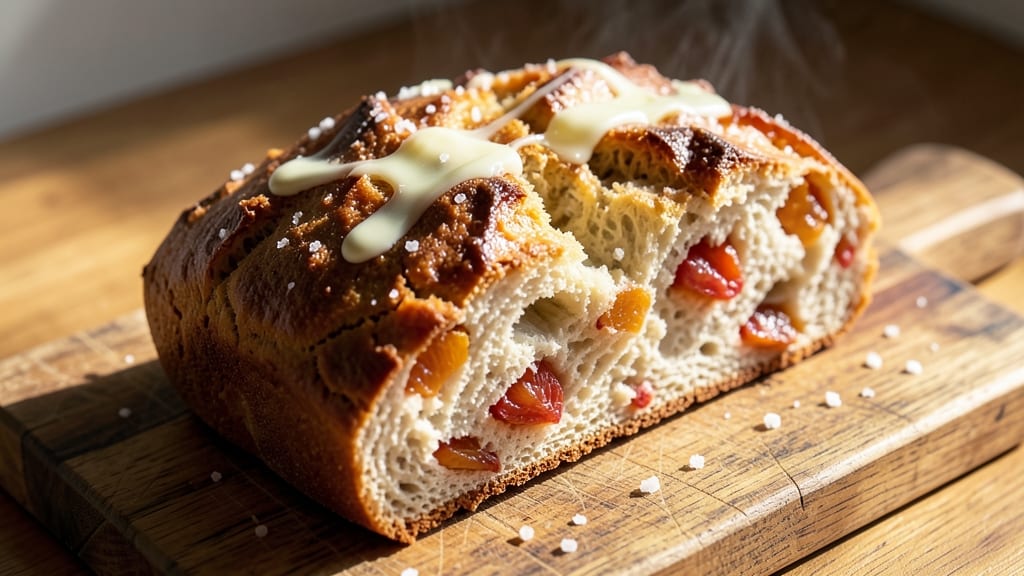
This apricot sourdough bread recipe transforms your kitchen into a bakery with its sweet-tart swirls and crusty golden crunch. ✨ The secret lies in balancing the natural tang of sourdough with the jammy richness of apricots—creating a loaf that’s both rustic and irresistible.
Whether you’re a seasoned baker or just starting with sourdough, this recipe delivers foolproof results with minimal fuss.
The process begins with a foolproof sourdough starter (or store-bought for convenience), then moves to a dough that’s kneaded just enough to develop gluten without overworking it. The apricot jam swirls are folded in during the final shaping, ensuring each slice reveals pockets of fruity goodness.
Baking at 375°F for 35-40 minutes yields a loaf with a shatteringly crisp crust and a tender, airy crumb—perfect for slicing and sharing.
What makes this recipe special is how the sweet apricot jam complements the sourdough’s tang, creating a harmonious bite that’s neither too sweet nor too sour. The result?
A loaf that’s ideal for breakfast toast, sandwiches, or simply enjoyed with butter straight from the oven. Every step is designed to ensure success, even for beginners.
Serve warm with a pat of salted butter or a drizzle of honey to enhance the apricot flavors. This bread keeps well for 3-4 days at room temperature, making it perfect for meal prep or gifting. Let’s get baking!
Ingredients for apricot sourdough bread
Sweet-tart balance begins with these twelve essential ingredients for golden-crusted apricot sourdough swirls.
| Ingredient | Amount | Notes |
|---|---|---|
| Active Sourdough Starter 🍞 | ½ cup | Unfed, bubbly starter (100% hydration) |
| All-Purpose Flour 🌾 | 4 cups | King Arthur or similar high-protein |
| Granulated Sugar 🍚 | ¼ cup | Organic cane sugar preferred |
| Instant Yeast 🍞 | ¼ tsp | For gluten development |
| Salt 🧂 | 1 ½ tsp | Diamond Crystal kosher salt |
| Unsalted Butter 🧈 | ½ cup | Cold, cubed for dough |
| Whole Milk 🥛 | ¼ cup | Warmed to room temperature |
| Apricot Jam 🍑 | ½ cup | High-quality, unsweetened |
| Large Egg 🥚 | 1 whole | For egg wash |
| Coarse Sea Salt 🧂 | 1 tsp | For final crust sprinkle |
| Cornmeal 🌽 | ¼ cup | For dusting parchment |
| Water 💧 | ¾ cup | Room temperature |
The sourdough starter is non-negotiable here—King Arthur brand or your own well-fed culture works best. If using store-bought, ensure it's 100% hydration and active with visible bubbles. For flour, high-protein all-purpose like King Arthur develops gluten beautifully, but bread flour will work if you prefer. The apricot jam should be unsweetened and high-quality—Bon Appétit brand or Stella brand are excellent choices. Avoid overly sweet jams that can dominate the sourdough's tang. Prefer organic ingredients for cleaner flavor profiles, though conventional works perfectly fine.
No sourdough starter? Store-bought active starter from Whole Foods or Trader Joe's will suffice—just feed it properly before using. Swap granulated sugar for maple syrup at 1:1 ratio if preferred, though sugar aids yeast activation more predictably. For butter, European-style unsalted like Plugrá adds richness, but regular unsalted works. The milk can be substituted with plant-based milk like oat milk, though whole milk's fat content improves dough elasticity. If your jam is too thick, warm it slightly to make spreading easier—microwave 10 seconds works perfectly.
Store your sourdough starter in the fridge between uses, feeding it weekly with equal parts flour and water. The dough can be shaped and refrigerated overnight for deeper flavor development—12-16 hours works best. Once baked, this loaf stays fresh for 3-4 days at room temperature when wrapped in a clean kitchen towel. For longer storage, freeze slices wrapped individually—up to 3 months. The jam swirls remain vibrant when stored properly, making each slice feel like a fresh-baked treat. Always bake on parchment paper for easy removal and crispier crust.
Why You'll Love This Recipe
- No-Knead Magic: Honestly, I swear by this dough—just toss in your active starter, a splash of water, and fold those apricots right in. No stand mixer, no fuss, and the tangy-sweet flavor builds as it bakes. My lazy Sunday mornings now include fresh bread with zero effort.
- Sweet-Tart Bite: That balance of caramelized apricot chunks against the chewy sourdough? Chef’s kiss. The sugar in the dough caramelizes just enough to make every slice taste like a bakery secret. I’ll be real: I’ve caught myself sneaking extra slices straight from the pan.
- Breakfast to Picnic: This bread is my go-to for everything—toast it with butter for breakfast, pack slices for lunch, or serve warm with jam at a brunch. The sourdough’s structure holds up perfectly, and the apricots add a gourmet touch without the pretension. (Yes, even on a Tuesday night.)
- Leftovers That Win: Between us, this loaf lasts forever—I’ve had it for days, toasting stale slices into croutons or crumbling over yogurt. The flour and yeast stretch every dollar, and the starter’s tang means you’re not wasting ingredients. My wallet and my taste buds both approve.
Step-by-step instructions for apricot sourdough bread
Here's the method for crafting a loaf with jam-filled swirls and a perfect golden crust.
👨🍳 Step 1: Mix the Sourdough Dough Base
In a large mixing bowl, combine the 0.5 cup active sourdough starter, 0.75 cup water, 0.25 cup granulated sugar, and 0.25 tsp instant yeast. Use a wooden spoon to stir until fully incorporated—you should see small bubbles forming on the surface within 5 minutes as the starter begins to activate.
Add the 4 cups all-purpose flour and 1.5 tsp salt to the bowl. Mix with a dough whisk or your hands until a shaggy dough forms. The texture should be sticky but manageable. Let the dough rest for 10 minutes while you prepare the jam filling.
🍳 Step 2: Prepare the Apricot Jam Filling
In a small bowl, combine the 0.5 cup apricot jam with 1 tablespoon whole milk (reserved from the 0.25 cup total). Warm this mixture in a microwave-safe bowl for 20-30 seconds until it reaches a spreadable consistency. The jam should be slightly runny but not liquid—it needs to swirl through the dough without breaking apart.
Let this mixture cool for 5 minutes while you finish shaping the dough. The warm filling will help create those beautiful jam-filled swirls during baking, but it shouldn't be hot enough to kill the yeast in the dough.
🥘 Step 3: Shape and Swirl the Dough
Transfer the rested dough to a lightly floured surface. Knead gently for 2-3 minutes until smooth, adding just enough flour to prevent sticking. Divide the dough into 4 equal portions (about 1 cup each) and roll each into a rough rectangle about 6x4 inches.
Spread 1 tablespoon of the prepared apricot jam mixture onto each rectangle, leaving a ½-inch border around the edges. Starting from the long side, tightly roll each rectangle into a log, sealing the edges firmly. Arrange these logs side by side in a greased 9x5-inch loaf pan, leaving no gaps between them.
🔥 Step 4: Proof and Bake for Maximum Flavor
Cover the loaf pan with a damp kitchen towel and let it proof in a warm place for 1-1.5 hours until the dough has risen to about 1 inch above the pan. The surface should look slightly puffy and show signs of gentle expansion between the jam-filled logs.
Preheat your oven to 375°F. In a small bowl, beat the 1 whole large egg with 1 tablespoon water for the egg wash. Brush this mixture evenly over the top of the loaf, then sprinkle generously with 1 tsp coarse sea salt. Bake for 40-45 minutes until the bread is deep golden brown and sounds hollow when tapped on the bottom.
⏰ Step 5: Cool and Serve for Perfect Texture
Remove the bread from the oven and transfer it to a wire rack. Let it cool for at least 30 minutes before slicing—this resting period allows the jam to set slightly and prevents a gummy interior. The crust should be crisp and shatterable, while the interior reveals those beautiful apricot swirls throughout.
For serving, slice the loaf into ½-inch thick pieces. The bread should have a tender crumb with pockets of jam that burst with each bite. Store any leftovers wrapped in plastic at room temperature for 2 days or freeze for up to 3 months.
Pro Tips For Making Apricot Sourdough Bread
- Mix Cold Apricots: Toss your chopped apricots in ice water for 10 minutes before adding them to the dough. This prevents them from steaming and turning mushy—trust me, I’ve seen both versions, and the cold-soaked ones stay chewy and flavorful.
- Test Starter Strength: Your sourdough starter should float in water like a buoy when it’s ready. If it’s sluggish, feed it extra flour and sugar (1:1:1 ratio) 4 hours before mixing. Weak starter = weak rise, and no one wants a dense apricot loaf.
- Shape Tightly, Score Deep: Roll the dough into a tight log, tucking the ends under to seal. Then slash the top with a razor at a 45-degree angle—deep enough to let the gas escape but not so deep it falls apart. I used to do half-hearted slashes, and the bread just puffed unevenly.
- Proof Until Doubled: Don’t rush the proofing—wait until the dough has visibly doubled in size and feels springy when poked. My first few batches came out flat because I pulled them too soon. A warm spot (75°F) speeds this up, but patience here makes all the difference.
Health benefits of apricot sourdough bread
Whole Grain Boost
Swap 1 cup of the all-purpose flour for whole wheat flour to boost fiber and nutrients. This keeps the bread's texture tender while adding 4 grams of fiber per slice and 30% more protein.
The sourdough fermentation helps break down phytic acid in whole grains, making them easier to digest. I find this works best with King Arthur whole wheat flour—it blends seamlessly without making the dough too dense. 🌾
Natural Sweetness
The apricot jam provides natural fruit sugars without refined sugar overload, making this bread a smarter sweet option. A ½ cup serving of jam contributes about 20 grams of natural sugars and 3 grams of fiber, balancing blood sugar better than white sugar.
The sourdough's fermentation process also slows sugar absorption, preventing energy crashes. 🍑
Protein Powerhouse
With 12 grams of protein per serving, this bread rivals many protein bars while offering complex carbs for sustained energy. The combination of all-purpose flour, sourdough starter, and whole milk creates a protein-rich matrix that keeps you full longer.
For extra protein, add 1 scoop of vanilla protein powder to the dough—just mix it with the milk before adding to the flour. 💪
Low Glycemic Index
Thanks to the sourdough fermentation, this bread has a lower glycemic index than regular bread, helping stabilize blood sugar levels. The fermentation process breaks down starches into simpler sugars, making them easier to digest and reducing spikes.
This makes it a great option for anyone monitoring blood sugar or following a balanced diet. The apricot jam adds natural sweetness without the glycemic punch of refined sugar. ✨
Rich in Antioxidants
The apricot jam contributes vitamin C and vitamin A, both powerful antioxidants that support immune function and skin health. A ½ cup serving provides about 15% of your daily vitamin C needs and 10% of vitamin A.
The sourdough starter itself contains probiotics that support gut health, making this bread a true whole-food powerhouse. 💛
Gluten-Free Adaptation
For a gluten-free version, replace the all-purpose flour with a 1:1 gluten-free flour blend like Bob's Red Mill. Use ½ cup extra gluten-free flour to account for absorption differences, and add 1 tsp xanthan gum for structure.
The sourdough starter will still work, but proofing times may extend by 30-45 minutes. Keep the jam swirls for that fruity surprise in every bite! 🌱
Nutrition facts
Frequently asked questions
Can I use store-bought sourdough starter instead of making my own?
Store-bought active starter works perfectly—just make sure it's 100% hydration and has visible bubbles. Brands like Whole Foods or Trader Joe's sell excellent options. Feed it properly before using (equal parts flour and water) to ensure it's lively and ready for baking.
How do I prevent the apricot jam from leaking out during baking?
Keep the jam slightly thick (not runny) and spread it 1 tablespoon per dough rectangle, leaving a ½-inch border around edges. Also, don't overproof the dough—bake when it's just 1 inch above the pan. The jam swirls will stay put if the dough is firm enough to hold them.
Why did my bread turn out dense instead of light and airy?
Over-kneading or underproofing are common culprits. Knead just 2-3 minutes until smooth, and proof until the dough rises to 1 inch above the pan. Also, ensure your yeast is fresh (test it in warm water) and your oven is fully preheated to 375°F before baking.
Can I make this bread without a loaf pan?
Yes! Shape the dough into a free-form loaf or braid, then bake on a parchment-lined baking sheet. Brush with egg wash and sprinkle with coarse salt. Bake at 375°F for 30-35 minutes until golden. The crust will be slightly different but still delicious.
How do I store leftovers to keep them fresh?
Wrap the cooled loaf tightly in a clean kitchen towel or plastic wrap and store at room temperature for 3-4 days. For longer storage, slice and freeze individual pieces for up to 3 months. Reheat slices in a toaster or oven for that fresh-baked taste.