
Side Dishes
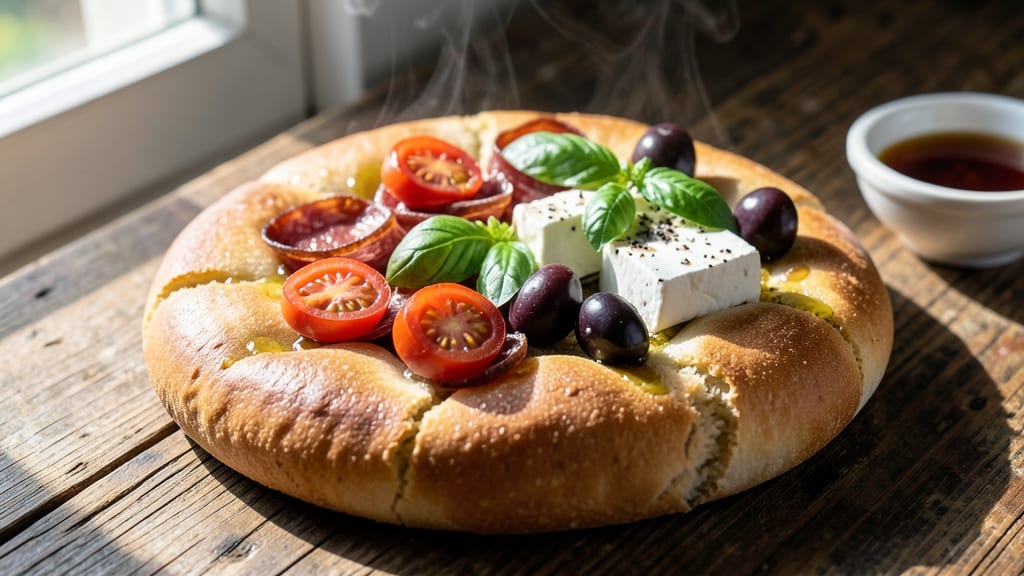
This antipasto bread recipe transforms your dinner table into an Italian feast with its savory olive and herb-stuffed crust. 🌟 The golden, crispy exterior hides a surprise filling of briny olives, fragrant rosemary, and garlic-infused olive oil—perfect for soaking up antipasto spreads or pairing with cured meats.
I developed this recipe after craving a bread that could stand up to bold Italian flavors without overpowering them, and it’s become a staple in my kitchen for its versatility and restaurant-quality taste.
The beauty of this recipe lies in its simplicity: just a few high-quality ingredients come together to create a bread with crispy edges and a chewy interior, all thanks to a foolproof dough technique.
The stuffed crust isn’t just decorative—it’s packed with flavor, ensuring every bite delivers a burst of Mediterranean goodness. Whether you’re hosting a dinner party or simply craving a satisfying side, this bread elevates any meal with minimal effort.
What makes this antipasto bread truly special is its ability to complement a variety of dishes. Serve it warm alongside bruschetta, prosciutto, or a charcuterie board, or enjoy it on its own as a flavorful snack.
The dough proofing and baking process is straightforward, but the result is anything but basic—think of it as a foolproof way to bring Italian bistro vibes to your home. Ready in under 2 hours, it’s perfect for meal prep or last-minute gatherings.
The secret to achieving that perfect crust lies in the balance of olive oil and herbs, which infuse the dough with aromatic depth while keeping it tender. Once baked, the bread’s crispy exterior contrasts beautifully with its soft, flavorful interior, making it a showstopper on any table.
Here’s how to make it—your taste buds (and dinner guests) will thank you.
Ingredients for antipasto bread
Four cups flour, a splash of olive oil, and Mediterranean magic for your antipasto bread feast.
| Ingredient | Amount | Notes |
|---|---|---|
| All-Purpose Flour 🌾 | 4 cups | Plus 2 tbsp for dusting |
| Instant Yeast 🍞 | 1 tbsp | Active dry works too |
| Granulated Sugar 🍚 | 1 tbsp | For dough activation |
| Fine Sea Salt 🧂 | 1 ½ tsp | Diamond Crystal preferred |
| Extra-Virgin Olive Oil 🫒 | ½ cup | High-quality for flavor |
| Warm Water 💧 | 1 ¼ cups | 110°F for optimal yeast |
| Kalamata Olives 🫒 | ½ cup | Pitted and chopped |
| Fresh Rosemary 🌿 | ¼ cup | Finely chopped stems |
| Garlic Cloves 🧄 | 3 cloves | Minced for infusion |
| Coarse Sea Salt 🧂 | 1 tbsp | For crust sprinkle |
| Black Peppercorns 🌶️ | 1 tsp | Crushed for filling |
| Fresh Basil Leaves 🌿 | ⅛ cup | Chopped for herb boost |
The flour is your foundation—King Arthur or Caputo Tipo 00 if you want that Italian touch, but all-purpose works beautifully. The yeast needs to be fresh and active, so toss it in warm water with sugar and wait 5 minutes for foam before mixing. For the stuffed crust, Kalamata olives from Trader Joe's or a specialty store bring that briny depth—none of that canned green olive nonsense. Fresh rosemary and basil are non-negotiable here; dried just won't cut it. If you're feeling fancy, infuse the olive oil with garlic by heating it gently with the cloves for 2 minutes before cooling—trust me, it's worth the extra minute.
No Kalamata olives? Green olives or sun-dried tomatoes work in a pinch, but chop them extra fine. Short on rosemary? Thyme or oregano at half the amount keeps the Mediterranean vibe. For the garlic infusion, if you forget, just mince 1 extra clove and fold it into the crust mixture. The coarse sea salt should be Maldon or Jacobsen if you've got it—those big flakes melt dramatically. Prefer a different herb? Sage or marjoram both play well in this ensemble. And if you're making this ahead, prep the crust filling first and store it separately until ready to shape.
This dough keeps beautifully for 3 days in the fridge, wrapped tightly in plastic—just let it come to room temp before shaping. The stuffed crust filling can be prepped 2 days ahead and stored in an airtight container. For best results, bake immediately after shaping, but you can proof overnight in the fridge if you're prepping ahead. The bread reheats beautifully—wrap in foil and warm in a 350°F oven for 10 minutes. Freeze uncut loaves for up to 3 months—just thaw overnight on the counter before reheating.
Why You'll Love This Recipe
- No-Knead Magic: I swear by this dough—just mix, let it rise, and boom. No stand mixer, no arm workout, just a bowl and 20 minutes of hands-off time while you sip your coffee.
- Olive Oil Luxury: That first pull-apart bite? Pure Mediterranean comfort. The oil infuses the dough so deeply the crust stays tender, and the salt cuts through the richness like a perfect balance.
- Party in a Loaf: Slice it warm for bruschetta, toast it for dips, or pack it for lunch—this bread does everything. Honestly, I’ve fed a crowd with just this, some cured meats, and a bowl of olives.
- Budget Bread Wins: Five ingredients, zero waste. The yeast stretches every penny, and a single batch lasts my family for days. (Yes, even on a Tuesday night.)
Step-by-step instructions for antipasto bread with stuffed crust
Here's how to craft this Mediterranean-inspired bread with a flavor-packed crust and tender interior.
👨🍳 Step 1: Mix the Dough and Let It Rise
In a large bowl, whisk together the 4 cups all-purpose flour, 1 tbsp instant yeast, 1 tbsp granulated sugar, and 1.5 tsp fine sea salt. Make a well in the center and pour in the 0.5 cup extra-virgin olive oil and 1.25 cups warm water (around 110°F). Mix with a wooden spoon until combined, then turn out onto a lightly floured surface and knead for 8-10 minutes until smooth and elastic.
Place the dough in a lightly oiled bowl, cover with a damp towel, and let rise in a warm place for 1-2 hours or until doubled in size. This first rise develops the gluten structure and creates that perfect airy texture we want. I like to place my bowl in a slightly warm oven (70°F) to help it rise faster if my kitchen is cool.
👨🍳 Step 2: Prepare the Stuffing Mixture
While the dough rises, make the herb and olive filling. In a food processor, pulse the 0.5 cup kalamata olives, 0.25 cup fresh rosemary, 3 minced garlic cloves, 1 tsp crushed black peppercorns, and 0.125 cup chopped fresh basil leaves until finely chopped but not pasty. You want texture here—this will be our flavor bomb in the crust.
Transfer the mixture to a small bowl and stir in 1 tbsp coarse sea salt. Taste it—this is where all the Mediterranean flavors come together. The salt enhances the olives' brininess while the herbs add freshness. If you're feeling fancy, you can add a pinch of red pepper flakes for a subtle kick.
🥘 Step 3: Shape and Stuff the Dough
Once the dough has risen, punch it down to release air and divide it into two equal pieces. Roll each piece into a 12-inch circle on a floured surface, about ¼-inch thick. Sprinkle half of the herb mixture evenly over one circle, leaving a ½-inch border around the edges. Top with the second circle and press gently to seal the edges.
Roll the stuffed dough into a 16x10-inch rectangle (about ½-inch thick). Fold the long sides inward to form a 10-inch square, then fold the top and bottom edges inward to create a sealed packet. This creates that beautiful stuffed crust effect. Place the shaped dough on a parchment-lined baking sheet and let it rise for another 30-45 minutes until puffy.
🔥 Step 4: Bake to Golden Perfection
Preheat your oven to 375°F. Brush the top of the bread with a little water to help it brown beautifully. Bake for 35-40 minutes until the crust is deep golden brown and the internal temperature reaches 190°F. The bread should sound hollow when tapped on the bottom.
For that perfect crust, I recommend baking on the middle rack. Rotate the pan halfway through if your oven has hot spots. The aroma that fills your kitchen as it bakes is worth the wait—warm, herby, and just slightly salty. Let it cool for 10 minutes before slicing to let the flavors settle.
🍽️ Step 5: Serve Warm with Olive Oil
Slice the bread into 1-inch thick pieces and serve warm. Drizzle generously with high-quality extra-virgin olive oil and sprinkle with additional coarse sea salt. Each bite should deliver that perfect balance of crispy crust packed with herby, briny olives and tender, airy interior.
This bread is fantastic on its own, but it's also perfect for soaking up soups, pairing with charcuterie boards, or serving alongside pasta dishes. The flavors only get better as it cools slightly, so don't be afraid to make extra—it keeps well wrapped at room temperature for 2 days or frozen for up to 3 months.
Pro Tips For Making Antipasto Bread
- Mix Oil Last: Add the olive oil after dissolving the yeast in warm water—this keeps your dough from getting gummy. I learned this the hard way when my first batch turned into a sticky mess that wouldn’t hold shape.
- Knead Just Enough: Stop when the dough springs back slowly (not instantly) when poked—overworking it makes antipasto bread tough. My grandmother swore by this, and she was right: less effort, better texture.
- Salt the Flour: Sprinkle the sea salt directly into the flour before mixing—it distributes evenly and cuts down on clumps. I used to add it later, and half the time, I’d forget or miss spots.
- Let It Rise Twice: First rise (1 hour) gets the yeast going; second rise (30-60 minutes) develops flavor. Skip the second, and your bread will taste flat—like you’re missing half the party. (Yes, even if you’re impatient like me.)
Dietary considerations for this antipasto bread
Gluten-Free Adaptation
To make this antipasto bread gluten-free, replace the 4 cups all-purpose flour with a 1:1 gluten-free flour blend like Bob's Red Mill or King Arthur. Add 1 tsp xanthan gum to improve elasticity, as gluten-free doughs lack natural structure.
For better texture, use ½ cup almond flour mixed with 3½ cups gluten-free flour—this adds richness and helps bind the dough. 💫
Dairy-Free Options
This recipe is naturally dairy-free, but if you're using store-bought yeast, check for dairy additives. For extra flavor without cheese, add 1 tbsp nutritional yeast to the dough—it adds a cheesy, umami depth.
The olive oil and herbs already provide plenty of flavor, so no substitutions are needed in the crust filling.
Low-Carb Version
For a lower-carb approach, cut the flour to 3 cups and add ½ cup ground flaxseed or almond flour to the dough. Reduce the sugar to ½ tbsp and use 1 tbsp erythritol if you prefer.
The stuffed crust remains the same, but the bread will be denser—bake at 350°F for 40-45 minutes to ensure full doneness.
Nut-Free Considerations
If nut allergies are a concern, stick to the original recipe with all-purpose flour and avoid almond flour substitutions. The crust filling is already nut-free, but double-check olive brands for cross-contamination warnings. For extra crunch, use toasted sunflower seeds instead of nuts in the crust mixture.
Allergen-Friendly Tips
For a completely allergen-free version, ensure all ingredients—especially olives and herbs—are certified free of top allergens. Use certified gluten-free oats if adding to the dough for texture. Always check labels on yeast, salt, and olive oil for hidden allergens like soy or dairy.
Keep the crust filling simple with just olives, herbs, and salt for maximum safety. ✨
Nutrition facts
Frequently asked questions
Can I make this antipasto bread without a food processor?
For the herb mixture, simply chop the 0.5 cup kalamata olives, 0.25 cup rosemary, 3 garlic cloves, 1 tsp black peppercorns, and 0.125 cup basil by hand with a sharp knife. Use a rock salt or mortar and pestle to crush the peppercorns if needed. The texture will be slightly chunkier but still delicious!
How do I store leftover antipasto bread?
Wrap cooled slices tightly in plastic wrap or aluminum foil and store at room temperature for up to 2 days. For longer storage, freeze uncut loaves for 3 months—thaw overnight on the counter before reheating. To refresh stale bread, warm in a 350°F oven for 5-10 minutes or toast in a skillet with olive oil for crispiness.
What can I substitute if I don't have Kalamata olives?
Try green olives or sun-dried tomatoes (chopped finely) for a similar briny flavor. For a nutty twist, use ¼ cup chopped sunflower seeds or sesame seeds instead. If you prefer a cheese variation, sprinkle ¼ cup grated Parmesan into the crust mixture for an umami kick. Just adjust the salt accordingly!
Why did my bread turn out dense instead of light?
Over-kneading or underproofing often causes dense bread. Knead only until smooth (8-10 minutes), and ensure your yeast is active (test in warm water with sugar—it should foam in 5 minutes). Also, check your oven temperature—if it's too hot, the bread may bake too quickly, trapping steam. For extra lightness, let the dough rise in a warm spot (70°F) until doubled.
Can I make this bread in a Dutch oven?
Yes! Shape the dough into a round loaf and place it in a greased Dutch oven. Bake at 375°F for 30-35 minutes, then remove the lid and bake another 10-15 minutes until golden. The Dutch oven creates steam for a crispier crust and chewier interior. For the stuffed crust version, flatten the dough into a rectangle before folding and shaping.