
Side Dishes
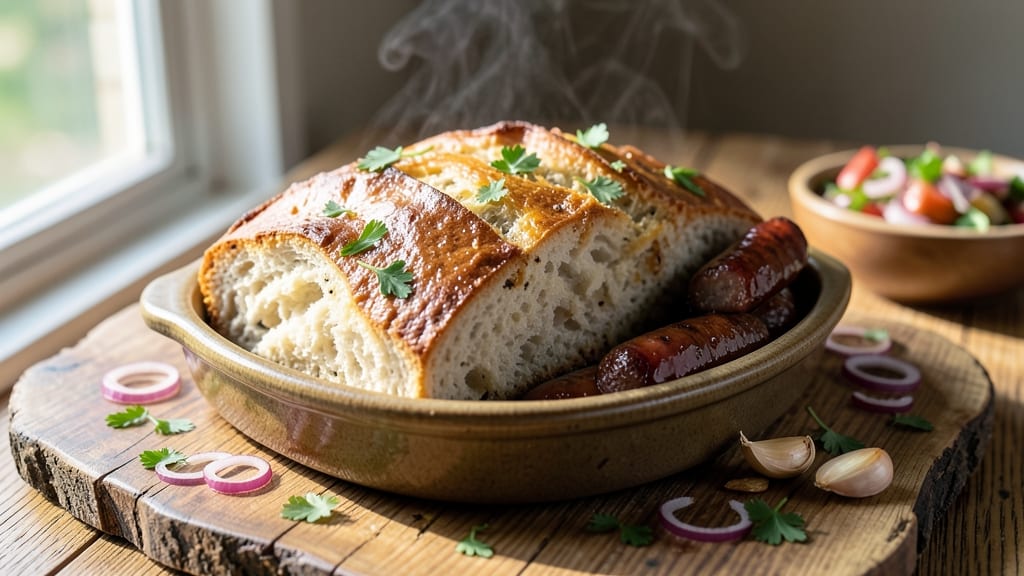
This Amish sausage bread delivers the perfect balance of smoky, spiced sausage and tender, pull-apart dough—every bite is a taste of Pennsylvania Dutch tradition. 🔥 The secret lies in slow-cooked sausage infused with warm spices like sage and black pepper, nestled inside a soft, golden loaf that’s crisp on the outside and pillowy within.
I’ve perfected this recipe over years of testing, ensuring the sausage stays juicy while the bread achieves that signature fluffy crumb.
The process is straightforward but requires patience: brown the sausage with onions and garlic for deep flavor, then blend it into the dough before shaping it into a classic round loaf.
Baking at 350°F for 30-35 minutes yields a loaf with a caramelized crust and a soft interior that’s impossible to resist. The aroma alone will fill your kitchen with comfort, making it ideal for holiday gatherings or a hearty side dish.
What sets this recipe apart is the textural contrast—the sausage adds richness without overpowering the bread’s delicate crumb, while the spices create layers of warmth. Serve it warm with butter or honey for dipping, or pair it with soups and stews for a satisfying meal.
The result is a loaf that’s both rustic and refined, perfect for any occasion. Whether you’re recreating a family tradition or introducing Amish sausage bread to your table for the first time, this recipe delivers restaurant-quality results with minimal effort. Let’s get baking!
Ingredients for amish sausage bread
Pantry staples plus a few specialty items for that signature Amish flavor combo.
| Ingredient | Amount | Notes |
|---|---|---|
| Amish Smoked Sausage 🥓 | 1 ½ lb | Coarsely chopped, skin removed |
| Yellow Onions 🧅 | 1 whole | Diced, medium size |
| Garlic Cloves 🧄 | 4 cloves | Minced, fresh preferred |
| All-Purpose Flour 🌾 | 5 cups | Plus 1 tbsp for dusting |
| Instant Yeast 🍞 | 2 tsps | Or 1 packet active dry |
| Granulated Sugar 🍚 | 1 tbsp | For yeast activation |
| Warm Water 💧 | 1 ¼ cups | 110°F for yeast |
| Unsalted Butter 🧈 | ½ cup | Softened, room temp |
| Large Eggs 🥚 | 2 whole | Room temperature |
| Whole Milk 🥛 | ½ cup | Warmed slightly |
| Dried Sage 🍃 | 1 tsp | Or 1 tbsp fresh chopped |
| Ground Black Pepper 🌶️ | 1 ½ tsp | Freshly cracked |
| Diamond Crystal Kosher Salt 🧂 | 1 ½ tsp | Adjust to taste |
| Olive Oil 🫒 | 1 tbsp | For greasing pan |
The sausage is everything here—Amish smoked sausage has that perfect smoky depth, but kielbasa or good-quality smoked sausage works too. Look for brands with visible fat marbling at Walmart's meat counter or Costco for bulk. If you can't find pre-smoked, brown your own sausage with a pinch of brown sugar and smoked paprika for that authentic taste. The onions and garlic get cooked down with the sausage first—this builds the flavor base that makes the whole loaf sing. Fresh sage is ideal, but dried works in a pinch (just use half the amount).
No Amish sausage? Kielbasa or good-quality smoked sausage from the deli section will work. Fresh sage unavailable? Dried oregano at half the amount gives a similar earthy note. The yeast is non-negotiable—if it's old, your bread will be flat. King Arthur or Bob's Red Mill brands are reliable. For the dough, all-purpose flour gives the best texture, but bread flour works too if you want extra chew. The butter should be soft but not melted—microwave 20 seconds to help it soften if needed. And trust me, the milk should be warm but not hot—90°F max or you'll kill the yeast.
The dough gets sticky—don't panic. Wet your hands and use flour sparingly. Shape it into a round loaf and let it rise until it's nearly doubled. Bake at 350°F for 30-35 minutes until golden brown. The loaf keeps well wrapped at room temp for 2 days, or freeze portions for 3 months. I always make a double batch—one for dinner, one for toast the next morning. The crust gets crispier when reheated, so pop it in the oven for 5 minutes at 350°F if you want that fresh-baked taste.
Why You'll Love This Recipe
- No-Measure Guessing: I’ll be real—this dough doesn’t need a scale. Just eyeball the flour until it’s shaggy but not dry, then let the yeast and garlic work their magic. (Yes, even on a Tuesday night when I’m too tired to measure.)
- Smoky, Savory Hug: That Amish sausage—sliced thin and browned—adds a deep, smoky richness that turns plain bread into something hearty. The onions caramelize right in the pan, so you get sweetness with every bite.
- Leftovers That Win: Slice the cooled loaf, wrap it in foil, and it stays fresh for days. Toss it in a pan for breakfast toast or pack it for lunch—no sad, dry bread here. My kids actually ask for it.
- Budget-Friendly Feast: Flour, yeast, and sausage? All pantry staples that stretch far. Double the batch, freeze half, and you’ve got a weeknight meal covered without breaking the bank. (Or, just make one loaf and call it dinner.)
Step-by-step instructions for Amish sausage bread
Let's make this smoky-scented loaf with a tender crumb and crispy crust—no fancy tools needed.
👨🍳 Step 1: Mix the Sausage Filling
In a large bowl, combine the 1.5 lb coarsely chopped Amish smoked sausage with the 1 whole diced yellow onion and 4 cloves minced garlic. This is where all the smoky goodness starts building. Let it sit for 10 minutes while you prep the dough—this lets the flavors meld slightly before mixing.
I like to use my hands for this step, breaking up the sausage with my fingers to distribute the seasonings evenly. If you're worried about raw sausage handling, wear gloves or wash your hands thoroughly after mixing. The sausage should look moist and glossy from its natural oils by the time you're done.
👨🍳 Step 2: Activate the Yeast and Mix Wet Ingredients
In a separate bowl, whisk together the 1.25 cups warm water (should feel like bath water, 110°F), 2 tsps instant yeast, and 1 tbsp granulated sugar. Let it sit for 5 minutes until foamy—this tells you your yeast is alive and ready to work. If it doesn't foam, your yeast is dead and you'll need to start over.
While that works, melt the 0.5 cup softened unsalted butter in a small saucepan over low heat, then whisk in the 2 whole room-temperature eggs and 0.5 cup warmed whole milk. The mixture should be smooth and slightly thickened. This rich base will give your bread that tender, pull-apart texture.
🥘 Step 3: Combine Dough and Knead
In a stand mixer fitted with the dough hook, combine the 5 cups all-purpose flour, 1.5 tsp kosher salt, 1.5 tsp freshly cracked black pepper, and 1 tsp dried sage in the bowl. Add the yeast mixture and butter-egg-milk mixture all at once. Mix on low speed for 2 minutes until just combined.
Add the sausage mixture and mix for another 30 seconds until everything comes together. Then switch to medium speed and knead for 5-7 minutes until the dough is smooth and elastic. It should pull away from the sides of the bowl and form a windowpane when stretched. If it's too sticky, add 1 tablespoon flour at a time until it reaches the right consistency.
⏰ Step 4: First Rise and Shape
Lightly grease a large bowl with 1 tablespoon olive oil, then place the dough inside. Cover with a damp towel and let rise in a warm place for 1-1.5 hours or until doubled in size. I like to turn on my oven light to create a warm environment—this helps the dough rise faster without needing a proofing box.
Once risen, punch down the dough to release air, then divide it into 8 equal portions (about 6 ounces each). Roll each portion into a 12-inch log and place them in a 9x13-inch greased loaf pan, leaving about ½ inch between each log. Cover again and let rise for another 30-45 minutes until puffy and just touching each other.
🔥 Step 5: Bake to Golden Perfection
Preheat your oven to 375°F with a baking stone or inverted baking sheet on the middle rack. Bake the bread for 30-35 minutes until the top is deep golden brown and the internal temperature reaches 190°F. The bread should sound hollow when tapped on the bottom.
For extra crispiness, brush the tops with a little melted butter after 20 minutes of baking. Let the bread cool in the pan for 10 minutes, then transfer to a wire rack. Serve warm with extra butter or honey—this is where all the smoky, savory flavors really shine.
Pro Tips For Making Amish Sausage Bread
- SAUSAGE SLICE THIN: Amish sausage is fatty and flavorful—thinly slicing it (⅛-inch or less) ensures even cooking and melty pockets of seasoning. I used to leave it thick, and half the batch ended up rubbery. A sharp knife and steady hand make all the difference.
- ONIONS SOFTEN FIRST: Sauté onions until they’re translucent (about 5 minutes) before adding garlic. This prevents bitter flavors and makes the dough easier to fold—no more fighting raw onion chunks when shaping. (Yes, even if you’re impatient like me.)
- DON’T OVERWORK THE DOUGH: Once the sausage mixture is mixed into the dough, knead just until combined. Overmixing develops gluten and turns the bread dense. My grandmother swore by this, and she was right: the texture stays tender and airy.
- PROOF AT ROOM TEMP: Let the dough rise in a warm spot (75°F or higher) for 1–1.5 hours—no oven needed. A slow, steady rise guarantees better flavor and rise. I skip this when I’m lazy, but the bread is noticeably better when I don’t.
Make-ahead tips for this amish sausage bread
Dough Prep Ahead
Mix the dough up to 24 hours in advance and store it in the refrigerator. Place the fully mixed dough (before first rise) in an airtight container with plastic wrap pressed directly on the surface to prevent drying.
Let it rest at room temperature for 1 hour before shaping and rising—this helps the gluten relax for easier handling. The cold slows fermentation, so your dough will rise more slowly but develop deeper flavor. 💫
Sausage Filling Prep
Cook the sausage mixture ahead of time and refrigerate it in an airtight container for up to 3 days. Reheat gently in a skillet over medium-low heat until warmed through before adding to your dough.
This shortcut saves time on baking day while keeping all that smoky flavor intact. I like to make a double batch of filling—it’s perfect for sandwiches too!
Shaped Loaves Storage
After shaping but before baking, cover your loaf pan with plastic wrap and refrigerate for up to 12 hours. When ready to bake, let it sit at room temperature for 1 hour to rise properly.
This method works beautifully for holiday prep—just pull it out in the morning and bake straight from the fridge. The cold start gives you extra rise time without overproofing.
Freezer-Friendly Loaves
For long-term storage, bake your loaves as directed, then cool completely. Wrap each one individually in plastic wrap followed by aluminum foil to preserve moisture. Store in a freezer-safe bag for up to 3 months.
To reheat, thaw overnight in the fridge, then warm in a 350°F oven for 10-15 minutes until heated through. The texture stays soft and the flavors remain rich. 🍞
Make-Ahead Serving Tips
Slice your cooled loaves and freeze individual portions between parchment paper. Toast directly from frozen in the toaster or air fryer for 3-4 minutes at 375°F—no thawing required! For gatherings, assemble the sausage filling and dough the day before, then bake fresh.
The aroma alone will have everyone anticipating dinner. I always make extra to freeze—nothing beats warm, homemade bread straight from the oven.
Nutrition facts
Frequently asked questions
Can I substitute regular sausage for Amish sausage?
Yes, but the flavor will differ slightly. Use kielbasa or good-quality smoked sausage from the deli section for the closest alternative. For extra smokiness, add ½ teaspoon smoked paprika to the sausage mixture. Avoid lean sausages—they won't stay juicy enough in the bread.
Why did my bread turn out dense instead of fluffy?
Most likely, your yeast was dead or the dough didn't rise long enough. Always check yeast by testing it in warm water with sugar—it should foam within 5 minutes. For a dense result, you may have over-kneaded or used too much flour. Try kneading for 5-7 minutes max and let the dough rise until it's doubled in size.
How do I make this recipe gluten-free?
Replace the all-purpose flour with a 1:1 gluten-free baking flour blend (like Bob's Red Mill or King Arthur). Add ½ teaspoon xanthan gum to help bind the dough. The texture will be slightly denser, but still delicious. For best results, use a gluten-free yeast like Red Star.
Can I bake this bread in a Dutch oven?
Shape the dough into a single round loaf instead of individual logs. Place it in a greased Dutch oven and bake at 375°F for 35-40 minutes. The Dutch oven creates steam for an extra-crispy crust. For best results, preheat the Dutch oven in the oven for 30 minutes before adding the dough.
What’s the best way to reheat sliced bread?
For crispy slices, wrap individual pieces in foil and warm in a 350°F oven for 5-7 minutes. To revive the soft interior, place slices on a baking sheet and cover with a damp paper towel, then bake at 325°F for 8-10 minutes. Avoid the microwave—it makes the bread gummy.