Side Dishes
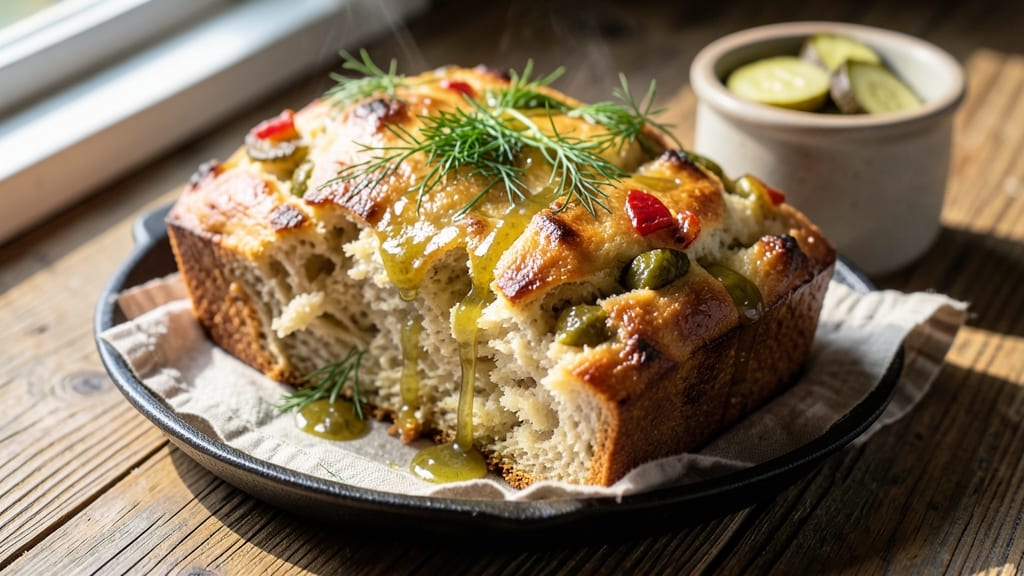
This Amish dill pickle bread recipe delivers the perfect balance of tangy, briny pickles and golden, crusty bread in every bite. 💛 The secret lies in blending homemade dough with finely chopped pickles, creating a texture that's both tender and satisfyingly crisp.
This traditional recipe has been a staple in Amish kitchens for generations, offering a taste of Pennsylvania Dutch heritage with minimal effort. What makes this bread truly special is how the pickles infuse the dough with their signature tang, while the crust develops a satisfying crunch when baked just right.
The process is straightforward—mix, knead, let the dough rise, and bake—but the result is anything but ordinary. Each slice offers a symphony of flavors, from the sweetness of the bread to the bold, briny punch of the pickles.
By the time you pull this bread from the oven, you'll have a loaf with a golden crust and a tender interior, all infused with that unmistakable pickle flavor. The aroma alone will have everyone gathering around the table, eager for a taste.
Serve warm with butter or honey for the full experience. This recipe is perfect for holidays, family gatherings, or whenever you crave something comforting yet distinctive. Let's get started on creating this iconic Amish treat!
Ingredients for amish dill pickle bread
Four cups flour, a splash of pickle juice, and a handful of chopped pickles transform simple dough into iconic Amish bread.
| Ingredient | Amount | Notes |
|---|---|---|
| All-Purpose Flour 🌾 | 4 cups | Sifted for even texture |
| Active Dry Yeast 🍞 | 2 ¼ tsp | One packet preferred |
| Granulated Sugar 🍚 | ¼ cup | For yeast activation |
| Unsalted Butter 🧈 | ½ cup | Cold, cubed for easier mixing |
| Warm Water 💧 | 1 ¼ cups | 110°F for yeast activation |
| Dill Pickles 🥒 | 1 ½ cups | Finely chopped, brined |
| Pickle Juice 💧 | ¼ cup | Reserved from chopped pickles |
| Salt 🧂 | 1 ½ tsp | Diamond Crystal preferred |
| Large Egg 🥚 | 1 whole | Room temperature |
| Milk 🥛 | ¼ cup | Whole milk for richness |
| Dried Dill 🌿 | 1 tsp | Or 1 tbsp fresh chopped |
| Black Pepper 🌶️ | ½ tsp | Freshly ground preferred |
| Egg Wash 🥚 | 1 tbsp | 1 egg beaten with 1 tbsp milk |
| Coarse Sea Salt 🧂 | 1 tsp | For sprinkling on crust |
The pickles are the soul of this bread—look for small, crunchy dill pickles from the refrigerated section at Walmart or Kroger. The jarred kind works too, but homemade or fresh-packed pickles have that extra tang. Reserve half a cup of juice from the chopped pickles; it adds moisture and depth. If you can't find dill pickles, sweet gherkins work in a pinch, but the flavor won't be quite the same. For the flour, King Arthur or Gold Medal brands rise beautifully—avoid self-rising mixes unless you adjust the salt.
No yeast on hand? Instant yeast works 1:1, but active dry needs proofing time. Short on milk? Buttermilk or plain yogurt adds tanginess without thinning the dough. The butter should be cold—cut it into small cubes and mix it in quickly to avoid melting. For extra flavor, add 1/4 tsp garlic powder to the dough or sprinkle everything bagel seasoning on top before baking. If your pickles are very briny, reduce the reserved juice to 2 tbsp to balance the dough's sweetness.
This dough needs time to rise—at least 1 hour at room temp or up to 12 hours in the fridge for deeper flavor. Shape the loaf into a round boule or oval for classic presentation. Bake until the crust is deep golden brown and internal temp hits 190°F. Cool on a wire rack for at least 20 minutes before slicing—cutting too soon makes it gummy. Store wrapped at room temp for 3 days or freeze slices for 3 months. The crust gets crunchier as it cools, so reheat slices in a 350°F oven for 5 minutes if you want that fresh-baked crunch.
Why You'll Love This Recipe
- No-Knead Magic: I swear by this recipe because the dough barely gets a workout—just mix, let it rise, and bake. That butter-rich dough? It’s forgiving enough for beginners but still delivers a tender crumb.
- Pickle-Packed Tang: The secret’s in the jarred dill pickles—chopped right into the dough—adding that sharp, briny punch that cuts through the sweetness. Honestly, it’s like a hug for your taste buds.
- Picnic Ready: Wrap slices in foil, toss them in a basket, and you’ve got the perfect no-fuss side for church potlucks or backyard barbecues. It holds up better than store-bought bread and actually tastes homemade.
- Budget Baking: Flour, yeast, sugar, butter—these are pantry staples that won’t break the bank. Plus, a loaf lasts days, so you’re not scrambling for last-minute bread runs. My wallet (and my stomach) thank me.
Step-by-step instructions for Amish dill pickle bread
Here's how to craft this beloved bread with perfect texture and bold pickle flavor.
👨🍳 Step 1: Activate the Yeast and Mix the Dough
In a large bowl, combine the 1.25 cups warm water (should feel like bathwater, around 110°F) with the 0.25 cup granulated sugar and 2.25 tsp active dry yeast. Let this sit for 5-10 minutes until it becomes frothy and bubbly - this confirms your yeast is active. If it doesn't bubble, your yeast is dead and you'll need to start over.
In a separate bowl, whisk together the 4 cups all-purpose flour, 1.5 tsp salt, 1 tsp dried dill, and 0.5 tsp black pepper. Make a well in the center and pour in the yeast mixture along with the 0.5 cup cold cubed unsalted butter and 1.5 cups finely chopped dill pickles. Using a wooden spoon or dough whisk, mix until a shaggy dough forms.
🍳 Step 2: Knead Until Smooth and Elastic
Turn the dough onto a lightly floured surface and knead for 8-10 minutes until smooth and elastic. You'll know it's ready when it springs back when poked and leaves a clean surface. I press down gently on the dough during the first minute - this prevents it from curling and ensures even contact with the surface.
If the dough feels too sticky, add flour 1 tablespoon at a time until it comes together nicely. The goal is a dough that's soft but not wet. Once properly kneaded, place the dough in a lightly greased bowl, cover with a damp towel, and let rise in a warm place for 1-1.5 hours or until doubled in size.
🥘 Step 3: Add Pickle Juice and Second Rise
Punch down the risen dough and transfer it back to your mixing bowl. Stir in the 0.25 cup reserved pickle juice and 0.25 cup milk. This extra moisture creates that signature tender crumb. Mix well, then shape the dough into a loaf and place it in a greased 9x5-inch loaf pan.
Cover the pan with a damp towel and let rise again for 30-45 minutes until the dough reaches the top of the pan. The second rise is crucial for that light, airy texture. I like to place the pan in a warm oven with the light on for consistent warmth during this final rise.
🔥 Step 4: Bake to Golden Perfection
Preheat your oven to 375°F. Brush the risen dough with the prepared 1 tbsp egg wash (1 egg beaten with 1 tbsp milk) for a beautiful golden crust. Sprinkle generously with 1 tsp coarse sea salt - this is what gives Amish bread its signature crunchy top.
Bake for 35-40 minutes until the bread is deep golden brown and sounds hollow when tapped on the bottom. The internal temperature should reach 190-200°F. For that perfect crunch, I recommend broiling for 1-2 minutes at the end if your oven runs cool.
⏰ Step 5: Cool and Slice for Maximum Flavor
Remove the bread from the pan and let it cool on a wire rack for at least 15 minutes before slicing. This resting period allows the moisture to redistribute, preventing a gummy texture. The bread will be warm but not hot to the touch when ready.
Slice the bread into ½-inch thick pieces and serve warm. The exterior should be crisp with that signature salt crust, while the interior remains soft and tender with pockets of tangy pickle flavor throughout. Each slice should reveal those beautiful dill specks from the chopped pickles.
Pro Tips For Making Amish Dill Pickle Bread
- Test Your Yeast First: Skip the guesswork—mix 1 packet yeast with ¼ cup warm water and 1 teaspoon sugar. If it doesn’t foam in 5 minutes, your yeast is dead (or your water’s too hot). Grab fresh yeast and try again—this bread won’t rise otherwise.
- Soften Butter Properly: Don’t melt it, don’t leave it out too long—just press cold butter with a fork until it’s almost soft, with a few tiny lumps left. This keeps the dough tender without making it greasy. (Yes, I’ve ruined batches by over-softening it.)
- Knead Until Smooth: Stop when the dough springs back slowly when poked and looks silky, not sticky or shaggy. Under-kneaded dough collapses; over-kneaded dough gets tough. Aim for 8–10 minutes by hand—no need to tire yourself out.
- Let It Rise Twice: First rise should be in a warm spot until doubled (about 1–1.5 hours). Punch it down, shape it, then let it rise again until it’s just over the bowl’s edge. Rushing the second rise = dense bread. (Trust me, the wait is worth it.)
Flavor customization for this amish dill pickle bread
Classic Tangy Twist
Start with the original recipe's 1.5 cups chopped dill pickles for that signature briny kick. For extra tang, add 1 extra tablespoon of reserved pickle juice to the dough during the second rise.
This amplifies the flavor without altering the texture. I've found that homemade pickles (from local Amish markets) provide the most authentic taste—look for small, firm dill pickles with visible dill specks. 🥒
Sweet & Spicy Fusion
Balance the tang with ½ cup diced sweet onions and 1 teaspoon smoked paprika mixed into the dough. The onions caramelize slightly during baking, adding natural sweetness, while the paprika introduces a subtle smokiness.
For heat, add ½ teaspoon cayenne pepper—it mellows during baking but leaves a gentle warmth. This variation works especially well when served with honey butter for dipping.
Herb-Infused Variations
Boost the herbal notes by adding 1 tablespoon fresh rosemary (finely chopped) or 1 teaspoon dried thyme to the dough. For a garden-fresh twist, mix in ¼ cup finely chopped fresh dill along with the dried version.
These herbs complement the pickles beautifully and add an earthy depth. I recommend using organic herbs from the grocery store's produce section for the best flavor.
Cheesy Pickle Loaf
For a heartier version, fold in 1 cup shredded sharp cheddar cheese during the second rise. The cheese melts slightly during baking, creating pockets of gooey goodness that contrast perfectly with the tangy pickles.
I like to use Kraft Natural Cheddar for its reliable melt and sharp flavor. This variation pairs wonderfully with spicy mustard or apple butter for dipping.
Everything Pickle Bread
Create a savory version by sprinkling 1 tablespoon everything bagel seasoning on top of the egg wash before baking. The sesame seeds, poppy seeds, and garlic add a delightful crunch and flavor complexity.
For extra texture, mix 1 tablespoon toasted sesame seeds directly into the dough. This variation is perfect for breakfast or as a side to smoked salmon or creamy dips. 🌟
Sweet Pickle Glaze
For a dessert-like twist, brush the baked loaf with a glaze made from ½ cup powdered sugar, 2 tablespoons milk, and 1 teaspoon vanilla extract. The sweetness contrasts beautifully with the tangy pickles, creating a unique flavor profile.
This version is a hit with kids and makes a fantastic holiday bread or gift loaf. Store any leftovers in an airtight container for up to 3 days.
Nutrition facts
Frequently asked questions
Can I make this bread without a loaf pan?
Shape the dough into a free-form boule or oval on a parchment-lined baking sheet. Brush with egg wash and sprinkle with coarse salt. Bake at 375°F for 30-35 minutes until golden. The crust will be crispier on the bottom, but the interior remains tender. This method works especially well for rustic Amish-style breads.
Why does my dough smell so strong like pickles?
The strong pickle aroma is normal and actually enhances the flavor! The brined pickles release their tangy oils during kneading. For a milder version, reduce the chopped pickles to 1 cup and add 1 extra tablespoon dried dill for flavor without the intense smell. The aroma dissipates as the bread bakes, leaving just the right amount of tang.
How do I store leftovers to keep them fresh?
Wrap cooled slices in plastic wrap or aluminum foil and store at room temperature for 3 days in an airtight container. For longer storage, freeze slices for up to 3 months. To revive stale bread, wrap slices in a damp paper towel and heat in a 350°F oven for 5-7 minutes. The crust will crisp up while the interior stays soft.
Can I substitute homemade pickles for store-bought?
Yes! Homemade pickles work beautifully—they often have more visible dill specks and a fresher taste. Use 1.5 cups chopped homemade dill pickles (with juice) and adjust the reserved juice to 2 tablespoons if your homemade pickles are extra briny. The flavor will be more authentic, especially if you use vinegar-brined rather than salt-brined pickles.
What if my bread turns out too dense?
Dense bread usually means the dough didn't rise enough or the oven wasn't hot enough. Next time, ensure your yeast is fresh (test it in warm water first) and let the dough rise in a warm place (80°F). Also, preheat your oven for 15 minutes before baking. For extra lightness, add 1 extra tablespoon milk during the second rise to improve texture.