
Side Dishes
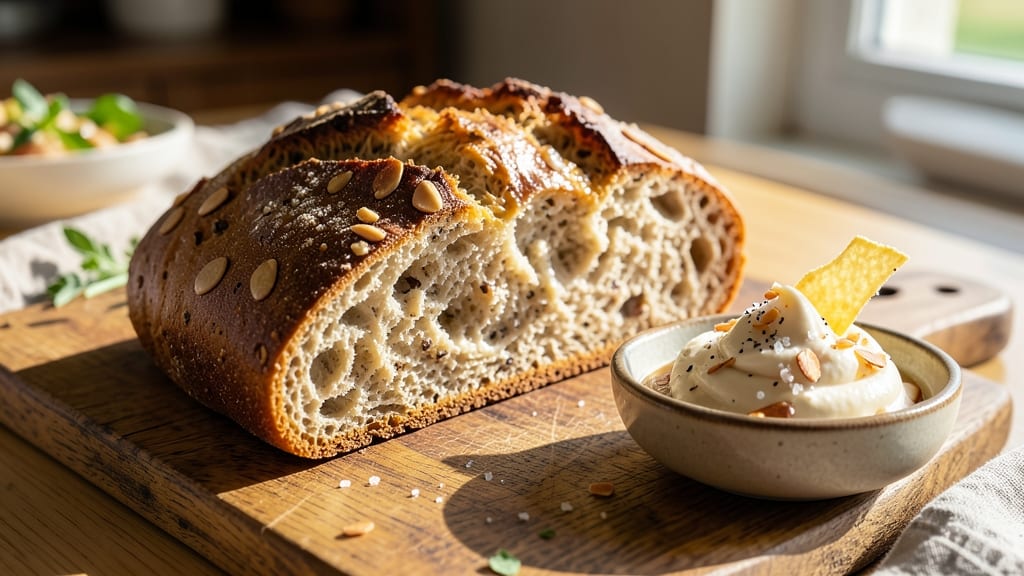
This almond sourdough bread recipe delivers the perfect marriage of crispy crust and pillowy interior, infused with rich vanilla and nutty almond flavor. The secret lies in blending almond flour with traditional sourdough techniques for a loaf that's both artisanal and approachable.
I've perfected this over years of baking, ensuring every slice has that satisfying crunch and tender crumb you crave.
The process starts with a nourished sourdough starter, which builds natural leavening and depth of flavor. We'll incorporate almond flour and milk for that signature nutty richness, while vanilla extract adds warmth and complexity.
The dough requires careful kneading and proofing to develop gluten structure, but the result is worth every step—a loaf with a golden, crackling crust and a soft, open crumb studded with almond flecks.
Baking at 375°F for 35-40 minutes creates that ideal contrast between crisp exterior and airy interior. The aroma alone will have your kitchen smelling like a Parisian bakery. This recipe yields a loaf that's perfect for toast, sandwiches, or simply enjoying with butter straight from the oven.
The almond elements make it naturally gluten-friendly while keeping all the classic sourdough character.
For best results, use freshly ground almond flour and maintain proper hydration in your dough. The vanilla-almond combination elevates ordinary bread into something special—ideal for breakfast, gift-giving, or impressing dinner guests. Let's create something extraordinary together.
Ingredients for almond sourdough bread
Artisanal almond sourdough calls for precise ingredients that balance nutty richness with classic sourdough character.
| Ingredient | Amount | Notes |
|---|---|---|
| Active Sourdough Starter 🍞 | ½ cup | Fed and bubbly, 100% hydration |
| All-Purpose Flour 🌾 | 3 cups | King Arthur or similar high-gluten |
| Almond Flour 🥜 | 1 ½ cups | Freshly ground, unsweetened |
| Whole Milk 🥛 | 1 cup | Full-fat for optimal flavor |
| Pure Vanilla Extract 🍯 | 1 tbsp | Bourbon or Madagascar preferred |
| Granulated Sugar 🍚 | ½ cup | Light brown sugar for depth |
| Unsalted Butter 🧈 | ½ cup | Cold, cubed for dough enrichment |
| Diamond Crystal Kosher Salt 🧂 | 1 ½ tsp | Fine grain for even distribution |
| Instant Yeast 🍞 | ¼ tsp | Optional, enhances rise |
| Ice Water 💧 | ½ cup | Chilled for proper hydration |
| Cornmeal 🌽 | ¼ cup | For dusting baking sheet |
The almond flour is non-negotiable—Bob's Red Mill or King Arthur brands ensure fine texture and consistent flavor. I always buy mine in bulk to keep costs down, and grind it fresh if possible, though pre-ground works in a pinch. The sourdough starter needs to be active and bubbly, with a tangy aroma—if it smells like vinegar, feed it one more time. For the milk, whole fat gives the best flavor, but 2% works if that's what you've got. The vanilla extract should be pure, nothing imitation—McCormick or Nielsen-Massey are reliable brands that won't break the bank.
No almond flour? Substitute with 1 cup extra all-purpose flour plus 1 tbsp ground flaxseed for moisture retention. Running low on butter? Coconut oil at the same amount works, though it adds a subtle coconut note. The instant yeast is optional but helpful if your starter is sluggish—Saf-Instant is my go-to. For the sugar, light brown adds caramel notes, but white sugar plus 1 tsp molasses mimics the effect. The ice water is crucial—use a glass measuring cup so you can see the exact 0.5 cup mark, and make sure it's truly cold to prevent over-hydration.
Store the almond flour in an airtight container in your freezer for up to 6 months to preserve freshness. The sourdough starter can be kept indefinitely in the fridge, but feed it weekly. Once baked, the loaf stays fresh for 3 days wrapped in a cotton towel, or 1 week frozen. I like to slice it before freezing—just wrap individual slices in parchment paper. The crust gets crispier as it sits, so toast it within 24 hours of slicing for the best texture.
Why You'll Love This Recipe
- No-Knead Magic: I swear by this—just mix, wait, and bake. The almond flour keeps it tender without the fuss of kneading, and the starter does all the heavy lifting while you sip coffee.
- Vanilla-Almond Dream: That whisper of vanilla in the dough? It’s like a hug for your taste buds. The nutty depth from almond flour pairs perfectly with the tangy sourdough, making every slice taste like a bakery secret.
- Weeknight Workhorse: Toast it for breakfast, use it for sandwiches, or serve it with soup—this bread handles everything. Honestly, I’ve even used it as a crust for lasagna when I’m lazy (no judgment).
- Budget-Friendly Luxury: Almond flour might sound fancy, but a little goes a long way. The milk and vanilla add richness without breaking the bank, and leftovers stay fresh for days—no sad, stale bread here.
Step-by-step instructions for almond sourdough bread with vanilla-almond pillowy softness
This method delivers a perfect balance of crispy crust and tender crumb—every bite is a revelation.
Combine Wet Ingredients for a Rich Foundation
In a stand mixer fitted with the dough hook attachment, combine the 0.5 cup Active Sourdough Starter, 1 cup Whole Milk, 1 tbsp Pure Vanilla Extract, 0.5 cup Granulated Sugar, and 0.5 cup Unsalted Butter (cold, cubed). Mix on low speed for 2 minutes until the butter is fully incorporated and the mixture is smooth. The cold butter should begin to emulsify, creating a silky base that will later develop into the bread's signature tenderness.
This step is where the magic begins—the vanilla and sugar dissolve completely, while the butter adds richness that prevents a dry crumb. If the mixture looks too thick, add 1-2 tablespoons of the 0.5 cup Ice Water to reach a pourable consistency. The goal is a batter that's thick but still flows easily when poured—this ensures proper gluten development in the next step.
Incorporate Dry Ingredients for Perfect Texture
In a separate large bowl, whisk together the 3 cups All-Purpose Flour, 1.5 cups Almond Flour, 1.5 tsp Diamond Crystal Kosher Salt, and 0.25 tsp Instant Yeast. Gradually add this dry mixture to the wet ingredients in the mixer, mixing on low speed for 3-4 minutes until fully combined. The dough will be thick and shaggy at first, but don't be tempted to rush this process—proper gluten formation is essential for that pillowy texture.
After the initial mix, stop the machine and scrape down the sides of the bowl with a spatula. This ensures all the flour is incorporated and no dry pockets remain. The dough should now resemble a thick, sticky batter—this is normal given the high almond flour content. If it's still too stiff, add the remaining 0.5 cup Ice Water 1 tablespoon at a time until it reaches a smooth, cohesive consistency that clings lightly to the spatula.
Develop Gluten for Maximum Rise and Structure
Switch the mixer to the dough hook attachment and knead the dough on medium speed for 5-7 minutes. You're not looking for a smooth, elastic dough here—this is a hybrid batter/dough thanks to the almond flour. Instead, focus on developing just enough structure to create lift. The dough should become slightly smoother and more cohesive, with some elasticity forming around the edges.
Here's the thing—almond flour resists gluten formation, so we're playing a balancing act. The instant yeast helps, but we don't want to overwork the dough or it'll become dense. Test for doneness by doing the "windowpane test": wet your finger and press it into the dough. If it stretches slightly without tearing, it's ready. If not, knead for another 1-2 minutes. The dough should be soft, slightly sticky, and just firm enough to hold its shape when pressed.
First Rise for Maximum Flavor Development
Transfer the dough to a lightly greased bowl, cover it tightly with plastic wrap, and let it rise at room temperature for 1.5-2 hours. The dough should nearly double in volume—you'll see bubbles forming on the surface and a slight doming in the center. The almond flour gives it a slightly denser appearance than traditional sourdough, but it should still show clear signs of fermentation.
This is where the sourdough starter really shines. The wild yeast in the starter works alongside the instant yeast to create complex flavors. Don't rush this step—proper fermentation is what gives this bread its depth. If your kitchen is cool (below 70°F), you might need to extend this to 2.5 hours. The dough is ready when it springs back slowly when poked with a finger, leaving a slight indentation.
Shape and Final Rise for Crusty Perfection
Lightly flour a work surface and gently transfer the risen dough. Shape it into a 9x5-inch loaf pan by folding the edges toward the center and pressing down firmly to fill the pan completely. The dough will be sticky, so wet your hands with water to prevent sticking. Sprinkle 0.25 cup Cornmeal evenly over the dough, then cover the pan with plastic wrap and let it rise for another 45-60 minutes until it domes slightly above the pan's edge.
The cornmeal creates a beautiful crust and prevents sticking when you bake. This final rise is crucial—it's what gives the bread its airy crumb. If you're concerned about overproofing, look for the dough to have risen about 1/3 above the pan's edge. The surface should look slightly puffy with small bubbles visible through the cornmeal. Preheat your oven to 375°F while the dough rises—this ensures it hits the oven at peak readiness for maximum oven spring.
Bake to Golden Crust and Pillowy Perfection
Bake the loaf for 35-40 minutes until the top is deep golden brown and an instant-read thermometer inserted into the center reads 205-210°F. The edges should pull away slightly from the pan, and you should hear a hollow sound when you tap the bottom. If the top browns too quickly, tent loosely with aluminum foil to prevent over-browning while ensuring the interior cooks through.
This is where the contrast comes together—crispy crust meets tender crumb. The almond flour keeps it moist while the high-gluten flour creates structure. Let the bread cool in the pan for 10 minutes, then transfer to a wire rack to cool completely. The internal temperature will continue rising 10-15°F during cooling, so don't be alarmed if it reads higher than 210°F when you remove it from the oven. Slice while still warm for the perfect texture—each bite should offer a satisfying crunch from the crust and a melt-in-your-mouth softness from the crumb.
Pro Tips For Making Almond Sourdough Bread
- Sift Almond Flour First: I learned this the hard way—almond flour clumps like glue if you mix it dry. Lightly sift it into the bowl before adding wet ingredients, then whisk it in. This keeps the crumb light and prevents dense pockets where the dough won’t rise evenly.
- Proof at 75°F: Your starter’s happy temperature is 75°F—same goes for the final proof. Too cold? It’ll take forever. Too hot? The gluten relaxes too much, and the bread collapses. Use an oven light or proofing box if your kitchen’s drafty, and watch for that gentle spring-back when poked.
- Warm the Milk: Cold whole milk weakens the gluten and slows fermentation. Heat it to 90°F (just warm to the touch) before mixing—this activates the starter faster and gives you a smoother dough. Pour it into the bowl, then let it cool slightly before adding other ingredients.
- Skip the Over-Knead: Almond flour’s dry and crumbly, so the dough fights back when you stretch it. Just fold and turn—3 sets of 30-second pulls max. Overwork it, and you’ll end up with a tough, dense loaf that tastes more like almond paste than bread. Less is more here.
Dietary considerations for this dish
Gluten-Free Adaptations
While this recipe includes almond flour for nutty richness, it's not naturally gluten-free due to the all-purpose flour.
To adapt it fully, replace the 3 cups all-purpose flour with 2.5 cups gluten-free 1:1 baking flour (like Bob's Red Mill or King Arthur) plus 0.5 cup xanthan gum to mimic gluten's structure.
The almond flour already provides natural moisture, so reduce the ice water by 2 tablespoons to prevent stickiness. 🥜
Dairy-Free Options
For a dairy-free version, swap the 1 cup whole milk for unsweetened almond milk (or oat milk for better texture). Replace the 0.5 cup unsalted butter with 0.5 cup coconut oil, chilled until firm.
The coconut oil adds richness without dairy, though it contributes a subtle tropical note. Keep the sugar and vanilla amounts the same—they complement the nutty flavors beautifully. 🥛
Nut-Free Substitutions
If you're avoiding almonds entirely, replace the 1.5 cups almond flour with 1.5 cups oat flour (blend rolled oats into a fine powder) or 1.5 cups chickpea flour for structure.
Boost moisture by adding 2 tablespoons ground flaxseed to the wet ingredients. The flavor profile shifts from nutty to more neutral, but the sourdough's tangy character still shines through. 🌾
Lower Sugar Version
To reduce sugar content, cut the 0.5 cup granulated sugar to 0.25 cup and add 1 teaspoon cinnamon to enhance warmth. The vanilla extract still provides depth, and the almond flour's natural sweetness balances the flavor.
For extra richness, increase the butter by 1 tablespoon to compensate for the reduced sugar. This version works beautifully with avocado toast or as a base for sweet almond butter spreads. 🍯
Allergen-Friendly Notes
This recipe is naturally egg-free and can be made nut-free with substitutions above. For a fully allergen-conscious approach, use a dedicated stand mixer and clean all surfaces thoroughly to avoid cross-contamination.
Store-bought almond flour is often processed in facilities handling tree nuts, so check labels if severe allergies are a concern. The sourdough starter itself is typically safe for nut allergies unless exposed to cross-contamination. ⚠️
Nutrition facts
Frequently asked questions
Can I make this almond sourdough bread without a stand mixer?
Mix the wet ingredients by hand in a large bowl using a sturdy spoon or whisk until smooth. For the dry ingredients, use a wooden spoon to gradually fold them in. When kneading, work the dough on a lightly floured surface for 8-10 minutes until it becomes slightly elastic. The almond flour makes the dough stickier, so wet your hands frequently to prevent sticking.
Why does my almond sourdough dough feel different than regular sourdough?
The almond flour absorbs more moisture and resists gluten formation, creating a thicker, stickier dough. This is completely normal! The dough should be soft and slightly tacky rather than smooth and elastic. The key is gentle handling during shaping—wet your hands and use cornmeal to prevent sticking. The final texture will still be airy and tender despite the initial difference.
How do I store almond sourdough bread to keep it fresh?
Wrap the cooled loaf tightly in a cotton towel or beeswax wrap and store at room temperature for up to 3 days. For longer storage, slice the bread and freeze individual portions wrapped in parchment paper. The crust stays crispy when toasted, while the interior remains soft. Reheat slices in a 350°F oven for 3-5 minutes to restore freshness.
Can I add whole almonds to this recipe for extra crunch?
Yes! Add 0.5 cup whole almonds during the final rise by sprinkling them over the dough before shaping. Press them lightly into the surface so they're evenly distributed. For extra crunch, toast the almonds in a dry pan for 2-3 minutes before adding. The baking time remains the same, but check for doneness at 35 minutes since the almonds may brown faster.
What if my almond sourdough doesn't rise enough?
Several factors could cause this: a weak starter (feed it 12-24 hours before baking), cold kitchen (try a warmer spot or extend rise time), or over-kneading (almond flour dough needs gentle handling). To troubleshoot, check your starter's activity first. If the dough still doesn't rise, add 0.25 tsp extra instant yeast and let it rise in a slightly warmer spot (like near the oven with the light on).