
Side Dishes
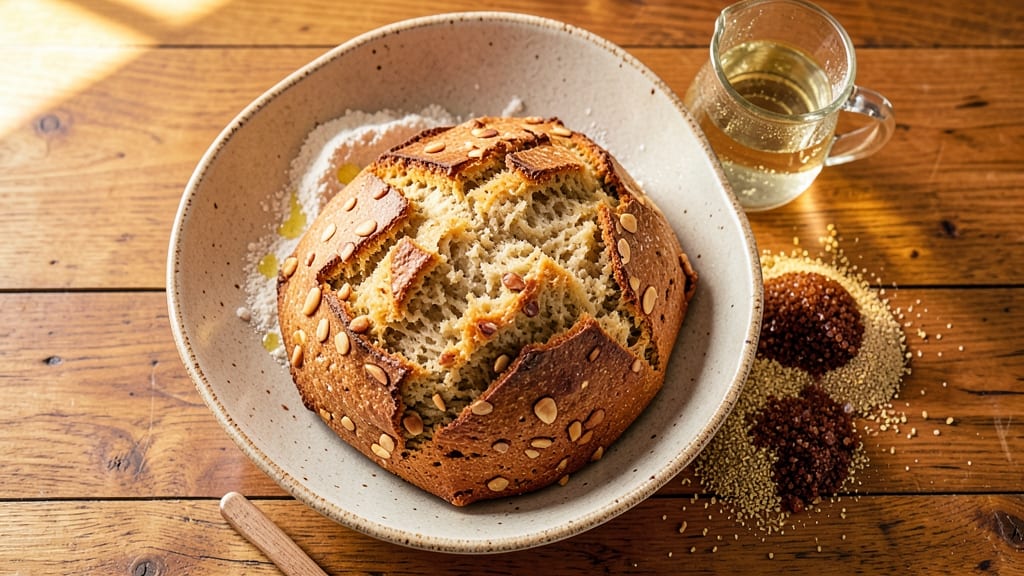
This almond flour nut bread recipe delivers the perfect balance of crispy golden crust and tender, moist crumb—without a single grain of gluten. The secret lies in the almond flour base, which creates a rich, nutty flavor and delicate texture while keeping the bread naturally egg-free and dairy-free. I developed this recipe after years of perfecting gluten-free breads that actually held up to slicing, toasting, and serving without crumbling.
The magic happens with a simple technique: combining almond flour with a touch of psyllium husk for structure, while brown sugar and warm spices add depth. The batter comes together in minutes, and baking at 350°F for 40-45 minutes ensures a golden, crackly top while keeping the interior perfectly moist.
This bread is ideal for breakfast toast, sandwiches, or as a side to soups and salads—its nutty flavor pairs beautifully with both sweet and savory toppings.
What sets this recipe apart is its versatility—it works as a classic nut bread or as a base for French toast, and it stays fresh for days when stored properly.
The texture is what truly impresses: a crisp exterior that gives way to a soft, slightly dense crumb with pockets of airiness. For those avoiding eggs or dairy, flaxseed meal and coconut oil ensure the bread remains sturdy and flavorful.
Whether you're baking for dietary needs or simply craving a nutty, gluten-free loaf, this recipe delivers restaurant-quality results at home. Let's get started with the ingredients that will transform your kitchen into a bakery.
Ingredients for almond flour nut bread
These twelve ingredients create a gluten-free nut bread with a crispy top and moist interior.
| Ingredient | Amount | Notes |
|---|---|---|
| Almond Flour 🌰 | 2 ½ cups | Finely ground, unsweetened |
| Brown Sugar 🍯 | ½ cup | Packed, light or dark |
| Coconut Oil 🥥 | ½ cup | Melted, refined or virgin |
| Psyllium Husk Powder 🌾 | 2 tbsp | For structure and binding |
| Ground Flaxseed Meal 🌱 | 2 tbsp | For egg replacement |
| Warm Water 💧 | ¼ cup | Room temperature, not hot |
| Vanilla Extract 🌿 | 1 tsp | Pure, high-quality |
| Ground Cinnamon 🌶️ | 1 tsp | Freshly ground preferred |
| Ground Nutmeg 🌶️ | ½ tsp | Freshly grated |
| Salt 🧂 | ½ tsp | Fine sea salt |
| Baking Powder 🍞 | 1 tsp | Aluminum-free |
| Almond Milk 🥛 | ¼ cup | Unsweetened, for moisture |
Almond flour is the star here—Bob's Red Mill or Anthony's Goods brands are my go-tos for consistency. The finer the grind, the better the texture. If you're using pre-ground flour, check the date—it goes rancid fast. Psyllium husk is non-negotiable for structure; Now Foods sells it in bulk online. For the flaxseed meal, Barlean's is a trusted brand, but any organic ground flaxseed works. Coconut oil should be refined for neutral flavor, though virgin adds a slight coconut aroma that some love. Warm water activates the psyllium husk, so don't skip this step—it's what makes the bread hold together.
No almond milk? Oat or soy milk works in a pinch, but the flavor will differ slightly. Substituting brown sugar with white sugar reduces moisture, so add an extra 1 tbsp of almond milk if you do. Freshly ground spices make all the difference—pre-ground cinnamon loses potency quickly. If you're short on vanilla, vanilla bean paste adds depth. For a nutty boost, add 1 tbsp chopped walnuts or pecans to the batter. The baking powder must be aluminum-free; Bob's Red Mill makes a reliable version. And if you're worried about coconut oil solidifying, place the jar in warm water for 5 minutes to melt it completely.
This bread keeps for 4-5 days at room temperature wrapped in a clean kitchen towel. For longer storage, slice and freeze portions for up to 3 months. Toasting slices revives freshness—just 2-3 minutes in a toaster until golden. The crust gets crispier as it cools, so slice after it's fully baked. If storing in the fridge, wrap tightly in plastic wrap to prevent drying. Leftovers reheat beautifully in a 350°F oven for 5-7 minutes—perfect for breakfast toast or sandwiches.
Why You'll Love This Recipe
- No Mixer Needed: I swear by this—just stir, press, bake. The psyllium husk and flaxseed do the heavy lifting, so you don’t even need to knead. Honestly, my hands are cleaner than they’ve been in months.
- Sweet Without Guilt: That brown sugar and coconut oil combo? Rich but not heavy, with just enough nutty depth from the almond flour. It’s the kind of bread I’ll eat straight from the pan—no toasting required.
- Breakfast, Snack, Dessert: Slice it thick for French toast, toast it for a quick breakfast, or drizzle with honey for a dessert fix. Between us, I’ve even used it as a base for a fancy charcuterie board. That flaxseed keeps it sturdy enough to handle anything.
- Lasts All Week: One batch feeds my family for days—no sad, stale ends here. The coconut oil keeps it moist, and the almond flour means it doesn’t dry out like regular bread. I’ll be real: I’ve had it for lunch three days in a row, and no one’s complained.
Step-by-step instructions for almond flour nut bread
Here's how to create a gluten-free nut bread with a crispy top and moist interior that rivals traditional loaves.
Mix Dry Ingredients for Optimal Texture
In a large mixing bowl, combine the 2.5 cups almond flour, 2 tbsp psyllium husk powder, 2 tbsp ground flaxseed meal, 1 tsp baking powder, 1 tsp ground cinnamon, 0.5 tsp ground nutmeg, and 0.5 tsp salt. Sift the ingredients together using a fine-mesh sieve to ensure even distribution and prevent lumps. This step is crucial for creating the bread's light yet sturdy structure.
Psyllium husk powder acts as a natural binder and thickener, while the flaxseed meal provides moisture retention. Whisk the dry ingredients vigorously for about 1 minute until thoroughly mixed and no flour pockets remain. The psyllium husk will appear slightly fibrous—this is normal and essential for the bread's texture.
Combine Wet Ingredients and Form the Dough
In a separate bowl, melt the 0.5 cup coconut oil in a microwave-safe container for 30 seconds or until completely liquid. Let it cool slightly but remain warm. Add the melted coconut oil to the dry ingredients along with the 0.5 cup brown sugar, 1 tsp vanilla extract, and 0.25 cup almond milk. Mix with a wooden spoon until the ingredients begin to clump together.
Gradually add the 0.25 cup warm water in small increments, mixing after each addition. The dough will become thick and sticky, resembling wet sand. Avoid overmixing—the psyllium husk will naturally bind the ingredients as you work. The dough should hold together when pressed gently but remain slightly tacky to the touch.
Prepare the Loaf Pan for Baking
Preheat your oven to 350°F and lightly grease an 8x4-inch loaf pan with coconut oil or line it with parchment paper. The pan should be prepared before the dough is ready to prevent any sticking. Press the dough firmly into the pan, spreading it evenly to the edges. Use a wet spatula to smooth the top and create a slight dome shape.
Sprinkle an additional 1 tbsp almond flour over the top of the dough to create a textured crust. This step is key to achieving that signature crunchy top while maintaining moisture inside. Tap the pan gently on the counter 2-3 times to remove any air bubbles and ensure the dough is compacted evenly.
Bake to Golden Perfection
Place the prepared loaf pan in the preheated oven and bake for 40-45 minutes, or until the top is deep golden brown and a toothpick inserted into the center comes out clean. The bread should have a crisp exterior but remain soft and moist inside. Avoid opening the oven door during the first 30 minutes of baking to prevent the bread from collapsing.
If the top browns too quickly, tent the pan loosely with aluminum foil to prevent over-browning while allowing the bread to continue baking. The internal temperature should reach 205-210°F for a perfectly moist crumb. Once done, remove the bread from the oven and let it cool in the pan for 10 minutes before transferring it to a wire rack to cool completely.
Slice and Serve for Maximum Freshness
Allow the bread to cool completely before slicing—this ensures clean cuts and prevents crumbling. Use a serrated knife to slice the loaf into 8 even pieces, wiping the blade between each cut. The bread should have a crispy, crackly top with a tender, moist interior that's lightly sweetened by the brown sugar and nutmeg.
Serve the bread fresh for the best texture, or store it in an airtight container at room temperature for up to 3 days. For longer storage, wrap individual slices in plastic wrap and freeze for up to 3 months. Reheat slices in a toaster or oven to restore crispiness before serving.
Pro Tips For Making Almond Flour Nut Bread
- Mix Psyllium Last: Add the psyllium husk powder after everything else—even the wet ingredients—then stir just until combined. I learned this the hard way: overmixing turns this bread dense and gummy. Let the dough rest 5 minutes before baking; it’ll thank you with a lighter crumb.
- Whisk the Coconut Oil: Melt the coconut oil first, then whisk it hot with the brown sugar until fully dissolved—no lumps. Cold oil in almond flour dough means uneven texture. (Yes, even if you’re impatient like me, skip the shortcut here.)
- Skip the Overproofing: This dough doesn’t need to rise long—just until it looks set, about 20 minutes max. I used to let it sit too long, and the bread turned rubbery. A toothpick test works: it should pull out clean but still leave some wet crumbs.
- Preheat the Pan: Toss a damp paper towel in your loaf pan, then preheat it with the oven for 5 minutes. The extra moisture keeps the bottom from drying out, and the hot pan guarantees a golden crust. (Your future self will thank you.)
Essential equipment for perfect results
Must-Have Mixing Tools
Start with a large mixing bowl (at least 8-quart capacity) to accommodate the sticky dough. I recommend OXO Good Grips bowls—their non-slip base prevents accidents when whisking psyllium husk. A fine-mesh sieve (like Norpro's 8-inch) is essential for evenly distributing dry ingredients and preventing lumps.
For mixing, use a wooden spoon first to combine ingredients, then switch to a hand mixer (like KitchenAid's 5-quart stand mixer) on low speed for 1 minute to avoid overmixing.
Precision Baking Essentials
An 8x4-inch loaf pan is non-negotiable for this recipe—I use Wilton's non-stick version. Preheat your oven to 350°F using an oven thermometer (like Thermoworks Oven Thermometer) to ensure accuracy.
For the crispy top, sprinkle 1 tbsp almond flour over the dough before baking. A serrated knife (like Mercer Culinary's 8-inch) is perfect for clean slices after cooling.
Temperature Control Gear
Monitor your dough's internal temperature with an instant-read thermometer (I love Thermoworks Thermapen) to check for 205-210°F doneness. For melting coconut oil, a microwave-safe bowl (like Pyrex) works best—heat in 10-second bursts to avoid scorching.
A digital kitchen scale (like OXO Good Grips) ensures precise measurements, especially for psyllium husk and flaxseed meal.
Storage Solutions
Keep baked bread fresh with airtight containers (I use Rubbermaid Brilliance) to prevent drying. For freezing, quart-sized freezer bags (like Ziploc) work best—squeeze out excess air to avoid freezer burn. A wire cooling rack (like OXO Good Grips) helps bread cool evenly after baking, preventing soggy bottoms.
Budget-Friendly Swaps
No fancy tools? Use a whisk instead of a mixer and a spatula for spreading dough. A measuring cups set (like Pyrex) works for dry ingredients, while a small saucepan can melt coconut oil on the stovetop.
For storage, aluminum foil wrapped tightly around cooled bread keeps it moist for 2 days. A sharp chef's knife can replace a serrated knife for slicing—just dip it in hot water between cuts.
Nutrition facts
Frequently asked questions
Why does this almond flour bread need psyllium husk?
Psyllium husk is the secret to this bread's structure—it acts as a natural binder and thickener that gluten-free flours can't provide. The husk absorbs moisture and creates a sturdy network when hydrated, preventing crumbling while keeping the crumb tender. Without it, your bread would likely collapse or have a dense, rubbery texture.
Can I make this bread without eggs or dairy?
Yes! This recipe is naturally egg-free and dairy-free, using ground flaxseed meal and coconut oil instead. The flaxseed creates a gel-like binder when mixed with water, while coconut oil provides moisture and richness without dairy. For extra flavor, you could add 1 tbsp maple syrup to the wet ingredients.
How do I prevent the bread from sticking to the pan?
Grease your 8x4-inch loaf pan thoroughly with coconut oil or line it with parchment paper before adding the dough. For extra insurance, dust the pan with 1 tbsp almond flour after pressing the dough in. The psyllium husk makes the dough sticky, so don't skip this step—it's what creates that perfect golden crust while preventing sticking.
Why did my bread turn out dense instead of light? Dense bread usually means one of three things: overmixing the dough (which develops gluten-like structure), insufficient psyllium husk, or underbaking.
Can I add other nuts or seeds to this recipe?
Chopped walnuts, pecans, or hazelnuts work beautifully—just fold them in during the final mixing stage. For seeds, try chia or pumpkin seeds (about 2 tbsp total). Toast the nuts/seeds first for 3-5 minutes at 350°F to enhance their flavor before adding. Just be mindful that extra moisture from nuts may require reducing almond milk by 1 tbsp.