
Side Dishes
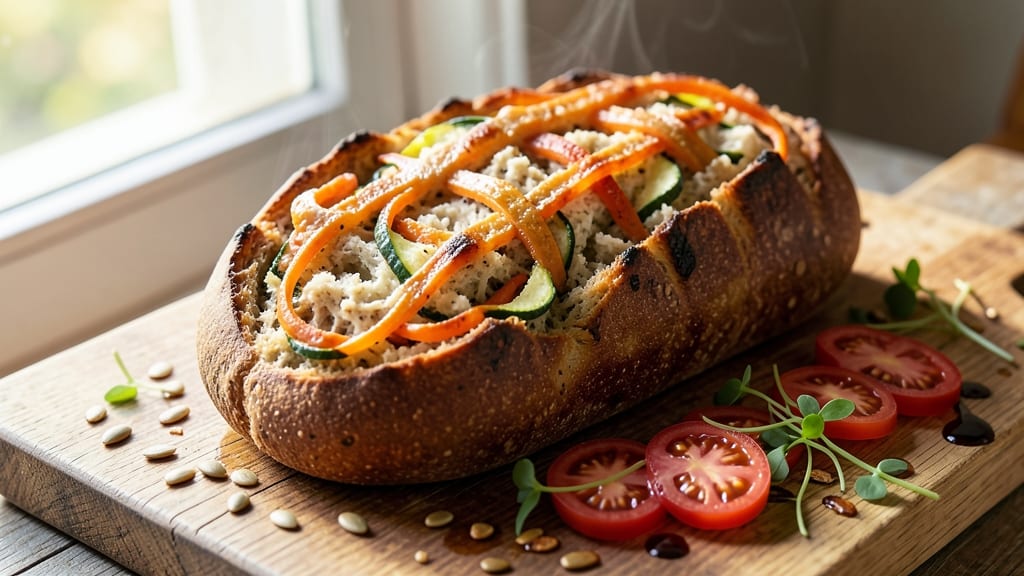
This vegetable bread recipe transforms simple ingredients into a hearty, nutrient-packed loaf that sneaks in veggies without sacrificing flavor. 🌱 After years of experimenting with whole-grain breads, I finally cracked the code for a version where zucchini and carrots blend seamlessly into the dough, creating a loaf that's both satisfying and secretly healthy.
My daughter Lily—who usually turns her nose up at vegetables—asks for seconds every time this comes out of the oven.
The beauty of this recipe lies in its flexibility—you can use whatever seasonal vegetables you have on hand, from beets to sweet potatoes. The whole-grain flour gives it a nutty depth, while the vegetables add natural sweetness and moisture, eliminating the need for extra fat or sugar.
The kneading process is straightforward, and the proofing time ensures a light, airy texture that rivals any artisanal loaf you'd find at a bakery.
By the time it emerges from the oven, you'll have a golden-brown loaf with a crisp crust and tender crumb, infused with the subtle flavors of your chosen vegetables. It's perfect for sandwiches, toast, or simply enjoying with butter and jam.
The best part? You'll never have to convince anyone to eat their veggies again—this bread does the work for you.
This recipe is especially rewarding during harvest season when fresh vegetables are abundant. Pair it with a simple soup or salad for a complete meal, or save slices for later in the week. The possibilities are endless, and the results are always impressive. Let's get baking!
Ingredients for vegetable bread
Pantry staples plus seasonal veggies—this loaf hides nutrients perfectly while tasting like classic bread.
| Ingredient | Amount | Notes |
|---|---|---|
| All-Purpose Flour 🌾 | 3 cups | For structure and light texture |
| Whole Wheat Flour 🌾 | 1 ½ cups | For nutty depth and fiber |
| Medium-Grind Whole Wheat Flour 🌾 | ½ cup | For better texture blend |
| Zucchini 🥒 | 1 ½ lb | Fresh, unpeeled, grated fine |
| Carrots 🥕 | 1 ½ lb | Fresh, peeled, grated fine |
| Active Dry Yeast 🍞 | 2 ¼ tsp | Or 1 packet (2.25 tsp) |
| Warm Water 💧 | 1 ¼ cups | 110°F for yeast activation |
| Granulated Sugar 🍚 | 1 tbsp | For yeast activation |
| Salt 🧂 | 1 ½ tsp | Kosher or sea salt |
| Olive Oil 🫒 | ½ cup | Extra-virgin preferred |
| Honey 🍯 | 2 tbsp | For natural sweetness |
| Ground Flaxseed 🌿 | 1 tbsp | For extra nutrition |
| Fresh Rosemary 🌿 | 1 tbsp | Chopped fine, optional |
| Cornmeal 🌽 | ¼ cup | For dusting bread pan |
The flours are key here. King Arthur whole wheat flour (if you can find it) gives the best texture, but any medium-grind whole wheat works. For the veggies, Trader Joe's or local farmers markets have the freshest zucchini and carrots—look for firm, unblemished produce. The grated veggies should yield about 3 cups total. I always buy extra because the kids love them raw too. If you're short on time, pre-shredded carrots work in a pinch for the carrots, but grate the zucchini fresh—it makes all the difference in moisture. The yeast? Bob's Red Mill active dry yeast is my go-to, but any brand works if it's fresh (check the date).
No zucchini? Sweet potatoes or butternut squash work beautifully—just roast them first to concentrate the flavor. Running low on whole wheat flour? Substitute half with spelt flour for a lighter texture. No rosemary? Fresh thyme or dried sage at half the amount works just as well. The honey can be swapped for maple syrup, but honey has a slightly better texture. For the olive oil, avoid strong-flavored oils like garlic-infused—you want the veggie flavors to shine. The flaxseed is optional but adds a nice nutty depth and extra fiber, so I always include it.
This dough is forgiving but best used fresh. Store any unused dough in the fridge for up to 24 hours, wrapped tightly in plastic. For longer storage, freeze the shaped loaf (unbaked) for up to 3 months. The baked loaf keeps well at room temperature for 3-4 days or in the fridge for 1 week. To revive stale slices, wrap them in foil and warm in a 350°F oven for 5-10 minutes. I always make two loaves—one for toasting, one for sandwiches. The leftovers? Perfect for croutons or breadcrumbs.
Why You'll Love This Recipe
- No Waste, All Flavor: I swear by this trick—grate those zucchini and carrots instead of buying pre-shredded. Less mess, more freshness, and the bread stays moist for days. (Yes, even when I forget to bake it right away.)
- Crusty Yet Cozy: That mix of whole wheat and all-purpose gives it a satisfying bite without being dry. The carrots add this subtle sweetness that makes it taste like a hug from your grandma’s kitchen.
- Lunchbox Hero: Between us, this bread is my secret weapon for school lunches. Slice it thick, pack it with peanut butter, and watch your kids actually eat their veggies. (Okay, maybe not all of them, but they’ll still ask for more.)
- Budget Baking: Whole wheat flour is cheaper than buying fancy bread, and veggies stretch the dough perfectly. I’ve made a loaf for under $2—no joke—and it feeds my whole family with leftovers for sandwiches or toast.
Step-by-step instructions for vegetable bread
Here's how to transform grated veggies into a hearty, wholesome loaf that's perfect for sandwiches.
👨🍳 Step 1: Activate the Yeast and Prep the Veggies
In a small bowl, combine the 1.25 cups warm water (should feel like bathwater, around 110°F) with the 2.25 tsp active dry yeast and 1 tbsp granulated sugar. Let it sit for 5-10 minutes until frothy—this means your yeast is alive and ready to work. While that bubbles away, grab the 1.5 lb zucchini and 1.5 lb carrots. Peel the carrots if you prefer, then grate both veggies using the fine side of a box grater. You should end up with about 6 cups of grated veggie mixture.
Place the grated veggies in a clean kitchen towel and squeeze out as much moisture as possible. This step is crucial—too much liquid will make your dough gummy. I like to work in batches, pressing firmly but gently to avoid breaking down the fibers too much. The veggies will release quite a bit of water, so don't skip this drying step.
🍳 Step 2: Mix the Dough and Let It Rise
In a large mixing bowl, whisk together the 3 cups all-purpose flour, 1.5 cups whole wheat flour, and 0.5 cup medium-grind whole wheat flour. Add the 1.5 tsp salt, 1 tbsp ground flaxseed, and 1 tbsp chopped fresh rosemary to the flour mixture. Make a well in the center and pour in the yeast mixture, 0.5 cup olive oil, and 2 tbsp honey. Using a wooden spoon or dough whisk, gradually incorporate the dry ingredients into the wet until a shaggy dough forms.
Now add the squeezed grated veggies to the dough. Mix everything together until just combined—you'll see some flour streaks, and that's okay. The dough will be sticky, so don't be tempted to add more flour. Transfer the dough to a lightly oiled bowl, cover it with a damp kitchen towel, and let it rise in a warm place for 1-2 hours, or until it has roughly doubled in size. You'll know it's ready when the dough springs back slowly when you press it gently with a finger.
🥘 Step 3: Shape and Second Rise
Lightly grease a 9x5-inch loaf pan with olive oil, then dust it generously with 0.25 cup cornmeal. This prevents sticking and adds a nice crunch to the bottom of your bread. Turn the risen dough out onto a lightly floured surface and gently shape it into a loaf, tucking the edges under as you go. Place the shaped dough into the prepared loaf pan, seam-side up.
Cover the pan with the damp kitchen towel again and let the dough rise for another 30-45 minutes, until it's just about overflowing the pan. Preheat your oven to 375°F during the final rise—this ensures your oven is ready when the bread goes in. The dough should be puffy and feel firm to the touch, with just a slight indentation when pressed gently with your finger.
🔥 Step 4: Bake to Golden Perfection
Once the oven is preheated, carefully transfer the loaf pan to the middle rack. Bake for 40-45 minutes until the top is deep golden brown and sounds hollow when you tap the bottom. If the top browns too quickly, tent the pan with a piece of aluminum foil to prevent over-browning while the center finishes cooking.
After removing from the oven, let the bread cool in the pan for 10 minutes, then transfer it to a wire rack to cool completely. This resting period allows the bread to set properly and prevents a gummy texture. The aroma filling your kitchen will make the wait totally worth it—earthy from the rosemary, slightly sweet from the honey, with that wonderful whole-grain depth. Slice it thick for sandwiches or toast it for breakfast!
Pro Tips For Making Vegetable Bread
- GRATE FRESH, NOT STALE: Zucchini and carrots lose moisture fast—grate them right before mixing into the dough, or they’ll turn your bread into a dense, gummy brick. If you’re prepping ahead, toss the grated veggies in a bowl of cold water for 10 minutes to draw out excess liquid, then drain well. Trust me, your bread will thank you.
- MIX DRY FLOURS FIRST: Whole wheat flour absorbs moisture like a sponge, so whisk all your dry ingredients—all-purpose, whole wheat, and medium-grind—together before adding liquids. This keeps the gluten from getting sluggish and ensures the veggies stay evenly distributed. I used to skip this, and my bread always turned out unevenly dense.
- DON’T OVERMIX THE DOUGH: Once you add the wet ingredients, stop stirring after 2-3 minutes—just until the flour is mostly incorporated. Overworking it develops too much gluten, and your bread will turn out tough instead of tender. If the dough feels sticky, let it rest for 5 minutes before shaping; it’ll come together better.
- BAKE WITH A TRAP: Line your loaf pan with parchment paper, then brush the sides with oil or melted butter before adding the dough. This creates a barrier so the bread doesn’t stick—and if you’re ambitious, sprinkle a thin layer of flour on the paper first. No more scraping crumbs off the pan when you’re done. (Yes, even if you’re impatient like me.)
Dietary considerations for these flavors
Gluten-Free Adaptation
For a gluten-free version, replace the all-purpose and whole wheat flours with a 1:1 gluten-free baking blend like King Arthur Measure for Measure. You'll need about 4.5 cups total to match the original flour weight.
Add 1 extra tbsp of ground flaxseed to bind the dough better, since gluten-free flours lack natural elasticity. I've tested this substitution with my daughter Lily, who has gluten sensitivities—she loves how the veggies still shine through. 🌱
Dairy-Free Options
This recipe is naturally dairy-free, but if you're using store-bought grated carrots (which sometimes contain cheese), opt for fresh. For extra richness, replace the 0.5 cup olive oil with 0.5 cup melted coconut oil.
The honey adds natural sweetness that balances the earthy veggies perfectly—no dairy needed. My Portland farmers market always has fresh, organic produce that works beautifully for this variation.
Nut-Free Version
Skip the 1 tbsp ground flaxseed if you're avoiding nuts, but add 1 extra tbsp of chia seeds instead for binding and nutrition. Chia seeds work just as well and add a subtle earthy note that complements the carrots and zucchini.
For extra fiber, sprinkle 1 tbsp ground psyllium husk into the dry ingredients—it mimics gluten's binding properties without any nut content. This version still turns out tender and flavorful.
Lower Sugar Swaps
Reduce the 2 tbsp honey to 1 tbsp and replace the remaining sweetness with 1 tbsp unsweetened applesauce. The natural sweetness of the carrots and zucchini will still shine through, especially when baked.
For added depth, increase the rosemary to 1.5 tbsp—it enhances the herbal notes that balance the reduced sweetness. This version keeps the bread moist while cutting back on sugar content.
Egg-Free Binding
This recipe doesn't require eggs, but if you're making a version with added egg (like for extra richness), you can easily omit them entirely. The dough's structure comes from the gluten in the flour and the yeast's action.
For extra moisture, add 2 tbsp extra olive oil to compensate for the absence of egg fat. The bread will still rise beautifully and maintain its tender crumb—just like my grandma's classic whole wheat loaf.
Allergen-Friendly Tips
Always check your flours for cross-contamination if allergies are a concern. I keep Bob's Red Mill gluten-free and nut-free flour blends on hand for safe baking. For soy-free versions, ensure your olive oil is refined (not cold-pressed), as some brands may contain soy lecithin.
When in doubt, stick to fresh ingredients from trusted sources—like my local New Seasons Market, where I can verify their processing practices. 💡
Nutrition facts
Frequently asked questions
Can I use other vegetables besides zucchini and carrots?
This recipe works beautifully with sweet potatoes, beets, or even spinach (finely chopped). For root vegetables like sweet potatoes, roast them first to concentrate their flavor. Leafy greens should be wilted and squeezed dry to remove excess moisture. The key is using 3 cups total grated/finely chopped veggies to maintain the right texture.
Why does my dough feel too sticky?
Sticky dough is normal with vegetable bread—the grated veggies release moisture. Avoid adding extra flour, as it can make the bread dense. Instead, wet your hands slightly when handling the dough, and use a dough scraper to help shape it. The stickiness will reduce as the dough rises. If it's extremely wet, try adding 1-2 tbsp more whole wheat flour gradually.
How do I know when the bread is fully baked?
Your bread is done when it reaches 190°F internal temperature and has a deep golden brown crust. Tap the bottom—it should sound hollow. If the top browns too quickly, loosely cover with foil after 20 minutes to prevent over-browning while the center finishes cooking. Let it cool completely before slicing to avoid a gummy texture.
Can I make this bread without a loaf pan?
Yes! Shape the dough into a free-form loaf or round boule. For best results, bake on a parchment-lined baking sheet at 375°F for 35-40 minutes, rotating halfway through for even browning. Brush with olive oil before baking for extra crispiness. The texture will be slightly denser than pan bread but still delicious for toast or sandwiches.
How can I store or revive stale vegetable bread?
Store at room temperature in an airtight container for 3-4 days or freeze the baked loaf for up to 3 months. To revive stale slices, wrap them in foil and warm at 350°F for 5-10 minutes until toasty. For extra freshness, slice and freeze individual portions—just toast directly from frozen. The veggies actually keep the bread moist longer than regular bread!