
Side Dishes
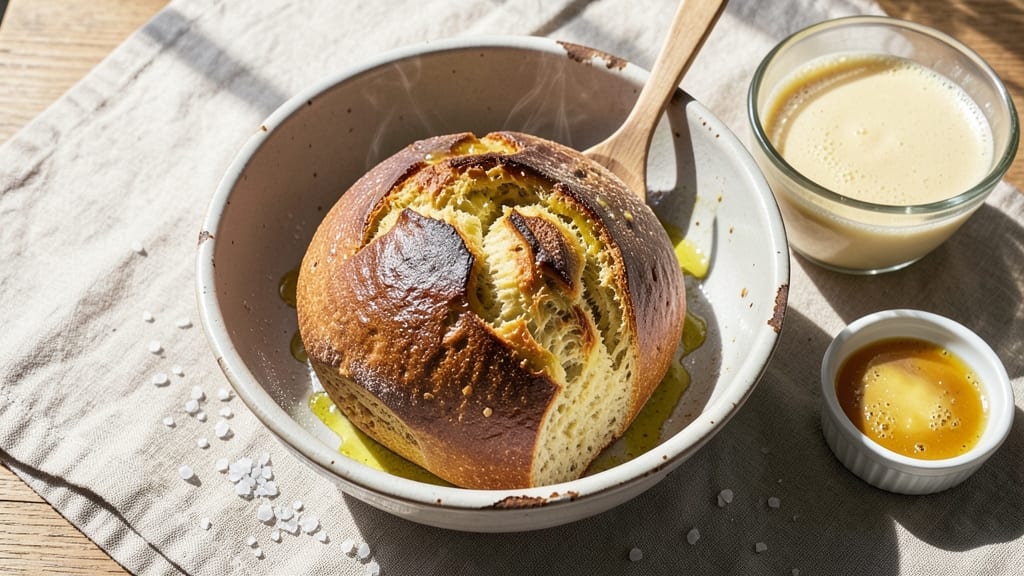
Nigella Lawson's no-knead bread recipe delivers restaurant-quality crusty bread with minimal effort—just four ingredients and a few hours of hands-off time. The secret lies in long fermentation, which develops deep flavor and that signature open crumb structure without any kneading.
I've baked this version dozens of times, and it never fails to impress with its crisp golden crust and tender interior.
What makes this recipe truly special is its simplicity combined with professional results. You'll mix the dough in a bowl, let it rest overnight in the fridge, then shape and bake it the next day.
The slow fermentation transforms basic flour and water into bread with complex, nutty flavors and an airy crumb that's impossible to achieve with quick methods.
By the time you pull it from the oven, you'll have a loaf with a crackling crust and an interior filled with those coveted open crumbs.
The aroma alone will have everyone gathering around your table. This bread stays fresh for days and makes an excellent base for sandwiches or toast.
The beauty of this method is that it requires no special equipment—just a bowl, a bit of flour, and your oven. Whether you're a beginner baker or an experienced one looking for a reliable recipe, this no-knead bread delivers consistent, impressive results every single time.
Ingredients for nigella lawson no knead bread
Four simple ingredients transform into restaurant-quality bread with minimal effort—just mix, rest, and bake.
| Ingredient | Amount | Notes |
|---|---|---|
| All-Purpose Flour 🌾 | 7 cups | Bread flour preferred for better crust |
| Active Dry Yeast 🍞 | ¼ tsp | Ensure yeast is fresh for best rise |
| Granulated Sugar 🍬 | 1 tbsp | Helps activate yeast |
| Salt 🧂 | 2 tsp | Kosher or sea salt for flavor |
| Warm Water 💧 | 3 ½ cups | 105-110°F for ideal yeast activation |
| Extra-Virgin Olive Oil 🫒 | 2 tbsp | For dough elasticity |
| Cornmeal 🌽 | ½ cup | For dusting baking surface |
The flour is everything here. Bread flour gives that perfect crisp crust and open crumb, but all-purpose works in a pinch. King Arthur or Bob's Red Mill are my go-tos for consistent results. If you're using all-purpose, add 1 extra tablespoon to account for lower protein content. The yeast needs to be fresh—if it's past its expiration date, it won't activate properly. Store yeast in the fridge to extend its life. For the water, warm it to body temperature (around 105°F)—too hot kills the yeast, too cold slows it down.
No bread flour? Add 1 tbsp vital wheat gluten to your all-purpose flour for better structure. Short on olive oil? Melted butter works too—just let it cool before mixing. The sugar can be swapped for honey (use half the amount), but it'll give a slightly different flavor. For the cornmeal, semolina works perfectly if you want to get fancy. If your dough feels too sticky after mixing, add 1 tbsp more flour. If it's too dry, add 1 tsp more water. Trust your hands here—dough should be tacky but not gluey.
This dough keeps beautifully in the fridge for up to 3 days—perfect for lazy mornings. Shape it the night before and bake fresh the next day. For longer storage, wrap tightly in plastic and freeze for up to 3 months. To revive, let it sit at room temperature for 1-2 hours before shaping. The bread stays fresh for 4-5 days at room temperature if wrapped well. Slice it thick for perfect toast—those crispy edges are worth it.
Why You'll Love This Recipe
- I’ll be real: mixing flour, yeast, sugar, salt, and warm water in a bowl feels like cheating. No punchy dough to wrestle, no overworking—just stir, rest, and let the yeast do the heavy lifting. That’s Nigella’s genius.
- No-Knead Magic: I’ll be real: mixing flour, yeast, sugar, salt, and warm water in a bowl feels like cheating. No punchy dough to wrestle, no overworking—just stir, rest, and let the yeast do the heavy lifting. That’s Nigella’s genius.
- Crusty-Creamy Payoff: The crust crackles like autumn leaves underfoot while the inside stays soft enough to soak up soup or butter straight from the jar. Honestly, that balance is what makes this bread my secret weapon for lazy Sundays.
- Weeknight Workhorse: Freeze half the dough for a rainy Tuesday night—no thawing needed, just pop it in the oven. It’s the kind of bread that turns a sad salad into a meal or makes toast feel like a celebration. (Yes, even on a Tuesday night.)
Step-by-step instructions for Nigella Lawson's no-knead bread
Here's how to transform simple ingredients into artisanal-style bread with minimal effort.
Activate the Yeast and Mix the Dough
In a large bowl, combine the 3.5 cups warm water with the 1 tablespoon granulated sugar and 0.25 teaspoon active dry yeast. Let this mixture sit for 5-10 minutes until it becomes frothy on top—this confirms your yeast is alive and ready to work. If nothing happens after 10 minutes, your yeast may be stale.
Once frothy, add the 7 cups all-purpose flour and 2 teaspoons salt to the bowl. Stir with a wooden spoon until a shaggy mass forms. Then, drizzle in the 2 tablespoons extra-virgin olive oil and mix until everything comes together into a rough dough. The dough will be sticky but shouldn't require flour to handle—this is normal for no-knead bread.
Let the Dough Rest Overnight
Transfer the dough to a lightly greased bowl, cover it tightly with plastic wrap, and let it rest at room temperature for 12-18 hours. This slow fermentation develops deep flavor and creates that signature open crumb structure. I like to place the bowl in a warm spot, like near the oven with the light on, to encourage even fermentation.
Here's the thing—don't worry if the dough doesn't double in size. Unlike traditional bread, no-knead dough rises slowly and irregularly. What matters is that it develops a slightly domed shape and smells yeasty and tangy when you poke it. If it smells like vinegar, it's overproofed and may not rise properly in the oven.
Shape and Prepare the Dough
After resting, turn the dough onto a surface lightly dusted with 0.5 cup cornmeal. This prevents sticking and gives the bread its signature rustic texture. Gently shape the dough into a round loaf by folding the edges toward the center and tucking them underneath. The dough will still be very soft and sticky—this is completely normal.
Place the shaped dough on a parchment-lined baking sheet, cover it loosely with plastic wrap, and let it rest for 1-2 hours at room temperature. This final proofing helps the dough relax and develop its structure. You'll know it's ready when the dough springs back slowly when gently pressed with a finger.
Score and Bake for Crusty Perfection
Preheat your oven to 450°F with a Dutch oven inside for 30 minutes. This step is crucial—it creates steam that gives the bread its signature crust and oven spring. Remove the Dutch oven from the oven and carefully transfer the dough (with parchment) into the pot. Using a sharp razor or knife, score the top of the dough in a crosshatch pattern or simple slash.
Bake the bread, covered, for 30 minutes. Then remove the lid and bake for another 15-20 minutes until the crust is deep golden brown and sounds hollow when tapped on the bottom. The internal temperature should reach 190-200°F. If the crust browns too quickly, tent the bread with foil to prevent over-browning.
Cool and Serve
Remove the bread from the Dutch oven and transfer it to a wire rack to cool completely. I know it's tempting to slice into that warm, crusty loaf immediately, but resist the urge. Letting it cool for at least 1 hour allows the crumb to set properly, making each slice perfect for serving.
Once cooled, slice the bread and serve it warm or at room temperature. The crust should be crisp and shatterable, while the interior should have an open, airy crumb with a tender yet slightly chewy texture. This bread freezes beautifully too—slice it before freezing for fresh, toasty bread anytime.
Pro Tips For Making Nigella Lawson No Knead Bread
- WEIGH YOUR FLOUR: The recipe calls for 500g flour, but scooping from the bag adds air and changes texture. Use a kitchen scale—this isn’t optional. I learned this the hard way when my first loaf turned out denser than a brick.
- LET THE YEAST BLOOM: Mix the yeast, sugar, and warm water first—wait 5 minutes until it’s bubbly before adding flour. This guarantees the yeast is active, not lazy. Skimping here means a slow rise or a loaf that collapses like a sad soufflé.
- STEAM THE FIRST 20 MINUTES: Place a metal tray on the oven rack below the bread, then pour boiling water into it right when you bake. This creates steam for a crisp crust without burning the top. I used to forget this and got chewy, sad bread instead of that golden crack.
- USE A LARGE BOWL: The dough will expand way more than you expect—double the bowl size if yours is small. A crowded bowl means dough spilling everywhere, and nobody wants to clean that mess. Trust me, your counter will thank you.
Storing and reheating your nigella lawson no knead bread
Fridge Storage Tips
After shaping your dough, store it in an airtight container or wrapped tightly in plastic wrap in the fridge for up to 3 days. The cold slows fermentation, preserving freshness while letting flavors develop further.
I like using glass containers with tight seals—they keep the dough from drying out and make it easy to grab when you're ready to bake. 🥖
If you've already baked the bread, wrap it in a clean kitchen towel and place it in a paper bag to maintain moisture. This method keeps it fresh for 4-5 days at room temperature.
For longer storage, slice the bread and freeze individual portions wrapped in plastic wrap—just thaw at room temperature for 1-2 hours before serving.
Freezing Dough
Unshaped dough freezes beautifully for up to 3 months. After the initial 12-18 hour rest at room temperature, transfer it to a freezer-safe bag or airtight container.
When ready to bake, thaw in the fridge overnight, then proceed with shaping and baking as usual. The texture will be slightly denser but still delicious.
For shaped but unbaked dough, freeze it on a parchment-lined tray first to prevent sticking, then transfer to a bag. Thaw completely before baking—this ensures even cooking. I've found that frozen dough often develops even more complex flavors after thawing.
Reviving Frozen Bread
To revive frozen bread, remove it from the freezer and let it sit at room temperature for 1-2 hours to thaw completely. For extra crispiness, warm it in a 350°F oven for 5-10 minutes wrapped in foil. This method restores the crust's crunch without drying out the interior. 💡
If you prefer toasting, slice the bread first, then freeze the slices on a tray. Once frozen solid, transfer to a bag. Toast directly from frozen for 3-4 minutes in a toaster—you'll get that perfect crispy exterior every time.
Reheating Warmth
For reheating slices, wrap them in foil and warm in a 300°F oven for 5-8 minutes until heated through. The foil traps steam, keeping the bread moist.
Alternatively, use a skillet over medium heat for 2 minutes per side to achieve a crispy crust. I find this method works best for sandwich bread.
Microwave reheating is possible but less ideal—place a slice on a plate with a damp paper towel and heat for 10-15 seconds. The bread will soften but lose some of its crusty texture. For best results, always reheat in short bursts and check frequently.
Nutrition facts
Frequently asked questions
Why does this no-knead bread need such a long fermentation time?
The extended 12-18 hour rest develops complex flavors and creates that signature open crumb structure. Unlike traditional bread, the slow fermentation breaks down gluten gently, resulting in a tender interior with crispy edges. This method mimics professional sourdough techniques without requiring special starters.
Can I use this recipe without a Dutch oven?
Yes! If you don't have a Dutch oven, bake the bread on a baking sheet covered with foil. For extra steam, place a tray of boiling water in the oven during the first 20 minutes of baking. The crust won't be quite as crisp, but the texture will still be excellent.
What if my dough doesn't rise much overnight?
No-knead dough rises slowly and irregularly—focus on the dough's texture and smell rather than size. If it's domed, smells yeasty, and feels slightly springy when pressed, it's ready. Overproofing is more common than underproofing. If it smells sour, bake it immediately with a longer bake time.
How do I get a better crust without burning it?
Preheat your oven with the Dutch oven inside for 30 minutes to ensure even heat. Score the dough before baking to release steam. For a darker crust, bake uncovered for 5-10 extra minutes at the end. If browning too quickly, tent with foil. The ideal crust should be deep golden brown with crispy edges.
Can I add herbs or seeds to this recipe?
Mix in 1-2 tablespoons of seeds (sesame, poppy) or finely chopped herbs (rosemary, thyme) with the flour. For stronger flavors, add them during the final proofing. Avoid adding too much—extra ingredients can make the dough too dense.