
Side Dishes
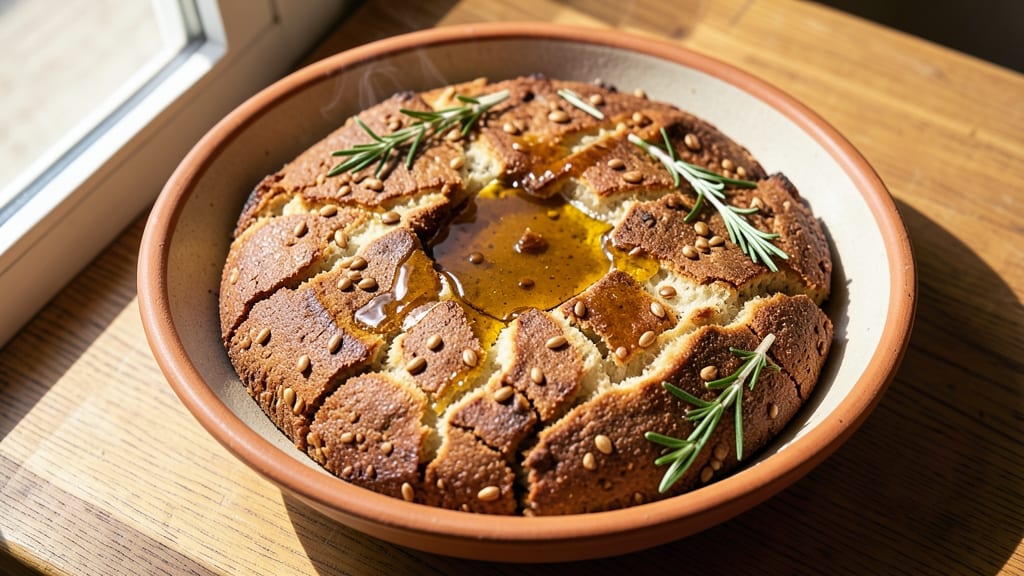
Arabic barley bread transforms simple ingredients into a rustic masterpiece with its nutty crumb and fragrant crust—perfect for dipping in olive oil or wrapping around your favorite fillings. This traditional recipe brings the warmth of Middle Eastern kitchens to your table, where every bite carries history and homestyle charm. The secret lies in the barley flour's earthy depth and the careful kneading that creates its signature texture.
Unlike refined white bread, this version relies on whole barley flour for a denser, heartier crumb that holds up beautifully to dipping or wrapping. The dough requires patience—kneading by hand develops gluten for that satisfying chew, while shaping into rounds ensures even baking.
No yeast means no waiting for rises, just a straightforward process that yields bread ready in under an hour.
What you’ll end up with is golden-brown bread with a crisp exterior and tender, nutty interior—ideal for serving alongside stews, grilled meats, or fresh dips. The aroma alone will transport you to bustling souks, where this bread is a staple.
Whether you’re recreating tradition or adapting it for modern meals, this recipe delivers authentic flavor without compromise.
For best results, use a mix of barley and wheat flour if needed for texture, and brush the baked loaves with olive oil for extra richness. Leftovers stay fresh for days, making this bread perfect for meal prep or gatherings. Let’s bring this classic to life in your kitchen.
Ingredients for arabic barley bread
Nine simple ingredients transform into aromatic, nutty bread with a crisp crust—perfect for dipping or wrapping.
| Ingredient | Amount | Notes |
|---|---|---|
| Barley Flour 🌾 | 2 cups | Whole grain for authentic texture |
| All-Purpose Flour 🌾 | 1 cup | Balances barley's density |
| Active Dry Yeast 🍞 | 1 tsp | Ensures proper rise |
| Warm Water 💧 | 1 ¼ cups | 110°F for yeast activation |
| Olive Oil 🫒 | 2 tbsp | Extra-virgin for richness |
| Honey 🍯 | 1 tbsp | Natural sweetener |
| Salt 🧂 | 1 tsp | Kosher or sea salt |
| Ground Cumin 🌿 | ½ tsp | Earthy spice for authenticity |
| Ground Coriander 🌿 | ½ tsp | Citrusy depth |
| Sesame Seeds 🌰 | 1 tbsp | For topping crumb |
| Coarse Sea Salt 🧂 | 1 tbsp | For finishing crust |
| Semolina Flour 🌾 | 1 tbsp | Prevents sticking |
The barley flour is the heart of this recipe—Bob's Red Mill or King Arthur brands give the best texture. If you can't find whole barley flour, swap for half all-purpose and half whole wheat, but the nutty flavor won't be as pronounced. The yeast needs to be fresh, so check the date on the package—if it's been sitting in your pantry for months, it won't activate properly. Warm the water to 110°F (just warm to the touch) before mixing, or the yeast will die. For extra authenticity, toast the whole spices (cumin and coriander) in a dry pan for 30 seconds before adding—they'll release their oils and deepen the flavor.
No barley flour? Substitute with half whole wheat and half all-purpose, but expect a slightly lighter texture. Out of sesame seeds? Poppy seeds or crushed pistachios work beautifully for topping. If you don't have semolina, all-purpose flour works in a pinch, though it won't give the same crisp crust. The honey can be swapped for maple syrup or agave, but honey adds subtle depth that's hard to replicate. For a richer dough, add 1 extra tablespoon of olive oil—trust me, it's worth it. And if you're feeling fancy, brush the baked loaves with a mix of olive oil and melted butter for extra richness.
This dough keeps for 2 days in the fridge, wrapped tightly in plastic. For longer storage, shape the dough into balls, freeze them on a tray, then transfer to a bag—up to 3 months. The bread reheats beautifully: wrap in foil and warm in a 350°F oven for 10 minutes. Leftovers stay fresh for 3-4 days if stored in a bread box. Pro tip: slice it while still warm for the crispiest texture. The aroma alone will have your whole kitchen smelling like a bustling souk—worth every minute of kneading.
Why You'll Love This Recipe
- No-Fuss Mixing: I swear by this dough—just toss the flours, yeast, and water together, let it sit. No kneading, no fussing, and the barley flour gives it that hearty texture without the extra work.
- Earthy, Rich Crunch: That barley flour? It’s what makes this bread sing—nutty, slightly sweet, with a satisfying bite. Pair it with olive oil and you’ve got a flavor punch that’s simple but unforgettable.
- Weeknight Workhorse: Freeze half the batch for lazy days, or use it to sop up soups, pair with labneh, or toast for breakfast. It’s my go-to for when I need something reliable that doesn’t skimp on flavor.
- Pocketbook-Friendly Staple: Barley flour is cheaper than whole wheat, and this recipe stretches far—enough for sandwiches, sides, or even a quick flatbread. Honestly, it’s the kind of bread that makes grocery day less stressful.
Step-by-step instructions for arabic barley bread
This dough comes together beautifully—just follow the steps and you'll have fragrant, nutty bread with a perfect crust.
Activate the Yeast in Warm Water
In a medium bowl, combine the 1.25 cups warm water (about 110°F) with the 1 tbsp honey and 1 tsp salt. Stir until the honey dissolves completely. This warm mixture creates the perfect environment for the yeast to wake up.
Sprinkle the 1 tsp active dry yeast over the surface and let it sit for 5-10 minutes until it becomes frothy and bubbly. You'll know it's active when you see small bubbles forming on top and the mixture smells slightly sweet and yeasty. If it doesn't bubble, your yeast might be dead—start over with fresh yeast.
Mix the Wet and Dry Ingredients
In a large mixing bowl, combine the 2 cups barley flour and 1 cup all-purpose flour. Add the 0.5 tsp ground cumin and 0.5 tsp ground coriander, then stir to evenly distribute the spices. These warm spices will give your bread that authentic Middle Eastern flavor.
Pour the yeast mixture into the dry ingredients along with the 2 tbsp olive oil. Use a wooden spoon to mix until a shaggy dough forms. The barley flour will make this dough denser than typical bread dough, so don't worry if it looks thick and sticky at this stage.
Knead Until Smooth and Elastic
Lightly flour a clean surface and turn out the dough. Knead for 8-10 minutes by pressing down, folding, and turning the dough. You're looking for a smooth, slightly tacky dough that springs back when pressed. The barley flour will make this dough less elastic than wheat-based doughs, so focus on developing gluten without overworking it.
If the dough feels too sticky, wet your hands slightly as you knead. Once it comes together nicely, shape it into a round loaf and place it back in the bowl. Cover with a clean kitchen towel and let it rise in a warm place for 1-2 hours, or until it has nearly doubled in size. You'll see bubbles forming on the surface and the dough will feel light and airy when pressed gently.
Shape and Proof the Dough
Once the dough has risen, punch it down to release the air and shape it into a round loaf about 1 inch thick. Place it on a baking sheet lined with parchment paper and cover it again with the towel. Let it proof for another 30-45 minutes until it rises slightly and feels springy to the touch.
While it proofs, preheat your oven to 375°F. Sprinkle the 1 tbsp sesame seeds and 1 tbsp coarse sea salt evenly over the top of the loaf. The sesame seeds will add a delightful crunch, while the coarse salt enhances the flavors. Brush the top lightly with a bit of water to help the seeds stick.
Bake to Golden Perfection
Bake the bread for 30-35 minutes until the top is deep golden brown and the internal temperature reaches 190°F. The crust should be crisp, and you should hear a hollow sound when you tap the bottom of the loaf.
For extra crispiness, sprinkle another 1 tbsp semolina flour over the top during the last 5 minutes of baking. Let the bread cool on a wire rack for at least 15 minutes before slicing—this allows the crumb to set and prevents a gummy texture. The finished loaf should have a nutty aroma, a crisp crust, and a tender, slightly dense crumb that's perfect for dipping in olive oil or hummus.
Pro Tips For Making Arabic Barley Bread
- Bloom the Yeast First: Skip mixing yeast straight into the flour—dissolve it in warm water with a pinch of sugar first, then let it foam for 5-10 minutes. I learned this the hard way after baking dense, flat loaves that tasted like cardboard. The foam means it’s alive and ready to work, not just sitting there playing dead.
- Sift the Barley Flour: Barley flour is heavy and clumpy—sift it with the all-purpose flour before mixing to avoid lumps that turn into tough pockets in your bread. Yes, it’s extra work, but your bread will rise evenly instead of looking like a brick with holes. Trust me, your kneading session will thank you.
- Don’t Over-Knead: Barley flour makes dough sticky and gummy—stop kneading as soon as it springs back when poked (about 8-10 minutes by hand). Overworking it activates too much gluten, and your bread will turn out dense instead of light and airy. I used to fight the dough until it “behaved,” but now I let it be.
- Shape Loaves Tightly: Roll the dough into a tight, smooth ball before shaping into a loaf—this creates tension that helps it rise straight and hold its shape. If it looks messy, tuck the edges under and press gently. I was skeptical until I tried it—my loaves now rise like they’re supposed to, not collapsing like sad pancakes.
Essential equipment for this recipe
Must-Have Tools
Start with a large mixing bowl (I use my Le Creuset stoneware bowl) for combining ingredients—its weight helps with kneading. A wooden spoon or dough scraper is essential for mixing the sticky barley dough without tearing it.
For precise measurements, grab a digital kitchen scale (like the OXO Good Grips)—barley flour is dense, so volume measurements can be tricky. 🌾
Kneading Essentials
Your hands are the best tool for kneading, but a dough whisk (like the Kitchy dough whisk) saves your arms when the dough gets tough. Keep a small bowl of water nearby to wet sticky hands—barley dough clings like glue!
For shaping, a rolling pin (I prefer marble for even pressure) helps create that signature round loaf. A bench scraper comes in handy for dividing and transferring dough.
Baking Gear
Preheat your oven to 375°F using a heavy baking sheet (my All-Clad stainless steel) for even heat distribution. Line it with parchment paper (I love Ghirardelli brand) to prevent sticking—barley bread has a dense crumb that can tear easily.
A wire cooling rack (like OXO's) is non-negotiable for crisp crusts. For extra authenticity, toast sesame seeds in a dry small skillet before sprinkling—they'll release their oils and add nutty depth. 🔥
Optional Upgrades
For pro results, invest in a proofing basket (like Weston's) to shape the dough traditionally. A laser thermometer (such as Thermoworks Smoke) ensures perfect 190°F internal temp without overbaking. If you love texture, a semolina flour sifter (like Norpro) creates that signature crispy crust.
And for storage, vacuum-seal bags (like FoodSaver) keep bread fresh for weeks—ideal for meal prep.
Budget-Friendly Swaps
No fancy tools? Use a large plastic bowl for mixing and a rolling pin from the dollar store—just wet it first to prevent sticking. A spoon works for kneading (though it’s more work).
For proofing, a clean kitchen towel draped over a bowl works just as well as a basket. The key is patience—barley dough forgives imperfect tools if you handle it gently. Every home kitchen can make this bread! ✨
Nutrition facts
Frequently asked questions
Why does this barley bread need both barley and all-purpose flour?
Barley flour gives the bread its signature nutty flavor and dense texture, but it can be too heavy on its own. The all-purpose flour adds lightness and structure, creating that perfect balance between chewy and tender. Think of it as the wheat flour's way of making the barley's earthy richness more approachable for everyday eating!
Can I make this bread without yeast?
Yes! For a quick version, replace the yeast with 1 tsp baking soda and 1 tbsp vinegar (or lemon juice) in the water mixture. The dough will rise immediately but won't be as light—expect a denser, heartier texture perfect for dipping. Proof time drops to just 15 minutes before baking.
How do I store leftovers to keep them fresh?
Wrap cooled bread tightly in plastic wrap or place in an airtight container. It stays fresh for 3-4 days at room temperature, or freeze shaped dough balls for up to 3 months. For reheating, wrap slices in foil and warm at 350°F for 5 minutes—this restores the crisp crust beautifully.
What's the best way to serve this bread?
Traditionally, it's served warm with olive oil for dipping, but it's also perfect for wrapping grilled meats, stuffing with falafel, or pairing with labneh and za'atar. The dense texture makes it ideal for soups too—just tear pieces into hearty chunks. For extra flair, brush baked loaves with olive oil and sprinkle with flaky salt before serving.
My dough didn't rise much—what went wrong?
Check your yeast first—it must be fresh and activated in warm (110°F) water. Cold environments or old yeast are common culprits. Also, barley flour absorbs moisture differently than wheat, so if your kitchen is dry, try adding 1 extra tbsp water to the mix. For next time, place the bowl in a warm oven with the light on for faster rising.