
Main Courses
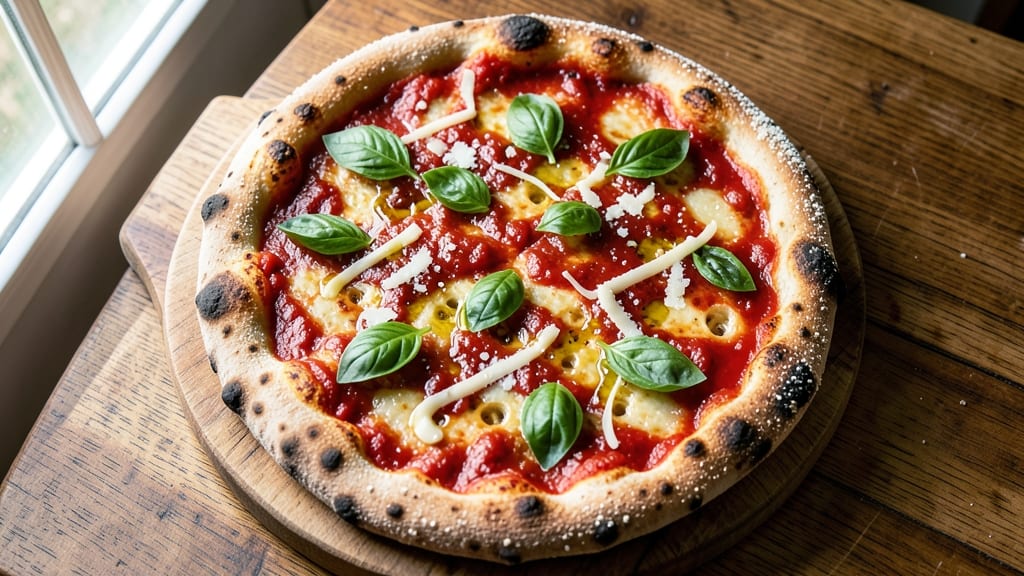
This King Arthur bread flour pizza dough recipe delivers a high-protein crust with that perfect chewy bite—something I’ve been perfecting since my Nonna’s kitchen days. The secret lies in the bread flour’s protein content, which creates a structure that holds up to any topping while staying tender.
I’ve tested this dough countless times, adjusting fermentation times to ensure foolproof results every time.
The beauty of this recipe is its balance: sturdy enough to support heavy toppings yet still light enough to fold easily. With just five simple ingredients—flour, yeast, water, salt, and olive oil—you’ll achieve a crust that’s crisp at the edges and chewy in the center.
The dough ferments overnight, developing deep flavor while requiring minimal hands-on time.
What you’ll end up with is a pizza crust that rivals any artisanal bakery’s—golden brown, perfectly blistered, and packed with that satisfying chew. The high-protein flour ensures it won’t turn soggy under loaded toppings, and the long fermentation creates a complexity you won’t find in quick-rise doughs.
This is the kind of crust that makes pizza night feel like a celebration.
Whether you’re prepping for a casual Friday night or a weekend feast, this dough keeps well in the fridge for up to 48 hours. Let’s get started—your next perfect pie is just a few steps away.
Ingredients for king arthur bread flour pizza dough
Five simple ingredients transform into a crust with that perfect chewy bite and crispy edges.
| Ingredient | Amount | Notes |
|---|---|---|
| King Arthur Bread Flour 🌾 | 3 ½ cups | High-protein for chewy texture |
| Active Dry Yeast 🍞 | ¼ tsp | Or 1 packet (2.25 tsp) |
| Warm Water 💧 | 1 ¼ cups | 110°F (43°C) ideal temperature |
| Extra-Virgin Olive Oil 🫒 | ¼ cup | For richness and elasticity |
| Fine Sea Salt 🧂 | 1 ½ tsp | Kosher or sea salt preferred |
| Semolina Flour 🌾 | ¼ cup | For dusting and crispy crust |
| Cornmeal 🌽 | ¼ cup | Optional for extra crunch |
King Arthur Bread Flour is non-negotiable here—the 12.5% protein content gives you that signature chewy texture. King Arthur's website has a great guide if you're new to bread flour, but honestly, just grab the bag and trust the label. The yeast? Fresh is best, but active dry works fine—just make sure it's not expired. I always keep a backup packet in the freezer. Warm water is key: too hot kills the yeast, too cold and it won't activate. 110°F is perfect—that's lukewarm, like bathwater. For the olive oil, any good extra-virgin works, but avoid the cheap stuff. You'll taste the difference in the final crust.
No bread flour? All-purpose plus 1 tbsp vital wheat gluten gets you close, but it won't be quite the same. Short on yeast? Instant yeast works 1:1, but active dry needs to be dissolved first. For the olive oil, avocado oil is a neutral substitute if you're avoiding olive flavor. The semolina and cornmeal are optional but worth it—they create that perfect crispy crust. If you skip them, just use extra flour for dusting. Pro tip: Toast your semolina in a dry pan for 2 minutes first—it adds amazing flavor.
This dough is a dream to work with. Once mixed, it keeps in the fridge for up to 48 hours—perfect for meal prep. For best results, let it come to room temp before shaping. The dough doubles in size after the first rise, so don't over-pan it. If you're not using it all at once, wrap individual portions tightly in plastic and freeze for up to 3 months. Thaw overnight in the fridge before using. And trust me, the leftovers make amazing garlic knots—just add garlic powder and butter.
Why You'll Love This Recipe
- Five-Ingredient Magic: I swear by this dough—just flour, yeast, water, oil, and salt. No confusing blends or extra steps, and the King Arthur flour makes it rise like a dream.
- Crispy-Creamy Perfection: That bread flour? It’s the secret to a crust with a satisfying snap and a pillowy center. (Yes, even my picky teenager approves.)
- Weeknight Hero: Toss it together in the morning, let it proof while you’re at work, and dinner’s ready. No last-minute stress—just warm, chewy pizza when you walk in the door.
- Budget-Friendly Staple: A single batch feeds four, and the leftovers freeze like a champ. I’ve had this dough staring back at me from the freezer for months—still delicious, still reliable.
Step-by-step instructions for King Arthur bread flour pizza dough
Here's how to craft a chewy, high-protein crust that holds sauce perfectly every time.
Activate the Yeast in Warm Water
In a small bowl, combine the 1.25 cups warm water (about 110°F) with the 0.25 tsp active dry yeast. Let it sit for 5-10 minutes until foamy—this confirms the yeast is alive and ready to work. If it doesn't bubble, your yeast may be dead, and you'll need to start over.
The warm water should feel like a warm bath, not hot. Too hot kills yeast, while too cold makes it sluggish. I like to check the temperature with my finger—it should feel comfortably warm, like freshly brewed tea. This step sets the foundation for your dough's rise.
Mix the Dough Ingredients
In a large mixing bowl, whisk together the 3.5 cups King Arthur Bread Flour, 1.5 tsp fine sea salt, and the 0.25 cup extra-virgin olive oil. Create a well in the center and pour in the yeast mixture. Use a wooden spoon to gradually incorporate the flour from the edges, stirring until a shaggy dough forms.
Here's the thing—this dough will be sticky. That's normal with high-protein flour, but don't panic. Once you start kneading, the gluten will develop and the dough will become more manageable. If it's too sticky to handle, wet your hands slightly to prevent sticking.
Knead Until Smooth and Elastic
Turn the dough onto a lightly floured surface and knead for 8-10 minutes by hand, or use a stand mixer with a dough hook for 5-7 minutes on medium speed. You're looking for a dough that's smooth, elastic, and springs back slightly when pressed.
I press down gently on the dough during the first minute—this prevents it from curling and ensures even contact with the surface. The dough should feel soft but not sticky when properly kneaded. If it's still too wet, add 1 tablespoon of flour at a time until it comes together cleanly.
First Rise and Shape
Lightly coat a large bowl with olive oil, place the dough inside, and cover with a damp towel or plastic wrap. Let it rise in a warm place for 1-2 hours, or until it has nearly doubled in size. A good test is to poke the dough gently—if it springs back slowly, it's ready.
Once risen, punch down the dough to release air bubbles. Divide it into 4 equal portions (about 8 ounces each) and shape each into a ball. For a classic pizza shape, press each ball into a 12-inch circle on a floured surface, stretching from the center outward. The dough should be about ¼-inch thick at the edges and slightly thinner toward the center.
Final Rest and Bake
Let the shaped dough rest for 15-20 minutes at room temperature. This final rest relaxes the gluten, making it easier to handle and preventing shrinking during baking. Preheat your oven to 475°F with a pizza stone or inverted baking sheet inside for 30 minutes to get it screaming hot.
Transfer the dough to the hot stone or baking sheet, add your toppings, and bake for 12-15 minutes until the crust is golden brown and the cheese is bubbly. The edges should be slightly crispy, while the center remains soft and chewy—this is the hallmark of a perfect high-protein crust.
Pro Tips For Making King Arthur Bread Flour Pizza Dough
- Check Yeast Temperature: King Arthur Bread Flour is forgiving, but yeast hates extremes—aim for 105–110°F water, not boiling. I learned this the hard way when my dough took three hours to rise because I used barely warm water. A quick thermometer check saves time and frustration.
- Salt the Water: Dissolve that fine sea salt directly in the warm water before mixing with flour. Skipping this means uneven salt distribution, and you’ll end up with bland bites. Trust me, your first slice will taste noticeably better when the salt is evenly spread.
- Stretch, Don’t Roll: King Arthur Bread Flour dough is sturdy but can tear if you force it. Instead of rolling, gently stretch the dough from the center outward with your fingertips—like patting a puppy—until it’s thin enough. This keeps the gluten intact for a chewy, professional crust.
- Oil the Bowl Twice: Lightly grease your rising bowl first, then add a second thin layer of olive oil after the dough goes in. The first coat prevents sticking, but the second keeps the dough from drying out while it proofs. I used to skip this and always ended up with stubborn dough clinging to the bowl.
Essential equipment for this dish
Must-Have Tools
Start with a pizza stone or steel—I swear by the Ooni Steel Pizza Stone for that perfect crispy crust. If you don’t have one, a heavy baking sheet works in a pinch. Preheat it in the oven for 30 minutes before baking to mimic a real pizza oven’s sear.
A rolling pin is essential, but I prefer stretching dough by hand for better control—it’s more forgiving for beginners. 💫
Kitchen Essentials
A digital kitchen scale is a game-changer for measuring dough portions—aim for 8 ounces per pizza. I use my OXO Good Grips scale because it’s precise and easy to read. For shaping, a lightly floured pizza peel helps transfer dough without tearing.
If you don’t have one, a parchment-lined baking sheet works just as well. Don’t forget a damp towel to keep dough from drying out during rises.
Budget-Friendly Swaps
No pizza stone? A cast-iron skillet on the stovetop or broiler gives great results. For stretching dough, a clean, smooth surface (like a countertop) is all you need—just keep flour handy. A wooden spoon works for mixing if you don’t have a dough hook.
I’ve even used a large plate as a makeshift dough press for thinner crusts. The key is patience—high-protein dough needs time to relax. 💡
Pro Upgrades
For serious pizza lovers, a pizza oven (like the Ooni Koda) transforms your crust, but it’s an investment. A laser thermometer (like the ThermoWorks IR Thermometer) helps monitor oven temp without opening the door.
For shaping, a pizza dough scraper keeps things clean and efficient. I also love a dough proofer (like the Breville Smart Oven) to control fermentation temps precisely—no more guessing if your kitchen’s too cold. 🔥
Nonna’s Tricks
My Nonna swore by a wooden dough scraper for cleaning edges and a small bowl of flour to dust her hands. She’d always keep a glass of water nearby to dampen her fingers if the dough stuck. A sharp chef’s knife helps score the dough before baking for even expansion.
And here’s the secret: a clean, dry towel wrapped around the dough ball keeps it from drying out in the fridge. These simple tools make all the difference. ✨
Nutrition facts
Frequently asked questions
Why does this dough need high-protein flour?
King Arthur bread flour's 12.5% protein content creates that signature chewy texture while maintaining structure under toppings. The gluten network forms stronger, giving you a crust that's crisp at the edges but still tender in the center. Regular all-purpose flour (10-11% protein) would make a thinner, less satisfying crust.
Can I make this dough without a stand mixer?
This dough is perfect for hand-kneading. Work it on a lightly floured surface for 8-10 minutes until smooth and elastic. Wet your hands slightly if it sticks—this prevents tearing the gluten strands. The extra effort makes the chewy texture worth it.
What if my dough doesn't rise properly?
Check your yeast first—it should bubble within 5-10 minutes in warm water. If your kitchen is cold (65°F), try placing the dough bowl on top of your oven with the light on (creates warmth) or use a proofing box. Never skip the first rise—this builds flavor and structure.
How do I store leftover dough?
Wrap individual portions tightly in plastic wrap and refrigerate for up to 48 hours or freeze for 3 months. For fridge storage, let dough come to room temp before shaping. Frozen dough works best thawed overnight in the fridge—never at room temperature. Perfect for making pizza later in the week!
Can I use this dough for other baked goods?
Yes! The high-protein dough works great for calzones, focaccia, or even garlic knots. For focaccia, shape into a rectangle and bake without toppings, then drizzle with olive oil after baking. For knots, roll dough into ropes, twist, and bake until golden. The chewy texture translates beautifully.