
Side Dishes
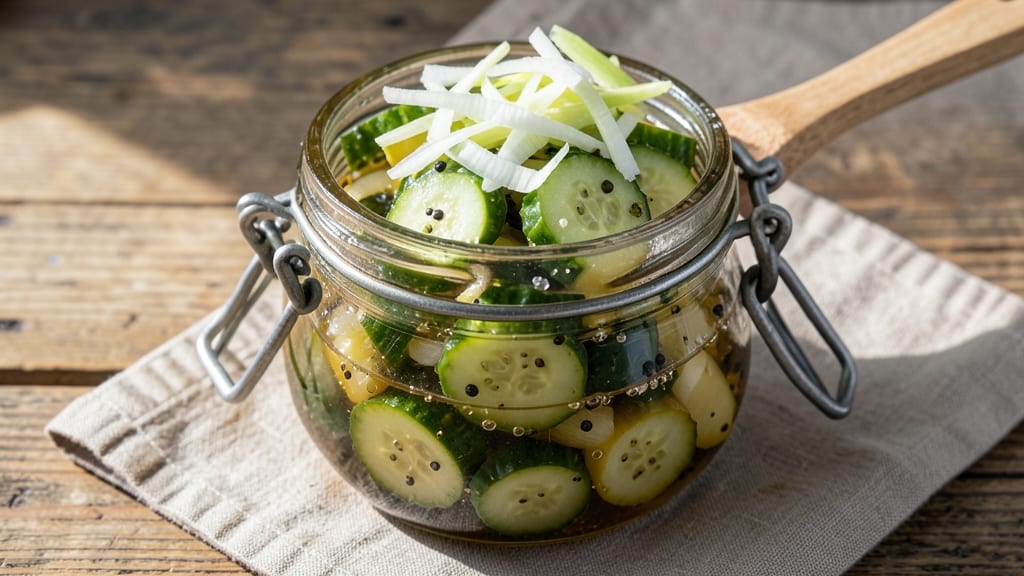
This bread and butter pickles recipe no canning delivers restaurant-quality crunch and tang in just 10 minutes—no pressure canner required. Standing on a step stool in my grandmother’s kitchen in Sicily, I learned how vinegar and sugar transform simple cucumbers into addictive bites.
The secret lies in balancing sweetness with sharp vinegar for that perfect bite.
What makes this recipe special is its simplicity: 5 ingredients, 15 minutes of active time, and no special equipment beyond a bowl and refrigerator. The vinegar brine creates crisp-tender cucumbers with a sweet-spicy kick, while mustard seeds and celery salt add depth.
This method preserves all the freshness of homemade pickles without the risk of canning.
By the time you taste the first bite, you’ll understand why these pickles disappear faster than they’re made. The crunchy texture and bright flavor make them perfect for sandwiches, charcuterie boards, or snacking straight from the jar.
Ready in less time than it takes to heat water for tea, this recipe proves great food doesn’t need complexity.
Serve alongside burgers, hot dogs, or cheese plates for an instant crowd-pleaser. Here’s everything you need to make them—no canning skills required.
Ingredients for bread and butter pickles recipe no canning
Five ingredients transform humble cucumbers into addictive vinegar bites with restaurant-quality crunch.
| Ingredient | Amount | Notes |
|---|---|---|
| Fresh Kirby Cucumbers 🥒 | 2 lb | Whole, unpeeled, 2-3 inches long |
| White Vinegar 💧 | 1 ½ cups | Distilled, 5% acidity minimum |
| Granulated Sugar 🍚 | 1 cup | Light brown preferred for depth |
| Celery Seed 🌿 | 1 tbsp | Freshly ground for optimal aroma |
| Mustard Seed 🌶️ | 1 tsp | Whole, yellow preferred |
| Celery Salt 🧂 | 1 tsp | Diamond Crystal preferred |
| Turbinado Sugar 🍚 | ½ cup | For final coating, coarse texture |
The cucumbers are non-negotiable—Kirby varieties are ideal for their crisp texture and small size. Local farmers markets often carry them in summer, but most grocery stores stock them year-round. Look for firm, unblemished specimens with vibrant green skins—avoid any with soft spots or yellowing. The vinegar should be distilled white vinegar (5% acidity minimum) for proper preservation; apple cider vinegar works but alters the flavor profile slightly. For the sugars, light brown sugar adds subtle molasses notes that elevate the sweetness, while turbinado sugar provides the signature crunchy coating. Penzeys Spices is my go-to for celery and mustard seeds—freshly ground celery seed makes all the difference in aroma.
No celery seed? Dried celery flakes at double the amount work in a pinch, though texture differs. Substitute 1/4 tsp ground mustard for whole seeds if needed, but the crunch is lost. For vinegar alternatives, white wine vinegar adds complexity but requires 1/2 tsp extra sugar to balance acidity. The Diamond Crystal celery salt is worth seeking out—its coarser grain and higher celery content make it superior to generic brands. If you can't find turbinado sugar, coarse kosher salt provides a similar texture, though flavor differs. The recipe holds firm with these swaps, though purists may notice differences.
These pickles reach peak crunch after 12-24 hours in the refrigerator, though they remain edible for 1 week. For longer storage, transfer to a clean glass jar and refrigerate—up to 2 weeks if submerged in fresh brine. The turbinado sugar coating hardens slightly over time, so add a splash of vinegar when serving if it appears dry. Portion into small containers for charcuterie boards or sandwich prep; the crunchy texture holds best when consumed within 3-4 days of making. Freezing isn't recommended as it destroys the crisp-tender texture.
Why You'll Love This Recipe
- No-Jar Needed: I swear by this method—just cucumbers, vinegar, and sugar in a jar, then pop it in the fridge. No canning, no pressure cooker, just pure simplicity that still delivers that classic tangy crunch.
- Sweet-Tangy Magic: That perfect balance of sugar and vinegar? It’s like a hug for your taste buds. The celery and mustard seeds add a subtle kick that makes these pickles irresistible—no weird aftertaste, just bold, bright flavor.
- Picnic & Party Hero: Slap these on a sandwich, toss them in a salad, or serve them straight from the jar at a BBQ. They’re my go-to for potlucks, tailgates, or even a lazy Sunday brunch—no fuss, all flavor.
- Fridge-Stable & Cheap: They keep for weeks in the fridge, so I always have a stash. And honestly? A bag of cucumbers and a bottle of vinegar are way cheaper than store-bought pickles—plus, I control the sweetness level. Win-win.
Step-by-step instructions for quick-pickled Kirby cucumbers
Here's the method for vibrant, crunchy pickles that capture all the classic bread-and-butter flavors without canning.
Prepare the Cucumbers for Quick Pickling
Begin by thoroughly washing the 2 lb fresh Kirby cucumbers under cold water to remove any dirt or debris. Using a sharp knife, trim off the blossom ends (the tiny flower stems) and cut each cucumber into 1-inch thick slices. I like to keep them slightly thick to maintain texture—thinner slices will soften too quickly in the vinegar bath.
Arrange the sliced cucumbers in a single layer on a clean kitchen towel or paper towels. Sprinkle lightly with 1 teaspoon celery salt and 1 teaspoon mustard seed, gently tossing to distribute evenly. This initial seasoning helps develop flavor immediately. Let them sit for 5 minutes while you prepare the pickling liquid—this brief resting period allows the cucumbers to absorb some of the spices before full immersion.
Create the Flavorful Vinegar Brine
In a medium saucepan, combine 1.5 cups white vinegar, 1 cup granulated sugar, 1 tablespoon celery seed, and 1 teaspoon celery salt. Bring the mixture to a gentle simmer over medium heat, stirring occasionally until the sugar completely dissolves—this should take about 3-4 minutes. The solution should be clear with no visible sugar crystals remaining.
Here's the thing—don't walk away while it heats. The vinegar can easily boil over if unattended, and you want that sugar to dissolve smoothly without scorching. Once dissolved, remove the pan from heat and let the liquid cool for 5 minutes—this prevents shocking the cucumbers when they're added later.
Combine and Infuse the Pickles
Transfer the cooled vinegar mixture to a heatproof glass jar or bowl large enough to hold all the cucumber slices. Add the prepared cucumbers, ensuring they're completely submerged in the liquid. If any slices float, gently press them down with a clean spoon. The ½ cup turbinado sugar should be sprinkled over the top at this stage—its coarse texture will cling to the cucumbers and add a delightful crunch.
Cover the jar with a lid or plastic wrap and let the pickles sit at room temperature for 10 minutes. This initial infusion period allows the flavors to begin penetrating the cucumbers. After 10 minutes, transfer the jar to the refrigerator and let them pickle for at least 2 hours before serving. The longer they sit, the more flavor they develop—up to 48 hours for maximum intensity.
Serve with Perfect Texture and Flavor
When ready to serve, remove the pickles from the refrigerator and let them sit at room temperature for 10-15 minutes before eating. This brief warming period enhances their natural crunch and allows the flavors to fully meld. The cucumbers should be firm yet tender, with a bright tang from the vinegar and subtle sweetness from the sugars.
Real talk: These pickles are best enjoyed within 1 week for peak texture. The turbinado sugar coating will crystallize slightly over time, adding an extra layer of complexity to each bite. Serve them alongside sandwiches, charcuterie boards, or as a refreshing snack on their own—their crisp texture and bold flavor make them irresistible.
Pro Tips For Making Bread And Butter Pickles Recipe No Canning
- Cut Cucumbers Even: Use a sharp knife and slice them ¼-inch thick—no thicker, or they’ll stay crunchy and undercooked. I learned this the hard way when my first batch came out mushy despite simmering; consistency matters more than you’d think.
- Salt the Brine First: Dissolve the salt in the vinegar before adding sugar or seeds—this guarantees even distribution. I used to toss everything in at once, and the salt would clump like sad little rocks at the bottom.
- Simmer Gently, Not Boil: Keep the heat at a low simmer (tiny bubbles, not rolling) for 20–25 minutes. Boiling turns pickles into sad, limp noodles, and no one wants that. A lid helps, but leave it cracked—steam’s the enemy here.
- Toast the Seeds: Dry-toast celery and mustard seeds in a pan for 30 seconds before adding them to the vinegar. This wakes up their flavor—my lazy days of just dumping them raw made the pickles taste like they were missing something.
Storing and reheating this recipe
Refrigerator Storage
Store your freshly made bread and butter pickles in an airtight glass container—I prefer mason jars with tight-sealing lids. The vinegar brine acts as a natural preservative, keeping them crisp and flavorful for up to 1 week in the refrigerator.
For best texture, ensure the cucumbers are fully submerged in the liquid. If they float, press them down gently with a clean spoon. The turbinado sugar coating will harden slightly over time, adding an extra crunchy layer—this is normal and enhances the flavor. 🥒
Portioning for Convenience
Divide the pickles into smaller quart-sized mason jars or plastic containers before storing. This makes them perfect for grab-and-go snacks or quick additions to sandwiches. Label each container with the date and store in the crisper drawer for maximum freshness.
I like to keep one jar in the fridge at all times for immediate use—these pickles disappear faster than you can say "bread and butter." The smaller portions also help maintain their crisp texture longer. ❄️
Reheating (If Needed)
While these pickles are best enjoyed cold, you can gently warm them if desired. Place the jar in a bowl of warm water (not hot) for 5-10 minutes to soften the turbinado sugar coating slightly. Avoid microwaving, as it can make the cucumbers mushy.
If the pickles seem dry after storage, add a splash of fresh vinegar brine (equal parts vinegar and water) to revive their tangy flavor. A quick toss with the brine restores their crispness and brightness. 💡
Freezing (Not Recommended)
Unfortunately, freezing isn't ideal for these pickles—the texture becomes soft and mealy, losing that signature crunch. If you must store them longer than 1 week, transfer them to a clean jar and refrigerate for up to 2 weeks.
The flavor remains vibrant, though the texture will be slightly less crisp. For best results, enjoy them fresh or within the 1-week window for that perfect bite. Honestly, the effort of making them fresh is worth the reward! ⏰
Reviving Stale Pickles
If your pickles lose some of their crunch after a few days, don’t toss them! Drain the cucumbers and toss them with 1 tablespoon fresh vinegar and ½ teaspoon sugar in a bowl. Let them sit for 10 minutes before serving.
This quick revive trick restores their tangy bite and slight crispness. I’ve used this method countless times—it’s a lifesaver when you’re craving that classic bread-and-butter flavor but forgot to make fresh ones. 💪
Serving Suggestions
Serve these pickles alongside sandwiches, burgers, or charcuterie boards for an instant flavor boost. Their sweet-spicy kick pairs perfectly with cheddar cheese, smoked meats, or even grilled chicken. For a quick snack, serve them straight from the jar with a cold beer or sparkling water.
The contrast of their bright tang against rich or creamy foods is what makes them irresistible. Trust me, once you try them, they’ll become a staple in your kitchen. 🍽️
Nutrition facts
Frequently asked questions
Why do these pickles need to rest before eating?
The 10-minute room temperature rest before refrigerating lets the vinegar and spices fully penetrate the cucumbers, creating that signature crisp-tender texture. Skipping this step means missing out on maximum flavor infusion and the perfect bite. Think of it like letting coffee steep—patience pays off!
Can I use regular table salt instead of celery salt?
Yes, but you'll lose that distinctive celery flavor that makes these pickles special. Use 1 teaspoon table salt plus ½ teaspoon dried celery flakes for a similar effect. The celery salt adds depth that plain salt can't replicate—it's worth seeking out for authentic results.
What if my pickles turn out too sweet or too sour?
Adjust the balance by adding 1 teaspoon sugar if too sour, or 1 tablespoon vinegar if too sweet. For the next batch, reduce sugar by ¼ cup if you prefer less sweetness, or increase vinegar by ¼ cup for more tang. Taste as you go—this recipe is all about finding your perfect balance!
How do I make these pickles spicier?
Add ½ teaspoon cayenne pepper or 1 teaspoon hot mustard powder to the vinegar mixture for heat. For a smoky kick, include ¼ teaspoon smoked paprika. Remember, spices build flavor over time, so let them pickle for the full 24 hours for maximum impact. Start small—you can always add more!
Can I make these pickles with different vegetables?
Try radishes (cut into thick slices) or carrots (julienned) for variation. The same method works, though texture and cooking time may vary. For radishes, reduce pickling time to 1 hour to maintain crispness. The vinegar brine formula remains the same—just adjust the vegetable prep accordingly.