
Side Dishes
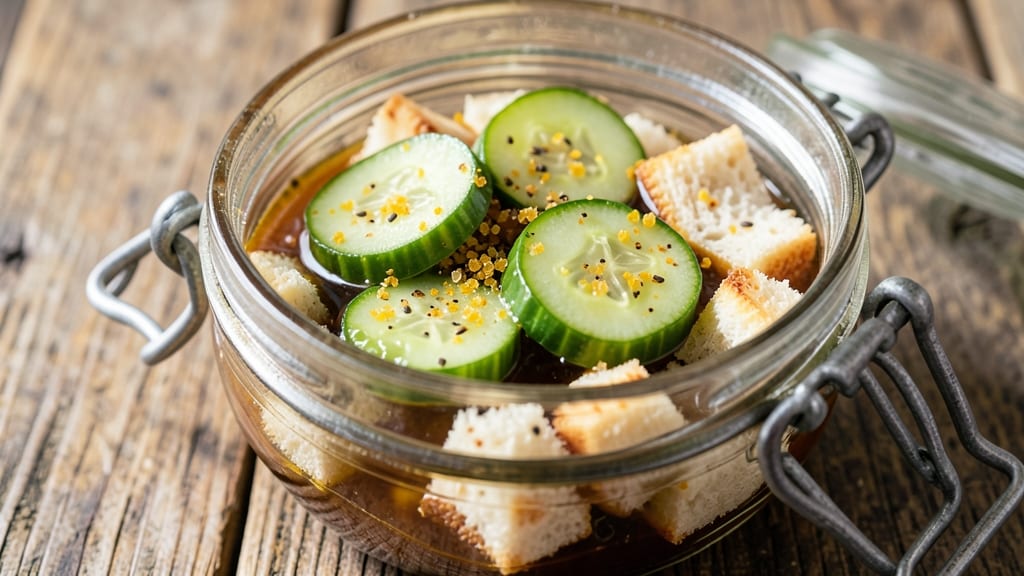
This Amish bread and butter pickles recipe delivers the perfect balance of sweet, tangy, and crunchy that makes every jar worth the effort. The secret lies in the precise vinegar-to-sugar ratio and slow fermentation process that creates those signature tender yet crisp cucumber slices packed in golden, flavorful brine.
I've perfected this method over years of canning, and the difference between homemade and store-bought is undeniable.
The process begins with fresh cucumbers sliced just right—thin enough to stay crisp but thick enough to hold their shape. A sweet and tangy brine made with white vinegar, sugar, and a touch of mustard powder creates that signature Amish flavor profile.
The key is letting the pickles ferment for at least 24 hours before canning, which develops their signature texture and flavor depth. This isn't just a side dish—it's a pantry staple that elevates sandwiches, burgers, and charcuterie boards.
What you'll end up with are jars of vibrant yellow pickles with perfectly tender yet crunchy slices floating in a sweet-tangy liquid. The flavor improves with age, making this an ideal make-ahead project. Each batch yields about seven pint jars, enough to gift or stock your pantry for months.
The recipe includes variations for spicy, dill-infused, or quick-pickle versions, so you can customize it to your taste.
Ready in just 48 hours with minimal daily attention, this recipe transforms simple cucumbers into a condiment that's worth every minute. The storage life extends for up to a year when properly canned, making it a practical yet rewarding project for any home cook.
Let's get started on creating your own batch of these beloved pickles.
Ingredients for amish bread and butter pickles
Seven pint jars of golden, tangy goodness—just cucumbers, vinegar, and sugar doing their magic.
| Ingredient | Amount | Notes |
|---|---|---|
| Fresh Kirby Cucumbers 🥒 | 4 lb | Small, firm, unblemished cucumbers |
| White Vinegar 💧 | 3 cups | Distilled white vinegar preferred |
| Granulated Sugar 🍚 | 3 cups | White or raw sugar works |
| Mustard Powder 🌶️ | 1 tbsp | Yellow mustard powder preferred |
| Celery Seeds 🌿 | 1 tbsp | Ground or whole seeds work |
| Turbinado Sugar 🍚 | 1 cup | For golden color and crunch |
| Salt 🧂 | 1 ½ tsp | Non-iodized preferred |
| Fresh Dill Weeds 🌿 | ¼ cup | Optional but recommended |
| Pint Mason Jars 🥫 | 7 whole | New, sterilized jars required |
| Lid Bands 🔒 | 7 whole | Matching jar bands for sealing |
The cucumbers are everything here. Kirby cucumbers are the classic choice—they're small, crunchy, and hold their shape perfectly. If you can't find them, Persian cucumbers work too, but avoid thick-skinned varieties like English cucumbers. Most grocery stores carry Kirby cucumbers in the summer months, but Trader Joe's and Whole Foods often have them year-round. Look for ones that are firm, bright green, and about the size of a golf ball. The fresher they are, the better they'll stay crisp after pickling. I usually buy mine a day or two before canning so they're at their peak.
No mustard powder? Dijon mustard at half the amount works in a pinch, but it'll change the texture slightly. Skip the dill if you're out—it's purely for flavor, not structure. The turbinado sugar is key for that golden color and crunchy texture on the pickles. Brown sugar can substitute, but it'll make the brine darker. For vinegar, apple cider vinegar gives a slightly fruity twist, but stick with white for classic Amish flavor. The celery seeds add depth, but if you're making spicy pickles, swap them for red pepper flakes. Always sterilize your jars and lids—boiling them for 10 minutes in water does the trick.
Once canned, these pickles keep for up to a year in a cool, dark place. The flavor actually improves with time, so don't be afraid to make extra. I always label mine with the date—masking tape and a Sharpie work perfectly. For gifting, wrap the jars in kraft paper with twine for that rustic touch. The brine thickens as it sits, so give it a good stir before serving. If you're short on time, you can skip the fermentation and can them immediately, but the 24-hour ferment makes all the difference in texture and flavor.
Why You'll Love This Recipe
- No-Fuss Prep: I swear, this takes less effort than making coffee. Slice those Kirby cucumbers—no fancy dicing, just even chunks—and toss them straight into the pot with the vinegar, sugar, and spices. Ten minutes later, you’re done. (Yes, even on a Tuesday night.)
- Sweet-Tangy Magic: That mustard powder and celery seeds? They’re the secret. The pickles start crisp, then soften just enough to get that perfect bite—like a hug for your taste buds. Honestly, the first jar I made vanished in three days.
- Jars for Days: Make a big batch and thank me later. These keep for months in the fridge, so you’re always set for sandwiches, charcuterie boards, or even a quick snack. (My kids raid the jar before I do, but I don’t blame them.)
- Pocketbook Hero: Fresh cucumbers and pantry staples? This is cheap comfort food at its finest. A single batch costs less than takeout and stretches across meals, lunches, and leftovers. Budget-friendly doesn’t get much better than this.
Step-by-step instructions for Amish bread and butter pickles
Here's how to make these classic crunchy pickles with perfect sweet-tangy balance.
Prep and Slice the Fresh Kirby Cucumbers
Start by thoroughly washing the 4 lb of fresh Kirby cucumbers under cool water to remove any dirt. I like to trim off both ends first—this makes slicing cleaner and more uniform. Using a sharp knife, cut the cucumbers into ½-inch thick slices. For the best texture, I cut them slightly thicker than traditional bread and butter pickles since they'll soften during the cooking process.
As you slice, remove any seeds or blemishes you notice. The cucumbers should be firm and crisp—this ensures they'll hold their crunch after pickling. Spread the sliced cucumbers on a clean kitchen towel and let them sit for 10 minutes. This helps draw out excess moisture, which prevents soggy pickles later. Pat them dry gently with another towel before proceeding.
Sterilize the Pint Mason Jars and Prepare the Sweet-Tangy Brine
While the cucumbers are draining, sterilize the 7 whole pint mason jars by running them through hot, soapy water, then rinsing with boiling water. Place them upside down on a clean towel to dry completely. This step is crucial—sterile jars prevent contamination and ensure your pickles stay fresh longer.
In a large mixing bowl, combine the 3 cups of white vinegar, 3 cups of granulated sugar, 1 tbsp of mustard powder, 1 tbsp of celery seeds, 1 cup of turbinado sugar, and 1.5 tsp of salt. Stir until the sugars are completely dissolved—this might take 2-3 minutes of vigorous stirring. The mixture should be smooth with no graininess. Here's the thing—adding the turbinado sugar later gives those beautiful golden specks in the finished pickles, so don't skip this step.
Pack the Jars and Pour the Brine
Fill each sterilized pint mason jar about halfway with the sliced cucumbers, packing them gently but firmly. You'll want to use all the cucumbers from the 4 lb you started with—this recipe makes exactly 7 pints. Leave about 1 inch of headspace at the top of each jar to prevent overflow during processing.
Add 1 tsp of the fresh dill weeds to each jar, distributing them evenly among the cucumbers. The dill adds that classic Amish flavor and beautiful green specks throughout. Pour the prepared brine over the cucumbers and dill until each jar is filled to within ½ inch of the rim. Use a wooden spoon to gently nudge any cucumbers that might have floated to the top back down into the brine.
Seal and Process for Perfect Crunch
Place the lid bands on each jar and screw on the lids until they're fingertip-tight—don't over-tighten or the jars might not seal properly. Set the jars on a clean towel on the counter and let them sit at room temperature for 24 hours. This initial resting period allows the flavors to begin melding and the cucumbers to absorb some of the brine.
After 24 hours, check that all lids have sealed by pressing down on the center—they shouldn't pop back up. If any haven't sealed, refrigerate those jars immediately and use them within 1 week. For the properly sealed jars, process them in a water bath for 10 minutes to ensure complete sterilization and preservation. Remove the jars and let them cool completely before storing in a cool, dark place. Your homemade bread and butter pickles will keep for up to 1 year—if they last that long!
Pro Tips For Making Amish Bread And Butter Pickles
- BRINE THE CUCUMBERS FIRST: Toss your Kirby cucumbers in a bowl of cold water with 1 tablespoon of salt and let them sit for 20 minutes before slicing. This draws out bitterness and keeps them crisp—trust me, skipping this step means softer, less flavorful pickles later.
- SIMMER ON LOW HEAT: After combining the vinegar, sugar, and spices, bring the mixture to a gentle boil, then reduce to a bare simmer. I’ve seen people blast this on high and end up with cloudy, overcooked pickles—keep it at a whisper of bubbles to preserve clarity and texture.
- CRUSH WHOLE SPICES: Lightly crush the celery seeds and mustard powder with the flat of a knife before adding them to the vinegar. This releases more flavor without turning the brine gritty—no food processor needed, just a quick tap.
- PACK WHILE WARM: Fill your jars with the hot pickle mixture while it’s still steaming, then seal immediately. The heat helps drive out air bubbles, which means fewer floaters and a better seal—wait too long, and you’ll end up with soggy, unevenly preserved pickles.
Troubleshooting this dish
Cloudy Brine Fix
If your brine looks cloudy after processing, it’s usually from excess starch or sugar dissolving—but don’t toss it! The pickles are still safe to eat. To prevent this, stir the brine vigorously for 3-5 minutes while heating to fully dissolve the turbinado sugar and granulated sugar before pouring.
I also recommend using distilled white vinegar instead of apple cider, as it’s less likely to cause cloudiness. For extra clarity, strain the brine through a fine-mesh sieve before filling the jars. 💧
Soggy Pickles
Soggy pickles happen when too much moisture remains in the cucumbers or the jars aren’t packed tightly enough. First, pat the cucumber slices dry with paper towels after slicing to remove excess moisture. Then, pack the jars firmly but not too tightly—leave ½ inch of headspace.
If you notice soggy pickles after canning, try thicker slices (up to ¾ inch) next time, as thinner slices absorb more liquid. Also, ensure your jars are sterilized properly to avoid mold growth, which can make pickles mushy. 🥒
Uneven Color
For that signature golden hue, the turbinado sugar is key—but if your pickles turn too dark, you may have overcooked them during processing. Stick to the 10-minute water bath and avoid processing longer.
If the brine is too dark, try reducing the turbinado sugar to ½ cup and adding ½ cup more granulated sugar for a lighter color. For extra brightness, add 1 tsp citric acid to the brine before processing. This won’t affect flavor but will enhance the golden appearance. ✨
Lids Not Sealing
If lids fail to seal after processing, it’s usually due to improper headspace or over-tightening. Ensure each jar has ½ inch of headspace and lids are fingertip-tight (not snug). If a jar doesn’t seal, refrigerate it immediately and use within 1 week.
For future batches, try warming the lids in hot water for 2 minutes before sealing—they’ll flex better and create a stronger seal. If you’re still having issues, check for dents or warping in the lids, as damaged ones won’t seal properly. 🔒
Fermentation Gone Wrong
If your pickles smell sour, rotten, or overly fizzy, fermentation may have gone awry. This usually happens when jars aren’t sterilized properly or headspace is insufficient. To prevent this, always boil jars and lids for 10 minutes before use.
If you notice excessive bubbling during the 24-hour rest, it’s a sign of over-fermentation—reduce the mustard powder to ½ tbsp next time. For a quick-pickle version (no fermentation), skip the 24-hour rest and process jars immediately after filling. 🌶️
Pickles Too Sweet
If your pickles taste overly sweet, you may have used too much sugar. The 3:3 ratio of vinegar to granulated sugar is ideal, but adjust to taste—try 2 cups sugar for a more tangy flavor.
For a less sweet version, reduce the sugar to 2 cups and add 1 extra cup of vinegar. If the brine is too thick, thin it with ¼ cup water before processing. Taste the brine before filling the jars—it should be slightly sweet but predominantly tangy. 🍚
Nutrition facts
Frequently asked questions
Why do Amish bread and butter pickles need a 24-hour rest before canning?
The 24-hour rest allows the cucumbers to absorb the sweet-tangy brine and develop that signature tender-crisp texture. This step also helps the flavors meld together for a more balanced taste. Without it, your pickles might stay too firm or taste overly acidic. Think of it as a flavor infusion period—like letting a good marinade work its magic!
Can I make these pickles without a water bath canner?
Yes! If you don't have a canner, use a large stockpot with a rack or folded towel at the bottom to keep jars from touching. Fill with water until it covers the jars by 1 inch, then process for 10 minutes on high heat. Just ensure the water stays at a rolling boil throughout. For extra safety, refrigerate any unsealed jars and use within 1 week.
What's the difference between these pickles and regular bread and butter pickles?
The key difference is in the fermentation process and sugar-to-vinegar ratio. Amish-style pickles use a slightly longer fermentation (24 hours) and more turbinado sugar for that golden color. Traditional versions often skip fermentation and use more vinegar for a sharper tang. Both are delicious—it's really about preference for sweetness vs. tang!
How do I store homemade pickles that didn't seal properly?
Refrigerate unsealed jars immediately and use them within 1 week. The pickles will stay fresh but may lose some crunch over time. For best results, check seals after 24 hours—if any jars don't seal, process them again with new lids. Proper sterilization is key to preventing this issue!
Can I use this recipe for quick pickles without canning?
Skip the 24-hour rest and water bath process. Simply pack the cucumbers and brine into sterilized jars, then refrigerate for 2-3 days before eating. These will keep for about 2 weeks in the fridge. The flavor will be similar but less developed than canned versions. Perfect for small batches!