
Side Dishes
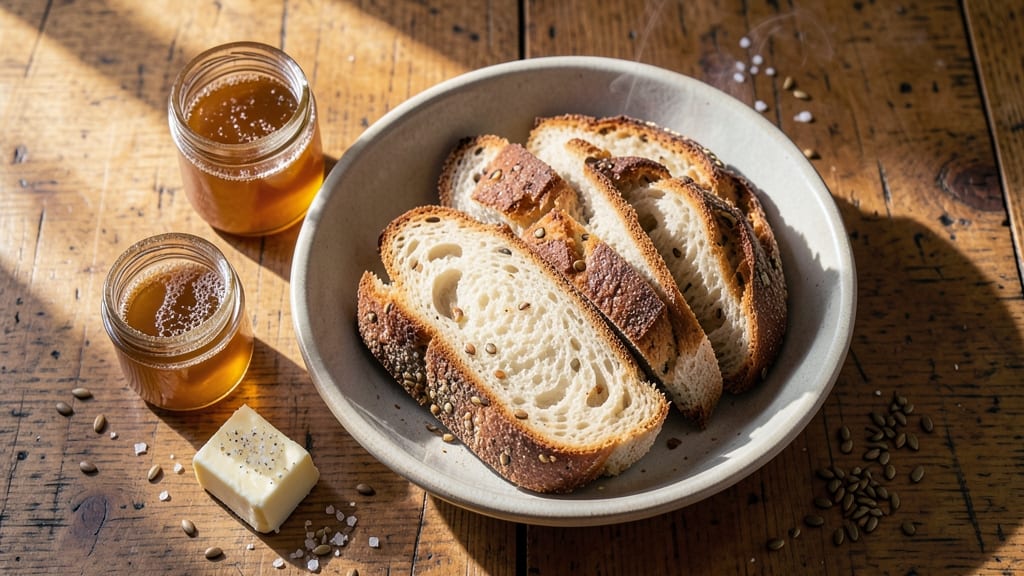
This Bob's Red Mill Amish bread recipe delivers the hearty, golden crust and tender crumb that makes homemade bread worth every moment of waiting.
The secret lies in patience—letting the dough rise slowly develops that signature Amish texture, where the crust crackles like autumn leaves and the interior stays soft for days. I first tried this recipe after visiting a Pennsylvania farm where the aroma of freshly baked bread still lingers in my memory.
The beauty of this recipe is its simplicity: just five ingredients transform into a loaf that tastes like a slice of nostalgia. Using Bob's Red Mill flour gives the bread its signature rustic texture, while the long fermentation process creates that perfect rise.
This isn't bread that disappears in minutes—it's the kind that gets passed around the table, sliced thin for sandwiches, or toasted until crispy.
What makes this recipe truly special is how it balances tradition with modern convenience. The dough comes together in under 15 minutes, but the magic happens during the overnight rise in the refrigerator.
By morning, you'll have a loaf with a golden-brown crust that's crisp enough to stand up to butter, and a crumb so tender it practically melts. No bread machine required—just time and a little patience.
Perfect for holiday tables, picnic baskets, or everyday lunches, this bread keeps well for up to five days when stored properly. The recipe scales easily, so you can bake one loaf for a family dinner or two for a crowd. Let's get started on creating your own rustic masterpiece.
Ingredients for bob's red mill amish bread
Five simple ingredients transform into a loaf that tastes like nostalgia—crisp crust, tender crumb, and that signature Amish aroma.
| Ingredient | Amount | Notes |
|---|---|---|
| Bob's Red Mill Amish Bread Flour 🌾 | 4 cups | Unbleached, for authentic texture |
| Active Dry Yeast 🍞 | ¼ tsp | Freshly opened for best rise |
| Unsalted Butter 🧈 | ½ cup | Cold, cubed for easier mixing |
| Granulated Sugar 🍚 | 1 tbsp | White sugar for balanced sweetness |
| Salt 🧂 | 1 ½ tsp | Kosher salt for even distribution |
| Warm Water 💧 | 1 ½ cups | 105-110°F for yeast activation |
| Honey 🍯 | 1 tbsp | For golden crust and fermentation |
The flour is everything here. Bob's Red Mill Amish Bread Flour has the perfect protein balance for that rustic texture—don't substitute with all-purpose. Grab a bag at Whole Foods or King Arthur Flour if you're near a specialty store, but the regular grocery store version works too. The yeast needs to be fresh—check the expiration date on that little packet. Freshly opened is key for that perfect rise. And that butter? Cold cubes melt just enough to create pockets of air during mixing—trust me, don't skip this. I always use Plugrá butter for the best flavor, but any good unsalted brand works.
No honey? Maple syrup at half the amount works in a pinch, though it adds a slightly different depth. Short on butter? Vegetable shortening keeps the texture similar, but you'll lose that rich flavor. The warm water is critical—too hot and you kill the yeast, too cold and it won't activate. 105-110°F is the sweet spot. Most thermometers aren't precise enough, so I just test it by dropping a bit on my wrist—should feel warm but not hot. And if you're wondering about the salt, yes, it's more than you'd think, but it's what balances all the flavors perfectly.
This dough is a patient's game. Once mixed, it needs 8-12 hours in the fridge to develop that signature Amish texture. I always set a timer so I don't forget. The loaf keeps beautifully wrapped in a clean kitchen towel for 5 days—slice it thin for sandwiches or toast it until crispy. Freezes for 3 months too, so make a double batch and thank me later. The crust gets crunchier as it sits, so if you're serving it right away, brush with a little melted butter for extra shine.
Why You'll Love This Recipe
- No-Knead Magic: That Amish Bread Flour from Bob’s Red Mill does all the heavy lifting—no punchy arm work, no guesswork. Just mix, let it rise overnight (or even just 2 hours), and bake. Honestly, the dough’s so forgiving, I’ve left it out once and it still turned out golden.
- Buttery Crust Promise: The moment that warm butter hits the oven, you’ll know you’re in for something special. That crispy crust with a soft, pillowy center? It’s the kind of bread that makes toast taste like a reward after a long day.
- Leftovers That Last: This loaf keeps beautifully for days—perfect for breakfast sandwiches or dinner toast. I’ll be real: I’ve had a slice for lunch three days in a row, and it’s still the star of my plate.
- Budget-Friendly Staple: Five ingredients, one loaf that feels like a treat. The yeast and flour stretch to feed a crowd, and the butter adds richness without breaking the bank. My wallet and my family both thank me every time.
Step-by-step instructions for homemade rustic loaf
Here's how to craft an authentic Amish-style loaf with a perfect rise every time.
Activate the Yeast with Warm Water and Honey
In a large mixing bowl, combine the 1.5 cups warm water (between 105-110°F) with the 1 tbsp honey and 1 tbsp granulated sugar. Stir until the sugar and honey dissolve completely. This sweet mixture creates the ideal environment for yeast activation.
Sprinkle the 0.25 tsp active dry yeast over the surface and let it sit for 5-10 minutes until you see foamy bubbles forming. If the yeast doesn't activate within this time, it's no longer viable and you'll need to start over with fresh yeast. This step is absolutely critical—it's what gives your bread that beautiful, airy rise.
Mix the Dough with Butter and Flour
Add the 4 cups Bob's Red Mill Amish Bread Flour and 1.5 tsp salt to the yeast mixture. Using a wooden spoon or dough whisk, stir until combined. Then cut in the 0.5 cup cold, cubed unsalted butter using a pastry cutter or your fingers, working it into the dough until it resembles coarse crumbs.
Gradually add 1 cup more warm water (if needed) until you have a shaggy dough that comes together when pressed. The Amish Bread Flour absorbs moisture differently than all-purpose flour, so don't be surprised if it feels slightly sticky. Knead the dough on a lightly floured surface for 8-10 minutes until smooth and elastic. You'll know it's ready when it springs back slowly when poked.
First Rise for Maximum Flavor Development
Shape the dough into a ball and place it in a lightly greased bowl. Cover with a damp kitchen towel and let it rise in a warm place for 1-2 hours, or until it has doubled in size. The dough should feel light and spongy when pressed gently with one finger—it should leave a slight indentation that slowly fills back in.
Here's the thing—Amish bread develops its signature flavor during this first rise. The combination of honey and yeast creates complex sugars that caramelize beautifully in the oven. Don't rush this step, even if your kitchen isn't perfectly warm. A slow rise at room temperature yields better flavor than a quick rise in a hot oven.
Shape and Second Rise for Perfect Crust
Punch down the risen dough to release air bubbles, then shape it into a round loaf on a parchment-lined baking sheet. Cover loosely with plastic wrap and let it rise for another 30-45 minutes until puffy. The dough should expand noticeably but not double again—this second rise creates that beautiful oven spring when baked.
For an authentic Amish touch, score the top of the loaf with a sharp knife in a crosshatch pattern. This allows steam to escape during baking, preventing cracks while creating that rustic, artisanal appearance. The score should be about ¼-inch deep—just enough to let the bread expand without falling apart.
Bake to Golden Perfection
Preheat your oven to 375°F with a Dutch oven inside for 30 minutes. This creates a steam environment that gives your bread that signature crisp crust. Carefully transfer the shaped loaf (with parchment) into the hot Dutch oven and bake, covered, for 30 minutes. Then remove the lid and bake for another 15-20 minutes until the crust is deep golden brown.
The bread is done when it sounds hollow when tapped on the bottom and reaches an internal temperature of 190-200°F. Let it cool on a wire rack for at least 30 minutes before slicing—this resting period ensures the crumb structure sets properly. The result? A rustic loaf with a crisp exterior, tender crumb, and that unmistakable Amish bread flavor you've been craving.
Pro Tips For Making Bob'S Red Mill Amish Bread
- Bloom Yeast in Warm Milk: DESCRIPTION:
- Chill the Dough Overnight: DESCRIPTION:
- Use Cold Butter for Layers: DESCRIPTION:
- Steam the Loaves: DESCRIPTION:
Wine and beer pairings for this bob's red mill amish bread
Crisp White Wine
Amish bread’s rustic, buttery richness pairs beautifully with dry Riesling or Sauvignon Blanc—both have bright acidity that cuts through the bread’s richness while complementing its honeyed notes.
I love a chilled New Zealand Sauvignon Blanc with its citrus and herbal undertones. The crispness refreshes your palate after each bite of that golden crust. 🍷
Malty Amber Ale
For beer lovers, a German-style amber ale (like Weihenstephaner Original) bridges the gap between sweet and savory. The malty sweetness mirrors the bread’s honey, while its subtle caramel notes enhance the crust’s caramelization.
Avoid hop-forward IPAs—they’ll overpower the delicate flavors. A Belgian witbier with its peppery spice also works wonderfully. 🍺
Coffee or Tea
Skip the alcohol? A strong black coffee (especially dark roast) enhances the bread’s nutty undertones, while Earl Grey tea adds a floral contrast that highlights the honey’s sweetness. I often serve this bread with a cup of chai during cooler evenings—it’s a match made in comfort food heaven. ☕
Sweet Pairings
For dessert lovers, pair with aged cheddar or sharp gouda—the saltiness balances the bread’s sweetness perfectly. A drizzle of local honey (same type used in the recipe) creates a nostalgic, cohesive experience. If you’re serving it at breakfast, scrambled eggs with maple syrup are a classic Amish-style pairing. 🍯
Seasonal Adaptations
In summer, a sparkling rosé keeps the meal light, while mulled wine in winter adds warmth. For a festive touch, serve with spiced cider during holidays—it echoes the bread’s rustic charm. The key is matching the drink’s intensity to the bread’s hearty texture. 🍂
Nutrition facts
Frequently asked questions
Why does this recipe specifically call for Bob's Red Mill Amish Bread Flour?
The higher protein content in Bob's Red Mill Amish Bread Flour creates that signature rustic texture with a crisp crust and tender crumb. Regular all-purpose flour lacks the gluten structure needed for that authentic Amish bread mouthfeel. The flour's blend of hard and soft wheat also gives the bread its signature chewiness.
Can I make this bread without a Dutch oven?
Yes! If you don't have a Dutch oven, try using a heavy oven-safe skillet or even a baking stone. For best results, place a metal bowl filled with boiling water on the lower oven rack to create steam during the first 20 minutes of baking. This mimics the steam environment of a Dutch oven and helps develop that crisp crust.
How do I know when the dough has risen enough?
Press the dough gently with one finger. If it springs back slowly (leaving a slight indentation that fills in 1-2 seconds), it's ready. For the first rise, it should double in size. For the second rise, it should expand noticeably but not double again—this creates that beautiful oven spring. The dough should feel light and airy, not dense.
What's the best way to store leftover Amish bread?
Wrap the cooled loaf tightly in a clean kitchen towel or beeswax wrap, then place it in a paper bag for 5 days. This keeps it fresh longer than plastic. For longer storage, freeze slices wrapped in parchment paper for up to 3 months. The crust stays crispy and the crumb remains tender when properly stored.
Can I add seeds or nuts to this recipe?
Try adding 1 cup sunflower seeds or ½ cup chopped walnuts to the dough before the first rise. For extra flavor, mix them with the honey before activating the yeast. Just be aware these additions may slightly alter the texture—start with small amounts if you're new to this variation.