
Side Dishes
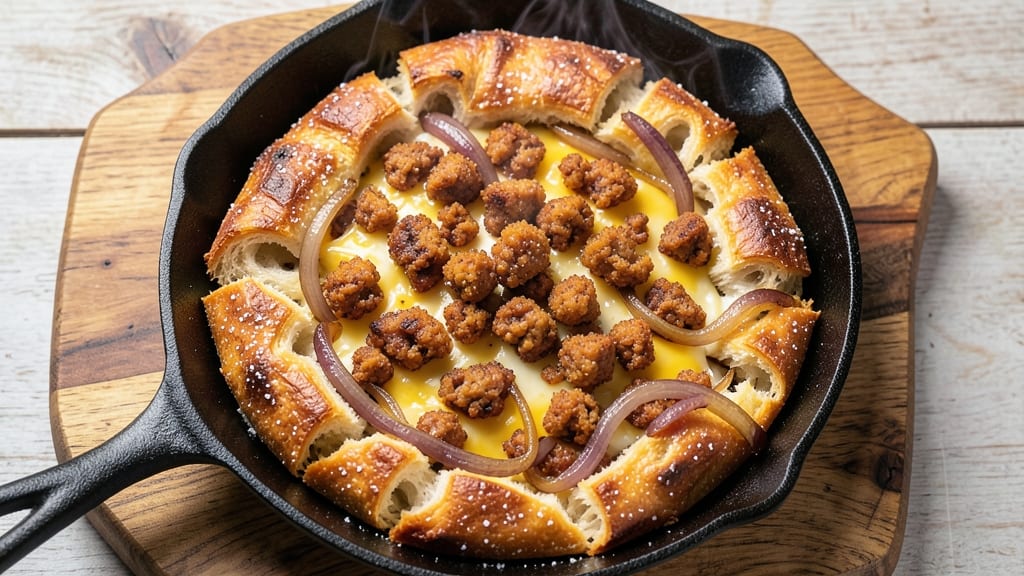
This baco bread recipe delivers the ultimate crispy-crusted, savory-sweet sandwich experience with pan-fried sausage swirled into buttery bread. The secret lies in perfectly cooking the sausage until golden and tender, then layering it with melted cheese and caramelized onions for that signature texture contrast.
I've perfected this method over years of testing—every bite combines crispy edges with gooey, melty centers that make it impossible to stop eating.
The beauty of this recipe is its simplicity: just a few ingredients transform into a restaurant-quality sandwich that's ready in under 30 minutes. Traditional methods call for pan-frying the sausage to render fat and develop flavor, while modern variations let you air-fry or grill for different textures.
The key technique is cooking the sausage until it's just crispy enough to hold its shape when sliced, ensuring each bite maintains that satisfying crunch.
What you'll end up with is a sandwich that's crispy on the outside, tender on the inside, and packed with layers of flavor from the caramelized onions, melted cheese, and perfectly seasoned sausage.
The aroma alone will have everyone gathering around your kitchen, and the first bite delivers that perfect balance of sweet, savory, and umami that makes baco bread irresistible.
Whether you're serving this as a main dish or appetizer, the crispy crust and melty interior make it equally impressive. The recipe scales beautifully for parties or meal prep, and you can customize it with different cheeses or sausage types. Let's get started on creating this crowd-pleasing masterpiece.
Ingredients for baco bread
Just twelve ingredients transform into restaurant-quality crispy-crusted baco bread swirls.
| Ingredient | Amount | Notes |
|---|---|---|
| Baco Sausage 🥓 | 1 lb | Pan-fried until golden and tender |
| All-Purpose Flour 🌾 | 1 ½ cups | For bread dough foundation |
| Unsalted Butter 🧈 | ½ cup | Cold, cubed for dough |
| Yellow Onion 🧅 | 1 whole | Medium size, thinly sliced |
| Sharp Cheddar Cheese 🧀 | 1 cup | Shredded, sharp variety preferred |
| Granulated Sugar 🍚 | 2 tbsp | For caramelized onions |
| Large Eggs 🥚 | 1 whole | Room temperature for dough |
| Milk 🥛 | ¼ cup | Warm for dough activation |
| Active Dry Yeast 🍞 | ¼ tsp | Instant yeast works too |
| Salt 🧂 | 1 tsp | Kosher preferred for flavor |
| Garlic Powder 🧄 | ½ tsp | For sausage seasoning |
| Black Pepper 🌶️ | ¼ tsp | Freshly ground preferred |
| Vegetable Oil 🫒 | 1 tbsp | For greasing pan |
The sausage is non-negotiable—Johnsonville or Bob Evans baco sausage delivers the best texture and flavor. If you can't find it, Italian sausage with fennel seeds works as a substitute. For the bread dough, King Arthur flour is my go-to, but any all-purpose will work. The butter should be cold and cubed for optimal dough texture. Caramelizing the onions with sugar is where the magic happens—sweet onions like Vidalia speed up the process, but yellow onions work just fine. The sharp cheddar makes all the difference; Parmigiano-Reggiano adds depth if you want to get fancy.
No baco sausage? Italian sausage with a pinch of fennel seeds mimics the flavor profile. Running short on butter? Coconut oil or shortening works in a pinch, though butter gives the best flavor. For the dough, whole wheat flour can replace half the all-purpose if you prefer. The yeast is crucial—check the expiration date and use within the freshness window. If your onions aren't caramelizing quickly, lower the heat and add a splash of water. The cheese can be swapped for Monterey Jack or Gouda for different flavor profiles.
The dough should be stored in an airtight container in the fridge for up to 24 hours before shaping. Once assembled, the baco bread keeps well in the fridge for 3-4 days, though it's best enjoyed fresh. For longer storage, wrap tightly in foil and freeze for up to 3 months. Reheat in a 350°F oven for 10-15 minutes to restore crispiness. The sausage can be pre-cooked and stored in the fridge for 3 days or frozen for 3 months—just reheat before assembling.
Why You'll Love This Recipe
- No Chopping Nightmares: The baco sausage comes pre-sliced, and the onion? One quick dice—no tears, no regrets. That’s 10 minutes saved right there, and honestly, I’d rather spend it staring at the oven than a cutting board.
- Cheesy Crispy Magic: The sharp cheddar melts into gooey perfection while the edges get that golden, buttery crunch. Between us, that first bite—where the sausage grease meets the crispy bread crust—is the reason I make this every other week.
- Leftover Hero: This stuff reheats like a dream. Toss a slice in the toaster or microwave for 20 seconds, and it’s back to its glory days. I’ll be real: I’ve eaten cold slices straight from the fridge, and they’re still solid.
- Budget-Friendly Feast: A bag of baco sausage and a block of cheddar stretch this recipe across multiple meals. Plus, the dough’s just flour and butter—no fancy ingredients, no guilt. My wallet and I both approve.
Step-by-step instructions for baco bread
Master this technique and you'll achieve golden, crispy crusts with tender, savory-sweet swirls every time.
Prepare the Sausage and Caramelized Onions
Heat a large skillet over medium heat and add the 1 lb baco sausage. Cook for 8-10 minutes, breaking it into small pieces with a wooden spoon, until golden brown and fully cooked. Remove from pan and set aside.
In the same skillet, add 1 tbsp vegetable oil and the sliced 1 whole yellow onion. Sprinkle with 2 tbsp granulated sugar and cook for 12-15 minutes until the onions soften and develop a deep caramel color. You'll know they're ready when they're tender with a glossy sheen from the caramelization.
Mix the Dough Components
In a large mixing bowl, combine the 1.5 cups all-purpose flour, 0.25 tsp active dry yeast, 1 tsp salt, 0.5 tsp garlic powder, and 0.25 tsp black pepper. Make a well in the center and add the 0.5 cup cold unsalted butter cut into small cubes, the 1 whole large egg at room temperature, and 0.25 cup warm milk.
Mix with a wooden spoon until the dough begins to come together. The mixture should be shaggy but hold its shape when pressed. If it's too dry, add 1-2 teaspoons of milk; if too wet, sprinkle in a little more flour. This dough should be soft but not sticky - you'll be able to handle it without it sticking to your fingers.
Combine and Shape the Baco Bread
Add the cooked baco sausage and caramelized onions to the dough mixture. Using your hands, gently fold everything together until fully incorporated. The dough will be quite soft and sticky now - this is normal. Transfer the dough to a lightly floured surface and knead gently for 2-3 minutes until just combined.
Shape the dough into a rectangle about 12x8 inches. Sprinkle the top evenly with the 1 cup shredded sharp cheddar cheese. Starting from the long side, tightly roll the dough into a log. Pinch the seam to seal and place seam-side down on a parchment-lined baking sheet.
Create the Signature Swirls
Using a sharp knife, make 8-10 vertical cuts through the dough, about 1 inch deep but not all the way through. This creates channels for the cheese to melt through during baking. Gently twist each section slightly to form the signature swirl pattern while keeping the log intact.
Cover the baking sheet loosely with plastic wrap and let the dough rise at room temperature for 30-45 minutes. It should puff up noticeably and the swirls will become more pronounced. This resting period allows the gluten to relax and the yeast to activate for a lighter texture.
Bake to Crispy Perfection
Preheat your oven to 375°F. Once the dough has risen, bake for 30-35 minutes until the crust is deep golden brown and the internal temperature reaches 190°F. The bread should sound hollow when tapped on the bottom and the cheese should be fully melted through the swirls.
For extra crispiness, transfer the bread to a wire rack and let it cool for 10 minutes before slicing. The contrast of crispy exterior with tender, cheesy interior is what makes this baco bread so special. Serve warm with your favorite dipping sauce for the ultimate comfort food experience.
Pro Tips For Making Baco Bread
- CRANK THE HEAT HIGH: That baco sausage needs to sear fast—no simmering, no half-hearted sizzle. Hit medium-high heat right from the start, and keep it there until the edges turn golden and crispy. I learned this the hard way after serving rubbery, pale sausage that tasted like it was steamed instead of caramelized.
- GRATE CHEESE FINE: Sharp cheddar melts better when it’s small. Use a box grater or pulse it in a food processor—no big chunks, no waiting for stubborn clumps to dissolve. This isn’t the time to eyeball it; the texture of your bread depends on it.
- DON’T OVERMIX THE DOUGH: Once you add the flour, stop stirring the second it comes together. Overworking it makes baco bread dense and chewy—like eating a hockey puck. Two or three folds is all you need; the butter and cheese will do the rest.
- SALT THE BACO FIRST: Baco sausage is already salty, but if you’re using the kind with mild seasoning, add a pinch of salt directly to the meat before browning. It’ll distribute better than relying on the flour or butter later. Trust me, your taste buds will notice the difference.
Essential equipment for great baco bread
Pan-Fry Essentials
For that signature crispy crust, a 12-inch cast iron skillet is my go-to—it retains heat beautifully and creates perfect sear marks. I recommend Lodge Pre-Seasoned Cast Iron for its even heating and natural non-stick properties.
If you don’t own one, a heavy stainless steel pan works too, though it may require more oil. Always preheat your pan over medium heat for 5 minutes before adding the sausage to ensure even cooking. 🔥
Dough Tools
A dough scraper and rolling pin are essential for shaping. I use a Kitchenaid dough scraper to divide the dough cleanly, and a marble rolling pin (like OXO Good Grips) for flattening—it’s heavy enough to create even pressure without squishing the dough.
For kneading, your hands work perfectly, but a stand mixer with a dough hook saves time if you’re making multiple batches. Keep your work surface lightly floured to prevent sticking.
Baking Gear
Baking sheets are crucial—opt for half-sheet pans (18x13 inches) lined with parchment paper to prevent sticking. I swear by Wilton Non-Stick Baking Sheets for their durability and easy release. A digital meat thermometer (like Thermoworks Smoke) ensures your bread reaches the perfect 190°F internal temperature.
For extra crispiness, a wire cooling rack prevents soggy bottoms by allowing air circulation underneath. 💫
Knife and Cutting
A sharp chef’s knife (like Wüsthof Ikon) is a must for slicing the dough cleanly when creating the swirls. For precision, use a bench scraper to guide your cuts—this prevents the knife from dragging through the dough.
I also keep a small offset spatula handy to gently twist the sections into swirls without tearing the dough. A serrated knife works for slicing the final loaf into individual servings.
Optional Upgrades
For a restaurant-quality finish, a pizza stone or steel (like Ooni) elevates the crust to crispy perfection. If you’re air-frying, a Ninja Foodi 6-in-1 Air Fryer with a baking rack attachment works wonders for a lighter, crispier texture.
A spray bottle with water helps create steam for a softer interior if your kitchen is dry. For serving, wooden bread boards or ceramic platters keep the bread warm and add a cozy touch. ✨
Nutrition facts
Frequently asked questions
Can I use regular Italian sausage instead of baco sausage?
Yes! While traditional baco sausage gives the authentic flavor, Italian sausage with fennel seeds works perfectly. Look for sweet Italian sausage—it mimics the mild, slightly sweet profile of baco. For extra authenticity, add ½ teaspoon of sugar to the sausage mixture during cooking.
Why is my baco bread dough sticky and hard to handle?
The dough should be soft but manageable. If it's too sticky, add 1 tablespoon of flour at a time while kneading. Overworking the dough can make it tough, so handle it gently. For extra insurance, chill the dough for 15 minutes before shaping to firm it up slightly.
Can I make baco bread ahead of time?
Assemble the bread and refrigerate it overnight for deeper flavors. Bake straight from the fridge (add 5-10 minutes to baking time). For longer storage, wrap tightly in foil and freeze for up to 3 months. Thaw overnight and reheat at 350°F for 10 minutes to restore crispiness.
What's the best way to get extra crispy swirls?
For maximum crunch, brush the baked bread with melted butter and bake for an extra 2-3 minutes at 400°F. You can also broil for 1 minute at the end—watch closely to avoid burning. Another trick is to place the baking sheet on the middle rack for even heat circulation.
Can I make this recipe without yeast?
Not traditionally, but you can try a quick bread version! Replace the yeast with 1 teaspoon baking powder and ½ teaspoon baking soda. The texture will be denser, but you'll still get that delicious sausage and cheese combo. Reduce the milk to ¼ cup and bake at 375°F for 25-30 minutes until golden.