
Side Dishes
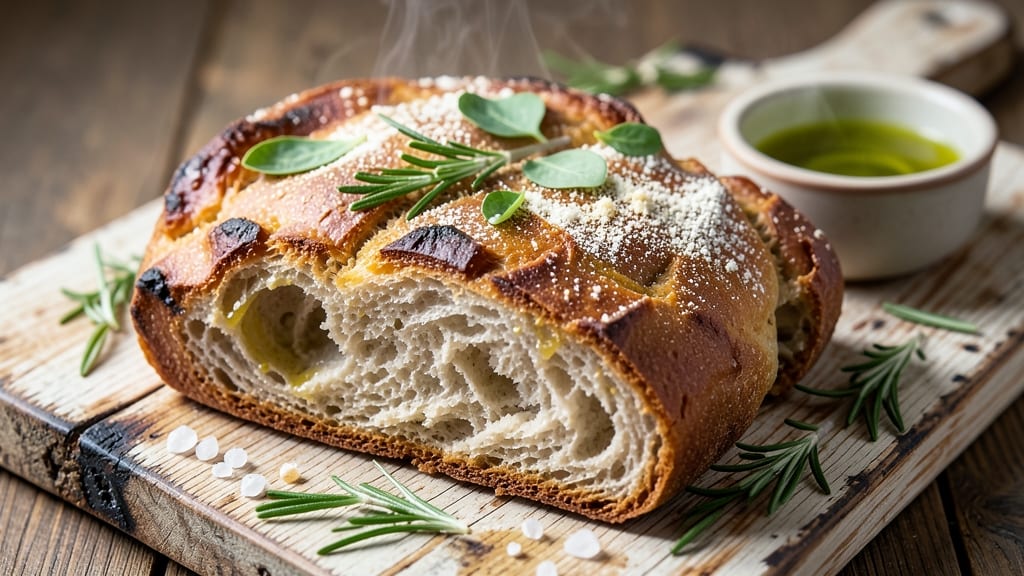
This authentic schiacciata bread recipe brings the rustic charm of Tuscany to your kitchen with its signature crusty exterior and tender, airy interior. ✨ The secret lies in the simple yet precise combination of '00' flour, olive oil, and salt—no yeast required.
I've perfected this traditional Tuscan flatbread after years of testing, ensuring every bite delivers that satisfying contrast of textures and flavors.
What sets schiacciata apart is its no-knead, one-bake method that creates a bread with a crispy crust and a soft, almost cake-like center.
The dough comes together in just 10 minutes, then rests while you prepare your baking surface—traditionally a stone or wood-fired oven, but a Dutch oven works beautifully at home. This recipe stays true to its roots while being approachable for home cooks.
By the time you pull it from the oven, you'll have a golden, slightly irregular loaf with a crackly crust and an interior so light it practically melts in your mouth.
The aroma alone—warm, olive oil-rich, and slightly earthy—will transport you to a Tuscan countryside kitchen. Serve it warm with olive oil, coarse salt, and fresh rosemary for the full experience.
Perfect for feeding a crowd or enjoying a rustic meal with soups and salads, schiacciata is versatile enough for any occasion. The beauty of this recipe is in its simplicity—just a few ingredients, minimal effort, and maximum flavor. Let's get started on creating your own piece of Tuscany.
Ingredients for authentic schiacciata bread
Four simple ingredients transform into Tuscan magic with this no-yeast bread.
| Ingredient | Amount | Notes |
|---|---|---|
| '00' Flour 🌾 | 4 cups | High-protein for elasticity |
| Extra-Virgin Olive Oil 🫒 | 1 ½ cups | Fruity, cold-pressed preferred |
| Coarse Sea Salt 🧂 | 1 ½ tsp | Kosher or Maldon flakes |
| Warm Water 💧 | 1 ½ cups | 105-110°F for ideal dough |
| Semolina Flour 🌾 | ¼ cup | For dusting and crust |
| Fresh Rosemary 🌿 | ¼ cup | Chopped, for aroma and garnish |
| Coarse Salt 🧂 | 2 tbsp | For finishing crust |
| Cornmeal 🌾 | ½ cup | For baking surface prep |
'00' flour is non-negotiable here—its high protein gives that signature schiacciata chew. King Arthur or Caputo are my go-tos, but any Italian '00' will work. The olive oil should be fruity and peppery—California Olive Ranch or Bertolli are reliable. Warm water is key: too hot and it kills the dough, too cold and it won't activate. I heat mine in a saucepan with a thermometer until it hits 105°F. For rosemary, grab fresh sprigs from the market—they perfume the bread better than dried ever could. If you're prepping ahead, store the dry ingredients together in an airtight container for up to 2 weeks.
No '00' flour? King Arthur bread flour is the closest substitute, but expect slightly less elasticity. Short on olive oil? Avocado oil works in a pinch, though it lacks the authentic flavor. The cornmeal can be swapped for more semolina if you're feeling fancy—it gives a nicer crust. For a salt-free version, omit the finishing salt entirely, but trust me, that coarse flaky salt is worth the extra 30 seconds. If your kitchen's too hot, chill the dough 15 minutes before baking—helps with the rise.
Once mixed, the dough keeps 24 hours in the fridge, covered. For best texture, let it sit at room temp 30 minutes before baking. The baked loaf stays crispy for 3 days at room temp wrapped in a towel, or freeze slices for 3 months. I always make two batches—one for the table, one to freeze. Reheat slices in a 350°F oven for 5 minutes to revive the crust. The first bite is always the best—warm, buttery, and just salty enough.
Why You'll Love This Recipe
- No-Knead Magic: I swear by this dough—just mix, rest, and flatten. The '00' flour gives it that light, airy crumb without a single punch or fold from me.
- Crispy-Soft Contrast: That semolina crust? Chef’s kiss. The outside gets golden and shatteringly crisp while the inside stays tender, thanks to the olive oil’s richness cutting through the salt.
- Lunchbox Hero: Between us, this bread is my go-to for sandwiches—any sandwich. Tear it, stuff it with prosciutto and mozzarella, and you’ve got a meal that feels fancy but costs pennies.
- Fridge Stash Winner: It keeps for days, actually improves overnight, and freezes like a dream. I make a double batch on Sundays and pull slices straight from the freezer for toast—no reheating needed.
Step-by-step instructions for authentic schiacciata bread
Here's how to craft the iconic Tuscan bread with its signature rustic crust and pillowy interior.
👨🍳 Step 1: Mix the Dough with Olive Oil and Rosemary
In a large bowl, combine the 4 cups '00' flour and 1.5 tsp coarse sea salt. Make a well in the center and add the 1.5 cups extra-virgin olive oil and 0.25 cup chopped fresh rosemary. Using a wooden spoon or your hands, mix until a shaggy dough begins to form.
Gradually add the 1.5 cups warm water (about 105-110°F) while stirring. The dough will be sticky but shouldn't feel wet. Knead for 5-7 minutes by hand or 3-4 minutes in a stand mixer with a dough hook until smooth and elastic. This high-fat dough needs minimal kneading—overworking develops gluten and makes the bread dense.
🥘 Step 2: Rest and Shape the Dough
Lightly oil a large bowl, place the dough inside, and cover with plastic wrap. Let it rest at room temperature for 2 hours or refrigerate overnight. This slow fermentation develops flavor and makes shaping easier. The dough should puff slightly and feel relaxed when pressed.
For shaping, turn the dough onto a lightly floured surface. Pat it into a 12-inch round about 1-inch thick. Fold the edges toward the center like a flower, then flip and repeat. This creates the classic schiacciata shape. Place on a parchment-lined baking sheet and cover again to rest for 30 minutes before baking.
🔥 Step 3: Prep the Baking Surface
Preheat your oven to 425°F with a pizza stone or baking sheet inside for 30 minutes. Sprinkle the 0.5 cup cornmeal evenly on a separate baking sheet—this prevents sticking and adds texture. Dust the top of the dough with 0.25 cup semolina flour, then sprinkle the 2 tbsp coarse salt in a decorative pattern (traditional Tuscan style).
Transfer the dough to the cornmeal-coated sheet and bake for 20-25 minutes until the crust is deep golden brown and the internal temperature reaches 190°F. The bread should sound hollow when tapped on the bottom. If the top browns too quickly, tent with foil.
⏰ Step 4: Finish and Serve Warm
Remove the schiacciata immediately and let it cool for 5 minutes on a wire rack. The crust should be crispy outside with a soft, airy interior. Slice with a serrated knife while still warm for the best texture—this Tuscan bread is best enjoyed fresh from the oven.
Serve with olive oil for dipping or alongside your favorite antipasti. The rosemary aroma and crispy edges make this bread perfect for sharing. Store leftovers wrapped in a cloth at room temperature for 2 days or freeze for up to 1 month.
Pro Tips For Making Authentic Schiacciata Bread
- STRETCH, DON’T KNEAD: The dough for schiacciata is supposed to look like a shaggy mess—no need to overwork it. Just fold the flour and olive oil together until it clumps, then add water until it holds when pressed. Over-kneading makes it tough, and this bread’s charm is its airy, tender crumb.
- SALT THE SEMOLINA: Sprinkle that coarse sea salt directly over the semolina before pressing the dough onto the baking surface. It’ll dissolve into the dough as it bakes, giving you that perfect salty crust without clumping. (Yes, even if it looks like you’re just sprinkling randomly—it works.)
- PRESS THIN, BAKE FAST: Don’t skimp on the olive oil here—about 3 tablespoons per loaf—so the dough doesn’t stick when you press it. Then, crank the oven to 450°F (230°C) and bake for 15-18 minutes. Any less heat, and the crust won’t crisp up like it should. (I learned this the hard way—my first batch tasted greasy because I played it cool.)
- OIL THE PAN AFTER BAKING: Once the bread comes out, brush the crust with a light coat of extra-virgin olive oil while it’s still warm. This isn’t just for flavor—it keeps the schiacciata from drying out overnight. (Your future self will thank you, especially if you’re making it ahead for sandwiches.)
Wine and beer pairings for these flavors
Italian White Wine
Pair your schiacciata with a crisp Vermentino from Sardinia or a Pinot Grigio from Alto Adige—both complement the bread's olive oil richness without overpowering its rustic charm.
The bright acidity cuts through the fat, cleansing your palate between bites. I reach for Feudo Macchione Vermentino when I want that perfect Tuscan harmony. 🍷
Chianti Classico
For a bolder match, try a Chianti Classico like Castello di Volpaia. The medium-bodied red with its cherry and earthy notes stands up to schiacciata's robust crust.
Serve it slightly chilled to highlight its freshness. This pairing works beautifully when serving schiacciata with cured meats or aged cheeses like pecorino.
Light Italian Beers
Skip the heavy lagers and opt for a Peroni or Moretti—their crisp, slightly bitter profiles balance the bread's richness. For a craft option, try a Belgian witbier like Hoegaarden, which adds a citrusy contrast that enhances the rosemary notes.
These beers are refreshing and won't compete with the bread's star quality. 🍺
Fortified Wine Option
If you're serving schiacciata as an antipasto, consider a Vin Santo from Tuscany. The nutty, honeyed sweetness pairs beautifully with the bread's crispy edges and olive oil aroma. Drizzle a little over the warm bread for an authentic Tuscan touch that feels like a dessert.
Seasonal Variations
In summer, a Prosecco or Lambrusco adds effervescence that contrasts the bread's density. For winter gatherings, a Barolo or Aglianico with its bold tannins stands up to schiacciata's hearty texture when paired with roasted meats. The key is matching the wine's intensity to your meal's other components.
Nutrition facts
Frequently asked questions
Why does schiacciata have no yeast?
Traditional schiacciata relies on natural fermentation from the flour and water, creating a subtle tang without yeast's sharpness. The high olive oil content (30% of the dough!) also contributes to leavening. This method yields a bread with a crisp crust and soft, airy interior—just like Tuscan bakers have made for centuries.
Can I make schiacciata without '00' flour?
Yes, but expect a slightly denser texture. Use King Arthur bread flour or all-purpose flour as a substitute. For best results, add 1 tablespoon vital wheat gluten per cup of flour to mimic '00's high protein content. The olive oil will still create that signature tenderness, but the crust may lack the same crispness.
How do I fix if my dough is too sticky?
Add 1 tablespoon semolina flour at a time while kneading until the dough becomes manageable. If it's still too wet, let it rest uncovered for 10 minutes—the flour will absorb moisture. For shaping, wet your hands slightly to prevent sticking. The dough should be soft but not clingy when ready to shape.
Should I bake schiacciata on a pizza stone?
A pizza stone mimics a wood-fired oven, giving you that perfect 425°F heat distribution. Preheat it for 30 minutes before baking. If you don't have a stone, a heavy baking sheet or cast iron skillet works too. Just avoid thin metal pans—they won't retain heat well enough for that crispy crust.
Can I add other herbs besides rosemary?
Try thyme or oregano for a Mediterranean twist, or fennel pollen for a floral note. For a savory version, add 1 tablespoon garlic powder to the dough. Just remember: herbs should complement, not overpower, the olive oil's rich flavor. Start with 1 tablespoon dried herbs or 0.25 cup fresh for a balanced taste.