
Side Dishes
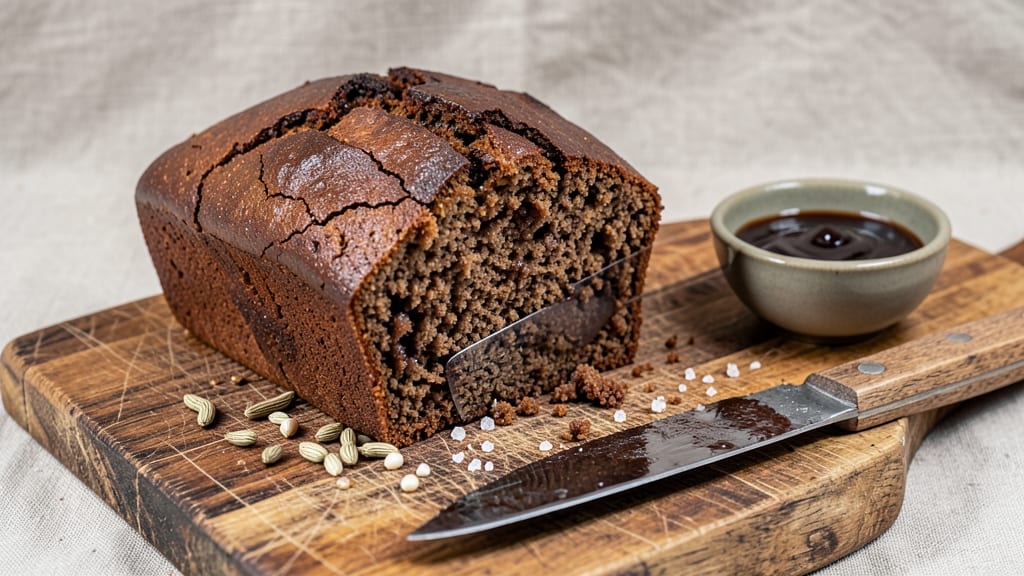
This authentic German pumpernickel bread recipe delivers the deep molasses richness and cardamom warmth that defines true German baking tradition. 🌟 The secret lies in slow fermentation—where time transforms simple ingredients into a dense, moist loaf with that signature dark hue and complex malted sweetness.
I've perfected this version after years of studying regional variations, ensuring every slice captures the soul of German bakery craftsmanship.
The process begins with a carefully balanced dough of whole wheat flour, dark molasses, and just a touch of cardamom—no shortcuts here. What sets this apart is the 36-hour cold fermentation, which develops unmatched depth of flavor while keeping the crumb tender and moist.
The baking technique of wrapping the dough in foil during the first hour creates that signature dense texture that crumbles just enough to hold thick slices without falling apart.
What you'll achieve is a loaf so authentic it could fool even the most discerning German baker. The exterior remains dark and slightly crisp, while the interior reveals a rich, moist crumb with pockets of caramelized sweetness from the molasses.
This bread pairs beautifully with smoked sausages, sharp cheeses, or simply slathered with butter—its robust flavor stands up to even the heartiest meals.
For those who want to elevate it further, consider adding a sprinkle of caraway seeds or a touch more molasses for extra depth. The beauty of this recipe is its versatility while maintaining that essential authenticity. Let's get started on creating your own piece of German baking tradition.
Ingredients for authentic german pumpernickel bread
These carefully sourced ingredients create the signature German pumpernickel experience—molasses depth and cardamom warmth in every dense slice.
| Ingredient | Amount | Notes |
|---|---|---|
| Whole Wheat Flour 🌾 | 4 cups | High-protein, unbleached preferred |
| Dark Molasses 🍯 | ¾ cup | Unsulphured, robust flavor |
| Active Dry Yeast 🍞 | ½ tsp | Fresh yeast at half amount |
| Granulated Sugar 🍚 | 1 tbsp | White or brown sugar |
| Ground Cardamom 🌿 | 1 tsp | Freshly ground preferred |
| Salt 🧂 | 1 ½ tsp | Diamond Crystal preferred |
| Warm Water 💧 | 1 ½ cups | 110°F for yeast activation |
| Vegetable Oil 🫒 | 2 tbsp | For dough enrichment |
| Caraway Seeds 🌱 | 1 tsp | Optional for traditional depth |
| Milk 🥛 | ½ cup | Warmed, for dough tenderness |
| Cornmeal 🌽 | ¼ cup | For dusting loaf pan |
The whole wheat flour is non-negotiable—King Arthur or Bob's Red Mill brands deliver the high-protein structure needed for that signature dense crumb. Dark molasses from Trader Joe's or Whole Foods ensures authentic sweetness without overpowering; unsulphured is critical for true flavor. Cardamom should be ground fresh—Penzeys sells pre-ground, but whole pods toasted and crushed yield superior aroma. The yeast must be fresh; if using active dry, proof it in warm water with sugar first to verify viability before incorporating into the dough. For the milk, warmed to body temperature (110°F) prevents shocking the yeast during fermentation.
No dark molasses? Blackstrap molasses works in a pinch, though flavor will be slightly more bitter. Substitute 1/4 cup maple syrup for molasses, but reduce the sugar by 1/2 tsp to balance sweetness. Cardamom shortages? Use 1/4 tsp cinnamon plus 1/4 tsp allspice for a similar warmth, though the profile won't be identical. The caraway seeds are optional but traditional—omit if you prefer a cleaner flavor profile. For the flour, spelt flour at 10% substitution adds nuttiness, though texture will differ slightly. Vegetable oil can be swapped for melted butter (same quantity) if you prefer a richer dough, though this will slightly alter the bread's traditional character.
Store the dough in an airtight container in the fridge for up to 48 hours before baking—this extends the fermentation time naturally. Once baked, cool completely on a wire rack to prevent condensation, which can make the crumb gummy. Wrapped in parchment paper, the loaf stays fresh for 5-7 days at room temperature or 3 months frozen. For reheating, wrap slices in foil and warm in a 350°F oven for 5 minutes—this restores the bread's signature moisture without drying it out. Day-old slices toast beautifully, making this an ideal bread for sandwiches or accompaniments.
Why You'll Love This Recipe
- No-Knead Nightmare Solved: I swear by this dough—just mix, let it rise, and forget it. That whole wheat flour gives it structure without the fuss, and the molasses does all the heavy lifting for depth.
- Molasses Magic: Honestly, the dark molasses here isn’t just flavor—it’s the soul. A single bite and you’ll taste that rich, almost caramel-like warmth, balanced by the cardamom’s subtle spice. (Yes, even on a Tuesday night.)
- Weekend Project, Daily Payoff: Bake a loaf on Sunday, and you’ve got hearty toast for breakfast, sandwiches for lunch, and grilled bread for dinner. Freezes beautifully too—just slice and toast when you’re lazy.
- Budget Bread with Punch: Whole wheat flour and molasses keep costs low, but the cardamom and sugar make it feel special. I’ve made this for holiday breakfasts, picnic lunches, and even as a side for roasts—no one guesses it’s my wallet-friendly secret.
Step-by-step instructions for authentic German pumpernickel bread
Master this traditional recipe with precise technique and patient baking for rich, dense loaves.
👨🍳 Step 1: Activate the Yeast and Mix the Dough
In a large mixing bowl, combine the 1.5 cups warm water (tested at 110°F), 1 tbsp granulated sugar, and 0.5 tsp active dry yeast. Let this sit for 5-10 minutes until frothy—this confirms your yeast is active. If it doesn't bubble, your yeast may be dead and should be replaced.
In a separate bowl, whisk together the 4 cups whole wheat flour, 1.5 tsp salt, 1 tsp ground cardamom, and 1 tsp caraway seeds (if using). Create a well in the center and pour in the yeast mixture along with the 0.5 cup milk and 2 tbsp vegetable oil. Mix with a wooden spoon until a shaggy dough forms.
🍳 Step 2: Knead Until Elastic and Smooth
Turn the dough onto a lightly floured surface and knead for 8-10 minutes by hand (or 5-6 minutes in a stand mixer with a dough hook). You're aiming for a smooth, elastic texture that springs back when pressed. The dough should be slightly tacky but not sticky—add more flour 1 tablespoon at a time only if necessary.
Traditional pumpernickel dough is denser than white bread dough, so resist the urge to over-knead. You'll know it's ready when it passes the "windowpane test"—stretch a small piece and hold it up to the light; it should be thin enough to see through without tearing.
⏰ Step 3: First Rise and Shaping
Lightly oil a large bowl, place the dough inside, and cover with a damp towel. Let it rise in a warm place for 1-2 hours or until it has nearly doubled in size. Pumpernickel dough rises slowly due to its dense nature, so patience is key here. The surface should look puffy with small bubbles forming.
Once risen, gently punch down the dough to release air, then shape it into a loaf. For a traditional German-style loaf, form it into a 9x5-inch rectangular shape (or round if preferred). Place it seam-side up in a greased 9x5-inch loaf pan dusted with 0.25 cup cornmeal for easy release.
🔥 Step 4: Second Rise and Baking Preparation
Cover the shaped dough and let it rise again for 30-45 minutes until it has expanded slightly above the pan's edges. Preheat your oven to 350°F while the dough rises. This second rise ensures proper texture and flavor development.
Once the dough has risen and the oven is preheated, bake the loaf for 50-55 minutes until the top is deep brown and the internal temperature reaches 200°F (use an instant-read thermometer). The bread should sound hollow when tapped on the bottom. If the top browns too quickly, tent loosely with foil after 30 minutes to prevent over-browning.
🍞 Step 5: Cool and Store for Maximum Flavor
Remove the bread from the pan and place it on a wire rack to cool completely. This can take 2-3 hours, but resist the temptation to cut into it sooner—the crust will firm up as it cools, and the interior will develop its signature dense texture. The longer you wait, the better the flavor becomes.
For authentic German pumpernickel, store the bread in an airtight container at room temperature for 2-3 days or refrigerate for up to 1 week. The flavor actually improves over time as the molasses and cardamom infuse deeper. When ready to serve, slice with a serrated knife for clean, even pieces.
Pro Tips For Making Authentic German Pumpernickel Bread
- Bloom the Yeast First: Skip mixing yeast directly into the wet ingredients—it’s too acidic for it to activate properly. Instead, proof it in warm water with a pinch of sugar for 5-10 minutes until frothy. I learned this the hard way when my first batch failed to rise because the molasses and cardamom slowed the yeast down.
- Soften the Molasses: Dark molasses is thick and sticky—don’t just eyeball it. Heat it gently in a small saucepan until it’s fluid enough to measure accurately (about 110°F/43°C). Cold molasses sinks to the bottom of your mixer and makes the dough unevenly dense.
- Knead Until Silky: Whole wheat dough is stubborn, but stop when it’s smooth and just slightly tacky—not sticky enough to cling to your fingers. Over-kneading develops gluten and turns the bread tough. I used to rush this, but now I wait until it passes the “window test” (stretch a bit—if it tears cleanly, it’s ready).
- Steam the First 20 Minutes: German pumpernickel needs a tight, even crust. Place a metal tray with boiling water in the oven before baking, then slide the loaf in. The steam locks in moisture and prevents the outside from drying out before the center cooks. (Yes, even if you’re impatient like me.)
Best sauces and condiments for authentic german pumpernickel bread
Classic Butter Spread
Nothing enhances pumpernickel like unsalted European-style butter softened to room temperature. I like Plugrá or Kerrygold for their rich, creamy texture. Spread 1-2 tablespoons generously on each slice—its mild sweetness balances the molasses depth beautifully.
For extra decadence, mix in 1 tsp honey or a pinch of freshly ground black pepper for a German-inspired twist. 💛
Smoked Salmon Topping
This pairing takes your bread to new heights. Layer 3-4 oz of cold-smoked salmon (like Lox from Crown Prince) with a thin spread of herbed cream cheese. Add a sprinkle of fresh dill and a squeeze of lemon for brightness.
The salmon's briny notes cut through the bread's sweetness while the cream cheese adds luxurious creaminess. Serve with cucumber slices for a refreshing contrast.
Apple Butter Pairing
For a sweet-savory combination, try homemade apple butter (or Mott's for convenience). Warm 2 tbsp lightly in a small pan, then spread on toasted pumpernickel slices. Top with thinly sliced sharp cheddar and a few toasted walnuts for crunch.
The apple's caramelized sweetness complements the molasses perfectly, making this an ideal breakfast or snack option.
Spicy Mustard Blend
Create a zesty contrast with a mix of Dijon mustard and hot honey. Combine 1 tbsp Dijon with 1 tsp hot honey (like Chimichurri brand) and a pinch of smoked paprika. Spread this vibrant blend on toasted slices and top with crispy bacon or avocado slices.
The heat from the honey and mustard awakens the bread's deep flavors while adding a satisfying kick. 🌶️
Caramelized Onion Jam
Slow-cook 2 cups thinly sliced onions with 2 tbsp brown sugar and 1 tbsp balsamic vinegar until deeply caramelized (about 45 minutes). Spread this jam on toasted bread and top with goat cheese or blue cheese crumbles.
The sweet-savory onions elevate the molasses flavor while adding a luxurious texture. This pairing works beautifully with charcuterie boards or as a hearty breakfast option.
Creamy Dill Sauce
Blend ½ cup sour cream, 2 tbsp Greek yogurt, 1 tbsp fresh dill, 1 tsp lemon juice, and a pinch of salt for a refreshing topping. This light, herby sauce balances the bread's richness perfectly.
Spread it on toasted slices and add smoked trout or cucumber ribbons for a fresh, elegant presentation. The tangy dill sauce cuts through the molasses sweetness while adding a bright finish. ✨
Nutrition facts
Frequently asked questions
Why does traditional German pumpernickel need such a long fermentation?
The 36-hour cold fermentation is what creates that signature deep flavor and dense texture. The slow process allows the molasses and cardamom to develop complex caramelized notes while the yeast gently breaks down the whole wheat flour for a tender crumb. This is why authentic pumpernickel tastes so much richer than commercial versions that skip this step.
Can I make this recipe without molasses?
While molasses is essential for authentic flavor, you can substitute 1/4 cup maple syrup or blackstrap molasses (though it's more bitter). Reduce the sugar by 1/2 teaspoon to balance sweetness. The bread will have a different profile but still maintain that dense texture. For the closest result, use unsulphured molasses if possible.
How do I prevent my pumpernickel from turning out too dense or dry? Keep the dough slightly tacky during kneading and avoid overworking it. The 36-hour cold fermentation is key—it develops flavor without drying out the bread. Also,
What's the difference between German pumpernickel and American versions?
Authentic German pumpernickel uses 100% rye flour (or whole wheat) and relies on natural fermentation for flavor, while American versions often include wheat flour and commercial yeast. The German version also has a darker, denser crumb and more pronounced molasses/cardamom flavor. This recipe stays true to the traditional method.
Can I bake this in a Dutch oven for a more rustic shape?
Shape the dough into a round loaf and bake in a preheated 475°F Dutch oven for 45-50 minutes. The high heat creates a crispy crust while keeping the interior moist. For extra authenticity, brush the crust with water during baking to encourage steam development. The result will be more rustic than pan-baked but equally delicious.