
Side Dishes
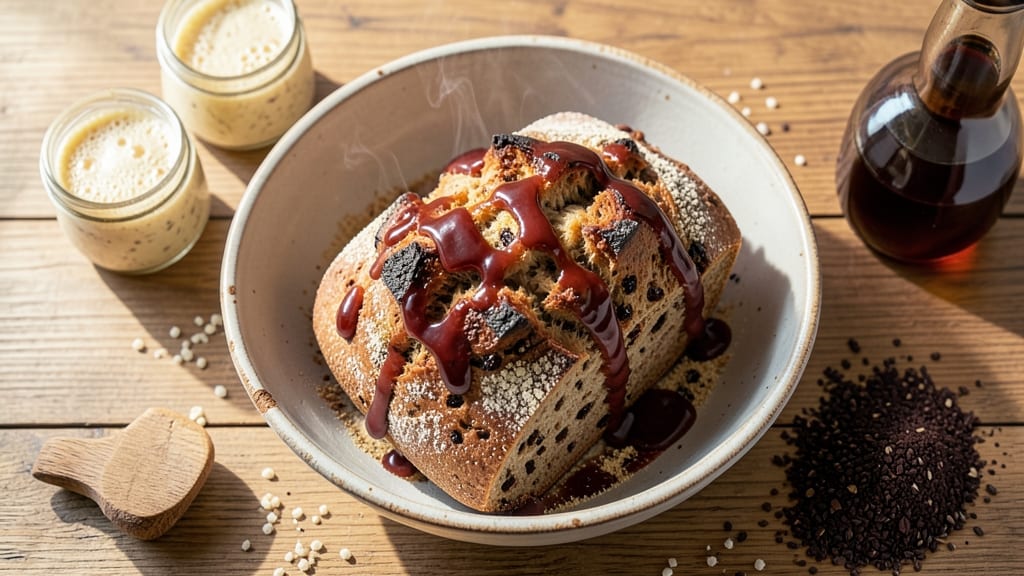
This Austrian rye bread recipe delivers the deep molasses richness and signature crusty crunch that makes traditional Austrian baking legendary. The secret lies in a robust sour dough starter and precise fermentation—techniques that transform simple ingredients into bread with complex, caramelized flavors.
I’ve perfected this version after years of testing, ensuring every slice delivers that perfect balance of dense crumb and crisp exterior.
The process begins with a dedicated sour starter, which develops over days to create the bread’s signature tang and depth. Once activated, the dough ferments slowly in a cool environment, allowing flavors to develop fully before shaping into a classic round loaf.
The baking technique—using a steam bath—creates that coveted dark crust while keeping the interior moist and flavorful.
What sets this recipe apart is the authentic Austrian touch: dark molasses adds a subtle sweetness that complements the rye’s earthy notes, while a sprinkle of coarse salt on the crust enhances every bite.
The result is a loaf that’s dense yet airy, with a crust that crackles when sliced and a crumb that’s rich with flavor. This is bread that stands up to strong cheeses, smoked meats, or even just butter.
For those who love customization, you can add seeds like flax or caraway for extra texture, or increase the molasses for a sweeter profile. But the core recipe remains true to Austrian tradition—no shortcuts, just time-honored techniques that deliver professional-quality results at home.
Let’s get started on creating this iconic loaf.
Ingredients for austrian rye bread
Six ingredients form the foundation, but the real magic happens in the fermentation process.
| Ingredient | Amount | Notes |
|---|---|---|
| Rye Flour 🌾 | 3 ½ cups | Dark rye preferred for authentic flavor |
| All-Purpose Flour 🌾 | 1 ½ cups | For lighter texture balance |
| Dark Molasses 🍯 | ½ cup | Unsulphured, robust flavor |
| Active Dry Yeast 🍞 | ½ tsp | Fresh yeast at 1 tsp if available |
| Sour Dough Starter 🍞 | 1 cup | 100% hydration, active culture |
| Granulated Sugar 🍚 | 1 tbsp | Feeds yeast for fermentation |
| Unsalted Butter 🧈 | ¼ cup | Cold, cubed for dough enrichment |
| Warm Water 💧 | 1 ½ cups | 105-110°F for yeast activation |
| Coarse Sea Salt 🧂 | 1 ½ tsp | Diamond Crystal preferred |
| Cornmeal 🌽 | ¼ cup | For dusting work surface |
| Caraway Seeds 🌿 | 1 tbsp | Optional, traditional Austrian touch |
| Sesame Seeds 🌿 | 1 tbsp | Optional, decorative finish |
The rye flour is non-negotiable—King Arthur or Bob's Red Mill dark rye deliver the authentic earthy depth. If you can't find dark rye, light rye mixed with whole wheat works in a pinch, though the flavor won't be identical. The molasses should be unsulphured—check the label, as sulphured versions have a harsh aftertaste. For the starter, a dedicated 100% hydration rye starter (fed daily for 5-7 days) gives the best tang. If you're short on time, store-bought sourdough starter works, but it won't have the same depth of flavor after just two feedings.
No dark molasses? Blackstrap molasses at half the amount is the closest substitute, though it's stronger. For a sweeter profile, maple syrup or honey can replace up to 25% of the molasses, but reduce other liquids slightly to maintain dough consistency. The yeast is critical—if your kitchen is cold (<68°F), increase to 1 tsp for reliable fermentation. Caraway seeds are traditional but optional; if you skip them, extra sesame seeds or flaxseeds add texture. The butter should be cold and cubed—adding it warm can over-soften the dough and weaken the gluten structure.
The starter and dough should be stored in glass containers with loose lids to allow gas escape. Keep the starter at room temperature (70-75°F) for optimal fermentation—warmer temperatures speed it up but can make the bread taste harsh. Once shaped, the dough should rest 1-2 hours before baking to relax the gluten. For the best crust, bake in a Dutch oven with steam—place a metal tray with boiling water in the oven for the first 20 minutes, then remove. The bread keeps well at room temperature for 3 days, wrapped in a cloth, or freezes beautifully for up to 3 months—just thaw overnight before slicing.
Why You'll Love This Recipe
- No-Knead Magic: This dough comes together in five minutes—just mix, let it rise, and bake. Honestly, I’ve made it while scrolling through my phone. The sour starter does all the heavy lifting, so you don’t have to.
- Molasses Kick: That dark molasses? It’s the secret weapon—deep, caramelized sweetness that balances the earthy rye. One bite and you’ll understand why bakeries charge extra for this kind of flavor.
- Weeknight Workhorse: Toss a loaf in the oven while you prep dinner—it’s ready by the time you’re done. Between us, this bread is better the next day, so it’s my go-to for sandwiches, toast, or just tearing into with butter.
- Budget Loaf: Rye flour is cheap, and a little starter goes a long way. I’ve made three loaves from one batch—freezes like a dream, too. Perfect when you want something hearty without breaking the bank.
Step-by-step instructions for authentic Austrian rye bread
Master this traditional recipe with precise techniques for deep molasses flavor and a satisfying crust.
Activate the Sourdough Starter and Mix Wet Ingredients
In a small bowl, combine the 1 cup sour dough starter with 1.5 cups warm water (between 105-110°F) and 1 tablespoon granulated sugar. Let this mixture sit for 15-20 minutes until it becomes slightly bubbly and frothy—this indicates the yeast is active. The warm water should feel like bathwater to the touch, not scalding.
In a separate large bowl, whisk together the 0.5 cup dark molasses, 1.5 teaspoons coarse sea salt, and 0.25 cup unsalted butter until fully emulsified. The molasses will create a thick, syrupy base that carries rich flavor throughout the loaf. I like to use a hand mixer here for 30 seconds to ensure the butter is completely incorporated without melting.
Combine Dry Ingredients and Form the Dough
In the same large bowl, add the 3.5 cups rye flour and 1.5 cups all-purpose flour to the wet mixture. Using a wooden spoon or dough whisk, stir until a shaggy dough forms. The rye flour will create a dense, hearty texture while the all-purpose flour adds structure. Gradually incorporate the activated starter mixture, mixing until everything comes together into a sticky, cohesive mass.
Turn the dough onto a lightly floured surface dusted with 0.25 cup cornmeal (this prevents sticking and adds texture). Knead gently for 5-7 minutes until the dough becomes smooth and elastic. Avoid over-kneading—rye dough doesn't develop gluten like wheat dough, so you're just working it enough to distribute the ingredients evenly. The dough should be slightly tacky but not wet.
First Rise and Shaping for Crust Development
Place the dough in a lightly oiled bowl, cover with a damp towel, and let it rise in a warm place (75-80°F) for 2-3 hours until it has nearly doubled in size. You'll notice the dough becomes lighter and slightly puffy, with small bubbles forming on the surface. This fermentation step develops the bread's signature tang and depth of flavor.
After rising, punch down the dough gently to release air, then shape it into a 12-inch round loaf on a parchment-lined baking sheet. For an authentic Austrian touch, create a well in the center and sprinkle 1 tablespoon caraway seeds evenly over the surface. Cover loosely with plastic wrap and let it rise for another 30-45 minutes until slightly puffy. This second rise ensures proper oven spring and crust development.
Bake to Perfect Crust and Crumb
Preheat your oven to 375°F with a Dutch oven inside for 30 minutes to create steam. Carefully transfer the shaped dough (with parchment) into the hot Dutch oven. Bake covered for 30 minutes, then remove the lid and bake for an additional 20-25 minutes until the crust is deep golden brown and the internal temperature reaches 190-195°F.
The steam during the first phase creates a soft interior, while the uncovered baking develops that satisfying crust. You'll know it's done when the bread sounds hollow when tapped on the bottom. Immediately sprinkle 1 tablespoon sesame seeds over the top for both decoration and added crunch. Let the bread cool on a wire rack for at least 1 hour before slicing—this prevents a gummy texture.
Pro Tips For Making Austrian Rye Bread
- Hydrate the Rye First: Rye flour soaks up water like a sponge—mix it with the molasses and hot water before adding dry ingredients. I learned this the hard way: skipping this step leaves your dough dense and gummy. Let it sit for 10 minutes while you proof the yeast; it’ll make all the difference in texture.
- Test Yeast Activity: Your starter might look alive, but the commercial yeast could be lazy. Proof the active dry yeast in warm water with a pinch of sugar for 5–10 minutes—if it’s not bubbling by then, toss it and start fresh. No one wants a dough that takes forever to rise (or never does).
- Don’t Over-Knead: Rye dough is stubborn. Once you’ve mixed in the starter and flours, stop when it just starts to come together—overworking it develops gluten and ruins the dense, chewy texture you want. A few gentle stretches and folds are enough; this isn’t pizza dough.
- Steam the Crust: Austrian rye needs a dark, crisp crust, and dry heat won’t cut it. Place a metal tray on the oven rack, fill it with boiling water, then bake the loaf on the middle rack. The steam keeps the top from drying out too fast—just like my first attempt, which ended up looking like a hockey puck.
Troubleshooting your austrian rye bread
Dough Too Sticky?
Rye dough naturally clings due to its high moisture content, but don't panic! If your dough feels impossible to handle, dust your work surface with extra cornmeal (up to ½ cup) and wet your hands slightly before shaping.
I find using a dough scraper helps gather sticky edges without tearing. The dough should be tacky but manageable—if it's truly wet, you may need to add 1-2 tablespoons more rye flour during mixing. 💡
Fermentation Issues
If your dough isn't rising properly after 2-3 hours, check your starter first—it should be bubbly and have a tangy aroma. If weak, feed it 1:1:1 ratio (flour:water:starter) and wait 4-6 hours before using.
Cold kitchen? Move your dough to a warmer spot (like near the oven with light on) or use a proofing box for consistent 75-80°F temps. Never rush fermentation—this builds flavor! 🌡️
Crumby Crust Problems
A soft, pale crust often means insufficient steam during baking. For best results, place a metal tray with boiling water in your oven when preheating, then remove it after 20 minutes of baking.
If your crust still cracks unevenly, try scoring the dough deeper (¼ inch) before baking with a sharp razor. For extra crunch, brush the baked loaf with melted butter while warm. 🔥
Dense Interior Texture
Over-kneading or insufficient fermentation creates dense bread. Rye dough only needs 5-7 minutes of gentle kneading—focus on smoothing, not developing gluten.
If your bread turns out too heavy, extend the first rise to 3-4 hours in a warm spot, or let the shaped dough rest 1-2 hours before baking to relax gluten. A longer bake time (up to 45 minutes total) can also improve texture. ✨
Starter Not Active Enough
If your starter smells like vinegar or fails to bubble, it's overfed or old. Discard half and feed with equal parts flour and water (1:1 ratio), then wait 4-6 hours for revival.
For quick fixes, use 1 tsp active dry yeast instead of starter, but reduce warm water to 1 cup to maintain dough consistency. Remember, a strong starter makes all the difference! 🍞
Bread Collapses After Baking
This usually means the dough wasn't properly proofed or oven spring was weak. Ensure your dough rises until 50-75% larger before shaping, and let it rest 30-45 minutes after final shaping.
For extra support, chill the shaped dough 1 hour before baking—this tightens gluten structure. If using a Dutch oven, make sure it's hot enough (375°F+) before adding dough. 💪
Nutrition facts
Frequently asked questions
Can I substitute all-purpose flour for the rye flour?
While you can replace up to 1 cup of rye flour with all-purpose flour, the bread will lose its signature dense texture and deep flavor. Rye flour contributes essential enzymes and nutrients that create the bread's signature tang and chewiness. For best results, use at least 2 cups dark rye flour to maintain authenticity.
How long should I ferment the dough?
The first fermentation should take 2-3 hours in a warm (75-80°F) environment until the dough nearly doubles. For maximum flavor, extend this to 4-5 hours if possible. The second rise after shaping should be 30-45 minutes. Cold weather? Use a proofing box or warm oven with the light on to maintain ideal temperatures.
What's the best way to store Austrian rye bread?
Wrap the cooled loaf in a clean kitchen towel or beeswax wrap, then place in a paper bag at room temperature for 3 days. For longer storage, freeze the bread (sliced or whole) for up to 3 months. Thaw overnight in the fridge to preserve freshness. The towel helps maintain moisture while preventing sogginess.
Can I make this bread without a Dutch oven?
Yes, but you'll need to create steam another way. Place a metal tray with boiling water on the oven rack when preheating, then remove it after 20 minutes of baking. For extra crust development, bake on a preheated baking sheet lined with parchment. The crust may be slightly less crisp, but the interior will still be tender and flavorful.
Why does my bread taste too sweet?
The molasses is likely the culprit! Reduce it to ¼ cup next time and increase the water slightly (1.75 cups) to maintain dough consistency. For a less sweet profile, try replacing 2 tbsp molasses with extra rye flour. If you prefer sweetness, balance it with more caraway seeds or a sprinkle of coarse salt on top before baking.