
Side Dishes
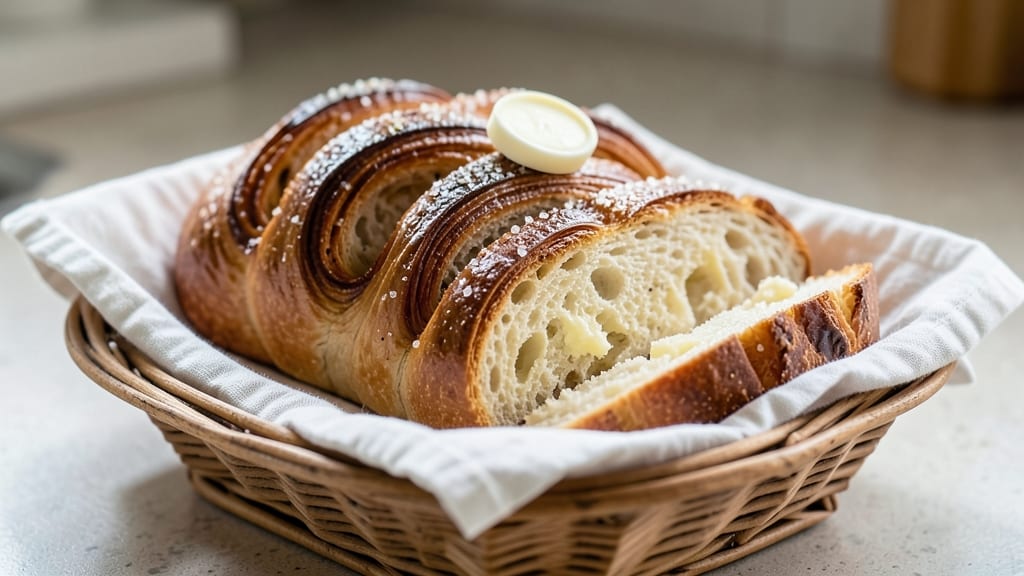
This authentic brioche bread recipe delivers the pillowy softness and buttery swirls you crave—just like a Parisian bakery. The secret lies in precise yeast activation, gentle kneading, and patient proofing, all working together to create a loaf with a tender crumb and golden crust.
After years of perfecting this technique, I’ve cracked the code for achieving that signature brioche texture without shortcuts.
What sets this recipe apart is the lamination method, where butter is folded into the dough in stages, creating those signature flaky layers. The dough requires time—overnight cold proofing develops maximum flavor and texture—but the result is worth every minute.
Each bite reveals rich, buttery notes with just a hint of sweetness, thanks to the careful balance of sugar and eggs in the dough.
By the time it emerges from the oven, your brioche will have a crisp, caramelized crust that gives way to an interior so soft it practically melts in your mouth.
The butter swirls remain distinct, adding pockets of richness with every slice. This isn’t just bread—it’s a showstopping centerpiece that elevates any meal, from breakfast to dessert.
Whether you’re baking for a special occasion or simply treating yourself, this authentic brioche delivers professional-quality results at home. Let’s get started on creating the most luxurious loaf you’ve ever made.
Ingredients for authentic brioche bread
Buttery richness meets French technique in this luxurious brioche loaf.
| Ingredient | Amount | Notes |
|---|---|---|
| Unsalted Butter 🧈 | 1 lb | European-style preferred, 82% fat |
| Active Dry Yeast 🍞 | ¼ oz | Fresh yeast if available |
| Granulated Sugar 🍚 | ½ cup | Superfine for faster dissolving |
| Large Eggs 🥚 | 4 whole | Room temperature preferred |
| Whole Milk 🥛 | ½ cup | Warmed to 100°F for activation |
| All-Purpose Flour 🌾 | 4 cups | Bread flour for better structure |
| Diamond Crystal Kosher Salt 🧂 | ½ tsp | Fine grain preferred |
| Vanilla Extract 🌿 | ½ tsp | Pure alcohol-free preferred |
| Heavy Whipping Cream 🥛 | ¼ cup | Full-fat for best texture |
| Large Egg Yolks 🥚 | 2 whole | Reserved from the 4 eggs |
| Cornstarch 🌾 | 1 tbsp | For dusting work surface |
| Large Egg Whites 🥚 | 2 whole | Reserved from the 4 eggs |
| Fine Sea Salt 🧂 | 1 tsp | For final crust sprinkle |
The butter is non-negotiable—European-style with 82% fat content gives the signature richness. Trader Joe's or Whole Foods carry excellent brands like Plugrá or President. Keep it chilled until ready to use, and don't skip the room-temperature step for the eggs—it ensures even incorporation. For the yeast, fresh yeast from a bakery supply store activates faster than active dry, but both work. The flour should be sifted before measuring to prevent dense pockets in the final loaf. If you're using bread flour, add an extra 1/2 teaspoon of vital wheat gluten for maximum rise potential.
No European butter? High-fat American butter like Land O'Lakes or Kerrygold works in a pinch, though the flavor won't be identical. Substituting milk? Whole milk powder reconstituted with warm water maintains the same richness. The vanilla extract can be omitted, but the dough will lack that subtle depth. For a sweeter brioche, increase the sugar to 2/3 cup, though the classic version relies on the butter's natural sweetness. The egg yolks are crucial—they create the signature tender crumb, so don't substitute with whites or powdered eggs. If you're making this ahead, freeze the shaped loaf before baking for up to 2 months.
This dough requires patience—overnight cold proofing develops maximum flavor and texture. Shape the loaf in a 9x5-inch loaf pan lined with parchment paper for easy removal. For extra shine, brush the baked loaf with melted butter while still warm. Brioche keeps well at room temperature for 3 days wrapped in a clean kitchen towel, or 1 week refrigerated. To revive stale brioche, wrap slices in damp paper towels and warm in a 350°F oven for 5-10 minutes. The butter swirls remain distinct when properly laminated, so don't rush the folding process—each stage builds those signature layers.
Why You'll Love This Recipe
- Butter-Soft Magic: I swear, that first pull-apart moment when you slice into it—warm, pillowy, with layers so tender they practically melt in your mouth? The eggs and butter create this insane richness that makes regular bread feel like a sad afterthought. Honestly, I’ve never met a brioche that didn’t steal the show at the table.
- No-Knead Nightmare Solved: Between us, I used to avoid brioche because I thought it required hours of kneading. But this recipe? Just mix, let it rise, and shape it—no fancy techniques, no stress. The yeast does all the work while you sip your coffee. Took me three tries to stop overworking the dough, but now it’s foolproof.
- Breakfast to Dessert: Seriously, this bread is my secret weapon. Toast it for French toast that’ll make you weep, use slices to soak up sauces, or even bake it into a quick brioche loaf for sandwiches. My kids grab it for school lunches, and I sneak a piece for dessert with jam—no one judges.
- Leftovers That Last: A full batch feeds my family for days, and it actually improves the next day. The crust gets just crisp enough while the inside stays buttery and soft. I freeze slices for quick toast, and honestly? The first batch rarely lasts past morning. Budget-friendly too—you’re using simple ingredients that stretch far.
Step-by-step instructions for authentic brioche bread
Here's how to craft that signature French richness—rich, tender crumb and golden crust every time.
Prepare the Yeast and Butter Mixture
In a small bowl, dissolve the 0.25 oz active dry yeast in the 0.5 cup warm whole milk (around 100°F) with the 0.5 cup granulated sugar. Let it sit for 5-10 minutes until frothy—this confirms your yeast is active. In a separate large bowl, beat the 1 lb unsalted butter until completely smooth and creamy, about 3-4 minutes with a hand mixer.
Here's the thing—European-style butter with 82% fat gives that signature brioche richness. If your butter has crystals, microwave it for 10 seconds to soften completely before beating. The butter should be fully incorporated and pale yellow, with no visible lumps.
Combine Wet Ingredients and Mix the Dough
Add the yeast mixture, 4 whole large eggs, 0.5 tsp vanilla extract, and 0.25 cup heavy whipping cream to the butter mixture. Mix on medium speed until fully combined, about 1-2 minutes. In a separate bowl, whisk together the 4 cups all-purpose flour and 0.5 tsp diamond crystal kosher salt.
Gradually add the dry ingredients to the wet mixture, mixing on low speed until just combined. The dough will be shaggy and sticky—this is normal. Avoid overmixing; you're looking for a soft, tacky dough that comes together when pressed. If it's too sticky to handle, sprinkle a little extra flour, but don't go overboard or your brioche will be dense.
Knead and Develop Gluten
Turn the dough out onto a lightly cornstarch-dusted surface and knead for 8-10 minutes until smooth and elastic. I use the "windowpane test"—stretch a small piece of dough until it's thin enough to see light through. If it tears, knead another 2 minutes. The dough should be soft, slightly tacky, and not stiff like regular bread dough.
Here's where brioche differs from other breads—the dough should be very soft and pliable. If it feels too firm, you've added too much flour. Wrap the dough in plastic wrap and let it rest at room temperature for 1 hour. This rest period relaxes the gluten and allows the dough to absorb the butter better during the next steps.
Create the Buttery Swirls and First Rise
After the rest, divide the dough into 4 equal portions, each about 8 oz. Roll each portion into a 12-inch log, about 2 inches in diameter. Place each log on a parchment-lined baking sheet and flatten slightly with your palm. Cut a ¼-inch deep slit lengthwise down the center of each log.
Take 4 tablespoons of the reserved butter (about ¼ cup) and roll it into thin sticks. Insert one butter stick into each slit, pressing gently to seal. Fold the dough over the butter to create a swirl pattern. Cover loosely with plastic wrap and let rise in a warm place for 1-2 hours until doubled in size.
Shape, Proof, and Bake to Golden Perfection
Preheat your oven to 350°F. Gently deflate the risen dough and shape each piece into a 10-inch round loaf. Place them on parchment-lined baking sheets, spacing them about 2 inches apart. Cover again and let proof for another 30-45 minutes until puffy and just touching.
In a small bowl, whisk together the 2 whole large egg yolks and 2 whole large egg whites until frothy. Brush this egg wash generously over each loaf, then sprinkle with 1 tsp fine sea salt. Bake for 30-35 minutes until deep golden brown and internal temperature reaches 190°F. The bread should sound hollow when tapped on the bottom.
Rest and Slice for Maximum Tenderness
Transfer the baked brioche to a wire rack and let cool for 10 minutes. This brief rest prevents the crumb from tearing when you slice. For the best texture, let the brioche cool completely at room temperature before slicing—this allows the gluten to fully relax and the crumb to set properly.
Slice with a sharp serrated knife and serve warm. That first bite should reveal a tender, almost custard-like crumb with those beautiful butter swirls peeking through. The crust should be crisp yet tender, with a subtle sweetness from the sugar and vanilla. For extra richness, brush warm slices with melted butter before serving.
Pro Tips For Making Authentic Brioche Bread
- SOFTEN BUTTER FIRST: I learned this the hard way—cold butter in brioche dough is a recipe for tough, dense bread. Cut the unsalted butter into small cubes and let it sit at room temperature for at least 2 hours (or overnight if you’re planning ahead). You want it to be just soft enough to press into the dough with your fingers, not melted. This ensures the butter incorporates smoothly and creates that signature tender crumb.
- WEIGH THE YEAST: Measuring yeast by volume is a gamble, especially in humid kitchens. Use a kitchen scale for accuracy—1 packet of active dry yeast is exactly 2¼ teaspoons, but scooping can give you 10% more or less. Dissolve it in the warm milk (85–90°F) with a pinch of sugar first, then wait 5–10 minutes until it’s foamy before mixing into the dough. No foam? Start over—dead yeast ruins everything.
- STRETCH DON’T FOLD: Brioche dough is delicate, and aggressive folding during laminating will tear the butter pockets. Instead, use the "stretch and fold" method: wet your hands, gently pull the dough toward you, then fold it back in thirds. Do this 3–4 times per session, rotating the bowl 90° each time. It’s tedious, but it builds those buttery layers without deflating the dough—yes, even if you’re impatient like me.
- SALT THE WATER: The milk in brioche is already rich, but the dough needs extra salt to balance the sweetness and enhance flavor. Add ½ teaspoon of fine salt directly to the warm milk before mixing in the yeast. This isn’t just about taste—it also helps control yeast activity, preventing overproofing. Skip this, and your brioche will taste bland, no matter how much butter you use.
Pro cooking tips for this dish
Butter Temperature Control
The butter is the star of brioche, and its temperature makes or breaks your loaf. Start with 1 lb of cold European-style butter (82% fat) and beat it until completely smooth and pale yellow—about 3-4 minutes with a hand mixer.
If your butter has any crystals, microwave it for 10 seconds to fully soften before mixing. The goal is room-temperature butter that incorporates seamlessly into the dough. Too cold? It won’t blend properly. Too warm?
It’ll melt and create greasy pockets. I like to test by pressing a small amount between my fingers—it should feel soft but not greasy. 🧈
Dough Resting Stages
Brioche dough needs two critical rest periods to develop its signature tenderness. After kneading, let it rest for 1 hour at room temperature—this relaxes the gluten and helps the butter distribute evenly. Then, after shaping the butter swirls, proof the dough for 1-2 hours until doubled.
The final proof before baking should be 30-45 minutes until just touching. Skipping these rests leads to dense, chewy bread. I set my dough in a warm oven with the light on for consistent proofing—85°F is ideal. Never rush this step; patience is key to that melt-in-your-mouth texture. ⏳
Lamination Mastery
The butter swirls are what make brioche special, and proper lamination is the secret. After dividing the dough, roll each piece into a 12-inch log, then make a ¼-inch deep slit down the center.
Insert a thin butter stick (about 1 tablespoon) into each slit, seal it gently, and fold the dough over to create the swirl. The butter should be cold but pliable—if it melts, chill the dough for 15 minutes before proceeding.
I like to use a bench scraper to help shape the logs neatly. The more precise your folds, the more distinct those buttery layers will be in the final loaf. 🔥
Egg Wash Perfection
A proper egg wash is non-negotiable for that golden, glossy crust. Whisk together 2 egg yolks and 2 egg whites until frothy, then brush generously over the proofed loaves. The wash should coat the dough evenly without pooling.
For extra shine, add 1 teaspoon of warm water to the mixture. After baking, sprinkle with fine sea salt while the crust is still soft—this enhances the buttery flavor and adds a delicate crunch.
I like to brush the baked loaf with melted butter while it’s still warm for maximum richness. 🍳
Oven Spring and Internal Temp
Brioche needs 350°F for a perfect rise and crust. Place your loaves on the middle rack—this ensures even heat distribution. Bake until the internal temperature reaches 190°F, which usually takes 30-35 minutes.
The bread is done when it sounds hollow when tapped on the bottom and has a deep golden color. Overbaking dries out the crumb, so pull it out just as it reaches temperature.
Let it cool for 10 minutes before slicing—this allows the gluten to relax and prevents a gummy texture. Trust your thermometer over visual cues alone. 🌡️
Nutrition facts
Frequently asked questions
Why does brioche dough need so many rests?
The multiple rests—after kneading, after shaping, and before baking—are essential for developing brioche's signature tender crumb. Each rest period allows the gluten to relax and the butter to distribute evenly, creating those signature flaky layers. Skipping rests often results in dense, chewy bread instead of the light, pillowy texture you want. Think of it like stretching and resting muscles—patience builds the perfect texture!
Can I make brioche without a stand mixer?
While a stand mixer makes kneading easier, you can absolutely do it by hand. For the butter mixture, use a wooden spoon or fork to beat the butter until smooth. When kneading, work the dough on a floured surface for 10-15 minutes until it becomes elastic and slightly tacky. The key is to be thorough—don't rush this step, or your brioche may turn out dense. A strong arm and patience are all you need!
What's the best way to store leftover brioche?
Wrap cooled brioche tightly in plastic wrap or place it in an airtight container to keep it fresh for 3 days at room temperature. For longer storage, refrigerate for up to 1 week or freeze for 2 months. To revive stale brioche, wrap slices in damp paper towels and warm in a 350°F oven for 5-10 minutes. The butter swirls remain distinct when properly stored!
Why did my brioche turn out dense instead of fluffy?
Dense brioche usually results from overworking the dough, skipping rests, or using too much flour. The dough should be soft and slightly tacky—not stiff like regular bread dough. Also, make sure your yeast is active (it should foam in 5-10 minutes when mixed with warm milk). If your butter was too warm, it could have melted and created greasy pockets. For next time, follow the resting times precisely and handle the dough gently.
Can I use this recipe for brioche buns or dinner rolls?
Yes! This recipe works perfectly for both brioche loaves and buns. For buns, divide the dough into 12-16 equal portions (about 2 oz each) and shape them into balls. Place on a baking sheet, proof, then bake at 350°F for 15-20 minutes until golden. The butter swirl technique works great for buns too—just insert a small butter stick before final proofing. They'll be even more decadent for hamburgers or sliders!