
Side Dishes
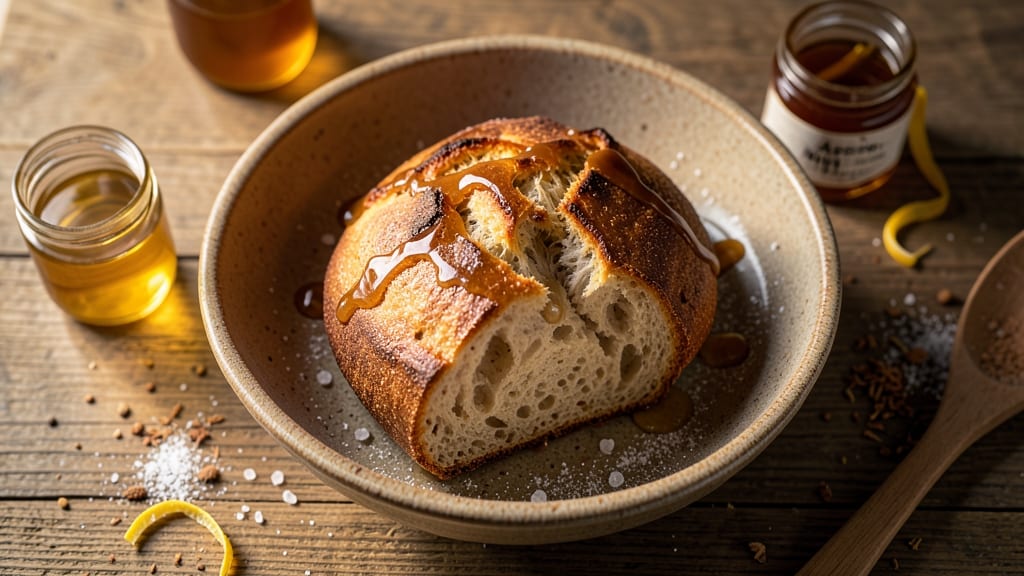
This Aspen Mills bread recipe delivers the same artisan-crusted perfection you'd find in a bakery, with a no-knead method that transforms simple ingredients into a loaf with a crispy shell and tender crumb.
The secret lies in a long, slow rise that develops deep flavor and an oven spring that creates that signature open crumb structure. I've perfected this technique after years of baking, ensuring even home ovens can achieve restaurant-quality results.
The process begins with activating yeast in warm water, then combining it with flour, salt, and a touch of honey for subtle sweetness that enhances the crust. Unlike traditional kneaded bread, this dough rests overnight in the refrigerator, allowing the gluten to relax and develop naturally.
This cold fermentation not only builds flavor but also makes the dough easier to shape and creates that coveted open crumb that defines artisan bread.
When you're ready to bake, the dough comes to room temperature before shaping into a classic boules or batard. A steam bath in the oven creates that signature crispy crust while keeping the interior moist and tender.
The result is a loaf with a golden, crackly crust that gives way to a soft, airy interior with those beautiful open pockets that make each slice satisfying.
This bread is perfect for serving with soups, alongside charcuterie, or simply toasted with butter. The recipe scales easily, making it ideal for feeding a crowd or making ahead for the week. Let's get started on creating your own bakery-style loaf at home.
Ingredients for aspen mills bread
Simple pantry staples transform into bakery-style bread with this no-knead artisan loaf.
| Ingredient | Amount | Notes |
|---|---|---|
| Active Dry Yeast 🍞 | ¼ tsp | One packet or 7g equivalent |
| Warm Water 💧 | 1 cup | 110°F for yeast activation |
| All-Purpose Flour 🌾 | 5 cups | Plus 1 tbsp for dusting |
| Granulated Sugar 🍚 | ½ tsp | For yeast activation |
| Honey 🍯 | 1 tbsp | For subtle sweetness |
| Sea Salt 🧂 | 1 ½ tsp | Diamond Crystal preferred |
| Olive Oil 🫒 | 1 tbsp | Extra-virgin for richness |
| Cornmeal 🌽 | ½ cup | For dusting baking sheet |
| Ice Water ❄️ | 1 tbsp | For adjusting dough temperature |
The yeast is the foundation—King Arthur or Bob's Red Mill brands activate fastest. Store-bought yeast works, but for best results, use fresh within 4 months of purchase. The flour should be unbleached all-purpose (King Arthur or Gold Medal) for consistent texture. Honey adds subtle sweetness that enhances crust development—local raw honey works best if you want to emphasize flavor. For salt, Diamond Crystal dissolves more easily than Morton's, which can affect dough hydration.
No honey? Maple syrup at half the amount works beautifully. Running short on olive oil? Avocado oil is a perfect substitute—neutral flavor, high smoke point. The dough should be slightly tacky but not sticky; if it's too wet, add 1 tbsp more flour. For a more rustic crust, swap the olive oil for melted butter (1 tbsp). The cornmeal is non-negotiable—it prevents sticking during shaping and baking. If you're in a pinch, semolina works too for that signature texture.
This dough is designed to rest 12-18 hours in the fridge—ideal for overnight baking. After shaping, cover tightly with plastic wrap and refrigerate. The longer it rests, the more flavor develops. When ready to bake, let the dough sit at room temperature for 1-2 hours before shaping. For storage, wrap cooled loaves in a clean kitchen towel and keep at room temperature for 3 days. Freeze for up to 3 months by wrapping tightly in plastic and foil.
Why You'll Love This Recipe
- Five-Ingredient Magic: I swear, this bread comes together with what’s already in my pantry. No fancy swaps—just yeast, flour, a touch of honey, and warm water. That’s it. The honey gives it this subtle sweetness that makes it feel special without extra work.
- Golden Crust Promise: Here’s what sold me—when it bakes, that crust turns a gorgeous amber, almost like caramelized honey. It’s crispy on the outside but still soft inside, and honestly? That contrast is my new favorite thing about homemade bread.
- Breakfast to Brunch: Between us, this bread is my go-to for toast, French toast, or even a quick charcuterie board. The honey’s warmth pairs perfectly with jam, butter, or even savory toppings like smoked salmon. I’ve made it for lazy Sundays and weeknight breakfasts—no judgment.
- Stays Fresh, Saves Money: A single batch feeds my family for days, and it keeps well wrapped at room temp. I’ll be real: I’ve had a loaf last five days, and it’s still better than store-bought. Plus, using pantry staples means I’m not blowing cash on specialty bread mixes. Win-win.
Step-by-step instructions for Aspen Mills bread
This method transforms simple ingredients into a rustic, crusty loaf with minimal effort.
Activate the Yeast with Warm Water
In a medium bowl, combine the 1 cup warm water (test by touching—it should feel like bathwater) with the 0.5 tsp granulated sugar and 0.25 tsp active dry yeast. Let sit for 5-10 minutes until foamy. This confirms the yeast is alive and ready to work.
If no foam appears after 10 minutes, your yeast may be dead—start over with fresh yeast. The foamy mixture signals the yeast has activated and is ready to transform your dough. Stir gently to avoid killing the yeast cells with excess agitation.
Mix the Dough with Wet and Dry Ingredients
Add the 5 cups all-purpose flour, 1.5 tsp sea salt, and 1 tbsp honey to the yeast mixture. Stir with a wooden spoon until a shaggy mass forms. Then add the 1 tbsp olive oil and mix until combined.
For the final touch, add the 1 tbsp ice water one tablespoon at a time, mixing just until the dough comes together. The ice water helps regulate temperature and prevents overproofing later. The dough should be soft but slightly sticky—this is ideal for our no-knead method.
Let the Dough Rest for Initial Development
Lightly oil a large bowl, transfer the dough, and cover with a damp kitchen towel. Let it rest at room temperature for 1 hour. This initial rest allows the gluten to begin developing without your active involvement.
During this time, the dough will rise slightly and become more manageable. I like to give it a gentle stir after 30 minutes to redistribute any dry spots. The goal is to create a cohesive, elastic dough that will hold its shape during baking.
Shape and Proof the Dough
Lightly flour a clean surface and turn the dough out. Gently shape it into a loose round loaf, tucking the edges under as you go. This creates surface tension that helps the bread hold its shape during baking.
Place the shaped dough on a baking sheet dusted with 0.5 cup cornmeal. Cover again and let it proof at room temperature for 3-4 hours, or until nearly doubled in size. The dough should spring back slowly when poked with a finger—this indicates it's ready for the oven.
Bake for a Crispy Crust and Soft Interior
Preheat your oven to 425°F with a Dutch oven inside for 30 minutes. Carefully transfer the dough (still on the cornmeal-dusted sheet) into the hot Dutch oven. Cover and bake for 30 minutes.
Remove the lid and bake for another 15-20 minutes until the crust is deep golden brown and sounds hollow when tapped on the bottom. The internal temperature should reach 205°F when measured with an instant-read thermometer.
Cool and Enjoy
Transfer the bread to a wire rack and let it cool completely for at least 1 hour before slicing. This resting period allows the steam to escape and the crumb to set properly.
The bread will have a crisp, crackly crust with a soft, airy interior. Slice it thickly for maximum enjoyment—each bite should reveal that perfect contrast between crust and crumb. Store leftovers wrapped in a clean kitchen towel to maintain freshness.
Pro Tips For Making Aspen Mills Bread
- Dissolve the Yeast First: I learned this the hard way—mixing active dry yeast straight into flour kills it before it even starts. Instead, whisk it into the warm water with honey first, then let it sit for 5 minutes until it gets frothy. That little bubble show means it’s alive and ready to work.
- Use a Thermometer for Water: That "warm" water temp in the recipe isn’t just a guess—yeast thrives at 105–110°F. Too hot, and it dies; too cool, and it’s sluggish. I bought a cheap instant-read thermometer ($10) and never looked back. No more wondering if my water’s "just right."
- Skip the Extra Sugar: This recipe already has granulated sugar and honey—adding more won’t make it sweeter, just gummy. The honey’s the star here; it feeds the yeast and adds depth. If your dough feels too stiff, add water, not sugar. Trust the original amounts.
- Let the Dough Rise Twice: One rise isn’t enough for that signature Aspen Mills texture. After the first rise (when it’s puffy), punch it down, cover it, and let it rise again—this time until it’s doubled and springy to the touch. I know, it takes patience, but skipping this step means dense, sad bread. (Your future self will notice.)
Best sauces and condiments for aspen mills bread
Classic Garlic Butter
This is my go-to pairing for Aspen Mills bread—simple yet transformative. Melt 4 tablespoons unsalted butter in a small saucepan over low heat, then add 3 minced garlic cloves and ½ tsp sea salt.
Cook for 2-3 minutes until fragrant but not browned. Brush warm butter generously on fresh slices or serve as a dipping sauce. 🧄
Herb-Infused Olive Oil
For a lighter option, combine ½ cup extra-virgin olive oil with 1 tbsp each of fresh rosemary and thyme, 2 minced garlic cloves, and ½ tsp flaky sea salt.
Let it infuse for 1 hour at room temperature before drizzling over warm bread. The herbs complement the bread's crust beautifully while keeping it light.
Spicy Honey Mustard
Mix 2 tbsp Dijon mustard, 2 tbsp honey (the same honey used in the dough!), 1 tbsp apple cider vinegar, and ¼ tsp cayenne pepper.
This sweet-spicy combo cuts through the bread's richness while adding a tangy kick. Spread on toasted slices or use as a dip for crostini. 🌶️
Whole Grain Mustard
For a heartier option, blend 3 tbsp whole grain mustard with 1 tbsp sour cream, 1 tsp honey, and ½ tsp black pepper.
The mustard's texture contrasts perfectly with the bread's soft interior and crisp crust. This works especially well with the bread's nutty undertones from the all-purpose flour.
Cream Cheese & Everything Bagel Seasoning
Spread 2 oz softened cream cheese on toasted bread, then sprinkle with 1 tsp everything bagel seasoning. The salty, sesame, and onion blend adds a savory crunch that pairs wonderfully with the bread's crust. This combo is perfect for breakfast or as a snack with soup. 🧀
Balsamic Glaze
For a quick finishing touch, drizzle warm bread with 2 tbsp reduced balsamic glaze (simmer ¼ cup balsamic vinegar for 5-7 minutes** until thickened). The tangy sweetness enhances the bread's natural flavors without overpowering it. I love this for serving with brie or prosciutto. 🍷
Nutrition facts
Frequently asked questions
Why does this bread need a long refrigerated rise?
The overnight cold fermentation in the fridge is what creates that signature artisan flavor and open crumb structure. The slow rise allows gluten to relax and develop fully, while the cold temperature controls yeast activity for even flavor development. This method also makes the dough easier to shape later—no tough kneading required!
Can I use this recipe without a Dutch oven?
Yes! If you don't have a Dutch oven, bake the bread on a preheated baking sheet at 425°F for 25 minutes, then transfer to a broiler for 3-5 minutes to crisp the crust. For extra steam, place a baking tray with boiling water on the lower oven rack. The crust won't be quite as crackly, but the interior will still be perfect.
How do I know when the dough is ready to bake?
Your dough is ready when it's nearly doubled in size and springs back slowly (not immediately) when poked with a finger. If it springs back quickly, it needs more time. The surface should also look slightly puffy with small bubbles forming. For best results, don't let it fully double—this can cause overproofing and a dense crumb.
What's the best way to store leftover bread?
Wrap cooled loaves in a clean kitchen towel (not plastic) and store at room temperature for 3 days. The towel helps maintain moisture while allowing the crust to stay crisp. For longer storage, freeze the bread (wrapped tightly) for up to 3 months. Thaw at room temperature before toasting—never microwave!
Can I add seeds or nuts to this recipe?
For a rustic twist, mix in 2 tbsp seeds (sesame, poppy, or sunflower) or ½ cup chopped nuts (walnuts or pecans) when shaping the dough. Fold them into the surface before baking for even distribution. Just be sure to adjust the cornmeal dusting if your dough becomes too sticky—add 1 tbsp more flour if needed.