
Side Dishes
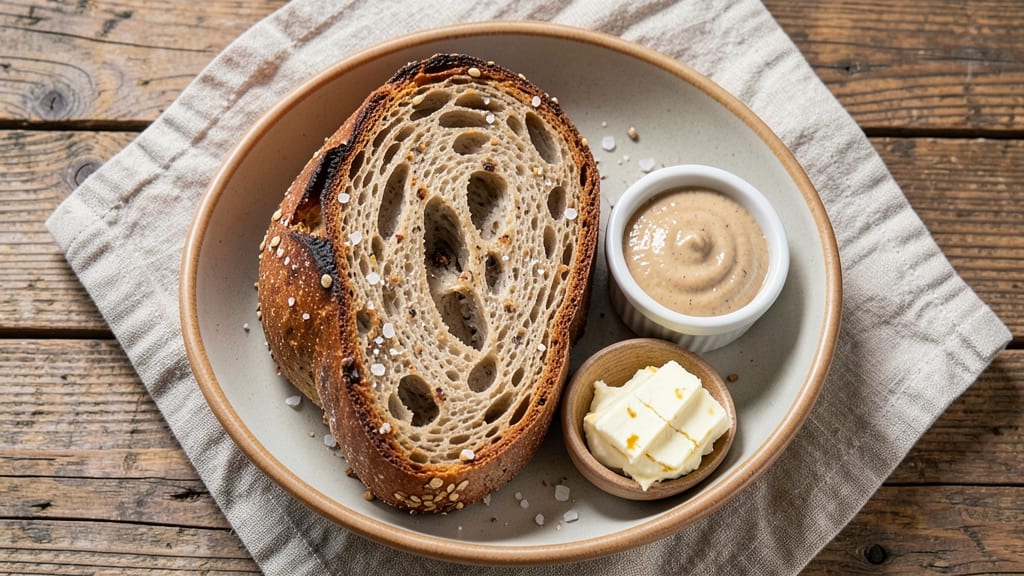
This artisan whole wheat sourdough bread recipe transforms simple ingredients into a loaf with a crisp crust and nutty, complex flavor profile. The secret lies in a well-maintained starter and precise fermentation, creating that signature tang and chewiness.
I've refined this recipe over years to work with standard home equipment, making it accessible without sacrificing professional results.
The process begins with a robust whole wheat starter that develops deep flavor during overnight fermentation. We'll use a 75% hydration dough for excellent oven spring and structure, with optional additions like seeds or honey for customization.
Every step—from mixing to shaping—is designed to create a loaf with an open crumb and satisfying crust.
By the time you pull this bread from the oven, you'll have a loaf with a golden-brown crust that crackles satisfyingly and a tender interior with visible air pockets. The whole wheat adds subtle earthiness while maintaining a pleasant texture, and the sourdough fermentation creates that distinctive tang.
This bread is perfect for sandwiches, toast, or serving alongside soups.
Whether you're a seasoned baker or new to sourdough, this recipe delivers professional-quality results with clear instructions and adaptable techniques. The key is patience—letting the dough and starter work their magic creates bread that tastes like it came from an artisan bakery. Let's get started on creating your perfect loaf.
Ingredients for artisan whole wheat sourdough bread
Pantry staples meet sourdough magic for a loaf with crisp crust and nutty depth.
| Ingredient | Amount | Notes |
|---|---|---|
| Whole Wheat Flour 🌾 | 4 cups | High-protein, freshly milled preferred |
| Unbleached All-Purpose Flour 🌾 | 1 cup | Balances dough structure |
| Active Whole Wheat Sourdough Starter 🍞 | 1 cup | 100% hydration, bubbly and active |
| Filtered Water 💧 | 2 ½ cups | Room temperature, 75°F |
| Granulated Sugar 🍚 | ½ tsp | Feeds starter fermentation |
| Unsalted Butter 🧈 | ½ cup | Cold, cubed for flavor |
| Diamond Crystal Kosher Salt 🧂 | 1 ½ tsp | Adjusts flavor balance |
| Flaxseeds 🌰 | 2 tbsp | Optional for nutty crunch |
| Sesame Seeds 🌻 | 1 tbsp | Optional topping |
| Cornmeal 🌽 | ¼ cup | Prevents sticking |
| Honey 🍯 | 1 tsp | Optional for sweetness |
| Active Dry Yeast 🍞 | ¼ tsp | Backup for starter |
The whole wheat flour is where the magic happens—King Arthur or Bob's Red Mill are my go-tos for reliable protein content. If your starter's sluggish, feed it extra sugar (1 tsp) 4 hours before using. For the butter, European-style (like Plugrá) has higher fat content, which gives that extra richness. Flaxseeds? Toast them first in a dry pan for 3 minutes—they'll be more aromatic. The sesame seeds should be toasted until golden for best flavor, not just sprinkled raw.
No sourdough starter? Use 0.25 tsp active dry yeast plus 1 tsp sugar instead, but expect less tang. Running low on whole wheat flour? Substitute half with white whole wheat flour—it's lighter but still nutty. The honey is optional, but if you omit it, add 0.25 tsp more sugar to the starter. For a seedless loaf, skip the flaxseeds and sesame seeds, but add 1 tbsp extra butter to compensate for lost texture. The cornmeal is non-negotiable—it creates that perfect crisp crust that separates this from regular sourdough.
Keep your starter in the fridge when not in use—it'll last 2 weeks if fed weekly. The dough can be shaped and refrigerated overnight for 12-16 hours before baking, which deepens the flavor. Once baked, store wrapped in a clean kitchen towel for up to 3 days at room temperature. For longer storage, freeze slices wrapped in parchment—3 months in a sealed bag. Toasting revives stale bread, but this loaf stays fresh surprisingly long.
Why You'll Love This Recipe
- I’ll be real: mixing the whole wheat starter with just water and flour takes zero effort—no stand mixer, no arm workout. That tangy depth comes from letting the dough rest while you watch Netflix, and honestly? The results feel like you’ve been baking for hours when it’s actually just a few hands-off moments.
- No-Knead Magic: I’ll be real: mixing the whole wheat starter with just water and flour takes zero effort—no stand mixer, no arm workout. That tangy depth comes from letting the dough rest while you watch Netflix, and honestly? The results feel like you’ve been baking for hours when it’s actually just a few hands-off moments.
- Nutty, Chewy Crunch: Between us, this isn’t your dry, dense whole wheat loaf. The blend of whole wheat flour and unbleached all-purpose creates a perfect crumb—tangy from the starter, slightly sweet from that pinch of sugar, and with a crust that’s crisp enough to shatter but chewy enough to stick to your ribs. (Yes, even on a Tuesday night.)
- Meal Prep MVP: This bread freezes like a dream—slice it fresh, wrap tightly, and toss it in the freezer. When you’re scrambling for breakfast or need a quick lunch, just toast a slice straight from frozen. I keep two loaves on hand at all times: one for now, one for “later me” who’s too tired to think.
Step-by-step instructions for artisan whole wheat sourdough bread
Let's craft a rustic loaf with deep nutty flavor and an open crumb—where fermentation does the heavy lifting.
Mix the Dough and Begin Fermentation
In a large mixing bowl, combine the 4 cups whole wheat flour, 1 cup unbleached all-purpose flour, 1 cup active whole wheat sourdough starter, 2.5 cups filtered water, 0.5 tsp granulated sugar, and 1.5 tsp diamond crystal kosher salt. Mix with a wooden spoon until a shaggy dough forms—it'll be sticky, but that's perfect for our hydration level.
Let the dough rest for 10 minutes while you prepare the butter. Cut the 0.5 cup unsalted butter into small cubes and add them to the dough. Using your hands (or a dough scraper), fold the butter pieces into the dough until fully incorporated. The butter should begin to soften slightly from the warmth of your hands—this ensures even distribution for maximum flavor.
Cover the bowl with a damp kitchen towel and let the dough ferment at room temperature for 4-6 hours. You're looking for 30-50% bulk fermentation—when the dough has nearly doubled in size and feels noticeably lighter when pressed gently with a finger. The aroma should be tangy and slightly sweet from the starter activity.
Shape and Cold Proof for Structure
Lightly flour a clean work surface and turn out the dough. Gently fold the dough over itself 3-4 times, rotating a quarter turn each time to strengthen the gluten structure. This technique, called "laminating," helps develop elasticity without overworking the dough.
Shape the dough into a round boule by pulling the edges toward the center and tucking them underneath. Place it seam-side up in a lightly greased bowl, cover again with the damp towel, and refrigerate for 12-16 hours. The cold slows fermentation while allowing the gluten to relax—this is where the magic happens for our open crumb structure. The dough should rise slightly but not double in size during this rest.
Score and Bake for Crispy Crust
Preheat your oven to 425°F with a Dutch oven inside for 45 minutes. Remove the Dutch oven and place the chilled dough directly into it. Using a sharp razor blade or lame, score the dough ½-inch deep in a simple pattern—this controls expansion and creates that beautiful artisan look.
Bake uncovered for 30 minutes, then remove the lid and continue baking for another 15-20 minutes until the crust is deep golden brown and the internal temperature reaches 205°F. The bread should sound hollow when tapped on the bottom. If the top browns too quickly, tent loosely with foil to prevent burning.
Transfer the bread to a wire rack and let it cool completely before slicing—this prevents a gummy interior. Brush the warm loaf with melted butter if desired, then sprinkle with 2 tbsp flaxseeds and 1 tbsp sesame seeds for added texture. The crumb should be open and airy with pockets of nutty flavor from the whole wheat flour.
Optional Sweet Variation
For a slightly sweetened version, dissolve 1 tsp honey in ¼ cup warm water and brush this mixture over the loaf after scoring but before baking. The honey will caramelize slightly during baking, adding subtle sweetness that complements the nutty depth of the whole wheat.
If you used the 0.25 tsp active dry yeast as a backup, you can reduce the starter slightly to ¾ cup while increasing the water to 2.6 cups to maintain the same hydration level. The yeast will work alongside the starter to ensure reliable fermentation, especially in cooler environments.
Pro Tips For Making Artisan Whole Wheat Sourdough Bread
- STRETCH THE DOUGH: Whole wheat dough is stubborn—it won’t stretch like white flour. Instead of fighting it, fold the dough in thirds every 30 minutes during bulk fermentation (3-4 times total). This builds strength without overworking it, and you’ll see the gluten develop more evenly. (Yes, it looks messy at first, but that’s how you know it’s working.)
- CHILL THE STARTER: Your whole wheat starter needs to be room temp but not warm—think lukewarm bathwater. If it’s too hot, the fermentation speeds up and can turn sour or gassy; too cold, and it’ll be sluggish. Stick your jar in a bowl of filtered water at 75°F (24°C) for 20 minutes before using. Trust me, your dough’s rise will thank you.
- WEIGH THE FLOUR: Scooping whole wheat flour by volume is a disaster—it packs unevenly, and your hydration will be off. Use a scale and weigh it directly into your mixing bowl. For this recipe, aim for 100% hydration (equal parts flour and water by weight), but add 5-10% extra water if the dough feels dry after mixing. Whole wheat absorbs moisture like a sponge.
- SKIP THE SUGAR (IF YOU DARE): Granulated sugar feeds the yeast, but whole wheat already has natural sugars and nutrients. Omit it entirely if your starter is active and bubbly—you’ll get a cleaner, nuttier flavor. If you keep it, use half the amount (about 1 tsp) and dissolve it in the water first. The dough will rise faster, but the crust might darken quicker, so bake it 5-10 minutes earlier.
Pro cooking tips for perfect results
Starter Vitality
Your whole wheat starter is the foundation—treat it like a living organism. Feed it 1:1:1 ratio (flour:water:sugar) 12 hours before using for maximum activity. I test mine by dropping a spoonful in water—if it floats, it's ready.
For sluggish starters, add ½ tsp extra sugar to the dough to kickstart fermentation. Keep your starter in a glass jar (not metal) to monitor bubbles easily. 🌱
Hydration Control
This dough uses 75% hydration, which means more water than standard breads. To handle the stickiness, wet your hands slightly when shaping—this prevents tearing the delicate gluten structure. If your dough feels too wet after mixing, add 1 tbsp extra flour gradually until it's manageable but still sticky.
For dry climates, chill the dough 1 hour before shaping to tighten the gluten.
Cold Proofing Magic
The 12-16 hour cold proof is where whole wheat dough shines. This slow fermentation develops complex flavors while preventing overproofing. Place your shaped boule in a lightly greased bowl (I use neutral oil) to prevent sticking.
For extra flavor, brush the dough with melted butter before refrigerating. The cold also helps the whole wheat absorb moisture evenly, preventing a dense crumb.
Scoring Secrets
Scoring isn't just decoration—it controls expansion. Use a sharp razor blade or lame for clean cuts. For whole wheat bread, score ½-inch deep with a simple basketweave or crosshatch pattern to direct steam escape.
Dip your blade in hot water between cuts to prevent sticking. The score should be just deep enough to see the pale dough underneath—this ensures proper oven spring without tearing.
Dutch Oven Mastery
Your Dutch oven creates that signature artisan crust. Preheat it 45 minutes with the bread inside for even heat distribution. Place ½ cup hot water in the bottom before baking to generate steam—this gives the crust that crackly texture.
If your oven runs hot, tent the bread with foil after 20 minutes to prevent over-browning. The internal temp should hit 205°F for perfect doneness.
Seed Topping Tips
For those flaxseeds and sesame seeds, toast them first in a dry pan over medium heat for 3 minutes until fragrant. Sprinkle them immediately after baking while the bread is still warm—they'll stick better and release their full flavor.
For extra crunch, press them lightly with the back of a spoon. If you're feeling fancy, mix in 1 tbsp poppy seeds for a different texture contrast. 💫
Nutrition facts
Frequently asked questions
Why does my whole wheat sourdough dough feel so sticky?
Whole wheat flour absorbs more water than white flour, creating a stickier dough at 75% hydration. This stickiness is normal and essential for flavor development! Wet your hands slightly when handling to prevent tearing the gluten. If it's too wet, add 1 tbsp extra flour gradually. The stickiness will reduce as the dough ferments.
Can I make this recipe without a Dutch oven?
Yes, but your crust won't be as crisp. Use a baking sheet lined with parchment and place a metal bowl filled with hot water on the lower rack during the first 20 minutes of baking to create steam. The bread will still rise well, though the crust may be softer. For best results, try a cast-iron skillet as an alternative.
How do I know when my sourdough starter is ready?
Your starter should be bubbly, have doubled in size within 4-6 hours after feeding, and pass the float test: drop a spoonful in water—if it floats, it's active! For whole wheat starters, it may take slightly longer to become bubbly due to the flour's density. Feed it 12 hours before using in your recipe for maximum activity.
What if my dough didn't rise enough?
Underproofed dough often happens with whole wheat flour. Try these fixes: extend bulk fermentation by 1-2 hours, add 0.25 tsp extra yeast to the dough, or increase your kitchen temperature by placing the dough near a warm oven (turned off). If using a sluggish starter, reduce it to ¾ cup and add 0.5 tsp extra sugar to boost fermentation.
Can I add other whole grains to this recipe?
Replace up to 1 cup of the whole wheat flour with other whole grains like spelt, rye, or oat flour. For best results, use pre-milled grains and adjust hydration by adding 1 tbsp extra water per cup of grain flour. Keep the total flour weight at 5 cups to maintain structure. Toasted grains add wonderful texture and flavor!