Side Dishes
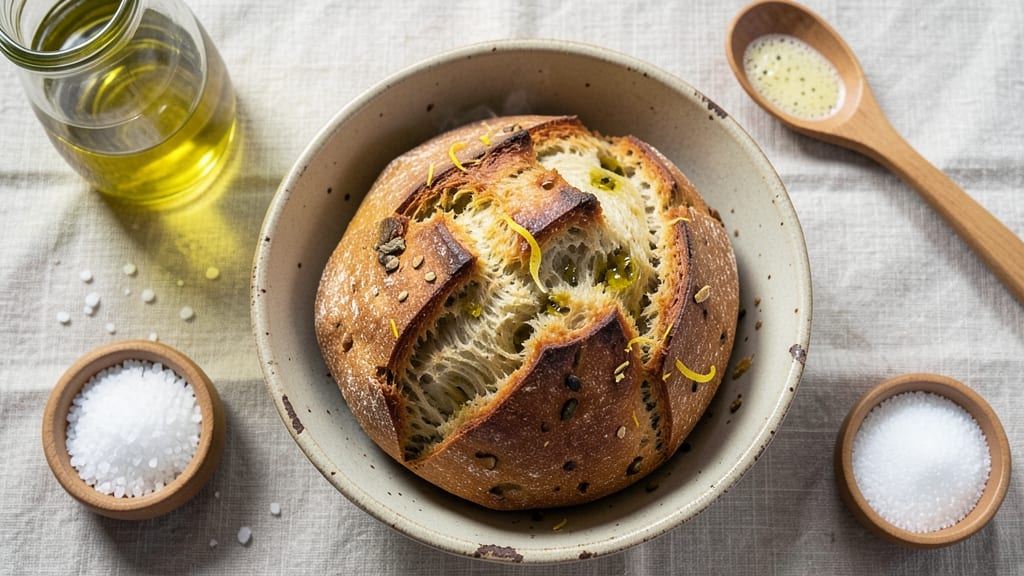
This artisan olive oil bread recipe transforms simple pantry staples into a loaf with a golden crust and olive-infused pillowy crumb—the kind that makes every slice worth savoring.
The secret lies in the balance of high-quality olive oil, which enriches both flavor and texture, while proper kneading and proofing create that signature open crumb structure.
I’ve perfected this method over years of baking, ensuring a crust that’s crisp enough to shatter but tender enough to melt in your mouth.
The beauty of this recipe is its simplicity: just five core ingredients—flour, water, yeast, olive oil, and salt—come together to create something extraordinary. Unlike commercial breads, this version relies on slow fermentation and high-heat baking to develop deep flavor and an airy interior.
The olive oil doesn’t just add richness; it creates a subtle fruity note that elevates every bite, making it far more complex than store-bought loaves.
What you’ll end up with is a loaf that’s visually stunning—a golden crust with deep cracks and a crumb so tender it practically dissolves. The aroma alone, wafting through your kitchen as it bakes, will have everyone gathering around.
This bread is versatile enough for toast, sandwiches, or serving alongside soups, but it’s the kind of loaf that becomes a centerpiece all on its own.
For those who love customization, you can easily adapt this recipe with additions like fresh rosemary, garlic, or whole grains—each variation adds its own unique character while keeping the foundational technique intact.
The key is patience and attention to detail, but the results are worth every minute. Let’s get started on creating your perfect loaf.
Ingredients for artisan olive oil bread
Five simple ingredients, one extraordinary loaf with golden crust and olive-infused crumb.
| Ingredient | Amount | Notes |
|---|---|---|
| All-Purpose Flour 🌾 | 4 cups | Unbleached preferred for best texture |
| Extra-Virgin Olive Oil 🫒 | ½ cup | High-quality, fruity variety |
| Active Dry Yeast 🍞 | 2 ¼ tsp | Fresh yeast if available |
| Granulated Sugar 🍚 | 1 tbsp | Helps activate yeast |
| Warm Water 💧 | 1 ¼ cups | 110°F for optimal yeast activation |
| Diamond Crystal Kosher Salt 🧂 | 1 ½ tsp | Adjust to taste |
| Cornmeal 🌽 | ¼ cup | For dusting baking sheet |
| Fresh Rosemary 🌿 | 1 tbsp | Chopped, optional for infusion |
| Garlic Cloves 🧄 | 2 cloves | Minced, optional for flavor |
The olive oil is non-negotiable here—look for extra-virgin with a fruity, peppery finish. California Olive Ranch or Bertolli are solid choices, but any high-quality brand works. Fresh yeast is ideal, but active dry yeast works perfectly if stored properly. The flour should be unbleached for that perfect tender crumb—King Arthur or Gold Medal are my go-tos. If you're feeling adventurous, swap half the all-purpose for bread flour for extra structure, but the standard version is foolproof. Rosemary and garlic are optional but add incredible depth—freshly chopped is best, but dried works in a pinch at half the amount.
No extra-virgin olive oil? Light olive oil or avocado oil will work, but you'll lose that fruity complexity. Short on yeast? Instant yeast at the same amount dissolves faster in the dough. The sugar can be swapped for honey (reduce by 1 tsp due to moisture), but it won't develop the same caramelized crust. For the water, lukewarm is key—too hot kills the yeast, too cold slows activation. If your kitchen is chilly, warm the water slightly. The cornmeal is just for dusting—semolina works too if you're feeling fancy, but it's not necessary.
This dough needs time—at least 2 hours of proofing at room temperature for best flavor. Store any extra dough wrapped tightly in plastic in the fridge for up to 3 days or freeze for 3 months. The baked loaf keeps well at room temperature for 2 days wrapped in a clean towel, or 1 week in the fridge. For maximum freshness, reheat slices in a dry pan for 30 seconds—nothing beats that just-baked aroma. The crust gets crunchier as it cools, so slice while still warm if you want perfect toast.
Why You'll Love This Recipe
- Five-Ingredient Magic: I swear by this list—just flour, olive oil, yeast, sugar, and water. No fancy mixers or obscure ingredients, just pure, reliable baking that never lets me down.
- Golden Crust Secret: That crispy olive oil crust? It’s the star. The moment it hits the oven, the aroma of warm oil and rising dough fills my kitchen—like a hug in bread form.
- Weeknight Hero: I make this on Tuesdays when I’m too tired for anything fancy. Toss it in a basket, and it’s breakfast, lunch, or a quick dinner fix—no planning required.
- Leftovers That Last: A loaf keeps beautifully for days. Toast it for breakfast, pack it for lunch, or freeze slices for when I’m too lazy to bake. Zero waste, all flavor.
Step-by-step instructions for artisan olive oil bread
Here's how to craft a rustic loaf with a crisp golden crust and tender, olive-infused interior.
Activate the Yeast and Mix the Dough
In a large mixing bowl, combine the 1.25 cups warm water (tested at 110°F), 1 tbsp granulated sugar, and 2.25 tsp active dry yeast. Let sit for 5-10 minutes until frothy—this confirms the yeast is alive and ready to work. If it doesn't bubble, your yeast may be dead, and you'll need to start over.
Add the 4 cups all-purpose flour and 1.5 tsp diamond crystal kosher salt to the bowl. Stir with a wooden spoon until a shaggy mass forms. Then drizzle in the 0.5 cup extra-virgin olive oil and mix until fully incorporated. The dough will feel sticky but cohesive. If it's too dry, add 1 tsp warm water; if too wet, sprinkle in 1 tbsp flour.
Knead Until Elastic and Smooth
Turn the dough onto a lightly floured surface and knead for 8-10 minutes by hand, or use a stand mixer with a dough hook on medium speed for 5-6 minutes. You're looking for a smooth, elastic dough that springs back when poked. This develops gluten, which gives the bread its structure and chew.
To test for readiness, stretch a small piece of dough—it should resist tearing and form a thin, translucent membrane. If it tears easily, knead another 2-3 minutes. Once properly kneaded, the dough should feel slightly tacky but not sticky to the touch.
First Rise and Infuse Flavors
Lightly oil a large bowl, place the dough inside, and cover with a damp towel or plastic wrap. Let rise in a warm, draft-free spot for 1-2 hours, or until doubled in size. The dough should feel light and airy, with noticeable puffiness. This first rise allows the yeast to ferment and develop flavor.
While the dough rises, finely chop the 2 cloves garlic and 1 tbsp fresh rosemary. Once the dough has risen, gently punch it down to release air, then sprinkle the chopped garlic and rosemary directly onto the surface. Fold the dough over itself a few times to distribute the aromatics evenly. This step infuses the bread with fragrant, Mediterranean notes.
Shape and Final Rise
Divide the dough into 4 equal portions (about 8 oz each). Roll each portion into a smooth, cylindrical log, tapering slightly at the ends to mimic a traditional baguette shape. Place the shaped dough onto a parchment-lined baking sheet, spacing them 2 inches apart to allow for expansion.
Cover the shaped dough with a damp towel and let rise for another 30-45 minutes until puffy and slightly domed. The dough should spring back slowly when gently pressed. This final rise ensures a light, airy crumb. Preheat your oven to 375°F while the dough rises—this maximizes the oven spring for that signature artisan look.
Score and Bake to Golden Perfection
Sprinkle the baking sheet with 0.25 cup cornmeal to create a crisp base. Using a sharp razor or serrated knife, score each loaf diagonally with 2-3 shallow cuts—this controls expansion and adds a professional touch. Bake for 25-30 minutes until the crust is deep golden brown and the internal temperature reaches 190°F.
For extra crispiness, transfer the baked bread to a wire rack and let cool for 10 minutes before slicing. The crust should be shatteringly crisp, while the interior remains soft and pillowy, infused with the rich flavors of olive oil and herbs. Slice and serve warm for the ultimate artisan experience.
Pro Tips For Making Artisan Olive Oil Bread
- WEIGH YOUR FLOUR: I learned this the hard way—measuring flour by scooping from the bag adds way too much air, and your dough will be denser than a brick. Use a kitchen scale for 500g (or 4 cups packed) of all-purpose flour. The difference in texture is night and day.
- DILUTE THE YEAST FIRST: Skip mixing yeast directly into the flour—it’ll clump and die before it even gets a chance to work. Instead, dissolve the yeast and sugar in the warm water (about 110°F/43°C) and let it foam for 5 minutes first. This guarantees it’s active before it meets the flour.
- STRETCH, DON’T PUNCH: When shaping the dough, resist the urge to punch it down like you’re angry at it. Gently stretch the sides toward the center instead—this builds gluten without tearing the delicate olive oil-rich dough. (Yes, it looks weird, but it works.)
- LET IT RISE TWICE: One rise isn’t enough for that light, airy crumb. After the first rise (about 1–1.5 hours), punch down the dough, shape it, and let it rise again for another 45–60 minutes. The second rise develops flavor and texture—cutting corners here means a heavier loaf.
Regional styles of artisan olive oil bread
Italian Focaccia Style
Transform this recipe into a Mediterranean-inspired focaccia by increasing the olive oil to ¾ cup and shaping the dough into a single large rectangle on a baking sheet. Dimple the surface with your fingers, then sprinkle with flaky sea salt and dried oregano before baking.
For extra flair, top with cherry tomatoes and Kalata olives in the final 10 minutes of baking—this Italian classic stays moist and olive-forward with a crisp top. 🌿
French Fougasse Twist
Shape the dough into a rustic fougasse by pinching off small pieces and tucking them under the edges before baking. Brush the surface with extra olive oil and sprinkle with coarse sea salt and herbes de Provence.
Bake at 400°F for 20-25 minutes until the crust is deeply golden. The French version embraces a chewy, open crumb with a nutty, herby aroma—perfect for dipping into olive oil or serving with charcuterie. 🥖
Greek Sesame Bread
For a Greek-inspired sesame bread, reduce the olive oil to ¼ cup and replace 1 cup of flour with whole wheat flour for depth. Shape into a round loaf and brush the top with egg wash before sprinkling generously with toasted sesame seeds.
Bake as directed, but increase the temperature to 425°F for the last 5 minutes to achieve a crisp, golden crust. The sesame seeds add a nutty crunch that pairs beautifully with feta and olives. 🌟
Spanish Pan Con Aceite
In Spain, this bread is called pan con aceite, and it’s all about the olive oil richness. Shape the dough into a small round loaf (about 6 inches wide) and bake in a preheated cast-iron skillet for a crispy, rustic crust.
After baking, brush the warm loaf with additional olive oil and sprinkle with flaky salt. Serve with tomato soup or jamón ibérico—the Spanish version is simple but deeply satisfying. 🇪🇸
Herbed Olive Oil Boule
For a French-style boule, shape the dough into a round loaf and bake in a pullman pan lined with parchment. Infuse the dough with 1 tbsp chopped thyme and 1 tsp lemon zest during the final kneading.
Brush the baked crust with melted butter and sprinkle with coarse salt for a buttery, herby crust that’s crisp yet tender. This version is ideal for charcuterie boards or French onion soup. ✨
Moroccan Za’atar Bread
Give your bread a North African twist by adding 1 tbsp za’atar seasoning and 1 tsp ground cumin to the dough. Shape into a flat, round loaf and bake at 425°F for 20 minutes until deeply golden.
Brush the warm bread with olive oil and sprinkle with extra za’atar for a nutty, citrusy aroma. Serve with lamb tagine or hummus—this version is bold and aromatic. 🌶️
Nutrition facts
Frequently asked questions
Why does olive oil make this bread different from regular bread?
The olive oil creates a richer, more complex flavor with subtle fruity notes and adds moisture that keeps the crumb tender for days. Unlike butter, it doesn't add dairy richness but instead enhances the bread's natural taste while creating a golden, crisp crust that's more aromatic than traditional loaves.
Can I make this bread without a stand mixer?
This recipe works perfectly with hand-kneading. Simply turn the dough onto a lightly floured surface and knead for 8-10 minutes until smooth and elastic. The key is consistency—knead until the dough springs back when poked and feels slightly tacky but not sticky.
How do I know when the dough is properly proofed?
Look for doubled volume and a light, airy texture that leaves noticeable fingerprints when gently pressed. The dough should also feel springy—press two fingers into it and watch it slowly rebound. If it springs back immediately, it needs more time; if it collapses, it's overproofed.
What if my crust isn't golden enough?
Try these fixes: Increase oven temp to 400°F for the last 5 minutes of baking, or brush the loaves with extra olive oil before baking for deeper color. For even browning, rotate pans halfway through. If using dark pans, reduce temp by 25°F to prevent over-browning.
How can I store leftovers to keep them fresh?
Wrap cooled bread in a clean kitchen towel or beeswax wrap and store at room temp for 2 days. For longer storage, freeze slices in a bag for up to 3 months. To revive, warm slices in a dry pan for 30 seconds or toast until crispy. The towel method preserves moisture better than plastic.