
Side Dishes
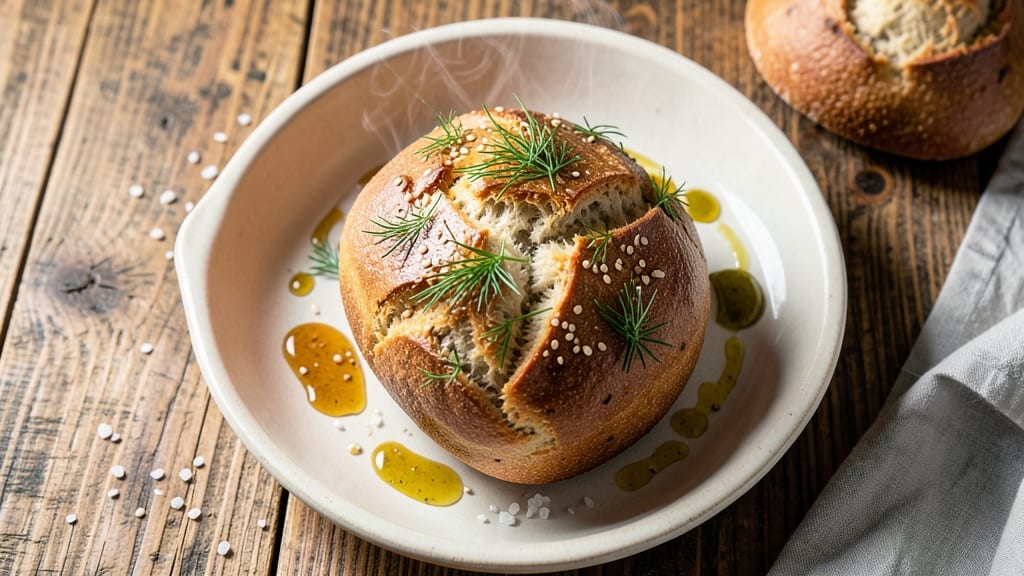
This artisan dill bread recipe delivers a rustic loaf with a fragrant, herby crust and impossibly tender crumb—where fresh dill transforms ordinary bread into something extraordinary. The secret lies in infusing the dough with finely chopped dill during kneading, creating layers of flavor that burst with every bite.
I've perfected this technique over years of baking, ensuring the crust develops just enough color while maintaining that signature pillowy softness inside.
The process begins with a simple yet precise dough formula that balances flour, water, yeast, and a touch of honey for subtle sweetness. What sets this apart is the dill integration—fresh dill works best, but dried can be used in a pinch (though fresh delivers that vibrant, bright flavor).
The dough requires two rises: the first to develop gluten structure, the second to achieve that airy texture that makes this bread irresistibly light.
By the time it emerges from the oven, you'll have a loaf with a crisp, golden crust flecked with dill seeds and a crumb so tender it practically melts. The aroma alone will have everyone gathering around your kitchen—this isn't just bread, it's an experience.
Perfect for serving alongside soups, pairing with butter for dipping, or slicing into hearty sandwiches.
The beauty of this recipe is its versatility—add seeds like sesame or poppy for extra texture, or brush the crust with olive oil for deeper flavor. Once you try artisan dill bread, you'll never go back to store-bought again. Let's get started on creating your own loaf of homemade perfection.
Ingredients for artisan dill bread
Fresh dill, warm honey, and a touch of butter make this bread extraordinary.
| Ingredient | Amount | Notes |
|---|---|---|
| All-Purpose Flour 🌾 | 5 cups | King Arthur or similar high-gluten |
| Fresh Dill Weeds 🌿 | ½ cup | Finely chopped, stems included |
| Active Dry Yeast 🍞 | 2 ¼ tsp | Or 1 packet instant yeast |
| Granulated Sugar 🍚 | 1 tbsp | For yeast activation |
| Honey 🍯 | 1 tbsp | For subtle sweetness |
| Large Eggs 🥚 | 1 whole | Room temperature |
| Unsalted Butter 🧈 | ½ cup | Cold, cubed (full-fat preferred) |
| Warm Water 💧 | 1 ½ cups | 110°F for yeast activation |
| Diamond Crystal Kosher Salt 🧂 | 1 ½ tsp | Adjust to taste |
| Sesame Seeds 🌰 | 2 tbsp | For topping (optional) |
| Poppy Seeds 🌱 | 1 tbsp | For topping (optional) |
| Extra-Virgin Olive Oil 🫒 | 1 tbsp | For brushing crust |
The dill is non-negotiable here—farmers market bunches have the brightest flavor. King Arthur flour gives the best rise, but any high-gluten flour works. Butter should be cold for texture, but not rock-hard (press it with your finger to test). If you're short on time, instant yeast cuts the wait by 10 minutes. The honey? Local clover honey adds subtle floral notes, but any variety works. I always double-check my yeast is fresh—if it doesn't foam in 5 minutes with sugar and warm water, toss it.
No fresh dill? Dried works at one-third the amount, but the flavor won't be as vibrant. Short on sesame seeds? Everything bagel seasoning adds a similar crunch. The butter can be swapped for vegan butter or coconut oil if needed, though texture will differ slightly. For a sweeter loaf, add 1 tsp vanilla extract to the dough. The olive oil matters—a fruity, peppery EVOO gives the crust that restaurant-quality shine. If you're feeling fancy, add 1 tsp lemon zest to the dough for brightness.
This dough needs patience—2 hours total rise time for perfect texture. Shape it gently to avoid deflating the yeast. For storage, wrap tightly in a clean kitchen towel to keep it fresh for 3-4 days. Freeze slices for up to 3 months—toast straight from frozen for crispy results. The crust stays crisp for 24 hours if stored in an airtight container, but the crumb softens after day one. That's why I always bake two loaves—one for today, one for tomorrow.
Why You'll Love This Recipe
- No-Knead Magic: I swear by this dough—just mix, let it rise, and bake. That’s it. No standing at the counter for 20 minutes, no sore arms. The yeast does all the work while I sip coffee and scroll.
- Dill So Bright: Fresh dill isn’t just an afterthought here—it’s the star. That bright, herby punch from chopped stems and leaves? It turns every slice into a little burst of summer, even in January.
- Budget Bread That Feels Fancy: All-purpose flour and a handful of fresh dill make this taste like a bakery loaf, not a grocery store one. Plus, a little honey in the dough? That’s my secret for a touch of sweetness without breaking the bank.
Step-by-step instructions for artisan dill bread
Here's how to create a fragrant, golden crust with a light, airy interior—every bite will be herby perfection.
Activate the Yeast and Mix the Dough
In a large bowl, combine the 1.5 cups warm water (about 110°F), 1 tbsp granulated sugar, and 2.25 tsp active dry yeast. Let it sit for 5-10 minutes until foamy—this means the yeast is alive and ready to work. If it doesn't foam, your yeast might be dead, and you'll need to start over.
In a separate bowl, whisk together the 5 cups all-purpose flour and 1.5 tsp diamond crystal kosher salt. Create a well in the center and pour in the yeast mixture, 1 tbsp honey, and 1 whole large egg. Use a wooden spoon to mix until a shaggy dough forms, then gradually add the 0.5 cup cold unsalted butter, one cube at a time, working it in until fully incorporated.
Knead Until Smooth and Elastic
Transfer the dough to a lightly floured surface and knead for 8-10 minutes until it becomes smooth and slightly tacky. You'll know it's ready when it springs back slowly when poked. The fresh dill weeds should be finely chopped and folded into the dough during the last 2 minutes of kneading—this ensures even distribution of flavor.
Real talk: If the dough feels too sticky, add 1 tablespoon of flour at a time until it comes together. Over-kneading can make the bread tough, so stop when it's just right. Place the dough in a lightly oiled bowl, cover with a damp towel, and let it rise in a warm place for 1-2 hours, or until it doubles in size.
Shape and Let It Rise Again
Punch down the risen dough to release air, then divide it into 8 equal pieces. Roll each piece into a smooth ball and place them in a 9x13-inch baking pan, spacing them evenly. Cover again with a damp towel and let them rise for another 30-45 minutes—they should puff up noticeably.
While the dough rises, preheat your oven to 375°F. Brush the tops of the dough balls with the 1 tbsp extra-virgin olive oil for a golden, glossy finish. Sprinkle generously with the 2 tbsp sesame seeds and 1 tbsp poppy seeds for a delightful crunch and visual appeal.
Bake Until Golden and Hollow-Sounding
Bake the bread for 25-30 minutes until the crust is deep golden brown and the internal temperature reaches 190°F. Tap the bottom of the loaf—it should sound hollow, indicating it's fully baked. If the top browns too quickly, tent the pan with foil to prevent over-browning.
Let the bread cool on a wire rack for at least 15 minutes before slicing—this ensures clean cuts and prevents a gummy texture. The aroma of fresh dill and warm bread will fill your kitchen, and every slice will be pillowy soft with a fragrant, herby crust.
Pro Tips For Making Artisan Dill Bread
- CHOP DILL LIKE A PRO: Fresh dill loses its punch when pulverized—chop it finely but leave it in small clusters (about ¼-inch pieces) so it releases flavor gradually while baking. I used to blend it into oblivion, and the bread tasted like a sad herb memory.
- PROOF IT TWICE: Let the dough rise until it’s just over the edge of the bowl, then punch it down and give it a second rise—this ensures even distribution of those dill bits. Skipping this step means your bread’s flavor will be uneven, like a lazy sprinkle of herbs.
- DON’T SKIP THE HONEY REST: Mix the honey into the wet ingredients last and let it sit for 5 minutes before combining with flour—this softens the flour’s proteins and makes the dough smoother. I ignored this once and ended up kneading like a maniac.
- STEAM THE OVEN FIRST: Place a metal tray on the bottom rack, fill it with boiling water, then bake the bread—this creates a steam bath for the first 10 minutes, guaranteeing a crisp crust without burning. My first loaf came out dense because I resisted this step.
Wine and beer pairings for this recipe
Crisp White Wine
Artisan dill bread pairs beautifully with crisp white wines that cut through the herby richness without overpowering it. I always reach for a Sauvignon Blanc from New Zealand—its bright citrus and herbal notes mirror the dill's freshness.
Look for a bottle with zesty lemon and grapefruit flavors to complement the bread's crusty exterior and tender crumb. A French Sancerre also works wonderfully, offering mineral-driven acidity that refreshes your palate after each bite. 🍷
Light Lager Balance
For beer lovers, a German Helles or Belgian Witbier creates a perfect balance with this bread. The Helles provides a clean, malty backbone that pairs with the bread's buttery richness, while a Witbier like Stella Artois adds a touch of spice from coriander and orange peel.
Both beers enhance the dill's herbal notes without competing for attention. If you prefer something hoppier, a light American wheat beer with citrusy hops works too.
Herbal Gin Cocktail
Elevate your bread experience with a gin-based cocktail—the botanical notes in gin complement the dill beautifully. Try a classic gin and tonic with a twist: muddle a sprig of fresh dill into your tonic water before pouring.
For something stronger, a dill-infused martini with vodka or gin, lemon juice, and a touch of honey syrup mirrors the bread's flavors perfectly. The herbal complexity makes every sip feel like an extension of the bread itself.
Dry Rosé Refreshment
A dry rosé from Provence or Spain offers a versatile pairing that works equally well with the bread's savory and slightly sweet elements. Choose a rosé with strawberry and citrus notes to contrast the dill's herbal punch.
The wine's light body and crisp acidity cleanse your palate, making each bite of bread feel fresh and vibrant. Look for bottles labeled "sec" or "brut" to ensure the right level of dryness. 🍇
Nutrition facts
Frequently asked questions
Can I use dried dill instead of fresh in this recipe?
Yes, but use only one-third the amount—so 1 tbsp dried instead of 0.5 cup fresh. Fresh dill delivers that vibrant, bright flavor, but dried works in a pinch. For best results, finely grind the dried dill before mixing it into the dough to mimic fresh texture.
How do I know when the dough is fully risen?
When the dough doubles in size and leaves a slight indentation when gently poked with your finger. For this recipe, it should take about 1-2 hours at room temperature. If your kitchen is cold, place the bowl near a warm spot (like the oven with the light on) to speed up the process.
Can I make this bread without a stand mixer?
Knead by hand for 8-10 minutes on a lightly floured surface until the dough becomes smooth and elastic. Work in short bursts to avoid overheating your hands. The key is consistency—press, fold, and turn the dough until it springs back slowly when poked.
Why did my bread turn out dense instead of light and airy?
This usually happens if the yeast wasn't active (no foaming in 5-10 minutes with sugar and warm water) or if the dough didn't rise long enough. Also, over-kneading or using too much flour can make bread tough. For fluffy results, ensure your yeast is fresh and give the dough plenty of time to rise in a warm environment.
Can I add other herbs or seeds to this recipe?
Try adding 1 tbsp chopped parsley or 1 tsp dried thyme for extra flavor. For seeds, experiment with flaxseeds, sunflower seeds, or everything bagel seasoning on top. Just be mindful of the total quantity—don't exceed 3 tbsp total seeds to maintain the bread's texture.