
Side Dishes
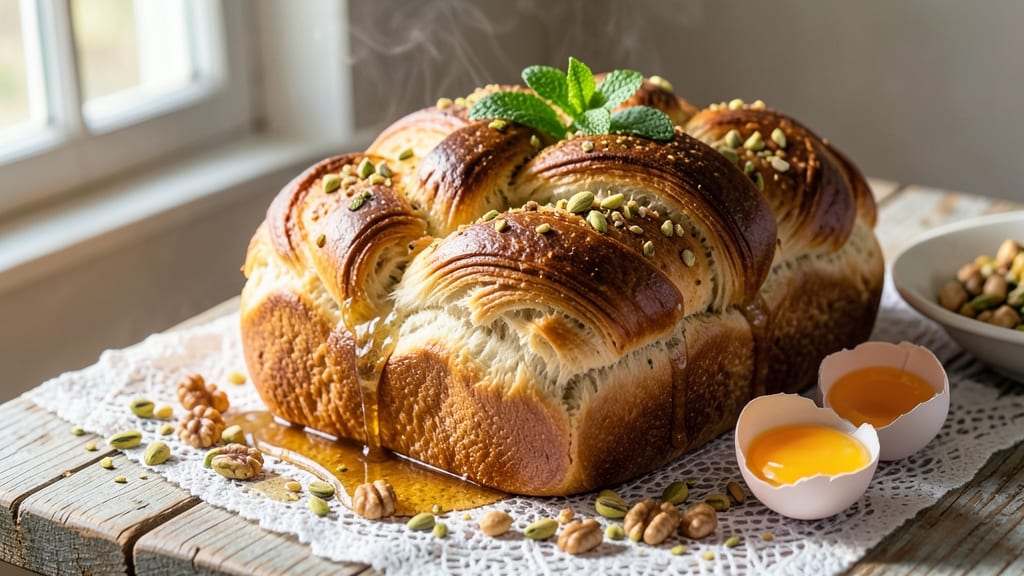
This Armenian Easter bread choreg recipe brings the heart of Armenian tradition to your kitchen with its signature golden crust and fragrant vanilla sweetness. 💛 The rich, buttery dough and delicate floral notes make it a centerpiece for Easter celebrations, symbolizing prosperity and joy.
What sets choreg apart is its tender crumb and caramelized exterior, achieved through precise kneading and baking techniques passed down through generations.
At the core of this recipe is a simple yet transformative process: combining flour, butter, eggs, and vanilla to create a dough that's both sturdy and tender. The key lies in letting it rest properly before shaping into a round loaf, ensuring that signature texture we all love.
Whether you're celebrating Easter or simply craving a taste of tradition, this bread delivers comfort in every bite.
The result is a beautifully golden loaf with a slightly crisp crust and a soft, buttery interior infused with vanilla. Its aroma alone will fill your home with warmth and nostalgia, making it perfect for sharing with family and friends.
This recipe preserves the essence of Armenian Easter traditions while being approachable for home bakers.
For those looking to elevate it further, consider brushing the top with melted butter before baking for extra richness or decorating with a simple egg wash for a glossy finish. The possibilities are endless, but the foundation remains the same: a simple, timeless recipe that connects us to our roots.
Ingredients for armenian easter bread choreg
Golden crust and vanilla sweetness start with this simple Armenian Easter bread list.
| Ingredient | Amount | Notes |
|---|---|---|
| All-Purpose Flour 🌾 | 5 cups | Sifted for lighter texture |
| Unsalted Butter 🧈 | 1 cup | Cold, cubed for easier mixing |
| Granulated Sugar 🍚 | ½ cup | For subtle sweetness |
| Large Eggs 🥚 | 2 whole | Room temperature for even mixing |
| Pure Vanilla Extract 🌸 | 2 tsp | High-quality for authentic flavor |
| Active Dry Yeast 🍞 | 2 ¼ tsp | Or 1 packet instant yeast |
| Warm Milk 🥛 | ½ cup | 110°F for activating yeast |
| Pinch of Salt 🧂 | ¼ tsp | Enhances flavor balance |
| Raisins 🍇 | ½ cup | Optional for traditional touch |
| Ground Cinnamon 🌿 | 1 tsp | For warm spice notes |
| Almond Slices 🌰 | ¼ cup | For decorative topping |
| Egg Wash 🥚 | 1 whole | For golden crust finish |
| Coarse Sugar 🍚 | 2 tbsp | For sprinkling on top |
The flour is your foundation—King Arthur or Gold Medal work best for that tender crumb. Butter should be cold (pop it in the freezer 15 minutes if it's soft)—this creates flaky layers. Vanilla extract? Go for pure Madagascar bourbon if you can find it; it's worth the splurge. Yeast is non-negotiable—Saf-Instant or Fleischmann's Active Dry both work, but check the expiration date. Warm the milk to 110°F (like baby bath water) to activate the yeast without killing it. Raisins are traditional but optional—if you skip them, add an extra tablespoon of sugar for sweetness. For the almonds, Trader Joe's sliced almonds are perfect—they're pre-sliced and stay fresh longer.
No vanilla extract? Vanilla bean paste works too, or even a pinch of vanilla sugar if you're in a pinch. Short on butter? Vegetable shortening keeps the texture but loses some flavor. The dough needs to rise twice—don't rush it. If your kitchen's cold, let it rise in a warm oven with a bowl of hot water for 10 minutes to speed things up. For the egg wash, beat the egg with a splash of milk for extra shine. No almonds? Toasted sesame seeds or chopped pistachios give a nice crunch. And if you're feeling fancy, brush the baked loaf with melted butter mixed with a little vanilla extract for extra richness.
This dough keeps 2 days in the fridge wrapped tightly—perfect for shaping the next day. For longer storage, freeze the shaped loaf (unbaked) for up to 3 months—thaw overnight in the fridge before baking. The baked bread stays fresh 3 days wrapped in a cool, dry place, or 1 week frozen. I always make two batches—one for Easter and one to freeze for holidays later in the year. The aroma alone makes it worth the effort, so don't skip the vanilla or the egg wash—those are what make it sing.
Why You'll Love This Recipe
- No-Knead Magic: I swear, the dough comes together in minutes—just mix, rest, and shape. No standing over a counter or fighting with gluten. That butter-sugar combo makes it so tender, you’ll wonder why you ever baked anything else.
- Vanilla Butter Bliss: The slow-melted butter and vanilla extract create this unreal richness—like a cross between a brioche and a shortbread cookie. Honestly, the first bite makes me question why I ever bought store-bought pastries.
- Easter Centerpiece: This isn’t just bread—it’s the showstopper for Easter baskets or family gatherings. The braided shape feels special, and it’s sturdy enough to hold up for hours (or days) without falling apart.
- Budget-Friendly Luxury: Five ingredients, zero waste—this feeds a crowd for pennies. Leftovers? Toast them for breakfast or crumble over yogurt. My wallet and my taste buds win every time.
Step-by-step instructions for Armenian Easter bread choreg
Here's how to craft this iconic bread with a perfect golden crust and fragrant vanilla center.
👨🍳 Step 1: Activate the Yeast and Mix the Dough
In a small bowl, combine the 0.5 cup warm milk (about 110°F) with the 2.25 tsp active dry yeast. Let it sit for 5-10 minutes until frothy—you'll see tiny bubbles forming on top. This proves your yeast is alive and ready to work its magic.
In a large bowl, whisk together the 5 cups all-purpose flour, 0.5 cup granulated sugar, and 1 tsp ground cinnamon. Add the 2 whole large eggs, 2 tsp pure vanilla extract, and the yeast-milk mixture. Mix until just combined, then add the 1 cup cold cubed butter and the 0.25 tsp pinch of salt. Use a wooden spoon or dough whisk to bring it together.
🥘 Step 2: Knead Until Smooth and Elastic
Turn the dough onto a lightly floured surface and knead for 8-10 minutes until smooth and elastic. You're looking for a dough that springs back when poked and feels slightly tacky but not sticky. I like to use my knuckles for this—press down firmly and watch the dough bounce back.
Here's the thing—don't rush this step. Proper kneading develops gluten, which gives choreg its signature tender crumb. If the dough feels too sticky, add 1 tablespoon flour at a time until it comes together nicely. Once you've got a smooth ball, place it back in the bowl, cover with a damp towel, and let it rise in a warm spot for 1-1.5 hours or until doubled in size.
🍳 Step 3: Shape and Add Filling
Punch down the risen dough and turn it out onto a lightly floured surface. Roll it into a rectangle about 12x16 inches. Spread the 0.5 cup raisins evenly over the surface, leaving a 1-inch border around the edges. Sprinkle the 0.25 cup almond slices on top of the raisins for that classic choreg presentation.
Roll the dough tightly into a log starting from the long side, pinching the seam to seal. Place the log seam-side down on a parchment-lined baking sheet. Cover with a damp towel and let it rise for another 30-45 minutes until puffy. This second rise is crucial—it ensures your bread has that light, airy texture we're after.
🔥 Step 4: Bake to Golden Perfection
Preheat your oven to 350°F. Brush the risen log with the 1 whole egg wash and sprinkle the top evenly with the 2 tbsp coarse sugar. Bake for 45-50 minutes until the bread is deep golden brown and sounds hollow when tapped on the bottom.
I know it's tempting to check early, but resist! The sugar needs time to caramelize for that beautiful crust. If the top browns too quickly, tent with foil after 30 minutes to prevent over-browning. When done, let the bread cool on a wire rack for at least 20 minutes before slicing—this prevents the filling from oozing out.
⏰ Step 5: Serve Warm with Vanilla Glaze (Optional)
For an extra-special touch, warm 2 tbsp heavy cream with 1 tsp vanilla extract and brush it over the cooled bread. This creates that signature shiny glaze that makes choreg look like it belongs in a bakery case. Slice into 8 equal pieces and serve warm with tea or coffee.
Each bite should deliver tender crumb, sweet raisins, crunchy almonds, and that irresistible vanilla aroma. The crust should be crisp but not hard, and the center should be just slightly gooey from the egg wash. Store leftovers in an airtight container for up to 3 days, though I doubt you'll have any left!
Pro Tips For Making Armenian Easter Bread Choreg
- Weigh Your Butter: Choreg demands precision, and measuring butter by volume leads to guesswork—especially when you’re working with cold, lumpy chunks. Use a kitchen scale for the butter and eggs; the dough’s structure relies on exact ratios, and even a few grams off can throw off the rise or texture.
- Soften Butter Properly: Room-temperature butter is non-negotiable for choreg, but don’t rush it. Spread the butter on a plate and let it sit for 30–45 minutes until it’s soft enough to press with a finger but still holds its shape—like a ripe avocado. Over-softened butter melts into the dough, making it greasy and hard to shape.
- Handle the Dough Gently: This isn’t pie dough—choreg is delicate. Once you’ve mixed the butter into the flour, fold just until combined, then stop. Overworking it develops gluten, and you’ll end up with a dense, chewy loaf instead of the light, airy crumb you want. Think "tender" here, not "kneaded."
- Bake Low and Slow: Choreg rises slowly, and rushing the bake is how you end up with a cracked, uneven top. Preheat the oven to 325°F (160°C) and bake the shaped loaf for the full recommended time—even if it looks done early. The center should register 190–195°F (88–90°C) before pulling it out. Patience here makes the difference between a golden crust and a sad, pale mess.
Troubleshooting your armenian easter bread choreg
Dough Too Sticky?
If your dough feels too sticky during kneading, resist the urge to add too much extra flour. Instead, wet your hands slightly with water and continue kneading—this helps the dough come together more easily. I’ve found that using King Arthur flour (which absorbs moisture better) can make a noticeable difference.
If you must add flour, do it gradually—1 tablespoon at a time—to avoid making the dough dry. 💫
Yeast Not Activating?
If your yeast doesn’t bubble within 10 minutes in warm milk, it’s likely dead. Double-check the expiration date on your yeast packet—Saf-Instant or Fleischmann’s Active Dry should work if fresh.
For a quick fix, try replacing the yeast with 1 packet of instant yeast (2¼ tsp) and warm the milk to exactly 110°F (like baby bath water).
If your kitchen is cold, place the bowl in a warm oven with a cup of hot water for 5 minutes to help activate it.
Bread Too Dense?
A dense choreg usually means the dough didn’t rise enough or wasn’t kneaded properly. Ensure your yeast is active and the dough rises in a warm spot (like a turned-off oven with a bowl of hot water). Knead for the full 8-10 minutes—this develops gluten for a light texture.
If the dough still feels heavy, let it rise longer (up to 2 hours) before shaping. Pro tip: Don’t skip the second rise—it’s what gives choreg its signature airiness. ✨
Crust Not Browning?
If your bread turns pale instead of golden, the oven might not be hot enough or the egg wash wasn’t applied evenly. Preheat your oven for at least 30 minutes before baking, and use a thermometer to confirm it’s at 350°F.
Brush the egg wash generously and sprinkle the coarse sugar evenly—this helps create that caramelized crust. For extra color, broil for 1-2 minutes at the end, but watch closely to avoid burning.
Raisins or Almonds Sinking?
If your raisins or almonds disappear into the dough, they were likely pressed in too firmly. Gently spread them on top of the rolled-out dough and sprinkle lightly—just enough to peek through.
For extra security, press them down very lightly with your fingers. If using raisins, soak them in warm water for 10 minutes first to plump them up and prevent sinking. 🌰
Bread Tastes Bland?
Choreg should be sweet, spiced, and aromatic—but if it tastes flat, check your vanilla and cinnamon. Use pure Madagascar bourbon vanilla extract (or vanilla bean paste) for depth, and don’t skimp on the 1 tsp cinnamon.
For extra flavor, brush the baked loaf with a mix of 2 tbsp melted butter + ½ tsp vanilla extract while still warm. A pinch of salt (as called for) balances sweetness, so make sure it’s included!
Nutrition facts
Frequently asked questions
Can I make choreg without raisins or almonds?
While raisins and almonds are traditional, they're optional. For a modern twist, try substituting raisins with chopped dried apricots or chocolate chips. Skip the almonds and add crushed pistachios or toasted sesame seeds for texture instead. The dough's flavor will still shine through beautifully.
How do I store leftover choreg?
Wrap cooled choreg tightly in plastic wrap or aluminum foil and store at room temperature for up to 3 days. For longer storage, slice the bread and freeze the pieces between parchment paper for up to 3 months. To reheat, warm slices in a 350°F oven for 5-7 minutes until lightly crisp.
Why does my choreg taste different from traditional versions?
The flavor varies based on ingredients and techniques! Armenian choreg often uses vanilla bean paste instead of extract for deeper flavor. For authenticity, try adding 1 tsp rose water (common in Armenian baking) or substituting half the sugar with honey. The key is balancing sweetness with the warm spices—don't skip the cinnamon!
Can I make choreg without butter?
Yes, but the texture will differ. Replace the butter with an equal amount of vegetable shortening (for flakiness) or coconut oil (for richness). For a lighter version, use Greek yogurt or sour cream (reduce by 2 tbsp per replacement). The bread will still be delicious but may lack the signature buttery richness.
What makes choreg special for Easter celebrations?
Choreg symbolizes abundance and joy in Armenian culture, often shared during Easter feasts. Its golden crust represents the sun, while the sweet filling signifies prosperity. The process of making it together with family reinforces community bonds—just like the bread itself brings people together!