
Side Dishes
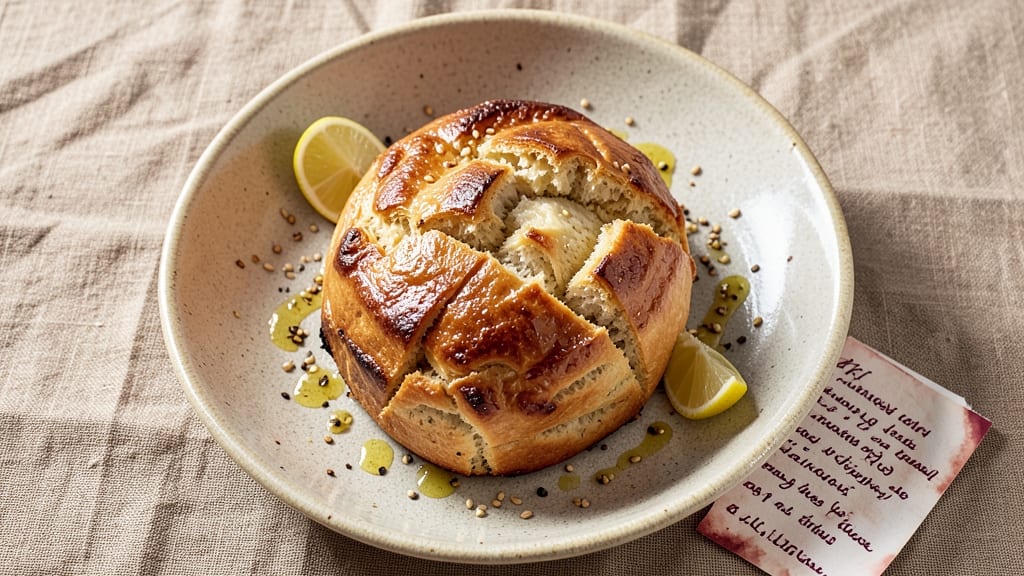
This Arabic shawarma bread recipe delivers the perfect balance of flaky layers and savory spice—essential for wrapping shawarma meat or serving as a standalone treat.
The secret lies in a well-balanced dough infused with warm spices like cumin and paprika, creating a fragrant base that transforms into golden, slightly crispy perfection when cooked. I’ve perfected this recipe over years of testing, ensuring every bite stays soft yet sturdy enough to hold fillings without falling apart.
The dough is simple but requires patience—kneading until smooth and resting for at least 30 minutes ensures the flaky texture that defines authentic shawarma bread.
Once shaped into ovals, a quick pan-fry or grill transforms the dough into crispy-edged, pillowy centers, ready to be stuffed with spiced meat or enjoyed with hummus and tahini. This recipe stays true to tradition while adapting for home kitchens, making it accessible yet undeniably flavorful.
What sets this bread apart is its versatility—serve it as a wrap for shawarma, a side for mezze, or even a breakfast option with scrambled eggs and herbs. The spiced dough absorbs flavors beautifully, so you can customize it with garlic butter or sesame seeds for extra depth.
Whether you’re hosting a dinner or craving a taste of the Middle East, this bread delivers restaurant-quality results with minimal effort.
For best results, use all-purpose flour and let the dough rest fully before cooking. The slight crispness on the outside contrasts perfectly with the soft interior, creating the ideal texture for every bite.
Pair it with your favorite shawarma fillings or enjoy it plain—either way, you’ll taste the essence of Arabic street food in every layer.
Ingredients for arabic shawarma bread
Flaky layers and aromatic spices—just these 13 ingredients transform into perfect shawarma bread.
| Ingredient | Amount | Notes |
|---|---|---|
| All-Purpose Flour 🌾 | 3 ½ cups | Spooned and leveled, not packed |
| Instant Yeast 🍞 | ½ tsp | Active dry works too |
| Granulated Sugar 🍚 | ½ tbsp | For yeast activation |
| Warm Water 💧 | 1 cup | 110°F for yeast activation |
| Unsalted Butter 🧈 | ½ cup | Cold, cubed for dough |
| Large Egg 🥚 | 1 whole | Room temperature |
| Ground Cumin 🌿 | 1 tsp | Toasted for deeper flavor |
| Paprika 🌶️ | 1 tsp | Smoked or sweet |
| Ground Coriander 🌿 | ½ tsp | Freshly ground preferred |
| Salt 🧂 | ½ tsp | Diamond Crystal preferred |
| Vegetable Oil 🫒 | 2 tbsp | For shaping and cooking |
| Sesame Seeds 🌾 | 1 tbsp | Toasted for garnish |
| Garlic Cloves 🧄 | 2 cloves | Minced for optional butter |
The flour is your foundation—King Arthur or Gold Medal work best for that tender yet sturdy texture. Yeast matters here: if it's been sitting in your pantry, test it in warm water with sugar first (should foam in 5-10 minutes). For the spices, Penzeys or Middle Eastern markets have the best blends, but your regular grocery store spices work fine if they're fresh. The butter? Cold cubes create those flaky layers—don't let it melt during mixing. I always grab Land O'Lakes unsalted butter from the freezer section for consistency.
No instant yeast? Active dry works at double the amount—just let it proof longer. Short on cumin? Half the amount of coriander plus a pinch of cinnamon gets you close. The sesame seeds can be skipped if you're not feeling fancy, but toasting them in a dry pan for 30 seconds brings out their nutty flavor. For that garlic butter option the intro mentions, melt 2 tbsp butter with the minced garlic and brush it on the cooked bread—absolute game-changer. The dough will be sticky, but resist the urge to add more flour—it needs that moisture for tenderness.
Make the dough the night before and let it rest in the fridge—12-24 hours actually improves the flavor. Once shaped, these keep 3 days wrapped in a damp towel at room temp or 1 week frozen. I portion mine into individual ovals before freezing, then just pop them straight into the pan when ready. For extra crispiness, cook them over medium-high heat for the last 30 seconds—you'll get that perfect golden crust without burning the inside. Leftovers? Toast them in a toaster or air fryer for a quick crunch.
Why You'll Love This Recipe
- No-Knead Magic: Honestly, this dough comes together faster than my coffee brews. Just mix flour, yeast, sugar, and warm water—no fancy techniques, just a bowl and your hands. The butter melts right in, giving it that rich, flaky promise without a single roll of the counter.
- Buttery Soft Crunch: That crispy, golden crust with a pillowy inside? It’s all in the butter and the way it puffs up while baking. One bite and you’ll forget store-bought wraps exist—especially when you slather it with garlic sauce or hummus.
- Weeknight Wrap Hero: Between us, this is my secret weapon for lazy nights. Stuff it with shawarma, falafel, or even PB&J—it holds up like a pro. And if you bake a batch on Sunday? You’ve got breakfasts, lunches, and late-night snacks covered.
- Pantry Staple Power: Five ingredients, zero guilt. The flour, sugar, and yeast are probably already lurking in your cabinets, and butter? Well, we’re not making rules here. It’s cheap, it’s reliable, and leftovers toast up like fresh bread the next morning.
Step-by-step instructions for Arabic shawarma bread
Here's how to create those signature flaky layers and aromatic spice filling that makes this bread irresistible.
Activate the Yeast and Mix the Dough
In a large mixing bowl, combine the 1 cup warm water (about 110°F) with the 0.5 tbsp granulated sugar and 0.5 tsp instant yeast. Let it sit for 5-10 minutes until it becomes foamy—this means your yeast is active and ready to work. If it doesn't foam, your yeast might be dead, and you'll need to start over.
In a separate bowl, whisk together the 3.5 cups all-purpose flour, 1 tsp ground cumin, 1 tsp paprika, 0.5 tsp ground coriander, and 0.5 tsp salt. Once the yeast mixture is foamy, pour it into the flour mixture along with the 1 whole large egg and 0.5 cup cold cubed unsalted butter. Mix with a wooden spoon or your hands until a shaggy dough forms.
Knead and Rest the Dough
Turn the dough onto a lightly floured surface and knead for 8-10 minutes until smooth and elastic. You'll know it's ready when it springs back when poked and doesn't stick to your fingers. If the dough feels too sticky, add 1 tablespoon of the all-purpose flour at a time until it comes together nicely.
Shape the dough into a ball, place it back in the bowl, and cover it with a damp towel. Let it rest at room temperature for 1 hour or until it doubles in size. This resting period allows the gluten to relax, making it easier to roll out later. Don't skip this step—it's what gives the bread its signature flakiness.
Prepare the Garlic Butter Filling
While the dough rests, make the garlic butter filling by mincing the 2 cloves garlic and mixing them with the 0.5 cup cold unsalted butter that was reserved from the dough. You can also add a pinch of salt if you like. Roll this mixture into a log and chill it in the refrigerator for 15 minutes to firm up slightly—this makes it easier to work with later.
This garlic butter is the heart of the shawarma bread. The cold butter creates pockets of flavor that melt beautifully when the bread bakes, giving you that rich, savory taste in every bite. If you don't have time to make it ahead, you can skip it, but your bread will be even more delicious with it.
Roll and Layer the Dough
Once the dough has rested, roll it out on a lightly floured surface into a large rectangle about 1/8-inch thick. Brush the entire surface with 1 tablespoon of the vegetable oil, leaving a 1-inch border around the edges. This oil prevents the layers from sticking together during baking.
Place the chilled garlic butter log in the center of the rectangle, then fold the dough up like an envelope, sealing the edges tightly. Roll the sealed package into a log shape and pinch the seam to ensure it holds together. This step is crucial for creating those beautiful flaky layers—take your time to get it right.
Bake to Golden Perfection
Preheat your oven to 375°F. Brush the outside of the dough log with the remaining 1 tablespoon vegetable oil and sprinkle generously with the 1 tbsp sesame seeds. Place the log seam-side down on a baking sheet lined with parchment paper and bake for 30-35 minutes until it's golden brown and sounds hollow when tapped on the bottom.
For extra crispiness, you can broil the bread for the last 2 minutes of baking, keeping a close eye on it to avoid burning. Let it cool for 10 minutes before slicing—this gives the filling time to set and makes it easier to cut cleanly. The result should be layers of flaky, buttery dough with a crisp exterior and a warm, garlicky center that melts in your mouth.
Pro Tips For Making Arabic Shawarma Bread
- TEST THE YEAST FIRST: Skip the guesswork—mix 1 tsp yeast with ¼ cup warm water and 1 tsp sugar, then wait 5–10 minutes for frothy bubbles. If nothing happens, your yeast is dead, and your dough won’t rise. Trust me, I’ve wasted dough over this.
- KNEAD UNTIL SILKY: This isn’t about brute force—work the dough until it’s smooth and elastic, about 8–10 minutes by hand (or 5–6 on a stand mixer). Over-kneading dries it out, but under-kneading means chewy, dense bread. Feel for resistance, then stretch it—if it springs back slowly, you’re golden.
- DON’T RUSH THE RISE: Give the dough a full 1–2 hours to double in a warm spot (like a turned-off oven with a bowl of hot water inside). I used to cut corners, and the bread turned out flat and dense. Patience here guarantees that light, airy shawarma texture.
- BRUSH WITH BUTTER LAST: Save that unsalted butter for right before baking—brush the risen dough generously with melted butter right after shaping. It locks in moisture and gives that signature crispy, buttery crust. Skipping this step means dry, bland bread. Worth the extra 2 minutes.
Regional styles of this recipe
Lebanese Street Style
In Lebanon, shawarma bread is all about simplicity and texture. The dough here is often slightly thinner and brushed with a mix of olive oil and garlic-infused oil before shaping.
I’ve found that adding ½ tsp cardamom to the spice blend elevates the flavor profile, giving it that signature Middle Eastern warmth.
For an authentic touch, shape the bread into a slightly elongated oval and cook it on a cast-iron skillet over medium-high heat for 2-3 minutes per side—this creates the perfect balance of crispy edges and soft centers. 🌟
Egyptian Crispy Layers
Egyptian shawarma bread takes flakiness to another level by incorporating melted butter into the dough itself, not just as a filling. After kneading, I mix ¼ cup melted butter into the dough before resting, which creates those iconic puffy layers.
The bread is often baked in a tandoor-style oven (or home oven at 350°F) until golden and slightly caramelized. For a shortcut, I use a pizza stone in my oven to mimic the tandoor’s high heat. Serve with a sprinkle of crushed sumac for a tangy kick.
Turkish Flatbread Twist
Turkish shawarma bread, or lavaş, skips the filling entirely and focuses on a thin, crispy flatbread that’s perfect for wrapping spiced meats. The dough is rolled paper-thin and cooked on a hot griddle or in a clay oven until blistered and golden.
For a home version, I roll the dough to ⅛-inch thickness and cook it on a non-stick skillet over high heat for 1-2 minutes per side. The result is a delicate, airy bread that’s ideal for shawarma but also great with grilled vegetables or cheeses.
Yemeni Spiced Bread
Yemeni shawarma bread incorporates warm spices like cinnamon and cloves into the dough, giving it a distinct aromatic profile. I add ¼ tsp cinnamon and ⅛ tsp cloves to the spice mix, along with a pinch of black pepper, for depth.
The bread is often baked in a clay pot or wrapped in foil and steamed for a softer texture. For home cooks, I recommend baking it at 325°F for 40-45 minutes until the crust is golden and the interior is tender. Serve with spiced yogurt or harissa for dipping.
Modern Fusion Adaptations
For a contemporary twist, I’ve experimented with whole wheat flour (replace ½ cup all-purpose flour with ½ cup whole wheat) for a nuttier flavor and added 1 tbsp honey to the dough for subtle sweetness.
Another fun variation is stuffing the bread with feta and herbs before baking—just mix ½ cup crumbled feta, 2 tbsp chopped dill, and 1 tbsp lemon zest with the garlic butter.
This fusion style works beautifully as a breakfast bread or appetizer with tzatziki or baba ganoush. ✨
Nutrition facts
Frequently asked questions
Why does the dough need to rest for so long?
The 1-hour rest (or overnight in the fridge) is crucial for developing gluten structure and flavor. This creates those signature flaky layers when baked. Skipping rest makes the bread dense and chewy instead of tender and pillowy. Think of it like letting pizza dough relax—patience pays off with better texture!
Can I make this bread without yeast?
Yes! For a quick version, replace yeast with 1 tsp baking powder and ½ tsp baking soda. Skip the resting time and bake immediately at 400°F for 15-20 minutes. The texture will be denser but still delicious—great for sandwiches or sides. Just reduce butter to ¼ cup to prevent over-browning.
How do I prevent the layers from sticking together?
Brush each layer with vegetable oil before folding, and keep the dough chilled while working. If layers stick during baking, your oven may be too hot—reduce to 350°F and bake 5-10 minutes longer. For extra insurance, sprinkle semolina flour between layers instead of oil.
What’s the best way to reheat leftover shawarma bread?
Wrap in foil and warm at 350°F for 5-7 minutes to restore softness. For crispy edges, toast in a skillet over medium heat for 1-2 minutes per side. Avoid microwaving—it makes the bread gummy. Store leftovers in an airtight container for up to 3 days or freeze for 1 month.
Can I use this bread for non-shawarma meals?
Serve as a side with dips like hummus or baba ganoush, or use it for breakfast with scrambled eggs and herbs. The spiced dough pairs well with grilled meats, falafel, or even as a sandwich roll. For extra flair, brush with garlic butter and sprinkle sesame seeds before serving.