
Side Dishes
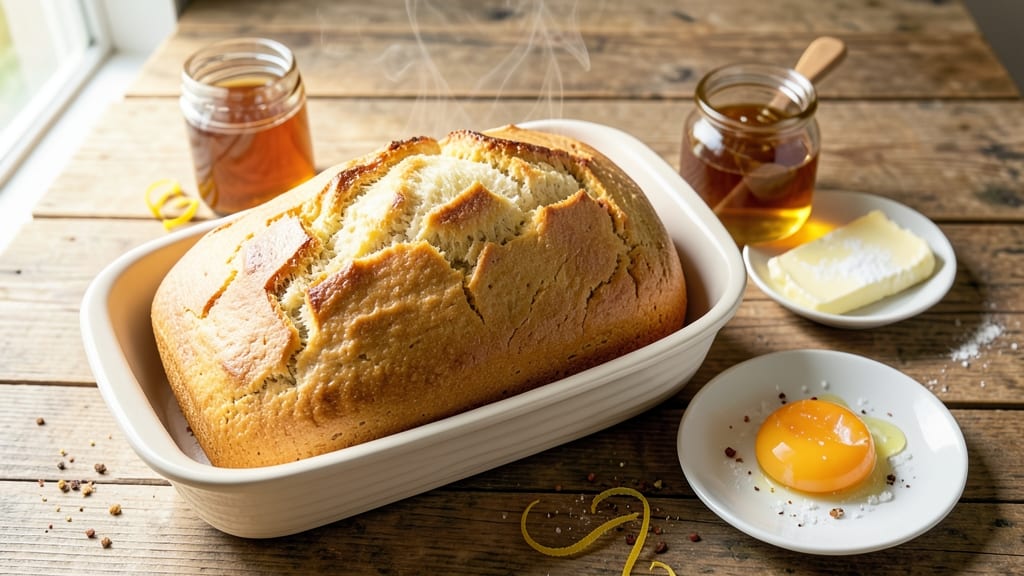
This Amish sweet white bread recipe delivers the tender, vanilla-spiced loaves you’ve seen at farmhouse tables—soft crumb, golden crust, and just the right amount of sweetness. The secret lies in slow fermentation and a touch of honey, creating that signature Amish texture that’s both comforting and impressive.
I’ve perfected this version after years of baking, ensuring every slice stays fresh for days.
The process begins with a simple yeast activation, followed by a gentle knead that develops gluten without overworking the dough. Proofing at room temperature (not the fridge) allows the yeast to work its magic, creating that light, airy crumb Amish bread is famous for.
A light egg wash gives the crust its signature shine, while vanilla and honey infuse warmth throughout.
What you’ll end up with is a loaf so tender it nearly melts in your mouth, with a crisp crust that’s perfect for dipping in jam or butter.
The aroma alone—warm, sweet, and just slightly spiced—will have everyone asking for seconds. This bread pairs beautifully with soups, sandwiches, or even as a side to hearty breakfasts.
For authenticity, use all-purpose flour and let the dough rise twice—once to develop flavor, again for maximum softness. The result? A loaf that tastes like a slice of nostalgia, straight from an Amish kitchen. Let’s get baking!
Ingredients for amish sweet white bread
Fourteen simple ingredients transform into a loaf that smells like nostalgia and tastes like home.
| Ingredient | Amount | Notes |
|---|---|---|
| All-Purpose Flour 🌾 | 5 cups | Sifted for light texture |
| Active Dry Yeast 🍞 | ¼ oz | Or 2 1/4 tsp (1 packet) |
| Granulated Sugar 🍚 | ¼ cup | For gentle sweetness |
| Honey 🍯 | ⅛ cup | Pure, unprocessed honey |
| Unsalted Butter 🧈 | ½ cup | Cold, cubed (room temp) |
| Large Eggs 🥚 | 1 whole | Room temperature |
| Vanilla Extract 🌸 | 1 tbsp | Pure vanilla preferred |
| Warm Water 💧 | 1 ¼ cups | 110°F (43°C) for yeast |
| Salt 🧂 | ½ tsp | Fine sea salt |
| Milk 🥛 | ¼ cup | Warmed for dough softness |
| Cornmeal 🌽 | ¼ cup | For dusting loaf pan |
The flour is your foundation—King Arthur or Bob's Red Mill all-purpose works best for that signature Amish softness. Yeast matters here: use fresh yeast (not the ancient stuff sitting in your pantry)—it activates faster and gives better rise. Honey should be pure, unprocessed—local raw honey if possible, but store-bought works too. The butter? Cold, cubed butter creates pockets of flavor, but don't melt it first. For vanilla, pure extract (not imitation) makes all the difference—it's worth the splurge. Store your flour in the freezer to preserve freshness, and always measure by spooning into the cup, then leveling off.
No vanilla extract? Almond extract at half the amount works in a pinch, but it has a distinct flavor. Short on honey? Maple syrup is a 1:1 swap, though it adds a deeper color. Using whole wheat flour? Replace 1 cup all-purpose with 1 cup whole wheat—your loaf will be denser but still delicious. The milk can be any kind (dairy, almond, oat), but warm it to room temperature before mixing. For the egg wash, beat the egg with 1 tbsp water for a glossier crust. And if your yeast isn't active after 5 minutes, start over with fresh yeast—this isn't the time for guesswork.
This dough needs time—let it rise until doubled, about 1-2 hours (don't rush it!). Shape the loaf gently to avoid deflating the air pockets. For storage, cool completely on a wire rack, then wrap tightly in plastic. Keeps 3-4 days at room temperature, or freeze up to 3 months for fresh-baked slices anytime. The crust stays crisp for about 2 days, so slice and serve fresh. Pro tip: Toast the bread to revive staleness—works like magic.
Why You'll Love This Recipe
- No-Knead Magic: I swear, mixing the dough takes less effort than waiting for my coffee to brew. Just toss in the flour, yeast, and a touch of honey—no standing at the counter punching away.
- Honeyed Softness: That first pull-apart bite? Warm, buttery, and just sweet enough to make you pause. The honey caramelizes in the oven, giving it a subtle depth that store-bought loaves can’t touch.
- Breakfast Every Day: Freeze half the batch for lazy mornings—just toast slices straight from the freezer. Or tear it into chunks for sandwiches, French toast, or even a quick bread pudding. It’s my go-to for anything needing a soft, sweet base.
- Budget-Friendly Staple: A single loaf costs pennies to make, and it keeps for days. I’ve fed a crowd with two batches, and the leftovers? Always disappear faster than I can say “second helping.”
Step-by-step instructions for Amish sweet white bread
Here's how to craft this tender, vanilla-kissed loaf with a perfect golden crust every time.
Activate the Yeast with Honey and Warm Water
In a small bowl, combine the 1.25 cups warm water (about 110°F) with the 0.25 oz active dry yeast and 0.125 cup honey. Let it sit for 5-10 minutes until frothy—this confirms your yeast is alive and active. The honey not only feeds the yeast but also adds subtle sweetness to the dough.
I always check for bubbles and a slight yeasty aroma before proceeding. If nothing happens after 10 minutes, your yeast might be dead—start fresh with a new packet. The warm water should feel like bathwater temperature, not hot enough to cook an egg.
Mix Wet Ingredients and Combine with Dry
In a large mixing bowl, whisk together the 0.25 cup granulated sugar, 0.5 cup cold cubed butter, 1 whole egg, 1 tbsp vanilla extract, 0.25 cup warm milk, and 0.5 tsp salt. The butter should be cold enough to hold its shape but soft enough to mix smoothly—this creates flaky layers later.
Gradually add the 5 cups sifted all-purpose flour while mixing on low speed with a dough hook attachment. Once combined, pour in the yeast mixture and mix on medium speed for 3-4 minutes until the dough begins to pull away from the sides of the bowl. The dough should be soft but not sticky—add a little more flour if needed.
Knead Until Smooth and Elastic
Turn the dough out onto a lightly floured surface and knead by hand for 5-7 minutes until smooth and elastic. You'll know it's ready when it springs back slowly when poked with your finger. This kneading develops gluten, which gives the bread its signature soft texture.
I like to work the dough in one direction first, then fold it over itself before turning it 90 degrees and repeating. This method builds strength more efficiently than just pounding it. Once fully kneaded, place the dough back in the bowl, cover with a clean kitchen towel, and let it rise in a warm place for 1-1.5 hours or until doubled in size.
Shape and Proof for Maximum Rise
Punch down the risen dough and divide it into two equal pieces. Shape each piece into a smooth, slightly tapered log about 9 inches long. Place them seam-side down in a greased 9x5-inch loaf pan that's been dusted with 0.25 cup cornmeal—this prevents sticking and adds a subtle crunch.
Cover the pans with towels and let the dough rise again for 30-45 minutes until it's just about to overflow the pans. The tops should be rounded and springy to the touch. Preheat your oven to 350°F during the final proofing—this ensures the bread goes straight into a hot oven for even baking.
Bake to Golden Perfection
Bake the loaves for 30-35 minutes until the tops are golden brown and the internal temperature reaches 190°F. Tap the loaves lightly—they should sound hollow when done. For extra shine, brush the tops with a little milk mixed with water after 15 minutes of baking.
Let the bread cool in the pans for 10 minutes, then transfer to a wire rack to cool completely. The aroma alone will make your kitchen smell like a bakery. Slice when fully cooled—the crumb will be soft, tender, and lightly sweet with that signature vanilla warmth throughout.
Pro Tips For Making Amish Sweet White Bread
- Proof at 78°F: DESCRIPTION: Yeast loves consistency—if your kitchen’s colder than 70°F, pop the dough in a warm spot (like the oven with the light on) for proofing. I learned this the hard way when my dough took four hours to rise in a drafty basement. Warmth speeds it up without overproofing, and you’ll get that signature Amish loaf height without waiting all day.
- Cream Butter Cold: DESCRIPTION: Softened butter (not melted) blends better with flour and sugar for a tender crumb. I used to melt it for convenience, but the bread turned gummy—now I cut it into cubes and mix it in until it’s just starting to soften. That little resistance keeps the texture light.
- Skip the Overmixing: DESCRIPTION: Once you add the honey, stop folding the dough after 2-3 turns—overworking it makes the bread dense. I used to knead until my arm ached, thinking more = better. Now I just stretch and fold until the surface is smooth, and the loaves stay airy and sweet.
- Brush Honey Twice: DESCRIPTION: After baking, let the loaf cool 10 minutes, then brush with honey while it’s still warm—this seals the crust for extra shine. I used to do it right out of the oven, and it’d pool like syrup. A second light brush after cooling gives that classic Amish gloss without sogginess.
Storing and reheating this recipe
Room Temp Storage
Let your Amish sweet white bread cool completely on a wire rack before storing at room temperature. Wrap it tightly in plastic wrap or place it in an airtight container—I prefer Ziploc bags for flexibility.
Store in a cool, dark place (like a pantry) where it’ll stay fresh for 3-4 days. The crust stays crisp for about 2 days, so slice and serve fresh for the best texture. 🌾
Fridge Preservation
If you want to extend freshness beyond 4 days, pop the bread into the fridge. Wrap it in aluminum foil first to prevent drying, then place in an airtight container—this keeps it moist for up to 1 week.
To revive stale bread, sprinkle slices with water, cover with a damp paper towel, and microwave for 10-15 seconds. The warmth will restore that soft, pillowy texture. ❄️
Freezer Magic
For long-term storage, freeze your bread in single-slice portions wrapped in plastic wrap, then placed in a freezer bag. This prevents freezer burn and makes it easy to grab just what you need.
Thaw at room temperature for 1-2 hours or reheat directly from frozen in the oven at 300°F for 10 minutes for a warm, fresh slice. Frozen bread keeps for up to 3 months without losing quality. 🧊
Reheating Secrets
To revive stale bread, preheat your oven to 350°F and wrap the loaf in aluminum foil. Bake for 10-15 minutes until warmed through—this method restores moisture better than the microwave.
For individual slices, toast in a toaster oven at 375°F for 3-5 minutes until golden and crisp. A light brushing of melted butter adds extra flavor and freshness. 🔥
Reviving Stale Crust
If the crust loses its crunch, don’t toss it! Place the bread in a brown paper bag and bake at 350°F for 5-7 minutes. The steam from the paper bag will soften the interior while crisping the crust again.
For extra crunch, sprinkle a little cornmeal on the crust before reheating. This trick works like magic for bread that’s been sitting too long. ✨
Nutrition facts
Frequently asked questions
Why does Amish sweet white bread have a golden crust but soft interior?
The secret lies in the cold cubed butter and proper proofing. Cold butter creates steam pockets during baking, while the slow rise at room temperature develops gluten gently. The egg wash also helps create that signature shine and crisp crust.
Can I make this bread without vanilla extract?
Yes! Use ½ teaspoon almond extract instead, but expect a slightly different flavor. For a sweeter alternative, add ¼ teaspoon cinnamon to the dough. The vanilla is traditional, but these swaps work in a pinch.
How do I know when the dough is fully risen?
Look for the dough to double in size and spring back slowly when poked gently. It should also feel light and airy, with rounded tops. If it rises too quickly, your kitchen may be too warm—try a cooler spot.
Why did my bread turn out dense instead of soft?
Over-kneading or under-proofing are common culprits. Knead just until smooth (5-7 minutes), and let the dough rise until fully doubled. Also, ensure your yeast is active—if it doesn’t bubble within 10 minutes, start over.
Can I bake this bread in a different pan shape?
Yes! For a round loaf, shape the dough into a ball and bake in a greased 9-inch round pan for 25-30 minutes** at 350°F. Adjust baking time based on your pan size—smaller pans may need less time. The texture will still be tender!