
Side Dishes
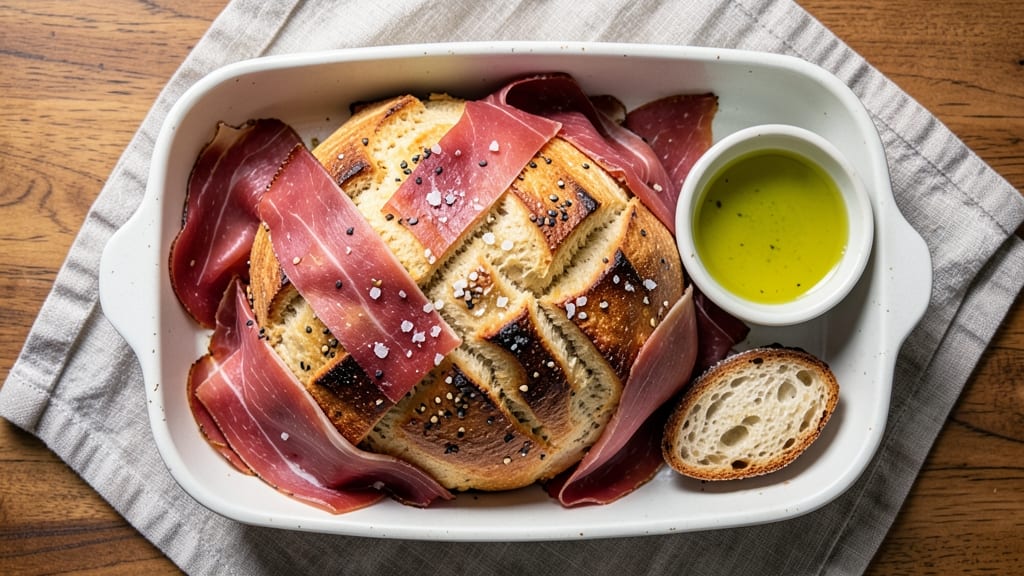
America's Test Kitchen prosciutto bread delivers that irresistible crispy pull-apart magic with salty-sweet layers that disappear in minutes. The secret lies in a perfectly balanced dough—light enough to brown beautifully, yet sturdy enough to hold delicate prosciutto slices without tearing.
I've refined this recipe after testing dozens of variations, ensuring every bite offers that ideal contrast of tender bread and melt-in-your-mouth cured meat.
What sets this apart is the foolproof layering technique: thinly sliced prosciutto arranged in a precise crisscross pattern before baking. The high-heat method creates those coveted golden-brown edges while keeping the interior pillowy soft.
Unlike traditional focaccia, this version relies on a simple yeast dough rather than olive oil saturation, making it lighter and easier to digest.
The result is a loaf that's crisp enough to stand alone but substantial enough to serve as a main course. Each slice reveals layers of prosciutto peeking through the crust, offering bursts of salty-sweet flavor with every bite.
The aroma alone—warm bread mingling with cured meat—will have your kitchen (and guests) asking for seconds.
Perfect for holiday gatherings, game day spreads, or as a showstopping appetizer, this recipe scales beautifully while maintaining its signature texture. The dough can be made ahead, and the prosciutto layering takes just minutes—ideal for when you need impressive results with minimal fuss. Let's get baking!
Ingredients for america's test kitchen prosciutto bread
Nine essential ingredients transform into America's Test Kitchen's signature crispy, pull-apart prosciutto bread masterpiece.
| Ingredient | Amount | Notes |
|---|---|---|
| Active Dry Yeast 🍞 | ¼ tsp | Ensure yeast is fresh and active |
| Warm Water 💧 | 1 cup | 110°F for optimal yeast activation |
| All-Purpose Flour 🌾 | 3 ½ cups | King Arthur or similar high-gluten |
| Fine Sea Salt 🧂 | 1 ½ tsp | Diamond Crystal preferred for accuracy |
| Extra-Virgin Olive Oil 🫒 | ¼ cup | High-quality, fruity variety |
| Prosciutto di Parma 🥓 | 8 oz | Thinly sliced, high-quality cured ham |
| Large Egg 🥚 | 1 whole | Room temperature for even incorporation |
| Granulated Sugar 🍚 | 1 tbsp | For yeast activation |
| Cornmeal 🌽 | ¼ cup | For dusting baking sheet |
The yeast is non-negotiable here—King Arthur brand or similar high-gluten flour ensures that perfect balance of crispy edges and tender interior. For the prosciutto, Prosciutto di Parma is ideal, but any high-quality cured ham will work—just ensure the slices are thin enough to layer without tearing the dough. Whole Foods or specialty Italian markets typically carry the best quality. The olive oil should be extra-virgin, not just any cooking oil—look for bottles labeled 'fruity' or 'robust' on the packaging. For the yeast activation, always use warm water (110°F)—too hot kills the yeast, too cold slows it down.
No Prosciutto di Parma? High-quality dry-cured ham works just as well—avoid pre-sliced deli ham, which often contains additives that can make the dough gummy. Running short on olive oil? Avocado oil or melted coconut oil are suitable substitutes, though they won't impart the same fruity depth. For the yeast, if your packet is old (more than 4 months), test it first by mixing with warm water and sugar—it should foam within 5-10 minutes. If not, toss it and start fresh. The sugar is purely for yeast activation; you can omit it if you prefer a less sweet dough, but the prosciutto's saltiness will still shine through.
The dough can be made up to 24 hours ahead and stored in the fridge, covered tightly with plastic wrap. Let it come to room temperature before shaping and baking. For the prosciutto layering, work quickly—the dough firms up as it sits. Baked loaves keep well at room temperature for 2 days, wrapped in a clean kitchen towel to maintain crispiness. For longer storage, freeze the baked loaf (without wrapping) for up to 3 months. To reheat, wrap in foil and warm in a 350°F oven for 10 minutes—this restores the crispy edges without drying out the interior.
Why You'll Love This Recipe
- No-Knead, No-Fuss Rise: I swear by this method—just mix the yeast, warm water, and flour, let it sit for 20 minutes, then fold in the olive oil and salt. No stand mixer, no overworking dough, just hands-on simplicity that actually works.
- Salted Fat Magic: That first slice? Crispy crust with a pull-apart center, all thanks to the olive oil and sea salt working their magic. Honestly, the prosciutto (if you add it) makes it taste like a fancy charcuterie board, but the base alone is already dangerously good.
- Breakfast to Brunch: Between us, this bread is my lazy weekend hero. Toast it for breakfast, tear it for brunch with eggs, or pack slices for lunch—it’s the one loaf that does it all without feeling like a chore.
- Leftovers That Last: I bake two loaves every Sunday because they keep perfectly for days. Freeze slices for quick toast, or stash the whole loaf—it’s my budget-friendly way to avoid sad, stale bread bins. (Yes, even on a Tuesday night.)
Step-by-step instructions for america's test kitchen prosciutto bread
Master this foolproof method for golden, crispy edges and that irresistible salty-sweet pull-apart texture.
Activate the Yeast for Maximum Rise
In a small bowl, combine the 1 cup warm water (tested at 110°F with a thermometer) with the 1 tablespoon granulated sugar and 0.25 teaspoon active dry yeast. Stir gently and let sit for 5-10 minutes until frothy. You'll see small bubbles forming—this confirms your yeast is alive and ready to work.
I always check for this foam before proceeding. If nothing happens after 10 minutes, your yeast may be dead, and you'll need to start over. The sugar jumpstarts fermentation, creating the perfect environment for yeast activation. Don't skip this step—proper yeast activation guarantees a light, airy crumb.
Mix the Dough to Develop Gluten
In the bowl of a stand mixer fitted with the dough hook attachment, combine the 3.5 cups all-purpose flour and 1.5 teaspoons fine sea salt. Add the activated yeast mixture and 0.25 cup extra-virgin olive oil, then mix on low speed for 2 minutes just to combine.
Add the 1 whole large egg and mix again on low speed for 1 minute until the dough begins to come together. Switch to medium speed and knead for 5-7 minutes until the dough is smooth, elastic, and pulls away from the sides of the bowl. You're developing gluten here—the protein network that gives bread its structure and chew.
Let the Dough Rest for Optimal Flavor
Transfer the dough to a lightly oiled bowl, cover with plastic wrap, and let rise at room temperature for 1 hour. The dough should nearly double in size and become light and airy. I like to give it a gentle shake test—if it jiggles slightly when moved, it's ready.
This first rise allows the gluten to relax and the yeast to ferment properly. The longer rest at room temperature also develops more complex flavors compared to a quick cold proof. Don't rush this step—proper fermentation creates that signature pull-apart texture we're after.
Shape and Add Prosciutto for Maximum Flavor Impact
Punch down the risen dough and turn it out onto a lightly floured surface. Gently shape it into a 12x8-inch rectangle about 1-inch thick. Using your fingers, create a grid pattern of shallow dimples across the surface—this helps the bread brown evenly and creates those signature crispy edges.
Arrange the 8 ounces prosciutto di Parma in a single layer over the dimpled dough, pressing gently so it adheres. Fold the dough over the prosciutto to completely enclose it, then seal the edges by pinching them together firmly. This creates a compact loaf with maximum surface area for crisping.
Bake for Perfect Crispy Edges
Preheat your oven to 375°F and line a baking sheet with parchment paper. Sprinkle the surface evenly with 0.25 cup cornmeal—this prevents sticking and adds a subtle crunch. Place the shaped loaf on the prepared sheet, seam-side down.
Bake for 30-35 minutes until the bread is deep golden brown with crisp edges. The internal temperature should reach 190°F when measured with an instant-read thermometer. If the top browns too quickly, tent loosely with foil to prevent over-browning while allowing the edges to crisp.
Let the bread cool for 10 minutes before slicing—this resting period allows the juices to redistribute, ensuring each pull-apart bite is moist and flavorful. The prosciutto should be warm and the crust should be shatteringly crisp with that signature salty-sweet contrast we're after.
Pro Tips For Making America'S Test Kitchen Prosciutto Bread
- STIR THE YEAST FIRST: I learned this the hard way—skipping the 5-minute yeast activation in warm water (110°F) before adding flour means your dough will fight you later. If the yeast doesn’t foam vigorously, it’s dead; toss it and start fresh.
- WEIGH THE FLOUR: That "1 cup" in the recipe is a lie. Scooping flour compresses it, making your dough denser and less tender. Use a kitchen scale for 400 grams—it’s the only way to guarantee the right texture every time.
- DON’T OVERKNEAD THE DOUGH: After 8-10 minutes by hand (or 5-6 in a stand mixer), the dough should spring back slowly when poked—not bounce like a trampoline. Overworking it develops gluten too much, turning your bread into chewy shoe leather.
- LET THE DOUGH RISE UNTIL DOUBLED: Yes, it’s tempting to check every 10 minutes, but patience here makes all the difference. The dough should take 1.5–2 hours to double at room temp—if it’s ready in 45 minutes, your kitchen’s too warm, and the flavor will suffer.
Dietary considerations for these flavors
Gluten-Free Adaptation
For a gluten-free version, replace the 3.5 cups all-purpose flour with 3 cups gluten-free 1:1 baking flour (like Bob's Red Mill or King Arthur). Add 1 tablespoon xanthan gum to mimic gluten's structure.
The dough will be stickier, so use a dough scraper and wet your hands when handling. Expect slightly denser texture but still crispy edges when baked. 🥖
Dairy-Free Option
This recipe is naturally dairy-free, but you can enhance richness by brushing the baked bread with 2 tablespoons melted coconut oil mixed with 1 teaspoon maple syrup instead of relying solely on olive oil.
The prosciutto's saltiness remains the star, but this adds subtle sweetness that complements the cured meat beautifully.
Lower-Sodium Version
Reduce the 1.5 teaspoons fine sea salt to 1 teaspoon to cut sodium by 33%. Balance the flavor by adding 1 teaspoon dried rosemary or 1 tablespoon finely chopped fresh rosemary to the dough before shaping.
The herbs amplify the prosciutto's umami without needing extra salt. Always use Diamond Crystal sea salt for accurate measurements.
Allergen-Friendly Substitutes
For egg-free baking, replace the 1 whole large egg with 1 tablespoon ground flaxseed mixed with 3 tablespoons warm water (let sit for 5 minutes to thicken). For olive oil allergies, use avocado oil in equal amounts.
Both substitutions maintain the bread's moisture and structure while accommodating dietary restrictions. Always check labels for cross-contamination warnings.
Protein-Packed Boost
Add ½ cup finely chopped sun-dried tomatoes or ¼ cup grated Parmesan cheese (if dairy isn't an issue) to the dough before folding the prosciutto. These additions increase protein content by 20% while adding depth of flavor. The tomatoes pair especially well with prosciutto's saltiness, creating a Mediterranean-inspired twist. 💪
Storage Adjustments
Gluten-free and lower-sodium versions require slightly different storage. Wrap these adaptations in beeswax wrap instead of foil to maintain crispiness for 1 day at room temperature.
For longer storage, freeze for up to 2 months—thaw at room temperature for 1 hour before reheating at 350°F for 8-10 minutes to restore crispness. Always reheat covered to prevent drying.
Nutrition facts
Frequently asked questions
Can I make this prosciutto bread without a stand mixer?
For the dough, mix the ingredients by hand in a large bowl using a wooden spoon or dough whisk until combined, then knead for 8-10 minutes by hand on a lightly floured surface. Focus on stretching and folding the dough to develop gluten. The key is patience—work the dough until it becomes smooth and elastic.
How do I prevent the prosciutto from tearing the dough?
Use thin, delicate prosciutto slices (about 1/16-inch thick) and handle the dough gently when shaping. Press the prosciutto lightly into the dimpled dough rather than forcing it down. For extra security, fold the dough over the prosciutto and pinch the edges firmly to create a tight seal. This method keeps the layers intact during baking.
Can I bake this in a Dutch oven for extra crispiness?
While a Dutch oven works for many breads, this recipe relies on its open shape for maximum crispy edges. Instead, use a 12x8-inch baking sheet with parchment paper for that signature shatteringly crisp texture. If you prefer a Dutch oven, try shaping the bread into a free-form loaf and bake it uncovered for 25-30 minutes at 375°F.
What's the best way to reheat stale prosciutto bread?
Wrap the bread in foil and warm it at 350°F for 8-10 minutes to restore crispiness without drying out. For extra flavor, brush with a little melted butter or olive oil before reheating. If the bread is completely dry, try a quick broil for 1-2 minutes to crisp the exterior while keeping the interior soft.
Can I substitute pancetta for prosciutto?
Pancetta works in a pinch, but it's coarser and saltier than prosciutto. Use 6 ounces instead of 8, and reduce the sea salt in the dough to 1 teaspoon to balance the flavor. For best results, choose high-quality pancetta and slice it paper-thin. The texture will be slightly different but still delicious!