
Side Dishes
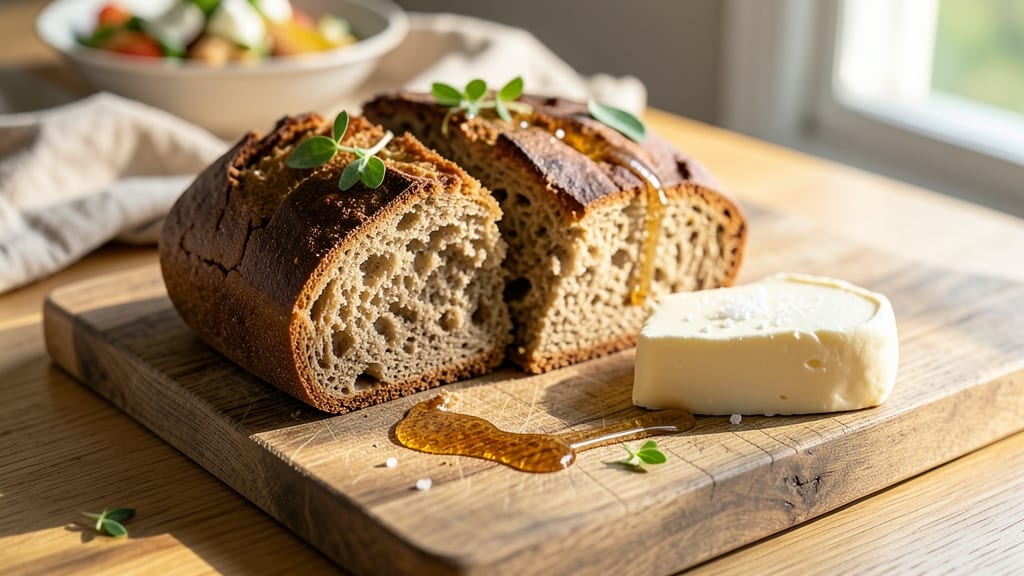
This American soda bread recipe delivers rustic, hearty loaves with a golden crust and tender crumb—all without yeast or kneading. 💛 The secret lies in buttermilk’s tangy magic, which creates that signature texture while keeping prep effortless.
I’ve perfected this version to rise beautifully in just 30 minutes of baking, making it ideal for quick meals or holiday sides.
What sets this recipe apart is its simplicity: no yeast, no waiting for dough to rise, and no complicated techniques. The buttermilk activates baking soda for a light, airy crumb, while a sprinkle of coarse salt on top enhances the crust’s flavor.
Add-ins like raisins, herbs, or cheese transform it into a versatile side for soups, stews, or sandwiches.
By the time it emerges from the oven, you’ll have a loaf with a crispy exterior and a soft, slightly dense interior—classic American soda bread at its finest. The aroma alone makes it worth baking, and every slice delivers that comforting, homestyle taste.
Perfect for beginners or seasoned bakers, this recipe scales easily for gatherings or leftovers that reheat beautifully. Let’s get started on your first batch!
Ingredients for american soda bread
Nine essential ingredients transform into rustic American soda bread with no yeast or kneading required.
| Ingredient | Amount | Notes |
|---|---|---|
| All-Purpose Flour 🌾 | 3 ½ cups | Unbleached preferred for better texture |
| Buttermilk 🥛 | 1 ½ cups | Full-fat for optimal tanginess |
| Baking Soda 🧂 | 2 tsp | Pure, not baking powder |
| Granulated Sugar 🍚 | ½ cup | White or light brown |
| Coarse Sea Salt 🧂 | 1 ½ tsp | For topping, not table salt |
| Unsalted Butter 🧈 | ¼ cup | Cold, cubed for texture |
| Fresh Rosemary 🌿 | 1 tbsp | Finely chopped, optional |
| Fresh Parsley 🌿 | 1 tbsp | Chopped, optional |
| Raisins 🍇 | ½ cup | Plumped in warm water |
| Whole Milk 🥛 | ¼ cup | For dough consistency |
| Egg 🥚 | 1 whole | Room temperature |
The flour is the foundation—King Arthur or Bob’s Red Mill brands yield the best texture for this recipe. Buttermilk must be full-fat for that signature tang, so skip the low-fat versions. Diamond Crystal baking soda is preferred over aluminum-free brands for proper leavening. For the butter, Plugrá or Land O’Lakes work best when cold-cubed—this creates those coveted pockets of richness. Fresh herbs like rosemary and parsley elevate the flavor, but dried will suffice in a pinch (use half the amount). The raisins should be plumped in warm water for 10 minutes before adding to the dough.
No buttermilk? Mix 1 cup whole milk with 1 tbsp white vinegar or lemon juice, let sit 5 minutes. Substitute 1 tbsp apple cider vinegar for the rosemary if you prefer a different herbal note. The egg can be omitted for a vegan version, but the dough will be slightly denser. For a sweeter loaf, increase sugar to 0.75 cup—just don’t exceed 1 cup or the bread may become gummy. Whole wheat flour can replace up to 25% of the all-purpose for added nutrition, though texture will be denser. Always measure flour by spooning it into the cup and leveling—never scooping directly from the bag.
Store baked loaves in an airtight container at room temperature for up to 3 days, or freeze for 3 months by wrapping tightly in plastic. Reheat slices in a 200°F oven for 5-10 minutes to restore freshness. The bread reheats beautifully, making it perfect for meal prep. For best results, bake immediately after mixing—this recipe doesn’t rise well if left to sit overnight. Double the recipe for gatherings, but bake in a 9x5-inch loaf pan for the same texture.
Why You'll Love This Recipe
- No Yeast Needed: I swear by this—just flour, buttermilk, and baking soda wake up magic. No waiting for dough to rise, no fancy techniques, just mix, shape, and bake. My lazy Sundays thank me.
- Tangy-Sweet Crust: That first bite? Buttermilk’s sharp kick meets the caramelized sugar crust—like a hug in bread form. Honestly, the coarse sea salt sprinkle on top turns it from good to "I’ll make this twice."
- Everyday Hero: Breakfast toast, sandwich base, or dinner side—it’s my go-to. Slice a loaf, freeze half, and you’ve got a pantry staple that’s cheaper than store-bought and way more satisfying.
- Zero-Waste Magic: Leftovers? Toss them in a toaster or wrap them up—they stay fresh for days. And if you bake a big batch? I’ve turned extra into croutons or crumbs for meatballs. Versatile, budget-friendly, and actually useful.
Step-by-step instructions for American soda bread
Master this classic recipe with a buttery crust and tender crumb—no kneading required.
👨🍳 Step 1: Mix Dry Ingredients for Optimal Texture
In a large mixing bowl, whisk together the 3.5 cups all-purpose flour, 2 tsp baking soda, 0.5 cup granulated sugar, and 1.5 tsp coarse sea salt. This dry blend creates the foundation for our bread's structure. Sift the mixture lightly to aerate the flour, which helps develop a lighter crumb later.
Next, add the 0.5 cup raisins to the dry ingredients and toss gently to distribute them evenly. The raisins will soak up some of the moisture later, preventing a gummy texture. Set this bowl aside—we'll return to it once the wet ingredients are ready.
🥘 Step 2: Combine Wet Ingredients for Perfect Rise
In a separate medium bowl, whisk together the 1.5 cups buttermilk, 0.25 cup whole milk, 1 whole egg, and 0.25 cup cold unsalted butter (cut into small cubes). The buttermilk's acidity reacts with the baking soda to create lift, while the butter adds richness to the crust. Mix just until the butter is fully incorporated—don't overwork it.
Here's where it gets good: fold in the 1 tbsp finely chopped fresh rosemary and 1 tbsp chopped fresh parsley. These herbs add a bright, aromatic contrast to the sweet raisins. The mixture should be thick but pourable—if it's too stiff, add 1-2 tablespoons more whole milk to achieve the right consistency.
🍳 Step 3: Form the Dough and Shape the Loaf
Pour the wet ingredients into the dry ingredients and stir gently with a wooden spoon until just combined. You'll see streaks of flour throughout—this is normal and ensures a rustic texture. Avoid overmixing, which develops gluten and makes the bread dense.
Transfer the dough to a lightly floured surface and shape it into a round loaf about 8 inches in diameter. For a traditional look, create a well in the center and press the edges inward slightly. The dough will be sticky—this is perfect for our buttermilk-infused crust.
🔥 Step 4: Bake for a Golden, Crispy Crust
Preheat your oven to 375°F. Place the shaped dough on a parchment-lined baking sheet. For that signature soda bread crust, brush the top with 2 tablespoons melted butter and sprinkle generously with 1.5 tsp coarse sea salt (save some for the table). Bake for 45-50 minutes until the crust is deep golden brown and the internal temperature reaches 190°F.
Here's the pro tip: Tap the bottom of the loaf gently—if it sounds hollow, it's done. Let it cool on a wire rack for 15 minutes before slicing. The bread will continue to firm up as it cools, making it easier to slice without crumbling.
Pro Tips For Making American Soda Bread
- MEASURE BUTTERMILK PRECISELY: The recipe calls for buttermilk, but store-bought versions vary wildly in acidity and fat content. Use a kitchen scale to weigh 250g—this guarantees the right tang and moisture balance. (I learned this the hard way when my bread turned out dense and bland after eyeballing a cup.)
- MIX JUST UNTIL COMBINED: Overmixing develops gluten, and soda bread’s magic lies in its tender crumb. Stir the wet ingredients into the dry until barely combined—lumps are fine, but don’t force it. (Yes, it’ll look uneven, but that’s how you get that classic rustic texture.)
- SALT THE BUTTERMILK FIRST: Sprinkle the coarse sea salt directly into the buttermilk before mixing it into the flour. This ensures even distribution—no more finding unsalted pockets in your bite. (Pro tip: Let it sit for 2 minutes so the salt dissolves fully.)
- BAKE UNTIL INTERNAL TEMP REACHES 190°F: The bread’s done when the center hits 190°F, not when it looks golden. A toothpick should come out clean but slightly moist. (I used to pull it too soon, and the crumb stayed gummy—now I wait, even if it means an extra 5 minutes.)
Essential equipment for great american soda bread
Basic Mixing Tools
Start with a large mixing bowl (at least 5-quart capacity) for combining ingredients—Pyrex or stainless steel bowls work best. A wooden spoon or flexible silicone spatula helps prevent overmixing while scraping every bit of dough from the bowl.
I recommend OXO Good Grips for its sturdy handle and heat-resistant silicone. 🥄
Measuring Essentials
Accurate measurements are critical for soda bread’s texture. Use a stainless steel measuring cups set (like Farberware) for dry ingredients and a liquid measuring cup with spout for buttermilk and milk.
For the 2 tsp baking soda, a small scoop or measuring spoon ensures precision—too much can make the bread bitter. Always level off flour with a knife for consistent results.
Baking Gear
A lightweight aluminum baking sheet (like Wilton Premium) conducts heat evenly for that perfect golden crust. Line it with parchment paper or silicon baking mat to prevent sticking. For shaping, keep a lightly floured surface (I use a marble pastry mat) nearby to handle the sticky dough.
A wire cooling rack is essential for proper airflow after baking.
Pro Upgrades
For next-level results, invest in a digital kitchen scale (like OXO Good Grips) to weigh flour by grams—this eliminates packing errors. A baking stone placed on the lower oven rack creates a crispier crust.
For herb lovers, a microplane makes quick work of fresh rosemary and parsley. These tools might seem optional, but they elevate every batch. ✨
Budget-Friendly Swaps
No fancy tools? No problem! Use glass mixing bowls from your pantry and a regular wooden spoon. Measure flour with a dry measuring cup and level with a butter knife. For baking, any oven-safe pan works—just ensure it’s preheated alongside your bread. The key is technique, not equipment. 💪
Storage Solutions
Keep baked loaves fresh with an airtight container (like Rubbermaid Brilliance) or beeswax wrap to prevent drying. For freezing, quart-sized freezer bags with excess air squeezed out preserve texture for up to 3 months. Label bags with dates—trust me, you’ll forget otherwise! ❄️
Nutrition facts
Frequently asked questions
Why does American soda bread need buttermilk?
The buttermilk's acidity reacts with baking soda to create lift and that signature tender crumb. Without it, the bread would be dense and flat. The tangy flavor also balances the sweetness of raisins or sugar perfectly. You can substitute with milk + vinegar if needed!
Can I make this bread without an egg?
Yes! For a vegan version, replace the egg with 1 tbsp ground flaxseed mixed with 3 tbsp water (let sit 5 minutes). The dough will be slightly denser but still delicious. The egg mainly adds richness and structure, so this works well for a lighter texture.
How do I fix a flat soda bread?
Overmixing develops gluten, making bread dense. Stir just until combined—streaks of flour are normal! Also ensure your baking soda is fresh (old soda loses potency). Preheat the oven thoroughly and use a lightweight baking sheet for even heat distribution.
What's the best way to reheat slices?
Wrap slices in a damp paper towel and warm in a 350°F oven for 5-8 minutes until crispy. For toasty results, use a toaster or skillet over medium-low heat for 1-2 minutes per side. Microwaving makes bread gummy—avoid it!
Can I add cheese or other mix-ins?
Try sharp cheddar or feta crumbles (add with raisins), caramelized onions, or crispy bacon bits. For savory versions, reduce sugar to 0.25 cup and add 1 tsp garlic powder. Keep total mix-ins under 1 cup to maintain texture.