
Desserts
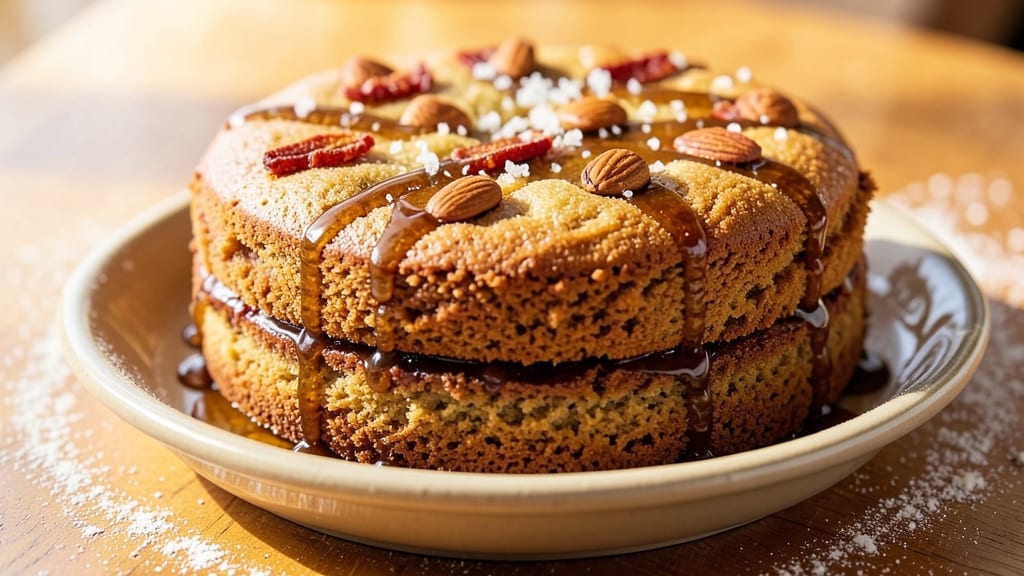
This almond flour gingerbread cake delivers all the cozy warmth of traditional gingerbread with a nutty, moist twist that keeps every slice irresistible. 🌟 The secret lies in blending almond flour's natural richness with classic spices—ginger, cinnamon, and molasses—for a texture that's tender yet sturdy, perfect for cutting clean slices.
What sets this apart is how the almond flour transforms the cake's structure, creating a delicate crumb that's lighter than traditional wheat-based versions while still holding up to generous frosting or whipped cream.
Creating this cake requires just 10 ingredients and 45 minutes of active time, making it ideal for holiday gatherings or special occasions without the fuss. The recipe includes adaptable options for vegan diets, ensuring everyone at the table can enjoy a slice.
What you'll end up with is a cake that's fragrant with warm spices, beautifully moist, and rich enough to satisfy even the most devoted gingerbread lovers—without the heaviness of traditional wheat flour.
This cake's star quality comes from its perfect balance: the almond flour provides a subtle nuttiness that complements the bold gingerbread flavors, while the molasses and spices create that signature holiday aroma.
The result is a dessert that's both elegant and comforting, with a texture that's moist enough to stay fresh for days. Whether you're serving it at a festive gathering or enjoying a quiet afternoon treat, this recipe delivers on every promise of holiday baking.
For those looking to elevate the presentation, a dusting of powdered sugar or a drizzle of caramel adds a professional touch. The cake also freezes beautifully, making it perfect for making ahead. Let's get started on creating this showstopping dessert that's sure to become a holiday tradition.
Ingredients for almond flour gingerbread cake
Ten cozy ingredients blend almond flour's richness with holiday spices for a moist, nutty gingerbread cake that's lighter and more elegant than traditional versions.
| Ingredient | Amount | Notes |
|---|---|---|
| Almond Flour 🌰 | 2 ½ cups | Finely ground, unsweetened preferred |
| Granulated Sugar 🍚 | 1 cup | Light brown preferred for depth |
| Molasses 🍯 | ½ cup | Unsulphured for best flavor |
| Large Eggs 🥚 | 2 whole | Room temperature for even mixing |
| Unsalted Butter 🧈 | ¾ cup | Softened, not melted |
| Ground Ginger 🌿 | 2 tsp | Freshly ground preferred |
| Ground Cinnamon 🌶️ | 1 ½ tsp | Ceylon cinnamon for subtle flavor |
| Ground Cloves 🌶️ | ½ tsp | Lightly toasted for warmth |
| Baking Soda 🧂 | 1 tsp | Pure, aluminum-free |
| Vanilla Extract 🌸 | 1 tbsp | Pure Madagascar bourbon |
| Salt 🧂 | ¼ tsp | Fine sea salt preferred |
| Almond Milk 🥛 | ½ cup | Unsweetened, for moisture |
Almond flour is the star here—Bob's Red Mill or Anthony's Goods are my go-tos for that ultra-fine grind. Grab the unsweetened kind (the sweetened has weird aftertastes). The molasses? Unsulphured makes all the difference—it's sweeter and richer. I always buy mine in the baking aisle at Whole Foods or bulk bins at Trader Joe's. For the spices, Penzeys sells pre-ground blends, but I prefer toasting whole spices myself for extra depth. The vanilla extract? Madagascar bourbon is worth the splurge—it adds that caramel note that takes this cake from good to showstopping.
No almond flour? Oat flour or coconut flour can work in a pinch (but texture changes—expect denser cake). Running low on molasses? Maple syrup at half the amount gets you close, though it lacks that signature depth. The eggs can be swapped for flax eggs (2 tbsp ground flax + 6 tbsp water) for a vegan version. Butter substitute? Coconut oil works, but it adds a slight coconut flavor—use sparingly. For the spices, cassia cinnamon is the classic choice, but Ceylon has a milder, sweeter profile. The almond milk? Any unsweetened plant milk works—just measure it after shaking the carton (they always say 'approximate' for a reason).
This cake keeps beautifully—3 days at room temperature wrapped in parchment, or 1 week in the fridge. For longer storage, freeze it (unfrosted) for up to 3 months. Thaw overnight in the fridge. The almond flour makes it extra delicate, so handle it like a soufflé—don't overmix the batter. I always bake two 8-inch rounds for easy serving. The frosting? Cream cheese or coconut whipped cream balances the richness perfectly.
Why You'll Love This Recipe
- No Mixer Needed: I swear by this recipe when my mixer’s on the fritz—just whisk eggs and butter until smooth, fold in the almond flour, and you’re done. The molasses cuts through the nutty richness like a secret handshake, and the texture stays tender without a single drop of oil.
- Spiced Warmth in Every Bite: That deep molasses caramelizes into the butter while baking, giving it a sticky, almost candied edge. Honestly, the gingerbread flavor here is next-level—no dry crumb here, just a moist, spiced hug that tastes like autumn in a pan.
- Weeknight or Holiday Hero: I’ve used this for a last-minute potluck (no one guessed it was gluten-free) and as a breakfast cake with whipped cream. The almond flour keeps it light enough to eat for dinner, but rich enough to feel special—no guilt, just satisfaction.
- Budget-Friendly Luxury: Almond flour might seem pricey, but this recipe uses less than a cup, and the butter and eggs stretch the flavor. Leftovers? They last five days in the fridge, and I’ve even frozen slices—just reheat until the molasses shines again. Frugal meets fancy.
Step-by-step instructions for almond flour gingerbread cake
Here's how to create a rich, nutty gingerbread cake with perfect moisture and warm spice notes every time.
👨🍳 Step 1: Cream Butter and Sugar for Maximum Fluffiness
In a stand mixer fitted with the paddle attachment, beat the softened unsalted butter and granulated sugar on medium speed for 3-4 minutes. You'll know it's ready when the mixture becomes light, fluffy, and nearly doubles in volume. This step incorporates air that will create that signature tender crumb.
I always check for the "ribbon stage"—when you lift the paddle, the mixture should leave a clean ribbon trail that holds its shape for a few seconds. If it's still too thick, keep mixing for another 30 seconds. The butter should be completely smooth with no lumps, and the color should lighten noticeably from its original yellow.
👨🍳 Step 2: Mix in Molasses and Wet Ingredients
Add the molasses and vanilla extract to the butter-sugar mixture, mixing on low speed for 1 minute until fully combined. The molasses will make the mixture look slightly darker and thicker. Then add the room temperature large eggs one at a time, mixing just until each is incorporated after about 15 seconds of mixing.
Here's the thing—molasses is thick and syrupy, so don't rush this step. You want it to blend smoothly with the butter mixture so it distributes evenly throughout the batter. The eggs will help create that signature moist texture, so make sure they're fully incorporated before moving on.
👨🍳 Step 3: Combine Dry Ingredients for Perfect Texture
In a separate bowl, whisk together the almond flour, baking soda, salt, ground ginger, ground cinnamon, and ground cloves. This is where the magic happens—those warm spices will infuse the entire cake with their aromatic goodness. Sift the mixture if you have any lumps, especially in the almond flour, to ensure a light texture.
With the mixer on low speed, gradually add the dry ingredients to the wet mixture. Mix just until combined—about 30-45 seconds—you should still see some flour streaks. Overmixing develops gluten in the almond flour, which can make the cake dense. Finally, pour in the almond milk and mix for another 15 seconds until just combined.
🔥 Step 4: Bake to Golden Perfection
Preheat your oven to 350°F and grease an 8-inch round cake pan or line it with parchment paper. Pour the batter into the prepared pan and smooth the top with a spatula. Bake for 35-40 minutes until a toothpick inserted in the center comes out clean and the edges are golden brown.
The almond flour makes this cake particularly prone to drying out, so I recommend checking it at the 30-minute mark. If the top starts browning too quickly, tent it loosely with aluminum foil. The cake should spring back slightly when pressed gently in the center—this indicates it's perfectly moist and tender.
⏰ Step 5: Cool and Serve for Maximum Moisture
Remove the cake from the oven and let it cool in the pan for 10 minutes, then transfer it to a wire rack to cool completely. Here's my pro tip: wrap the cooled cake tightly in plastic wrap and refrigerate for at least 1 hour before serving. This step is crucial for maintaining that luscious moisture—almond flour cakes can dry out quickly if served immediately.
Slice and serve with a dusting of powdered sugar or a dollop of whipped cream. Each bite should deliver that perfect balance of nutty almond flavor, warm spice notes, and moist, tender crumb. The cake will keep well in the refrigerator for up to 5 days, making it perfect for meal prep or holiday gifting!
Pro Tips For Making Almond Flour Gingerbread Cake
- Warm the molasses first: Cold molasses is thicker than syrup—pour it into a small saucepan with 2 tablespoons of water and heat for 30 seconds to loosen it up. I learned this the hard way when my first gingerbread cake turned out denser than a brick because the molasses refused to blend properly.
- Mix butter and sugar until pale: Beat the softened butter and sugar together for 3–4 minutes until the mixture lightens in color. This isn’t just about sweetness—it aerates the batter, which matters more with almond flour than wheat. Skip this, and your cake will sink like a lead balloon.
- Don’t overmix the batter: Almond flour develops gluten when overworked, leading to a tough, dry cake. Mix just until combined—lumps are fine, but stop as soon as the dry ingredients disappear. I used to whip it like a soufflé, and the texture paid the price.
- Use room-temperature eggs: Cold eggs create pockets of air that won’t incorporate smoothly, leading to a cake with uneven texture. Let them sit in warm water for 5 minutes before cracking them in—this guarantees a silky batter. (Yes, even if you’re impatient like me.)
Essential equipment for great almond flour gingerbread cake
Stand Mixer Essentials
Your stand mixer is the workhorse for this recipe—I use my KitchenAid Artisan Series with the paddle attachment for creaming butter and sugar. The paddle's flat surface ensures even mixing without over-incorporating air. For smaller batches, a hand mixer works too, but be prepared to mix longer.
Never use a whisk attachment—it whips too much air into the batter, making the cake too light and dry. 🌟
Precision Measuring Tools
Almond flour is notoriously tricky to measure accurately—it's much lighter than regular flour. I use a digital kitchen scale for the almond flour (250g for 2.5 cups) to ensure perfect texture. For other ingredients, a stainless steel measuring cups set (like OXO Good Grips) prevents spills.
The molasses should be measured by volume—not weight—using a liquid measuring cup. Spoon it in first, then scrape the top level with a knife for precision.
Quality Baking Pans
Invest in a heavy-gauge 8-inch round cake pan with non-stick coating—I recommend Wilton Perfect Results pans. They distribute heat evenly and prevent sticking. For a rustic look, try a cast iron skillet (preheated with oil), but monitor closely—it can brown faster.
Always grease pans thoroughly with butter or baking spray (like Baker's Joy) and line with parchment paper for easy release. The almond flour makes this cake delicate, so proper pan prep is non-negotiable.
Spice Grinders & Storage
Freshly ground spices make all the difference—my Microplane Spice Grater gives me that perfect texture for ginger, cinnamon, and cloves. Store your spices in airtight containers away from light and heat to preserve flavor.
For molasses, a glass jar with a tight-sealing lid keeps it fresh for up to 1 year unopened. I also keep a small jar of Penzeys Spiced Rum Extract on hand for an optional boozy twist in the batter (just 1 tsp adds depth).
Temperature Control
An oven thermometer (like Thermoworks Oven Thermometer) is essential—most home ovens run 25°F hotter or cooler than set. Preheat your oven to 350°F for 15 minutes before baking. For even cooking, place your cake pan on the middle rack.
If your oven has hot spots, rotate the pan halfway through baking. The almond flour makes this cake sensitive to temperature fluctuations, so consistency is key for that perfect golden-brown crust. 🔥
Cooling & Serving Tools
After baking, transfer your cake to a wire cooling rack (I love the OXO Good Grips design) to cool completely. For slicing, a serrated knife (like Mercer Culinary Genesis) gives clean cuts through the moist crumb.
To maintain moisture, I store leftovers in a vacuum-sealed bag or airtight container with a slice of bread to absorb excess dryness. For serving, a dusting of powdered sugar or whipped cream adds that restaurant-quality finish.
Nutrition facts
Frequently asked questions
Can I make this almond flour gingerbread cake without eggs?
Yes! For a vegan version, replace the 2 eggs with 2 flax eggs (mix 2 tbsp ground flaxseed with 6 tbsp water and let sit for 5 minutes to thicken). This maintains moisture and structure while keeping the cake's tender texture. The flax eggs also add a subtle nutty depth that pairs perfectly with the almond flour and warm spices.
Why does my almond flour gingerbread cake turn out dense?
Overmixing the batter is the most common cause—almond flour develops gluten when overworked, making the cake dense. Mix just until combined (about 30-45 seconds after adding dry ingredients). Also, ensure your almond flour is finely ground and measure it by weight (250g) rather than volume for accuracy. Finally, don't skip the 1-hour chilling before serving—this prevents dryness and helps the texture set properly.
Can I substitute regular flour for almond flour?
Not directly—the almond flour's fat content and lack of gluten create a completely different texture. However, you can blend 1.5 cups all-purpose flour with 1 cup almond flour for a lighter result. For a closer match, use a 1:1 almond flour blend (like Bob's Red Mill Almond Flour Mix) that includes xanthan gum to mimic gluten structure. The flavor will still benefit from the almond notes, though the texture will be slightly denser.
How do I store leftovers to keep them moist?
Wrap the cake tightly in plastic wrap or place it in an airtight container with a slice of bread to absorb excess dryness. Store at room temperature for 3 days or refrigerate for up to 5 days. For longer storage, freeze the unfrosted cake for 3 months. Thaw overnight in the fridge—microwaving can dry it out. The almond flour makes this cake particularly prone to drying, so always handle it gently when slicing.
What's the best way to add extra spice flavor?
For deeper spice notes, toast your whole spices (ginger, cinnamon, cloves) in a dry pan for 1-2 minutes until fragrant, then grind them fresh. You can also add 1 tsp spiced rum extract or ½ tsp orange zest to the batter for brightness. For a molasses boost, replace the ½ cup molasses with ⅓ cup molasses + 2 tbsp maple syrup—this enhances the caramelized depth while keeping the cake moist.