
Side Dishes
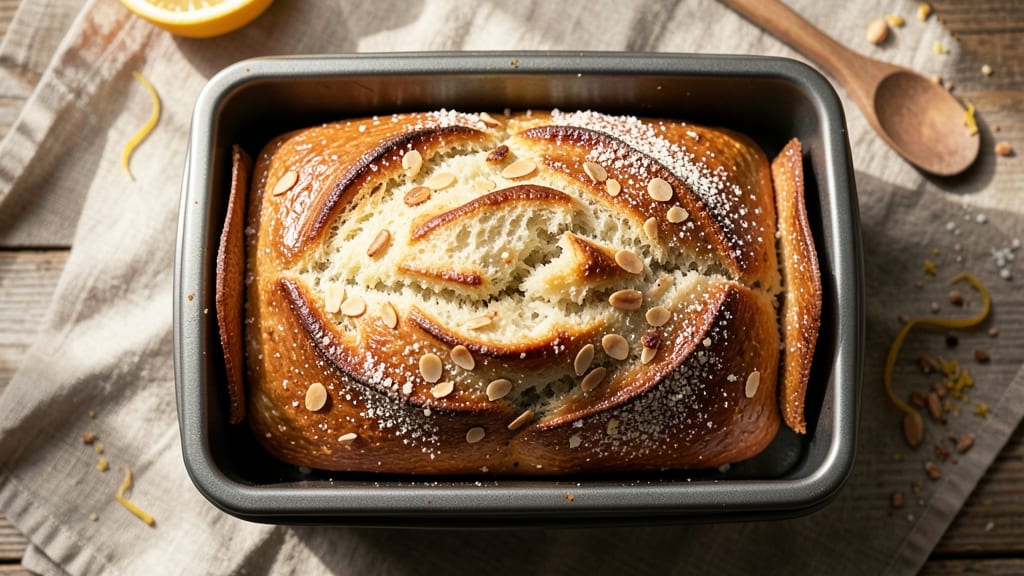
This almond bread machine recipe transforms your appliance into a hands-off bakery, delivering a loaf with nutty depth and a crispy top that rivals artisanal bakeries.
The secret lies in balancing almond flour's dryness with moisture-rich ingredients like yogurt and eggs, while the bread machine does all the heavy lifting—kneading, rising, and baking—without a single manual fold required.
What sets this recipe apart is its yeast-based foundation, which creates a lighter, airier texture than quick breads while still packing in that signature almond flavor. The bread machine's gentle kneading develops gluten just enough for structure, preventing the dense crumb that often plagues almond-heavy loaves.
A sprinkle of sliced almonds on top adds both visual appeal and extra crunch.
By the time it emerges from your machine, you'll have a loaf with a golden, crackly crust and tender interior infused with almond essence.
The scent alone will transform your kitchen into a warm, inviting space—perfect for breakfast toast, sandwiches, or gifting to neighbors who'll be jealous of your effortless baking skills.
Adjust the sweetness by adding honey or sugar, or boost the nutty flavor with almond extract. The recipe accommodates most bread machine models, but always check your manual for specific settings. Here's how to achieve bakery-quality results with minimal effort.
Ingredients for almond bread machine
Fourteen ingredients balance almond flour's dryness for a loaf with crispy top and nutty essence.
| Ingredient | Amount | Notes |
|---|---|---|
| Almond Flour 🌰 | 1 ½ cups | Finely ground, unsweetened preferred |
| All-Purpose Flour 🌾 | 1 cup | For structure and lightness |
| Granulated Sugar 🍚 | ¼ cup | Adjust for sweetness preference |
| Active Dry Yeast 🍞 | ¼ oz | Or 2 1/4 tsp (1 packet) |
| Plain Yogurt 🥛 | ½ cup | Full-fat for best texture |
| Large Eggs 🥚 | 1 whole | Room temperature preferred |
| Unsalted Butter 🧈 | ¼ cup | Melted, cooled slightly |
| Almond Extract 🌰 | 1 tsp | Pure, not imitation |
| Salt 🧂 | ½ tsp | Diamond Crystal preferred |
| Warm Water 💧 | ½ cup | 110°F for yeast activation |
| Sliced Almonds 🌰 | ¼ cup | Toasted for enhanced flavor |
| Honey 🍯 | 1 tbsp | Optional for extra moisture |
The almond flour is non-negotiable here—Bob's Red Mill or Anthony's Goods are my go-tos for consistency. If you can't find unsweetened, reduce the granulated sugar slightly. The yeast needs to be fresh, so check the date on that packet. Warm water should feel like bathwater—not hot, not cold. For the almond extract, McCormick or Goya are reliable brands. Toast your sliced almonds in a dry pan until golden for that extra crunch on top.
No almond flour? Substitute 1 cup whole wheat flour plus 1/4 cup ground almonds, but expect a denser loaf. Out of yogurt? Greek yogurt or sour cream work in a pinch, though texture may vary. The butter can be swapped for vegetable oil if dairy-free, but it'll lack richness. For extra sweetness, add maple syrup instead of honey. If your bread machine has a 'light crust' setting, skip the sliced almonds topping and add them after baking for a crispier finish.
Store leftovers in an airtight container for up to 3 days—it reheats beautifully in a toaster or wrapped in foil at 350°F for 5 minutes. The almond flour mix can be prepped ahead and refrigerated for 2 days before baking. For a crispier crust, brush the top with melted butter before baking. This loaf freezes well too—wrap tightly in plastic and thaw at room temperature for 2 hours.
Why You'll Love This Recipe
- Bread Machine Magic: The yeast and yogurt do all the work—just toss in the dough, set the machine, and walk away. No kneading, no fuss, no stress.
- Rich Nutty Depth: That almond flour gives it a subtle buttery richness, while the sugar keeps it just sweet enough. Honestly, it tastes like a cross between a croissant and a biscotti—without the effort.
- Weeknight & Holiday Ready: Slice it for toast, cube it for French toast, or serve it warm with jam. I’ve used it for breakfast, dessert, and even as a sandwich base—no one ever questions why it’s on the table.
- Budget-Friendly Luxury: Almond flour might sound fancy, but a little goes a long way, and the rest is basic pantry staples. Plus, it keeps for days, so you’re not scrambling for last-minute bread runs.
Step-by-step instructions for almond bread machine recipe
Transform simple ingredients into a golden, nutty loaf with minimal effort.
Activate the Yeast and Mix Wet Ingredients
In a small bowl, combine the 0.5 cup warm water (about 110°F) with the 0.25 oz active dry yeast and let it sit for 5-10 minutes until frothy. This step ensures your yeast is alive and ready to work—you'll see bubbles forming if it's active. If it doesn't bubble, your yeast is dead, and you'll need to start over.
In the bowl of your bread machine, mix the 0.5 cup plain yogurt, 1 whole large egg, 0.25 cup melted unsalted butter (cooled slightly), 1 tbsp honey, and the 1 tsp almond extract. Stir well until fully combined. The yogurt adds moisture and tang, while the butter and honey create a tender crumb. The almond extract infuses that signature nutty aroma that makes this bread special.
Combine Dry Ingredients and Add to Machine
In a separate bowl, whisk together the 1.5 cups almond flour, 1 cup all-purpose flour, 0.25 cup granulated sugar, and 0.5 tsp salt. Sift if necessary to remove lumps—this ensures even distribution and a lighter texture. The almond flour gives the bread its signature nutty depth, while the all-purpose flour provides structure.
Add the dry ingredients to the wet mixture in the bread machine. Give everything a quick stir with a silicone spatula to fully integrate the ingredients. The batter should be thick but pourable—if it's too stiff, add 1 tablespoon of warm water to help it flow. This step is crucial for achieving the right consistency that yields a tender, moist loaf.
Add Sliced Almonds and Select Bread Machine Settings
Sprinkle the 0.25 cup sliced almonds evenly over the batter. They'll add texture and a satisfying crunch to every bite. If you prefer extra crunch, lightly toast the almonds in a dry skillet over medium heat for 2-3 minutes before adding them to the machine.
Choose the "Basic White Bread" setting on your bread machine, which typically runs for 3-4 hours (including kneading, rising, and baking). If your machine has a "Sweet Bread" option, that works too—just be aware it may add extra sugar. The machine will handle the rest, so there's no need to monitor it closely. The yeast will activate, the dough will rise, and the bread will bake to a beautiful golden brown.
Achieve the Perfect Crispy Top
Once the bread machine signals that the cycle is complete, remove the loaf immediately. Place it on a wire rack to cool for 10-15 minutes—this prevents sogginess and allows the bread to set properly. For that coveted crispy top, brush the warm loaf with a little melted butter or honey while it's still hot. This step is what transforms a good loaf into a great one.
Slice the bread while it's still slightly warm for the best texture. The interior should be tender with a fine crumb, and the aroma of almond extract will fill your kitchen. Store any leftovers in an airtight container at room temperature for up to 3 days or freeze for longer storage. This bread is best enjoyed fresh, so don't wait too long to savor it!
Pro Tips For Making Almond Bread Machine
- Measure Almond Flour Right: Use a kitchen scale—this stuff packs differently than regular flour. I learned this the hard way when my first batch turned out dense as a brick. For every cup of almond flour, weigh 120 grams, not the scoop-and-level method.
- Proof Yeast in Warm Yogurt: Mix the yeast with warm yogurt (105–110°F) first—let it bubble for 5 minutes before adding other ingredients. Skipping this step means slower rise times and weaker flavor. (Yes, even if you're impatient like me.)
- Don’t Overmix the Dough: Once the machine starts kneading, resist the urge to peek or stop it early. Overworking the dough with almond flour makes it tough and dry. Let the machine do its job—about 3–5 minutes total.
- Use Room-Temp Yogurt: Cold yogurt slows fermentation and weakens the gluten structure. Let it sit out for 30 minutes before measuring. I was skeptical until I tried it—the bread rose higher and tasted fresher.
Flavor customization for these flavors
Sweet & Moist Variations
Boost sweetness by adding 2 tbsp maple syrup or 1 tbsp vanilla extract to the wet ingredients for a caramelized depth. For extra moisture, replace ¼ cup yogurt with ¼ cup applesauce—it keeps the loaf tender without altering the nutty flavor.
If you prefer a fruity twist, fold in ½ cup finely chopped dried apricots or raisins with the dry ingredients. 🍯
Spiced & Warm Flavors
Infuse warmth with ½ tsp cinnamon and ¼ tsp cardamom in the dry mix for a cozy, aromatic loaf. For a citrus kick, zest 1 lemon and add it to the wet ingredients along with 1 tsp lemon juice.
A pinch of nutmeg enhances the almond flavor without overpowering it. These spices pair beautifully with the bread’s natural sweetness.
Extra Nutty & Crunchy
Double the sliced almonds to ½ cup for a bolder nutty punch, or mix in 2 tbsp chopped walnuts or pecans for variety. For a marbled effect, swirl in 1 tbsp almond butter with the wet ingredients before adding dry ingredients.
Toasting the nuts in 1 tbsp brown sugar and ½ tsp cinnamon before adding them elevates the flavor even more.
Dairy-Free Adaptations
Swap the yogurt and butter for ½ cup coconut yogurt and ¼ cup coconut oil, melted and cooled. Use ¼ cup unsweetened applesauce instead of honey to maintain moisture.
The texture remains tender, though slightly denser. For a richer alternative, vegan butter works well—just ensure it’s fully melted and cooled before mixing.
Gluten-Free Option
Replace the all-purpose flour with 1 cup gluten-free 1:1 baking flour (like Bob’s Red Mill or King Arthur). Add ¼ cup ground flaxseed to the dry mix to improve structure and moisture retention.
The bread will still be tender but may have a slightly coarser crumb. For extra binding, include 1 tbsp psyllium husk powder with the dry ingredients.
Nutrition facts
Frequently asked questions
Can I make this almond bread without a bread machine?
Yes! You can adapt this recipe for a traditional oven by mixing all ingredients into a dough, letting it rise for 1-2 hours, then baking at 350°F for 30-35 minutes in a greased loaf pan. The texture will be slightly denser since you won't get the same kneading action, but it'll still taste delicious.
Why does my bread machine almond bread turn out dense?
Dense almond bread usually happens when the dough is too dry or lacks proper gluten development. Make sure your almond flour is finely ground and add 1 extra tablespoon of yogurt or water if the batter seems stiff. Also, check your bread machine's kneading cycle—some machines knead less aggressively, which can affect texture.
How can I make my almond bread extra moist?
For a moister loaf, add 1 extra tablespoon of honey or applesauce to the wet ingredients, or replace ¼ cup of the almond flour with ¼ cup ground flaxseed (which adds moisture and fiber). Wrapping the baked loaf in a towel while it cools also helps retain moisture.
Can I use almond butter instead of almond extract?
Not as a direct substitute—they serve different purposes. Almond extract provides aroma while almond butter adds texture and richness. If you want to use almond butter, replace ¼ cup of the melted butter with ¼ cup almond butter (thinned with 1 tablespoon of milk if too thick). This will give your bread a marbled effect and extra nutty flavor.
What's the best way to store almond bread?
Store in an airtight container at room temperature for up to 3 days or freeze for up to 3 months. To reheat, wrap slices in foil and warm at 350°F for 5 minutes or toast directly. For extra freshness, brush the crust with melted butter before storing.