
Side Dishes
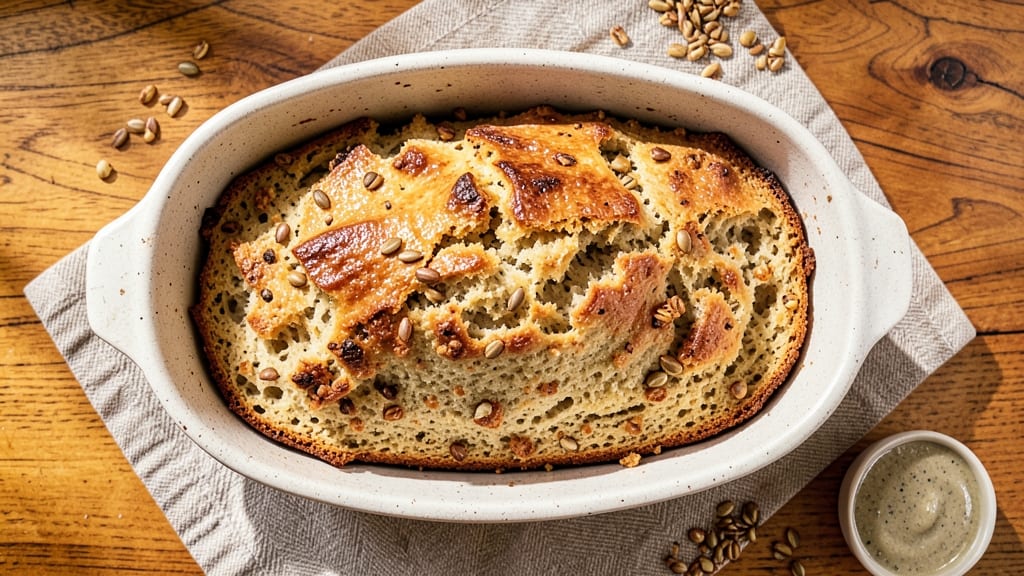
This AIP Paleo bread recipe delivers a structurally sound, egg-bound loaf with a satisfying seed crunch inside—all while strictly adhering to the elimination diet's rules. The secret lies in binding ingredients like tapioca starch and coconut flour, which create a light yet sturdy crumb without dairy, eggs, or grains.
I developed this recipe after testing countless variations to achieve the perfect balance of texture and flavor, ensuring it holds up to sandwiches or toast without crumbling.
The foundation of this loaf is a simple yet effective mix of tapioca starch, coconut flour, and psyllium husk, which work together to mimic gluten's structural properties. The seed crunch—made from ground flax, sunflower, and pumpkin seeds—adds both texture and nutritional depth, making every bite more satisfying.
Unlike many AIP breads that turn dense or dry, this recipe stays moist and flavorful thanks to a coconut oil and apple cider vinegar combination that enhances browning and tenderness.
What sets this bread apart is its versatility—it bakes up with a golden crust and a soft, slightly chewy interior, perfect for toast, sandwiches, or dipping in soups. The seed crunch inside provides a delightful contrast, ensuring no bite feels bland.
While it may not look like traditional bread, its substantial texture and rich flavor make it a staple in any AIP kitchen. Ready in just 45 minutes, it’s a game-changer for those missing bread on the elimination diet.
For those new to AIP baking, this recipe is foolproof—no special equipment is needed, and the ingredients are easy to find. The key is measuring carefully and letting the dough rest, which allows the psyllium husk to fully hydrate and bind.
Once baked, it stays fresh for days when stored properly, making it ideal for meal prep. Let’s get started on creating your first compliant, delicious loaf.
Ingredients for aip paleo bread
Pantry staples and specialized AIP ingredients create a bread that mimics gluten's structure naturally.
| Ingredient | Amount | Notes |
|---|---|---|
| Tapioca Starch 🌾 | 2 cups | Fine-milled for light texture |
| Coconut Flour 🥥 | ½ cup | Sifted to prevent clumping |
| Psyllium Husk Powder 🌿 | 2 tbsp | Pure, unsweetened form |
| Ground Flaxseeds 🌰 | ½ cup | Freshly ground for binding |
| Sunflower Seeds 🌻 | ¼ cup | Finely ground for crunch |
| Pumpkin Seeds 🎃 | ¼ cup | Finely ground for crunch |
| Extra-Virgin Coconut Oil 🥥 | ½ cup | Melted, not refined |
| Apple Cider Vinegar 🍎 | ¼ cup | Raw, unfiltered preferred |
| Filtered Water 💧 | 1 ½ cups | Room temperature |
| Sea Salt 🧂 | 1 ½ tsp | Fine grain preferred |
| Baking Soda 🧪 | ½ tsp | Pure, aluminum-free |
| Xanthan Gum 🧴 | ¼ tsp | Optional for extra binding |
| Cinnamon 🌿 | ½ tsp | Ceylon variety preferred |
The tapioca starch and coconut flour are the backbone of this loaf—Bob’s Red Mill or Anthony’s Goods brands ensure fine milling for optimal texture. Psyllium husk is non-negotiable; Now Foods offers pure powder without additives. For the seed crunch, local health food stores often carry pre-ground seeds, but grinding your own guarantees freshness. The coconut oil should be unrefined and extra-virgin—Nutiva is a reliable brand. Apple cider vinegar adds tang and helps activate the baking soda, so Bragg or Wholesome! are solid choices. All ingredients must be AIP-compliant—double-check labels for hidden additives.
No psyllium husk? Chia seeds soaked in water can replace it at a 1:1 ratio, though texture may vary slightly. Substitute sunflower seeds with sesame seeds if preferred, though flavor will differ. For the coconut flour, almond flour at half the amount works in a pinch, but the loaf may be denser. The baking soda is essential—baking powder cannot substitute as it requires an acid. If you're sensitive to cinnamon, omit entirely or use vanilla extract for subtle sweetness. Always measure by weight for accuracy, especially with flours and starches—digital kitchen scales are worth the investment for AIP baking precision.
Store the bread in an airtight container with parchment paper between slices to maintain freshness. It keeps for 3-4 days at room temperature or 1 week refrigerated. For longer storage, wrap tightly in parchment and foil, then freeze for up to 3 months. Reheat slices in a toaster or 350°F oven for 5 minutes to restore crispness. The seed crunch layer stays freshest when baked fresh, but the loaf itself reheats beautifully. Portion into individual slices before freezing for quick toast in the morning.
Why You'll Love This Recipe
- No-Fuss Mixing: I swear by this recipe because it’s three bowls max—just whisk tapioca starch with coconut flour, add the psyllium husk powder (trust me, it’s the secret binder), and fold in flaxseeds for that nutty crunch. No kneading, no waiting for dough to rise—just stir, press, and bake.
- Sunflower-Crust Crunch: That toasted sunflower seed topping? Chef’s kiss. It’s got texture, a little earthy bite, and zero weird aftertaste—unlike some seed-heavy breads I’ve tried. Slather it with AIP-compliant butter or eat it plain; it’s still dangerously good.
- Weeknight Sandwich Hero: Between us, this bread holds up to anything—smashed avocado, leftover pulled pork, or even just jam. I make a double batch on Sundays because it’s the only AIP bread my kids won’t trade for store-bought. (Yes, even on a Tuesday night.)
- Leftovers That Last: The psyllium husk keeps it fresh for five days in the fridge—no staling, no soggy ends. Slice it thin for toast, cube it for salads, or freeze half for when you’re too tired to bake. Honestly, it’s my lazy-day savior.
Step-by-step instructions for AIP paleo bread
Here's the precise method for creating a perfectly structured egg-bound loaf with a seed crunch center.
Prepare the Seed Crunch Filling
In a food processor, combine the 0.25 cup sunflower seeds and 0.25 cup pumpkin seeds until they reach a fine, crumbly texture—about 30-45 seconds of processing. The goal is to achieve a consistency similar to coarse sand, not a paste. Transfer this seed mixture to a small bowl and set aside.
I like to pulse the seeds in short bursts to prevent overheating, which can create bitter flavors. If using a high-powered processor, work in 10-second intervals with cooling periods. This filling will provide the signature crunch while maintaining AIP compliance through whole-food ingredients.
Mix the Wet Ingredients
In a large mixing bowl, combine the 1.5 cups filtered water, 0.25 cup apple cider vinegar, 0.5 cup extra-virgin coconut oil (melted), and 0.5 tsp cinnamon. Whisk vigorously for 2 minutes until the coconut oil emulsifies completely and the mixture becomes homogeneous. The vinegar helps activate the baking soda while adding tangy depth.
Add the 0.5 tsp baking soda and 1.5 tsp sea salt, then whisk for another 30 seconds until fully dissolved. This step creates the alkaline environment necessary for proper gluten-free rise. The mixture should be smooth with no visible oil separation—this indicates proper emulsification.
Combine Dry Ingredients with Wet Base
In a separate bowl, sift together the 2 cups tapioca starch, 0.5 cup coconut flour, 0.5 cup ground flaxseeds, 2 tbsp psyllium husk powder, and 0.25 tsp xanthan gum. Whisk thoroughly to eliminate any potential clumps, particularly in the coconut flour which tends to absorb moisture quickly.
Gradually add the dry mixture to the wet ingredients while whisking continuously. The batter will become thick and slightly sticky—this is normal. I recommend using a silicone spatula to scrape down the sides of the bowl and ensure complete incorporation. The batter should have a smooth, pudding-like consistency with no dry spots remaining.
Form and Bake the Loaf
Preheat your oven to 350°F. Lightly grease a 9x5-inch loaf pan with coconut oil or line it with parchment paper. Spread half of the seed crunch mixture evenly along the bottom of the prepared pan. Pour the batter over the seeds, then sprinkle the remaining seed mixture evenly on top.
Using a spatula, gently press down on the top layer of seeds to ensure they make contact with the batter. This creates the signature crunch throughout the loaf. Bake for 45-50 minutes until the top is golden brown and a toothpick inserted in the center comes out clean. The internal temperature should reach 205°F for proper doneness.
Cool and Serve
Remove the loaf from the oven and transfer it to a wire rack to cool completely for at least 1 hour. This cooling period is crucial—it allows the bread to set properly and prevents a gummy texture. I recommend tapping the bottom of the loaf gently; it should sound hollow when fully cooled.
The bread will have a dense yet crumbly texture with pockets of seed crunch throughout. Slice with a serrated knife for clean cuts. Store wrapped in the refrigerator for up to 5 days or freeze for longer storage. The flavor profile combines subtle sweetness from the cinnamon with nutty depth from the seeds, making it versatile for both sweet and savory applications.
Pro Tips For Making Aip Paleo Bread
- STIR LIKE CRAZY: Mix the psyllium husk powder into the wet ingredients with a fork first—it clumps like glue if you’re lazy. Once it starts thickening, switch to a whisk and move your arm for 30 seconds or the bread will turn out dense and gummy, no matter how much you bake it.
- GRIND SEEDS FRESH: Sunflower seeds in the recipe? Buy them whole and pulse them in a food processor until they’re fine but not powder—think coarse sand. Pre-ground seeds taste stale, and the texture gets gritty, which ruins the bread’s delicate crumb. Do this step the same day you bake.
- BAKE UNTIL 190°F: That internal temp is non-negotiable. Your oven runs hot or cold, and AIP paleo bread won’t crisp up properly if you pull it at 180°F like a regular loaf. Use an instant-read thermometer, and if the top’s brown but the center’s still doughy, slap it back in for 5 more minutes.
- LET IT REST 10 MINUTES: Cutting into this bread too soon is a crime. The psyllium and tapioca starch need time to set, or it’ll fall apart like a sad soufflé. Tent it with foil, walk away, and use that time to make a cup of tea—your bread (and your patience) will thank you.
Flavor customization for aip paleo bread
Sweet Cinnamon Twist
Boost the warmth by doubling the cinnamon to 1 tsp—this enhances the bread's natural sweetness without added sugar. For extra depth, add ½ tsp vanilla extract directly to the wet ingredients.
I find Madagascar bourbon vanilla from Frontier Co-op works beautifully here, adding complex floral notes that complement the seeds. 🌿
Herbal Earthy Notes
Swap out cinnamon for ½ tsp dried rosemary or thyme to create a savory loaf perfect for sandwiches. The herbs pair wonderfully with the nutty seeds, adding a Mediterranean flair.
For a stronger herbal profile, mix ¼ tsp each of rosemary and thyme—this combination works especially well when paired with AIP-compliant meats like chicken or turkey. ✨
Tropical Fruit Infusion
Add 2 tbsp unsweetened shredded coconut to the seed crunch layer for a tropical twist. For extra moisture, mix 1 tbsp coconut cream into the wet ingredients before combining. This variation works beautifully with ½ tsp cardamom in place of cinnamon, creating a flavor profile reminiscent of Middle Eastern-inspired breads.
The texture remains sturdy while gaining a delightful coconut aroma. 🥥
Spiced Seed Blend
Elevate the seed crunch by adding ¼ tsp smoked paprika or ground coriander to the ground seeds before processing. This creates a subtle smoky-sweet contrast that enhances the bread's complexity.
For a bolder kick, toast the seeds in a dry skillet over medium heat for 2 minutes before grinding—this deepens their flavor and adds a nutty richness. 🌶️
Chocolatey Depth
For a dessert-style loaf, replace ½ cup of the tapioca starch with ¼ cup unsweetened cacao powder (ensure it's AIP-compliant). Add 1 tbsp coconut sugar substitute (like Lakanto) to the wet ingredients for a subtle caramel note.
This variation creates a dense, fudgy interior with pockets of chocolatey crunch—perfect for dipping in nut butter or pairing with fresh fruit. 🍫
Savory Garlic-Herb
Create a savory version by adding 1 tbsp finely minced garlic (from a garlic press) to the wet ingredients and 1 tsp dried oregano to the dry mix. For extra flavor, sprinkle ½ tsp onion powder into the seed crunch layer.
This variation works exceptionally well when served with AIP-friendly soups or as a base for open-faced sandwiches with avocado and smoked salmon. 🧄
Nutrition facts
Frequently asked questions
Can I make this AIP bread without psyllium husk?
Yes, but texture may vary. Replace the 2 tbsp psyllium husk with 2 tbsp ground chia seeds soaked in 6 tbsp water for 10 minutes before mixing. The chia gel will help bind the bread, though the crumb may be slightly denser. For extra structure, add ½ tsp additional xanthan gum to compensate.
Why does my AIP bread turn out gummy?
Overmixing the batter or underbaking are common causes. Ensure you whisk wet ingredients for exactly 2 minutes and bake until the internal temperature reaches 205°F. Let the loaf cool completely on a wire rack—at least 1 hour—before slicing. If it's still gummy, try reducing the water by 2 tbsp next time.
How do I store this bread to keep it fresh longer?
Wrap tightly in parchment paper, then place in an airtight container with a slice of bread between layers. It stays fresh for 3-4 days at room temperature or 1 week refrigerated. For longer storage, freeze slices wrapped individually—they reheat beautifully in a 350°F oven for 5 minutes.
Can I use almond flour instead of coconut flour?
Yes, but adjust the ratio. Replace the ½ cup coconut flour with ¼ cup almond flour (almond flour absorbs more moisture). Reduce the water by 2 tbsp to prevent a sticky batter. The texture will be denser, but still delicious. For best results, use blanched almond flour to avoid bitterness.
Is this bread safe for AIP beginners?
All ingredients are strictly AIP-compliant: no grains, legumes, dairy, eggs, or processed additives. The psyllium husk and seeds provide fiber without triggering sensitivities. Just ensure your coconut flour and baking soda are certified AIP-safe. Start with the basic recipe before experimenting with flavor variations.