Side Dishes
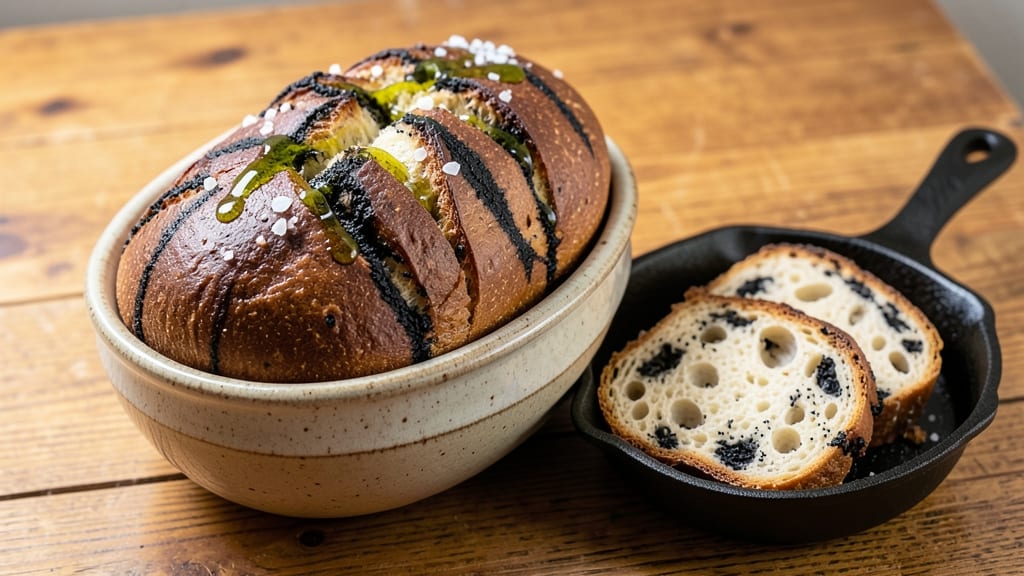
This activated charcoal bread recipe transforms your kitchen into a wellness sanctuary with every bite—dark, earthy, and packed with detoxifying properties. 💛 The key lies in blending activated charcoal into the dough, creating a visually striking loaf that supports digestive health while delivering a satisfying crunch.
Perfect for those seeking both nutrition and flavor, this recipe delivers a unique texture and subtle mineral notes that elevate any meal.
The process is straightforward but requires attention to detail, particularly when incorporating the charcoal. Unlike traditional breads, this version benefits from a slightly longer fermentation to ensure the charcoal disperses evenly without altering the dough's structure.
The result? A loaf with a deep, almost black crust and a tender crumb that's ideal for toast, sandwiches, or simply savoring on its own.
What sets this bread apart is its dual purpose—it's not just food, but a functional ingredient that may aid digestion and toxin removal. The charcoal's natural properties create a subtle earthy depth that pairs beautifully with rich spreads like almond butter or avocado.
For those with dietary restrictions, this vegan-friendly recipe is both nutritious and delicious, offering a healthier twist on classic bread.
Before baking, always consult a healthcare provider if you're on medications or supplements, as activated charcoal can interact with certain treatments. Once baked, store the bread in an airtight container to preserve its unique qualities. This isn't just bread—it's a wellness tool wrapped in a satisfying crust.
Ingredients for activated charcoal bread
Twelve ingredients transform ordinary dough into a detoxifying, visually striking loaf with subtle mineral depth.
| Ingredient | Amount | Notes |
|---|---|---|
| Activated Charcoal Powder ⚫ | ¼ cup | Food-grade, finely powdered |
| All-Purpose Flour 🌾 | 4 cups | Organic, unbleached preferred |
| Active Dry Yeast 🍞 | 2 ¼ tsp | Or 1 packet (2.25 tsp) |
| Granulated Sugar 🍚 | 1 tbsp | For yeast activation |
| Warm Water 💧 | 1 ¼ cups | 110-115°F for yeast |
| Extra-Virgin Olive Oil 🫒 | ¼ cup | Cold-pressed, fruity |
| Apple Cider Vinegar 🍏 | 1 tbsp | For dough elasticity |
| Himalayan Pink Salt 🧂 | 1 ½ tsp | Fine grain preferred |
| Ground Flaxseed 🌾 | 2 tbsp | For vegan binding |
| Unsweetened Almond Milk 🥛 | ¼ cup | For dough hydration |
| Sesame Seeds 🌱 | 2 tbsp | For crust texture |
| Poppy Seeds 🌼 | 1 tbsp | Optional garnish |
The activated charcoal is non-negotiable—sourcing matters here. Food-grade pharmaceutical charcoal from health stores or online retailers like Bulk Apothecary ensures purity. Avoid garden variety; it contains additives. Measure precisely: too much alters texture, too little dilutes detox benefits. The flour should be organic if possible—King Arthur or Bob's Red Mill brands work best for consistent fermentation. Yeast quality is critical too; Red Star active dry yeast is a professional standard. Store all dry ingredients in airtight containers away from heat sources to preserve potency.
No activated charcoal? Spirulina powder at half the amount creates a similar earthy hue without detox properties. Substitute flaxseed with chia seeds soaked in water for binding. The almond milk can be swapped for oat milk or coconut milk—just ensure it's unsweetened. For a lighter crumb, replace 1 cup flour with white whole wheat flour. The vinegar is essential—it mimics gluten development in vegan doughs. If unavailable, lemon juice works in a 1:1 ratio. Sesame seeds can be omitted if nut-free requirements exist, but the poppy seeds add delightful contrast without being essential.
This dough requires 24 hours of refrigerated fermentation—don't rush it. The charcoal's properties are best preserved when stored in an airtight container with a paper towel to absorb moisture. Once baked, the loaf keeps 3-4 days at room temperature wrapped in a clean kitchen towel. For longer storage, slice and freeze portions—reheat in a toaster or oven for 2-3 minutes to restore crispness. The bread's detoxifying qualities are most potent when consumed within 5 days** of baking, so plan accordingly for maximum benefits.
Why You'll Love This Recipe
- No-Fuss Dough: I swear, this bread takes less effort than ordering takeout. Just mix the flour, yeast, and a pinch of that activated charcoal—no kneading, no fuss—then let it rise while you sip your coffee.
- Earthy Crunch: Honestly, the charcoal gives it this unexpected depth—like a toasty, slightly smoky bite that’s weirdly addictive. Pair it with butter, and you’ve got a flavor upgrade for zero extra work.
- Meal Prep Hero: Between us, this bread stays fresh for days, so I bake a loaf on Sundays and use it all week. Toast it, sandwich it, or dip it—it’s my go-to for lazy mornings and quick lunches.
- Budget Magic: A tiny bag of charcoal and basic pantry staples make this way cheaper than store-bought. Plus, the leftovers? Still better than day-old bread from the grocery store. Win.
Step-by-step instructions for activated charcoal bread
This earthy, detoxifying loaf requires precise technique to balance the charcoal's intensity with perfect texture.
👨🍳 Step 1: Activate the Yeast and Prepare the Dough Base
In a small bowl, combine the 1.25 cups warm water (between 110-115°F), 1 tbsp granulated sugar, and 2.25 tsp active dry yeast. Let it sit for 5-10 minutes until foamy—this confirms your yeast is alive. If it doesn't foam, your yeast is inactive and needs replacement.
In a large mixing bowl, whisk together the 4 cups all-purpose flour, 1.5 tsp Himalayan pink salt, 2 tbsp ground flaxseed, and the 0.25 cup activated charcoal powder. The charcoal will darken the flour dramatically—this is normal and essential for the bread's distinctive appearance and detoxifying properties. Create a well in the center and pour in the yeast mixture along with the 0.25 cup extra-virgin olive oil and 0.25 cup unsweetened almond milk.
🍳 Step 2: Develop the Dough with Precision
Using a wooden spoon, gently combine the ingredients until a shaggy dough forms. Then add the 1 tbsp apple cider vinegar and mix thoroughly. The vinegar enhances gluten development and improves elasticity—critical for this dense, charcoal-infused dough.
Turn the dough onto a lightly floured surface and knead for 8-10 minutes until smooth and elastic. The dough will be darker than traditional bread due to the charcoal, but it should still feel slightly tacky rather than dry. If it's too sticky, add 1 tbsp flour at a time until it reaches the right consistency. This kneading step is crucial for developing the bread's structure to handle the charcoal's binding properties.
⏰ Step 3: First Rise and Charcoal Integration
Lightly oil a large bowl, place the dough inside, and cover with a damp towel. Let it rise in a warm place for 1.5-2 hours until doubled in size. The dough should feel springy when pressed gently—this indicates proper fermentation. The charcoal will make the dough appear darker than expected, but the rise should still be visible.
After rising, gently deflate the dough and divide it into 4 equal portions. Shape each portion into a round loaf and place them on a parchment-lined baking sheet. Cover again with a damp towel and let them rise for another 30-45 minutes. This second rise ensures proper oven spring despite the charcoal's density.
🔥 Step 4: Bake with Controlled Heat
Preheat your oven to 375°F with a baking stone or inverted baking sheet on the lower rack. This creates steam that's essential for the bread's crust development. Brush the tops of each loaf with a bit of water, then sprinkle with 2 tbsp sesame seeds and 1 tbsp poppy seeds for texture and visual contrast against the charcoal.
Bake for 25-30 minutes until the internal temperature reaches 190°F and the crust is deep golden brown with dark charcoal flecks. The bread should sound hollow when tapped on the bottom. If the tops brown too quickly, tent loosely with foil to prevent over-browning while maintaining internal moisture.
🍞 Step 5: Cool and Serve for Optimal Texture
Remove the bread from the oven and transfer to a wire rack to cool completely. This cooling period (at least 30 minutes) is critical—charcoal bread continues to develop its earthy flavors as it cools. The interior should be dense with visible charcoal speckles, while the exterior should have a satisfying crunch.
Slice the bread with a serrated knife for clean cuts that reveal the charcoal's unique texture. Serve warm with olive oil for dipping or as part of a detoxifying meal. The bread's earthy depth pairs beautifully with vibrant salads or as a base for open-faced sandwiches with nutrient-dense toppings.
Pro Tips For Making Activated Charcoal Bread
- Sift the Charcoal: Mixing in activated charcoal powder without sifting is like trying to fold in powdered sugar—it clumps. Use a fine-mesh sieve to distribute it evenly through the flour first, or you’ll end up with gray splotches instead of a uniform tint. Trust me, your bread will look (and rise) better.
- Proof Until Bubbly: Skip the "eyeball test" for yeast activity—your dough needs to double in size and have air pockets that pop when poked. If it’s just puffy but dense, give it another 15–20 minutes. Cold kitchens slow yeast, so a warm spot (like the oven with the light on) speeds things up without overproofing.
- Hydrate the Yeast Right: Sprinkle sugar directly on the yeast before adding warm water—this kickstarts fermentation faster. Use water that’s 105–110°F (not boiling), or you’ll kill the yeast. I learned this the hard way after a batch of flat, sad dough that smelled like burnt sugar.
- Shape Tightly, Rest Briefly: Handle the dough gently when shaping—overworking it makes gluten tighten too much, and the charcoal can turn the crust bitter. After forming the loaf, let it rest 10 minutes under a towel. This relaxes the gluten so it expands properly in the oven, not collapses. (Yes, even if you’re impatient like me.)
Pro cooking tips for activated charcoal bread
Charcoal Dough Mastery
The key to perfect texture lies in slow fermentation—this allows the charcoal to disperse evenly without altering the dough's structure. I recommend a 24-hour cold proof in the fridge after the initial rise.
The charcoal can make the dough heavier, so knead for 10-12 minutes until it's smooth but still slightly tacky. If it feels too dry, add 1 tbsp almond milk at a time. The vinegar is non-negotiable here—it mimics gluten development in vegan doughs and prevents a dense crumb. 💫
Temperature Precision
Bake at 375°F with a baking stone for optimal steam circulation—this prevents the charcoal from burning before the interior cooks through. Use an instant-read thermometer to check the internal temp at 190°F.
The bread should sound hollow when tapped. If the crust browns too quickly, tent loosely with foil. I've found that 30 minutes is the magic window for even baking without over-crisping.
Seed Selection Matters
Sesame and poppy seeds aren't just for looks—they add crunch contrast against the charcoal's earthiness. Toast the seeds in a dry pan for 1-2 minutes before sprinkling to enhance their flavor.
For extra depth, add 1 tsp nigella seeds (kalonji) to the mix. These seeds also provide a subtle nuttiness that balances the charcoal's mineral notes perfectly.
Storage Secrets
Store the bread in an airtight container with a paper towel to absorb moisture—charcoal bread dries out faster than traditional loaves. For longer storage, slice and freeze portions. Reheat in a toaster for 2-3 minutes or wrap in foil and warm in a 350°F oven for 5 minutes.
The bread's detoxifying properties peak within 5 days of baking, so plan your meals accordingly for maximum benefits. ❄️
Troubleshooting Dark Spots
If your bread develops uneven dark patches, it's likely from the charcoal burning. Reduce oven temp to 350°F and bake for 5-10 minutes longer. For a more even color, mix the charcoal with 1 tbsp flour before adding to the dough—this helps distribute it more evenly.
Never skip the cooling period; rushing this step can make the bread taste bitter.
Yeast Revival Tricks
If your yeast fails to foam, try warming the water to 105°F max—hotter temps kill yeast. For a quick test, sprinkle a pinch of sugar on top of the yeast mixture—if bubbles form within 30 seconds, it's active.
I keep a backup packet of Red Star Platinum yeast in my pantry for emergencies. The charcoal can sometimes inhibit yeast activity, so don't exceed 0.25 cup—more won't improve detox benefits but will risk altering the dough's structure. 🔥
Nutrition facts
Frequently asked questions
Why does the dough look so dark before baking?
The activated charcoal dramatically changes the flour's color—this is completely normal and essential for the bread's detoxifying properties. The charcoal creates that signature deep hue, but don't worry: the final baked loaf will have beautiful dark flecks throughout while maintaining a satisfying golden crust. Think of it as nature's food coloring!
Can I adjust the charcoal amount for stronger detox effects?
Not recommended! Stick to the 0.25 cup measurement—exceeding this can alter the dough's structure and potentially make the bread taste bitter. The recipe's charcoal level already provides detox benefits without compromising texture. For stronger effects, consider adding more through smoothies or elixirs instead.
How do I prevent the bread from tasting bitter?
Bitter flavor usually comes from over-baking or using expired yeast. Always check your yeast's expiration date and use 110-115°F water for activation. For baking, remove the bread when the internal temp reaches 190°F—don't rely solely on crust color. The cooling period (at least 30 minutes) also helps mellow any bitterness.
Is this bread safe for people on medications?
Activated charcoal can interfere with medication absorption, so consult your doctor first if you're on prescriptions. The bread contains a small amount of charcoal, but it's best to avoid it if you're taking critical medications. For those without medication concerns, this bread is completely safe and vegan-friendly.
What are the best ways to use this detox bread?
Try it as toasted slices with almond butter for breakfast, as a base for open-faced avocado sandwiches, or even as a crust for vegan pizza. The earthy flavor pairs beautifully with bright toppings like roasted vegetables or hummus. For extra benefits, pair with green smoothies or detox teas to enhance the cleansing effects.