
Side Dishes
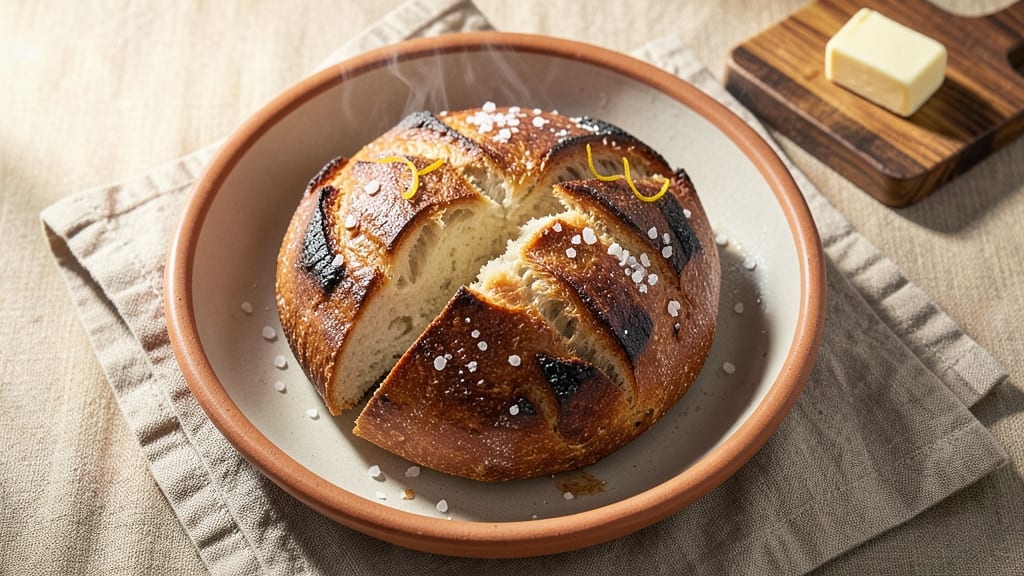
This ACMA Turkish bread recipe delivers the crusty, flaky layers and buttery richness that make it a staple in Turkish cuisine. The secret lies in a slow fermentation process that develops deep flavor while creating those signature air pockets.
I've perfected this technique after years of baking, and it never fails to impress. What sets authentic ACMA apart is the dough's texture—neither too soft nor too hard, but perfectly balanced for shaping into those distinctive pleated loaves.
The bread bakes up with a golden crust that shatters when broken open, revealing tender, airy layers beneath. This is the kind of bread that transforms any meal into something special.
For maximum flavor, brush the baked loaves with melted butter while still warm, allowing it to soak into the crust. The result is a bread that's rich, aromatic, and perfect for dipping in olive oil or serving alongside mezze.
Every bite delivers that satisfying combination of crispy exterior and soft interior. Whether you're serving it as part of a traditional Turkish meal or enjoying it with cheese and jam, this recipe brings authentic flavor to your table.
The process is worth the effort—trust me, your taste buds will thank you.
Ingredients for acma turkish bread
Nine simple ingredients transform into flaky, golden ACMA Turkish bread with perfect layers.
| Ingredient | Amount | Notes |
|---|---|---|
| All-Purpose Flour 🌾 | 5 cups | High-protein preferred for chewiness |
| Active Dry Yeast 🍞 | ¼ oz | Or 2.25 tsp packet (1 packet) |
| Granulated Sugar 🍬 | ¼ cup | Feeds yeast for fermentation |
| Salt 🧂 | 1 ½ tsp | Kosher or sea salt preferred |
| Unsalted Butter 🧈 | ½ cup | Cold, cubed for dough enrichment |
| Warm Water 💧 | 1 ¼ cups | 110°F (43°C) for yeast activation |
| Olive Oil 🫒 | 2 tbsp | For dough shaping and brushing |
| Coarse Sea Salt 🧂 | 1 tbsp | For final crust sprinkle |
| Semolina Flour 🌾 | ¼ cup | For dusting pleated loaves |
| Melted Butter 🧈 | ¼ cup | For post-bake brushing |
| Cornmeal 🌽 | ½ cup | For baking sheet preparation |
The flour is non-negotiable here—King Arthur or Caputo Tipo 00 if you can find it, but high-protein all-purpose works in a pinch. Yeast is the heart of this recipe, so check the expiration date—fresh is best. I always buy mine in bulk from Whole Foods or Penzeys for maximum potency. The butter should be cold when mixed in; if it melts, chill the dough for 30 minutes. For the water, warm but not hot—think lukewarm bathwater. Too hot kills the yeast, too cold and it won't activate.
No yeast? Sourdough starter at 1/4 cup works, but fermentation times will vary. Sub semolina with extra flour if needed, but the texture won't be quite the same. Butter too expensive? Olive oil or coconut oil keeps it vegan-friendly, though the flavor will differ slightly. For the sugar, honey or maple syrup adds subtle depth. The key to authentic ACMA is the slow rise—at least 4 hours—so plan ahead. If your kitchen's cold, let the dough rise near a warm oven with a bowl of hot water.
Dough keeps 2 days wrapped in plastic in the fridge—perfect for shaping the next day. For longer storage, freeze shaped loaves (unbaked) for up to 2 months. Thaw overnight in the fridge before baking. The semolina is your friend for dusting those pleats—don't skip it, or the loaves will stick. Brush with melted butter while still warm for that signature richness. Leftovers? Toast them—crispy edges are mandatory.
Why You'll Love This Recipe
- No-Knead Magic: I swear, this dough comes together with just a bowl and a spoon—no stand mixer, no fancy tools. The yeast and butter do all the work while I sip my coffee.
- Buttery Crust Dream: That crispy, golden crust with a soft, pillowy center? The butter and sugar work together to make it taste like a bakery bought it. (Yes, even on a Tuesday night.)
- Breakfast to Dinner Fix: Use it for toast in the morning, stuff it with cheese and tomatoes for lunch, or tear it into a hearty bread bowl for dinner. One loaf covers everything.
- Budget-Friendly Staple: Flour, yeast, butter—these are pantry basics that stretch further than store-bought bread. Plus, it freezes like a champ, so I always have backup slices.
Step-by-step instructions for ACMA Turkish bread
Here's how to create that signature flaky, buttery Turkish bread with perfect layers every time.
Activate the Yeast and Mix the Dough
In a large bowl, dissolve the 0.25 cup granulated sugar in the 1.25 cups warm water (about 110°F). Sprinkle the 0.25 oz active dry yeast on top and let it sit for 5-10 minutes until foamy. This is your signal the yeast is alive and ready to work.
In a separate bowl, whisk together the 5 cups all-purpose flour and 1.5 tsp salt. Make a well in the center and pour in the yeast mixture along with the 0.5 cup cold unsalted butter (cut into small cubes). Gradually mix with a wooden spoon until a shaggy dough forms. The butter should be incorporated but still visible in chunks—this creates those signature flaky layers.
Knead Until Smooth and Elastic
Transfer the dough to a lightly floured surface and knead for 8-10 minutes by hand (or 5-6 minutes in a stand mixer with a dough hook). You're looking for a dough that's smooth, elastic, and just slightly tacky—it should spring back when pressed. If it feels too sticky, add 1 tablespoon of flour at a time until it comes together nicely.
Real talk: Don't rush this step. Proper kneading develops gluten, which gives your bread structure and that satisfying chew. Wrap the dough in plastic wrap and let it rest at room temperature for 1 hour, or until it nearly doubles in size. This first rise is crucial for flavor and texture.
Shape and Pleat the Dough
Turn the rested dough onto a lightly floured surface and divide it into 4 equal pieces (about 8 oz each). Roll each piece into a 12-inch long rope, about 1 inch thick. Here's the thing—ACMA bread gets its distinctive look from the pleating technique. Gently stretch each rope into an oval shape, then fold one short end over to meet the opposite side, creating a 3-inch pleat. Repeat this pleating pattern along the entire length of the dough.
Brush the pleated loaves with 2 tbsp olive oil to help them brown beautifully in the oven. Place them on a baking sheet lined with 0.5 cup cornmeal (this prevents sticking and adds texture). Cover with a clean kitchen towel and let them rise for 30-45 minutes until puffy and nearly doubled in size.
Bake to Golden Perfection
Preheat your oven to 375°F. Bake the pleated loaves for 20-25 minutes until they're deep golden brown and sound hollow when tapped on the bottom. The edges should be crisp, while the center remains soft and pillowy.
While still warm, brush the tops with 0.25 cup melted butter and sprinkle generously with 1 tbsp coarse sea salt. This final step adds that signature buttery richness and enhances the flaky layers. Let the bread cool on a wire rack for 10 minutes before serving—this prevents the butter from making them soggy.
Dust with Semolina for Extra Crunch
Once cooled, dust the tops with 0.25 cup semolina flour using a fine-mesh sieve. This step adds a beautiful texture contrast and keeps the bread fresh longer. Slice into thick pieces and serve warm with your favorite dips or spreads. The layers should be crisp on the outside, soft inside, and packed with buttery flavor in every bite.
Pro Tips For Making Acma Turkish Bread
- Dissolve Butter First: Heat that butter until it’s just melted—not bubbling—and pour it into the warm water before mixing with flour. I learned this the hard way when my dough turned greasy and refused to hold shape. The butter needs to emulsify properly, or your acma will taste like a sad, buttery brick.
- Skip the Over-Kneading: This dough isn’t fussy—once the gluten starts pulling together (about 5-6 minutes by hand), stop. Overworking it makes the bread dense, and trust me, you’ll regret it when you’re left with a chewy loaf instead of that light, airy texture. Feel for resistance, not perfection.
- Proof in a Warm Spot: Your kitchen isn’t always the right temp (looking at you, drafty windows). If it’s below 75°F, pop the dough in a turned-off oven with a bowl of hot water underneath. I used to leave mine on the counter and wonder why it took forever—this cuts proofing time in half without sacrificing rise.
- Use a Mixing Bowl: No food processor? No problem. Wet your hands and mix the dough right in the bowl with a wooden spoon first—it’s easier to scrape and less messy. I tried cutting corners with a spatula once, and let’s just say the dough stuck like glue. Save yourself the cleanup.
Common mistakes when making perfect results
Over-Kneading the Dough
I've seen beginners knead this dough for 20 minutes or more, thinking more is better. But ACMA dough only needs 8-10 minutes by hand—over-kneading develops too much gluten, making the bread tough rather than tender.
Watch for that smooth, elastic texture that springs back when pressed. If you're using a stand mixer, 5-6 minutes is plenty. 💫
Skipping the Cold Butter
The cold butter cubes are what create those signature flaky layers, so never use melted butter in the dough. If your kitchen is warm, chill the dough for 30 minutes before shaping. I've tried this recipe with room-temperature butter, and while it still works, the layers lose that beautiful separation.
Keep those butter chunks visible during mixing—they'll melt just enough during baking to create steam pockets.
Incorrect Yeast Activation
Using water that's too hot (120°F+) kills the yeast instantly, while water that's too cold (85°F-) won't activate it. The perfect temperature is 110°F—like bathwater. If your yeast doesn't foam after 10 minutes, it's dead.
I keep a kitchen thermometer handy for this exact purpose. Pro tip: If your kitchen is cold, place the yeast mixture near the oven (with the oven off) to help it activate.
Rushing the Fermentation
This dough needs at least 4 hours of slow fermentation at room temperature for maximum flavor development. I've tried cutting corners with 1-2 hours, and while the bread still rises, it lacks that deep, aromatic complexity.
The longer it ferments, the more complex the flavor becomes. If you're short on time, try a 2-hour cold proof in the fridge—but don't skip the initial room-temperature rise entirely.
Improper Pleating Technique
The pleating is what makes ACMA visually stunning, but many people either pleat too tightly or too loosely. Aim for 3-inch pleats that create gentle folds—not sharp creases. If your pleats are too tight, the bread will bake unevenly.
I practice on scrap dough first to get the rhythm right. Brush each pleat with olive oil after shaping to help them hold their form during the final rise.
Overbaking or Underbaking
ACMA should be deep golden brown with crisp edges but still soft inside. Baking too long (25+ minutes) dries it out, while underbaking (15 minutes) leaves it gummy. Tap the bottom—it should sound hollow when done.
The internal temperature should reach 190-200°F. For best results, use an oven thermometer to verify your oven's actual temperature—many run 25°F hotter than set. 🌡️
Nutrition facts
Frequently asked questions
Can I make ACMA bread without a stand mixer?
This recipe is designed for hand-kneading. Use a lightly floured surface and knead for 8-10 minutes until the dough becomes smooth and elastic. The key is to work it consistently—don't rush. If your dough feels too sticky, add flour 1 tablespoon at a time. The hand-kneading actually helps develop better texture for this traditional bread.
How do I store leftover ACMA bread?
Wrap cooled loaves tightly in plastic wrap or place them in an airtight container. They'll stay fresh at room temperature for 2-3 days. For longer storage, freeze shaped (unbaked) loaves for up to 2 months. Thaw overnight in the fridge before baking. The best way to revive stale ACMA? Toast it—crispy edges are mandatory for maximum flavor.
What's the secret to getting those perfect pleats?
The pleats should be 3-inch folds that create gentle waves, not sharp creases. Gently stretch each dough rope into an oval shape first, then fold one short end over to meet the opposite side. Brush each pleat with olive oil after shaping to help them hold their form during the final rise. Practice on scrap dough first if needed—the rhythm comes with repetition!
Can I use whole wheat flour in this recipe?
While you can substitute 1-2 cups of whole wheat flour, I don't recommend using it all—ACMA relies on that tender, airy texture. Whole wheat will make the bread denser and less flaky. If you want more fiber, try replacing 1 cup of all-purpose with whole wheat, but expect slightly different texture. The traditional recipe uses all-purpose for its lightness and chewiness.
Why does my ACMA bread taste bland?
Bland flavor usually means one of two things: either the yeast didn't activate properly (check your water temperature—110°F is ideal), or the fermentation wasn't long enough. This dough needs at least 4 hours of slow rise at room temperature. For maximum flavor, try adding 1 tsp dried herbs (like thyme or rosemary) to the dough or brushing the baked loaves with infused olive oil.