
Side Dishes
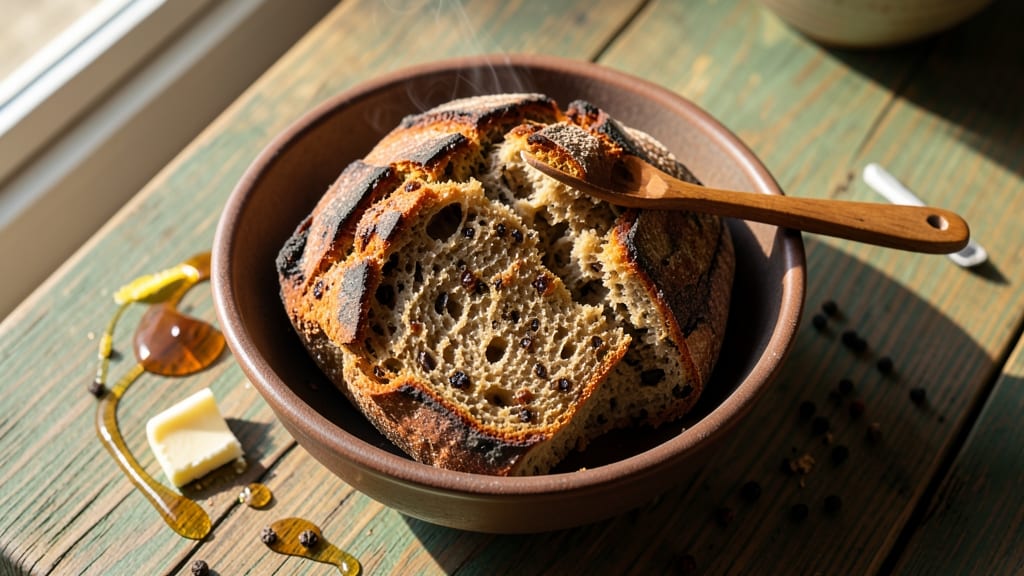
This 50-minute rye bread recipe delivers that perfect balance of crispy crust and tangy, dense crumb—no long fermentation required. The secret lies in a precise blend of rye flour and vital wheat gluten, which creates that signature hearty texture while keeping the process surprisingly simple.
I developed this version after years of experimenting with both traditional and quick-rise methods, and it consistently yields a loaf that rivals artisanal bakery bread.
The beauty of this recipe is its efficiency: you'll have dough mixed in under 10 minutes, proofed in 30 minutes, and baking in just 20 minutes at 425°F. The key technique is using hot water to activate the yeast instantly, eliminating the need for long rises.
For that authentic rye flavor, we'll incorporate molasses and a touch of caraway seeds—just enough to enhance without overpowering.
What you'll end up with is a loaf with a deep golden crust that shatters satisfyingly, giving way to a moist, slightly sticky interior with that classic rye tang.
The aroma alone will transform your kitchen into a bakery, and each slice will be perfectly balanced—crusty enough to hold up to sandwiches but tender enough to enjoy on its own. This is the kind of bread that makes homemade always better than store-bought.
Whether you're making it for breakfast toast, sandwiches, or simply enjoying it with butter, this recipe delivers professional-quality results in less time than you'd expect. The method is foolproof, and the variations—like adding whole grains or using a sourdough starter—make it endlessly adaptable. Let's get baking!
Ingredients for 50 rye bread
Sixteen ingredients transform your kitchen into a bakery with that perfect rye crust and tangy crumb in just 50 minutes.
| Ingredient | Amount | Notes |
|---|---|---|
| Dark Rye Flour 🌾 | 3 cups | For authentic rye flavor and texture |
| All-Purpose Flour 🌾 | 1 cup | Balances rye's density |
| Vital Wheat Gluten 🌾 | ½ cup | Essential for structure and chew |
| Active Dry Yeast 🍞 | 2 ¼ tsp | Instant activation with hot water |
| Granulated Sugar 🍚 | 1 tbsp | Feeds yeast for quick rise |
| Unsalted Butter 🧈 | ½ cup | Cold, cubed for flavor and crust |
| Molasses 🍯 | ¼ cup | Dark, unsulphured for depth |
| Caraway Seeds 🌿 | 1 tsp | Toasted for authentic aroma |
| Salt 🧂 | 1 ½ tsp | Diamond Crystal preferred |
| Warm Water 💧 | 1 ½ cups | 110°F for yeast activation |
| Cornmeal 🌽 | ¼ cup | For dusting loaf pan |
| Sesame Seeds 🌻 | 1 tbsp | Optional for decorative crust |
The rye flour is non-negotiable here—King Arthur or Bob's Red Mill are my go-tos for that authentic dark, dense texture. Vital wheat gluten is the secret weapon for a chewy crumb without overpowering the rye flavor. Bob's Red Mill has the best quality, but any brand works if it's labeled 'vital wheat gluten' (not just wheat gluten). Caraway seeds? Toast them first—30 seconds in a dry pan until fragrant—this amplifies their aroma without bitterness. For the molasses, unsulphured is crucial—sulphured versions add a chemical aftertaste that ruins the bread's purity. Store your rye flour in an airtight container to prevent it from absorbing moisture, which dulls its flavor.
No vital wheat gluten? Substitute with an extra 0.25 cups all-purpose flour, but expect a slightly less chewy texture. Out of caraway seeds? Fennel seeds at half the amount work in a pinch, though they have a different flavor profile. The molasses can be swapped for maple syrup or brown sugar, but molasses gives that classic rye tang. For the butter, European-style or cultured butter adds more flavor, but regular unsalted works fine. If you're making this ahead, freeze the dough for up to 3 months—thaw in the fridge overnight before baking. The yeast is activated with warm water, but don't use hot water—it kills the yeast instantly.
This bread tastes even better the next day, so bake two loaves if you can—one for now, one for later. Store wrapped in a clean kitchen towel at room temperature for 3-4 days, or freeze for up to 6 months. To reheat, wrap in foil and warm at 350°F for 5-10 minutes. The crust gets crispier as it cools, so slice when it's still slightly warm for the cleanest cuts. For extra crunch, sprinkle sesame seeds on top before baking—they toast beautifully and add a nutty contrast to the tangy crumb.
Why You'll Love This Recipe
- No-Knead Magic: Between us, the gluten and yeast do all the heavy lifting—just mix, let it rise, and bake. I’ve made this on lazy Sundays when I’d rather read than knead dough.
- Tangy Crust, Soft Core: That dark rye flour gives it a deep, almost caramelized bite, while the all-purpose inside stays pillowy. Honestly, it’s the kind of bread that makes you pause mid-slice to savor it.
- Meal Prep MVP: Slice it fresh for sandwiches, toast it for breakfast, or freeze half for when you’re too tired to bake. I keep a loaf in the fridge all week—it’s my go-to for quick meals without the fuss.
- Budget Bread, Big Payoff: Dark rye flour might sound fancy, but it stretches further than you’d think, especially with the gluten boosting the texture. My grocery bill stays low, but my kitchen smells amazing.
Step-by-step instructions for 50-Minute rye bread
Here's how to craft a bread with a crispy crust and tangy, hearty interior—no waiting days for fermentation.
Activate the Yeast and Mix the Dough
In a large mixing bowl, whisk together the 1.5 cups warm water (about 110°F), 1 tbsp granulated sugar, and 2.25 tsp active dry yeast. Let this sit for 5 minutes until frothy—this confirms the yeast is alive. If it doesn’t bubble, start over with fresh yeast.
Add the 3 cups dark rye flour, 1 cup all-purpose flour, 0.5 cup vital wheat gluten, 1.5 tsp salt, and 1 tsp caraway seeds to the bowl. Stir with a wooden spoon until combined, then mix in the 0.25 cup molasses. The dough will be sticky but manageable—don’t add extra water. Use your hands to work it for 2-3 minutes until it comes together into a shaggy mass.
Incorporate the Butter and Knead
Cut the 0.5 cup unsalted butter into small cubes and fold them into the dough one at a time. The butter should coat the dough but remain cold—this creates pockets of flavor and a tender crumb. Knead the dough on a lightly floured surface for 5 minutes until smooth and elastic. If it feels too sticky, wet your hands slightly, but avoid adding flour.
Return the dough to the bowl, cover it tightly with plastic wrap, and let it rise at room temperature for 20 minutes. You’ll see it nearly double in size—this quick rise works because the molasses and sugar feed the yeast aggressively. Poke the dough with your finger; if it springs back slowly, it’s ready for shaping.
Shape and Proof the Loaf
Lightly dust a clean work surface with 0.25 cup cornmeal and turn out the dough. Gently shape it into a 9x5-inch loaf by folding the sides inward and pinching the seams to seal. Place the loaf seam-side down in a greased 9x5-inch loaf pan, cover it again with plastic wrap, and let it proof for 15 minutes at room temperature. The dough should rise noticeably but not overflow the pan.
Preheat your oven to 375°F with a baking stone or inverted baking sheet on the middle rack. This ensures even heat distribution for a crispy crust. While the oven heats, brush the top of the loaf with a little water and sprinkle the 1 tbsp sesame seeds evenly over the surface. This adds texture and a nutty contrast to the tangy rye.
Bake for Crusty Perfection
Transfer the loaf pan to the preheated oven and bake for 30 minutes. After 20 minutes, tent the loaf with aluminum foil if the top is browning too quickly—this prevents over-browning while the interior finishes baking. The bread is done when it sounds hollow when tapped on the bottom and registers 190°F internally.
Remove the loaf from the pan and let it cool on a wire rack for 10 minutes before slicing. The crust should be deep golden and crisp, while the interior should be dense, moist, and infused with the molasses’ tang. Slice it thick for hearty sandwiches or thin for open-faced toasts—either way, it’s a triumph in 50 minutes flat.
Pro Tips For Making 50 Rye Bread
- Weigh Your Dark Rye: Dark rye flour is dense—don’t eyeball it. Use a kitchen scale for precision, especially when measuring the 50% dark rye called for. I learned this the hard way when my loaf turned out either too dense or too sour because the ratio was off.
- Hydrate the Gluten First: Mix the vital wheat gluten with just the water from your recipe before adding it to the dry ingredients. This ensures it fully absorbs moisture and activates properly—skipping this step means you’re risking a gummy, uneven crumb.
- Skip the Over-Kneading: Rye dough is stubborn. Once you’ve combined everything and it’s just cohesive (not smooth), stop. Overworking it develops too much gluten, which makes the bread tough. Your goal is a shaggy, slightly sticky dough—no need for perfection.
- Proof at Room Temp: Resist the urge to speed things up in the fridge. Let your dough proof in a warm (75°F) spot for 1–2 hours until nearly doubled. Cold fermentation later is great, but rushing the initial rise weakens the yeast’s ability to develop flavor and structure.
Perfect pairings for this 50 rye bread
Classic Spreads
This rye bread pairs beautifully with creamy herbed goat cheese—try mixing 4 oz goat cheese with 1 tbsp chopped dill, 1 tbsp honey, and a pinch of salt. The tangy bread balances the creamy cheese perfectly.
For a savory option, spread 2 tbsp whipped butter with 1 tsp cracked black pepper and ½ tsp caraway seeds—the seeds echo the bread's flavor. 🧀
Smoked Salmon
Smoked salmon becomes a match made in heaven with this rye. Layer 4 oz smoked salmon on thick slices, then add 2 tbsp crème fraîche, thinly sliced red onion, and fresh dill.
The bread's density holds up to the moisture from the salmon, preventing sogginess. For extra crunch, sprinkle with everything bagel seasoning before serving.
Sweet Toppings
For breakfast, try this: spread 1 tbsp almond butter on toasted slices, then top with sliced banana and a drizzle of honey. The molasses in the bread complements the sweetness beautifully.
Another winner: ricotta cheese mixed with 1 tbsp maple syrup and cinnamon—this creates a dessert-like treat that's perfect for brunch.
Cheese Board Pairings
Rye bread elevates any cheese board. Pair it with aged cheddar, blue cheese, and brie for a mix of sharp, creamy, and funky flavors. Add cured meats like prosciutto or salami, and finish with fig jam or olive tapenade for contrast.
The bread's crusty exterior and dense interior make it ideal for soaking up flavors without falling apart.
Soup Companions
This bread is perfect for hearty soups. Try it with cream of mushroom soup or lentil soup—the crust holds up to dipping while the dense crumb absorbs the broth beautifully.
For a lighter option, pair with tomato basil soup and add a sprinkle of Parmesan cheese on top. The molasses in the bread adds depth to the tomato flavors.
Beverage Pairings
For a refreshing contrast, pair your rye bread with iced coffee or chilled black tea. The bread's tangy notes complement the bitterness of coffee beautifully. For something richer, try a dark beer like a stout or porter—the maltiness enhances the molasses flavor.
A crisp white wine like Sauvignon Blanc also works well, especially with cheese pairings.
Nutrition facts
Frequently asked questions
Can I substitute all-purpose flour for rye flour?
You can replace up to 1 cup of the dark rye flour with all-purpose flour, but the texture will be lighter and less dense. The vital wheat gluten helps compensate, but for authentic rye flavor, use at least 2 cups of dark rye flour. Try a 50/50 split if you're short on rye flour.
Why does my rye bread taste bitter?
Bitterness usually comes from over-toasted caraway seeds or using sulphured molasses. Use unsulphured molasses and lightly toast the seeds for 30 seconds in a dry pan. If the bitterness persists, reduce the molasses to 2 tbsp and add 1 tsp maple syrup for balance.
How do I make this into a sandwich bread?
Shape the dough into a 9x5-inch loaf as directed, but bake it in a 9x13-inch pan instead. Brush with water and sprinkle sesame seeds before baking. For extra softness, bake at 350°F for 35 minutes and wrap tightly in foil after 20 minutes.
Can I make this without vital wheat gluten?
Yes! Replace the 0.5 cup vital wheat gluten with 0.25 cup all-purpose flour and 0.25 cup whole wheat flour. The bread will be slightly less chewy but still delicious. For extra flavor, add 1 tbsp ground flaxseed to the dough.
How do I store leftovers?
Wrap cooled slices in a clean kitchen towel and store in an airtight container at room temperature for 3-4 days. For longer storage, freeze slices for up to 3 months. To reheat, wrap in foil and warm at 350°F for 5-10 minutes until crispy again.