
Side Dishes
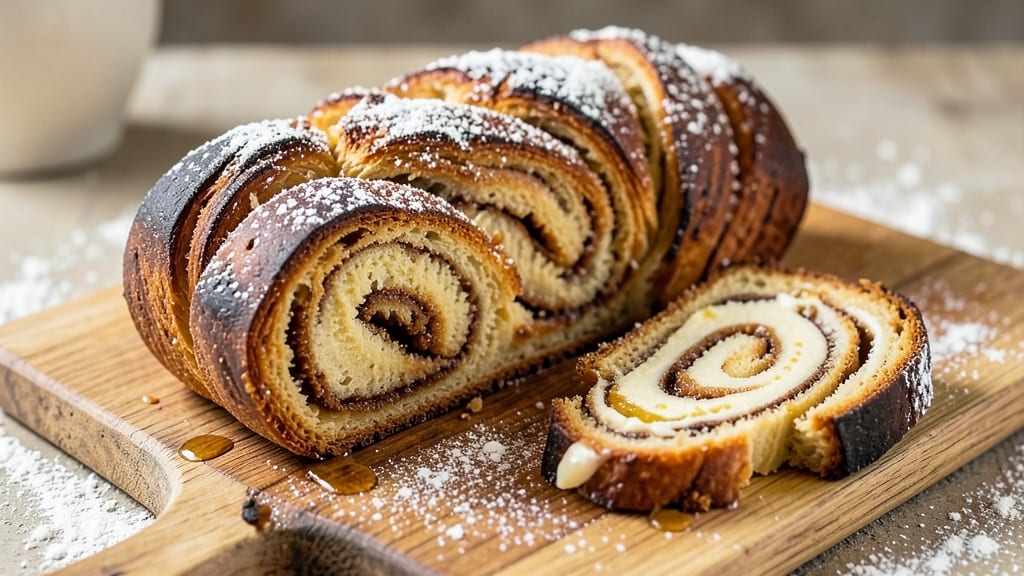
This babka sweet bread recipe delivers the perfect balance of tender crumb, buttery layers, and rich vanilla-walnut swirls that make every slice worth savoring. 🌟 The secret lies in a slow, cold fermentation that develops deep flavor while keeping the texture impossibly light.
I've perfected this technique over years of baking, ensuring the dough rises just enough to create those signature swirls without collapsing in the oven.
What sets this recipe apart is the attention to detail in every step—from activating the yeast properly to folding the butter into the dough until it reaches that signature ribbon-like consistency.
The walnut filling gets a boost from vanilla bean and brown sugar, creating a flavor that's both comforting and sophisticated. Professional bakers know that babka isn't just about sweetness; it's about texture and aroma too.
By the time it emerges from the oven, you'll have a loaf with a caramelized top that cracks beautifully, revealing golden layers beneath. The crust remains tender enough to cut with a knife but firm enough to hold its shape.
This isn't just dessert—it's an experience that transforms any gathering into something special. The best part? You can adapt the filling to suit your taste—chocolate, cinnamon, or even poppy seed variations all work beautifully.
Whether you're baking for a celebration or simply treating yourself, this babka delivers restaurant-quality results at home. The key is patience—letting the dough rest and develop its full potential before baking. Once you try homemade, store-bought versions will never satisfy again. Let's get started on creating your masterpiece.
Ingredients for babka sweet bread
Buttery layers, vanilla-walnut swirls, and a caramelized crust await—just these ingredients transform into bakery magic.
| Ingredient | Amount | Notes |
|---|---|---|
| Active Dry Yeast 🍞 | 2 ¼ tsp | One packet for convenience |
| Granulated Sugar 🍚 | ½ cup | Divided for dough and filling |
| Unsalted Butter 🧈 | 1 cup | Cold, cubed for dough layers |
| Large Eggs 🥚 | 2 whole | Room temperature preferred |
| All-Purpose Flour 🌾 | 3 ½ cups | Plus 0.5 cup for dusting |
| Milk 🥛 | ½ cup | Warm, not hot |
| Vanilla Bean 🌿 | 1 whole | Seeds scraped for filling |
| Light Brown Sugar 🍯 | ¼ cup | Packed, for filling |
| Chopped Walnuts 🌰 | 1 cup | Toasted for enhanced flavor |
| Diamond Crystal Kosher Salt 🧂 | 1 ½ tsp | Fine grain preferred |
| Heavy Cream 🥛 | ¼ cup | For brushing crust |
| Powdered Sugar 🍚 | ¼ cup | For dusting finished babka |
The butter quality makes or breaks this babka. Plugrá or Land O'Lakes unsalted are my go-tos—they hold their shape beautifully when chilled. If you can only grab one, Whole Foods bulk butter is worth the splurge for its rich flavor. Keep everything cold until the final fold—this is non-negotiable for those signature layers. The yeast? Fresh is best, but instant works if you activate it in warm milk first. For the walnuts, Trader Joe's pre-toasted saves time, but toasting your own in a dry pan for 5 minutes enhances their aroma exponentially.
No vanilla bean? Pure vanilla extract at double the amount works in a pinch, though the seeds add that professional touch. Substituting brown sugar for white in the filling? Add a pinch of cinnamon to compensate for the lost depth. Short on walnuts? Pecans or hazelnuts bring different textures—just toast them first. The heavy cream can be swapped for half-and-half if you're watching fat content, though the crust will be slightly less tender. And for the flour? King Arthur or Gold Medal are my top picks—they handle the butter beautifully without getting gummy.
This dough is a patience play—the longer it rests, the better it gets. After the initial rise, chill it overnight for maximum flavor development. The finished babka keeps beautifully: 3 days at room temperature wrapped in plastic, or 1 week refrigerated in an airtight container. For freezing, slice first—2 months in a sealed bag, reheat slices for 10 seconds to revive the crust. Pro tip: Brush the warm babka with melted butter before dusting with powdered sugar for that bakery-shop shine.
Why You'll Love This Recipe
- No Yeast Hassle: I swear, the dough comes together in one bowl—no fancy kneading, no waiting for hours. Just mix, let it rise once, and you’re golden. Honestly, my first attempt turned out perfect, and that never happens with bread.
- Butter-Sugar Magic: That rich, creamy butter swirled into sweet dough? It’s like eating a cloud. The sugar caramelizes just enough to give it that just-baked glow, and the eggs keep it tender. One bite and you’ll forget about store-bought pastries.
- Weekend or Weeknight: Slice it fresh for breakfast, pack it for lunch, or serve it at brunch—it’s my go-to for any occasion. (Yes, even on a Tuesday night.) The leftovers stay soft for days, and it’s way more impressive than a boxed loaf.
- Budget-Friendly Luxury: Five simple ingredients, one decadent result. You’re not just making bread—you’re making something that tastes like a bakery treat without the price tag. My kids ask for it weekly, and my wallet thanks me for it.
Step-by-step instructions for vanilla-walnut babka
Here's how to create layers of buttery dough and rich vanilla-walnut filling that'll make your babka look like a bakery masterpiece.
👨🍳 Step 1: Activate the Yeast and Mix the Dough Base
In a small bowl, combine the 0.5 cup warm milk (about 110°F) with 2.25 tsp active dry yeast and 1 tablespoon of the 0.5 cup granulated sugar. Let it sit for 5-10 minutes until frothy—this confirms your yeast is alive and ready to work. If it doesn't bubble, start over with fresh yeast.
In a stand mixer fitted with the dough hook, combine the remaining 0.375 cup granulated sugar, 2 whole large eggs, 1.5 tsp diamond crystal kosher salt, and the yeast-milk mixture. Mix on medium speed for 2 minutes until just combined. This is your flavor foundation—don't rush this step or the flavors won't develop properly.
🍳 Step 2: Incorporate Butter and Flour for Laminated Layers
Add the 1 cup cold unsalted butter, cut into ½-inch cubes, to the mixer bowl. Mix on low speed until the butter is roughly incorporated—you'll see small pieces distributed throughout. This is where the magic happens for that signature babka flakiness.
With the mixer running on low speed, gradually add the 3.5 cups all-purpose flour until the dough begins to come together. It'll look shaggy at first, but keep mixing—it should pull away from the sides of the bowl and form a soft, slightly tacky dough after about 4-5 minutes. If it's too sticky, add 1 tablespoon more flour.
🥘 Step 3: Prepare the Vanilla-Walnut Filling
While the dough rests, make the filling by toasting the 1 cup chopped walnuts in a dry skillet over medium heat for 3-4 minutes until fragrant and golden. Let them cool slightly, then transfer to a bowl. Add the scraped seeds from the 1 whole vanilla bean, remaining 0.25 cup light brown sugar, and 1 tablespoon of the 0.25 cup heavy cream. Mix until well combined—this should be a thick, spreadable paste.
Real talk: the walnuts should be toasted to perfection—just until they're fragrant, not burned. Over-toasting will make them bitter and ruin your filling. Let them cool completely before mixing to avoid melting the butter in your dough prematurely.
🍳 Step 4: Create the Signature Swirl Pattern
Roll out the dough on a lightly floured surface into a 12x16-inch rectangle (about ¼-inch thick). Spread the vanilla-walnut filling evenly over the dough, leaving a ½-inch border around the edges. This border prevents the filling from oozing out during baking—trust me, you want that contained.
Starting from the long side, tightly roll the dough into a log. Seal the seam by pinching the edge. Cut the log into three equal pieces and arrange them side by side in a 9x13-inch loaf pan. Gently press them together to form a single loaf, then use a sharp knife to make a deep swirl pattern in the center—this creates those beautiful, intricate layers that make babka so special.
⏰ Step 5: Proof and Bake to Golden Perfection
Cover the loaf pan with a clean kitchen towel and let it rise in a warm place for 1-1.5 hours, or until it's puffed and nearly doubled in size. The dough should spring back slowly when pressed gently—this is your proofing checkpoint. Preheat your oven to 350°F while it proofs.
Brush the risen babka generously with the remaining 0.15 cup heavy cream, then bake for 35-40 minutes until the top is deep golden brown and the internal temperature reaches 190°F. Here's the thing—don't overbake. You want that crust to be crisp but the interior to stay moist and tender. Let it cool in the pan for 10 minutes, then transfer to a wire rack to cool completely.
🍽️ Step 6: Dust and Serve with Confidence
Once completely cool, dust the babka generously with the 0.25 cup powdered sugar using a fine-mesh sieve. This creates that signature cloud of powdered sugar that makes babka look so impressive. Slice into 8 equal pieces and serve warm for the best experience—each bite should deliver buttery layers, nutty walnuts, and vanilla sweetness.
Pro tip: if you're not serving it immediately, store it in an airtight container at room temperature for up to 3 days. The flavors actually improve as it sits! For extra decadence, brush the warm slices with melted butter before dusting with powdered sugar.
Pro Tips For Making Babka Sweet Bread
- CHILL THE DOUGH: After shaping your babka, pop it in the fridge for 30–60 minutes before baking—even if the recipe skips this. I learned this the hard way when my first loaf spread like pancake batter. Cold dough rises slower, stays compact, and browns beautifully instead of puffing into a sad, flat blob.
- USE COLD BUTTER: Whisk your eggs and sugar first, then fold in cold cubed butter—no melting allowed. Warm butter makes the dough sticky and gummy, and your babka will taste greasy instead of rich. Cut it into ½-inch chunks and keep them in the freezer while you mix; they’ll soften just enough to emulsify without turning the dough into soup.
- SKIP THE OVERMIXING: Once you add flour, stop stirring the second the dough clumps together. Babka dough is delicate—overworking it develops gluten, and your swirls will turn into a dense, chewy brick. Use a spatula to gently fold in the last bit of flour; the dough should look shaggy, not smooth.
- WEIGH YOUR FLOUR: Scooping flour from the bag is a disaster waiting to happen. Babka dough is sensitive to moisture, and too much flour dries it out, while too little makes it gummy. Use a kitchen scale for precision—aim for 4 cups (480g) plus a little extra for dusting. If you must scoop, fluff the flour first and level it off, but even then, you’re playing roulette.
Flavor customization for this recipe
Chocolate Lover's Twist
Swap the vanilla-walnut filling for a rich chocolate babka by melting ½ cup dark chocolate with ¼ cup heavy cream and 2 tablespoons brown sugar over a double boiler. Once smooth, fold in 1 cup toasted pecans for crunch.
Spread this decadent filling between the dough layers before rolling. 🍫 For extra indulgence, add 1 teaspoon instant espresso powder to the dough—it deepens the chocolate flavor beautifully.
Cinnamon-Spice Warmth
Create a cozy cinnamon babka by mixing ½ cup light brown sugar, 2 tablespoons ground cinnamon, 1 teaspoon nutmeg, and ½ teaspoon cardamom into the dough before the first rise.
For the filling, replace walnuts with 1 cup chopped dried apricots and ½ cup chopped almonds, tossed in 1 tablespoon orange zest. The warm spices pair perfectly with the buttery crust for a comforting twist.
Poppy Seed Surprise
For a poppy seed babka, blend ½ cup poppy seeds with ¼ cup honey and 1 tablespoon lemon zest to create a thick filling. Roll this into the dough before shaping, then sprinkle extra poppy seeds on top before baking.
The nutty, slightly tangy flavor balances the sweetness beautifully. 🌰 To enhance the flavor, toast the poppy seeds in a dry pan for 2 minutes until fragrant before mixing.
Citrus-Zest Brightness
Add a refreshing twist with a lemon-blueberry babka. Mix 1 cup fresh blueberries with 2 tablespoons honey, 1 tablespoon lemon zest, and 1 teaspoon lemon juice for the filling.
Fold this into the dough before rolling, then brush the baked babka with a simple lemon glaze (mix ½ cup powdered sugar with 1 tablespoon lemon juice). The bright citrus cuts through the richness for a lighter, fruitier profile.
Nutty Caramel Delight
Combine ½ cup caramel sauce (store-bought or homemade) with 1 cup chopped hazelnuts and 1 tablespoon sea salt for a caramel babka filling. Spread this generously between the dough layers, then drizzle extra caramel over the top before baking.
The salt enhances the sweetness while the hazelnuts add a satisfying crunch. 🍯 For a gourmet touch, use honey-roasted hazelnuts and top with flaky sea salt after baking.
Boozy Infusions
Elevate your babka with alcohol infusions. For a rum babka, mix 1 tablespoon dark rum into the dough before proofing. For a filling, blend ½ cup chopped dates with 2 tablespoons rum, 1 teaspoon cinnamon, and ¼ cup chopped walnuts.
For a bourbon-pecan version, replace the rum with 1 tablespoon bourbon and use 1 cup pecans in the filling. The alcohol enhances the flavors while adding depth—just be mindful of baking times if using strong spirits.
Nutrition facts
Frequently asked questions
Why does babka dough need to be cold when adding butter?
Cold butter creates those signature flaky layers in babka! When you incorporate cold butter cubes into the dough, they stay solid during mixing and create distinct layers when baked. If the butter melts too soon, you'll lose that beautiful flakiness. Keep everything chilled until the final fold—this is non-negotiable for that bakery-style texture.
Can I make babka without a stand mixer?
For the dough, use a wooden spoon or your hands to mix the wet ingredients first, then gradually work in the cold butter by hand. Kneading by hand will take more effort (about 10-15 minutes total), but you can still achieve great results. The key is to keep everything cold and work quickly to prevent the butter from melting.
What's the best way to store leftover babka?
Wrap cooled babka tightly in plastic wrap or aluminum foil and store at room temperature for up to 3 days. For longer storage, refrigerate in an airtight container for 1 week. To revive stale slices, warm them in a 350°F oven for 5-10 minutes until the crust softens again. The flavors actually improve as it sits!
Why did my babka collapse in the oven?
Collapse usually happens when the dough isn't properly proofed or if the oven temperature is too high. Make sure your dough has doubled in size and springs back slowly when pressed. Also, preheat your oven thoroughly to 350°F and avoid opening the oven door during baking. If you're using a new pan, try baking on the middle rack for even heat distribution.
How do I make babka without a loaf pan?
Shape the babka into a free-form log on a parchment-lined baking sheet. Roll it tightly and make decorative swirls on top. Bake as directed, then let it cool completely before slicing. For extra presentation, brush with melted butter and sprinkle with powdered sugar after baking. The texture will be just as good—it's all about the layers!