
Desserts
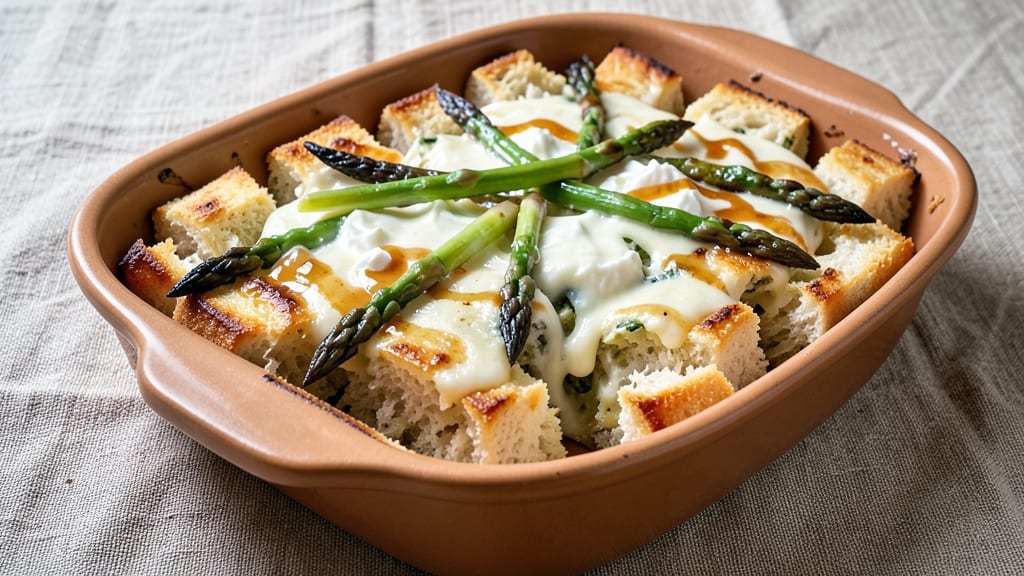
This asparagus bread pudding recipe transforms a classic dessert into a savory masterpiece that redefines comfort food. 💛 The secret lies in perfectly blanched asparagus—tender yet still holding its shape—woven through layers of custard-soaked bread, creating a harmonious blend of textures and flavors that surprise even the most skeptical dessert lovers.
The magic happens in the preparation: blanching the asparagus just until bright green preserves its vibrant color and crisp-tender bite, while the custard mixture—rich with eggs, milk, and a touch of nutmeg—binds everything together into a golden, custardy center.
This isn't your grandmother's bread pudding; it's a sophisticated twist that balances earthy asparagus with creamy, buttery bread, making it a standout centerpiece for brunch or dinner.
What you'll achieve is a dish that's restaurant-quality at home—crispy edges, a velvety custard core, and asparagus spears that add a satisfying crunch with every bite. The aroma alone will have everyone gathering around the table, while the first taste proves this savory dessert is anything but ordinary.
The best part? It's easier to make than traditional bread pudding, with no complicated techniques required.
Serve it warm with a sprinkle of flaky sea salt and a dollop of crème fraîche for the perfect finishing touch. This recipe proves comfort food can be elevated without sacrificing its soul—just a fresh, unexpected twist on something timeless.
Ingredients for asparagus bread pudding
Six ingredients transform ordinary bread into restaurant-quality asparagus bread pudding with crisp edges and velvety custard.
| Ingredient | Amount | Notes |
|---|---|---|
| Fresh Asparagus Spears 🌱 | 1 ½ lb | Trimmed, blanched for texture |
| Stale Baguette 🍞 | 1 whole | Crust removed, cubed |
| Large Eggs 🥚 | 6 whole | Room temperature preferred |
| Whole Milk 🥛 | 2 cups | Full-fat for creaminess |
| Unsalted Butter 🧈 | ½ cup | Cold, cubed for custard |
| Granulated Sugar 🍚 | ½ cup | Adjust to taste |
| Ground Nutmeg 🌿 | ½ tsp | Freshly grated preferred |
| Flaky Sea Salt 🧂 | 1 tsp | For finishing touch |
| Crème Fraîche 🧀 | ½ cup | For garnish |
| Extra-Virgin Olive Oil 🫒 | 1 tbsp | For greasing dish |
| Vegetable Stock 💧 | ¼ cup | For custard depth |
| All-Purpose Flour 🌾 | 2 tbsp | For thickening custard |
The asparagus is the star here—look for spears that are bright green and firm at the base, with no woody ends. Whole Foods or local farmers markets often carry the freshest cuts. Trim the ends carefully, leaving the tips intact for presentation. Blanching is critical: plunge into boiling water for exactly 2 minutes, then ice bath to lock in that vibrant color and crisp-tender bite. The bread should be stale but not dry—day-old baguettes work perfectly. If you're short on time, lightly toast cubed bread in the oven to remove excess moisture before assembling, which prevents a soggy pudding.
No fresh asparagus? Frozen works in a pinch—thaw and pat completely dry before using, but texture will be slightly softer. Substituting milk? Heavy cream adds richness, but whole milk keeps it balanced. The custard relies on the combination of eggs, milk, and butter for that velvety texture—don't skip the butter, even if you're watching calories. For a gluten-free version, swap the baguette for gluten-free bread cubes and use cornstarch instead of flour for thickening. The nutmeg is non-negotiable—it's what elevates this from ordinary bread pudding to something sophisticated. If you can't find ground nutmeg, grate your own from a whole nut for maximum flavor.
Assemble the pudding at least 30 minutes ahead—this allows the custard to fully absorb into the bread while chilling in the fridge. When ready to bake, preheat your oven to 375°F for that perfect crispy edge. The pudding reheats beautifully—cover loosely with foil after the first 20 minutes of baking to prevent over-browning. Store leftovers in an airtight container for 3 days in the fridge, though it's best enjoyed fresh. For make-ahead convenience, assemble the dish the night before and refrigerate until ready to bake—this actually enhances the flavors. The crème fraîche should be added right before serving to maintain its creamy texture.
Why You'll Love This Recipe
- No Waste, All Flavor: Stale baguette? Not a problem—this recipe turns it into something rich and golden. I swear, the buttery crust and tender asparagus spears make you forget it ever sat on your counter.
- One-Pan Magic: Honestly, this is the kind of dish where you mix, bake, and walk away. The asparagus softens just enough to melt into the custardy egg-milk base while the bread soaks up every last drop—no fancy techniques, just pure satisfaction.
- Crowd-Pleaser for Any Meal: Between us, this works for brunch, dinner, or even a lazy Sunday. The asparagus adds a fresh, slightly earthy note that balances the creamy, custardy center—even picky eaters ask for seconds.
- Budget-Friendly Luxury: Fresh asparagus and a baguette? That’s it. No specialty ingredients, no overpriced shortcuts. The eggs and milk are pantry staples, and the leftovers reheat like a dream—warm, comforting, and ready in minutes.
Step-by-step instructions for asparagus bread pudding
Transform simple ingredients into a rich, savory dessert with this elevated twist on bread pudding.
🍳 Step 1: Blanch and Prep the Asparagus
Trim the tough ends from the 1.5 lb fresh asparagus spears, leaving about 1 inch of tail. Cut the spears into 1-inch pieces and set aside. Bring a pot of salted water to a boil and blanch the asparagus for 2 minutes until bright green and just tender. Drain immediately and plunge into ice water to stop cooking. This preserves their vibrant color and crisp texture.
Drain well and pat dry with paper towels. Toss the asparagus with 1 tablespoon extra-virgin olive oil, ½ teaspoon ground nutmeg, and ½ teaspoon flaky sea salt. Set aside—this seasoning will infuse the asparagus with depth as it bakes.
👨🍳 Step 2: Prepare the Baguette Base
Remove the crusts from the 1 whole stale baguette and tear it into 1-inch cubes. Spread them evenly on a baking sheet and toast in a 375°F oven for 8-10 minutes until lightly golden. This step prevents a soggy pudding and enhances the bread's flavor. Let the cubes cool slightly before assembling.
In a large bowl, combine the toasted baguette cubes with the prepared asparagus. Stir gently to distribute the asparagus evenly throughout the bread. This creates pockets of flavor in every bite—don't skip this step, as it ensures each serving has both textures and tastes.
🥘 Step 3: Make the Custard Mixture
In a separate bowl, whisk together the 6 whole large eggs, 2 cups whole milk, 0.5 cup granulated sugar, 0.25 cup vegetable stock, and 2 tablespoons all-purpose flour until completely smooth. The mixture should be pale yellow and uniform. This custard forms the creamy backbone of the pudding, so whisking thoroughly prevents lumps.
Melt the 0.5 cup unsalted butter in a saucepan over low heat until just liquid, then let it cool slightly. Slowly pour the melted butter into the egg mixture while whisking continuously. This creates a velvety texture and ensures the butter emulsifies perfectly with the custard.
🍳 Step 4: Assemble and Bake
Grease a 9x13-inch baking dish with 1 tablespoon extra-virgin olive oil and spread half of the baguette-asparagus mixture evenly on the bottom. Pour half of the custard mixture over the bread, then add the remaining bread and asparagus. Top with the rest of the custard, pressing down gently to ensure the bread absorbs the custard fully.
Bake at 350°F for 45-50 minutes until the top is golden brown and the edges are set. The center should still have a slight wobble—it will firm up as it cools. If the top browns too quickly, tent loosely with foil to prevent over-browning while the center finishes cooking.
🍽️ Step 5: Finish and Serve
Remove the pudding from the oven and let it rest for 10 minutes before serving. This resting period allows the custard to set slightly, making it easier to slice without falling apart. While it rests, preheat your broiler for 2 minutes to crisp the top.
Broil the pudding for 1-2 minutes until the surface is golden and slightly caramelized. Dollop with 0.5 cup crème fraîche and sprinkle with an additional ½ teaspoon flaky sea salt for a sophisticated finish. Serve warm with a side of fresh berries or a drizzle of honey for a balanced sweet-savory contrast.
Pro Tips For Making Asparagus Bread Pudding
- Trim and Blanch First: Cut asparagus into 1-inch pieces, then blanch them for 2 minutes in salted boiling water before mixing into the custard—this softens them just enough to blend in smoothly without turning mushy later. (I learned this the hard way after ending up with a pudding full of crunchy stalks.)
- Soak Bread in Warm Milk: Use milk warmed to 160°F (just below simmer) to soak the baguette cubes—it absorbs faster and keeps the bread from stealing all the moisture from the custard. Cold milk makes for a dry, dense pudding, and nobody wants that.
- Whisk Eggs Like Your Life Depends on It: Beat the eggs and milk until the mixture is thick and ribbony—no streaks, no lumps—before folding in the bread. I used to rush this, and my pudding always ended up grainy. Take the extra 30 seconds; your texture will thank you.
- Bake at 325°F, Not 350°F: The lower temp guarantees a custardy center without a rubbery exterior. I was skeptical until I tried it—now I refuse to go higher, even if it means an extra 10 minutes in the oven. Patience here makes all the difference.
Health benefits of this recipe
Fiber-Rich Foundation
The asparagus and baguette combination packs a serious fiber punch—about 8 grams per serving. Asparagus alone delivers 2.8 grams of fiber per ½ cup, supporting digestion and keeping you full longer.
The whole-grain baguette (if using) adds another 3 grams per slice, making this a satisfying dish that helps stabilize blood sugar levels. 🌱
Protein Powerhouse
With 12 grams of protein per serving, this pudding stands out from traditional desserts. The eggs provide 6 grams per serving, while the milk and crème fraîche contribute additional protein.
This makes it a great option for post-workout recovery or a satisfying brunch dish that won't leave you crashing later.
Vitamin Boost
Asparagus brings vitamin K, folate, and vitamin A—all in one serving. A ½ cup serving delivers 40% of your daily vitamin K (essential for blood clotting) and 20% of your vitamin A (great for eye health).
The nutmeg adds a subtle warming flavor while contributing trace amounts of manganese, supporting bone health.
Low-Calorie Comfort
At just 320 calories per serving, this savory bread pudding offers the comfort of a rich dessert without the guilt. The whole milk and butter provide creaminess without excessive fat, while the asparagus adds volume and nutrients. It's the perfect balance for those who want indulgence without overdoing it.
Antioxidant Advantage
The vibrant green asparagus contains glutathione, a powerful antioxidant that helps your body detoxify. This compound is particularly concentrated in the tips of asparagus spears—so those pretty green tops you save for garnish are actually the most nutritious part!
The olive oil used in preparation also provides healthy monounsaturated fats that support heart health.
Savory Satisfaction
Unlike traditional sweet bread puddings, this asparagus version delivers umami-rich flavors** from the asparagus and nutmeg, making it more satisfying for savory lovers. The sea salt and crème fraîche add depth without added sugar, creating a dish that's both nutritious and delicious. It's comfort food with a nutritional upgrade! ✨
Nutrition facts
Frequently asked questions
Can I use frozen asparagus instead of fresh?
Yes, but with adjustments! Thaw frozen asparagus completely and pat it very dry to prevent excess moisture in your pudding. For best texture, trim the ends and cut into 1-inch pieces just like fresh. The flavor will be slightly milder than fresh, but it still works well in the dish.
How do I prevent the bread from getting soggy?
Toast your bread cubes first for 8-10 minutes at 375°F to remove moisture, then let them cool completely before assembling. Also, avoid over-soaking the bread with custard—press it down gently during assembly to help absorption without making it mushy.
Can I make this ahead of time?
Assemble the pudding in your baking dish up to 24 hours ahead and refrigerate. When ready to bake, let it sit at room temperature for 30 minutes before baking. This actually enhances the flavors and makes slicing easier.
What's the best way to reheat leftovers?
Warm leftovers in a 350°F oven for 15-20 minutes covered with foil, then uncover for the last 5 minutes to crisp the top. Microwaving works too—cover with a damp paper towel and heat in 30-second intervals until warmed through.
Can I make this gluten-free?
Yes! Use gluten-free bread cubes and replace the all-purpose flour with cornstarch in the custard. The texture will be slightly different but still delicious. Choose a gluten-free bread with good structure to hold up during baking.