
Appetizers
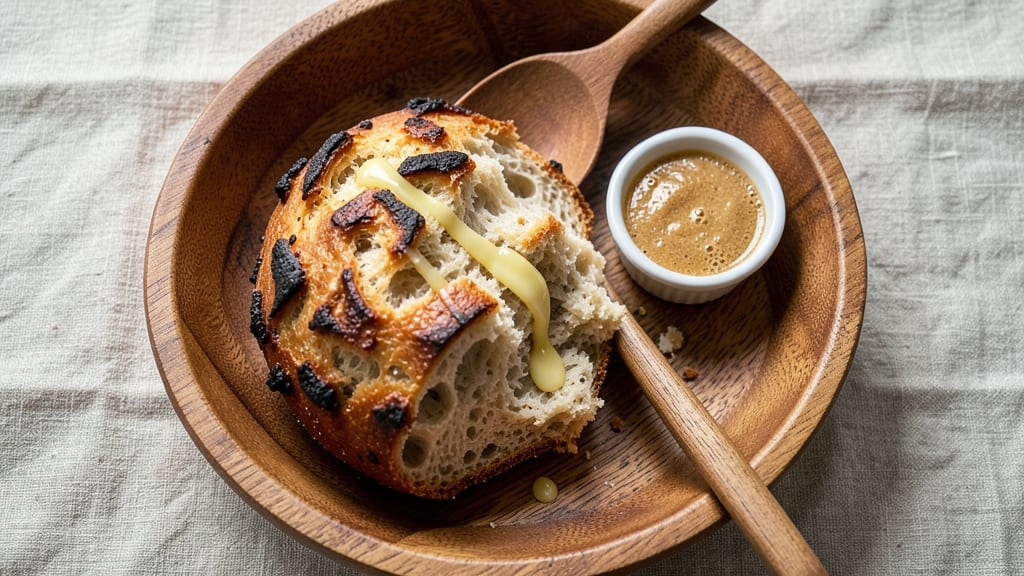
This artisan sourdough bread recipe with a starter transforms simple flour and water into a masterpiece with a crusty bite and tangy crumb—no fancy equipment required. The secret lies in the starter, a living culture that develops complex flavors over time.
I’ve perfected this method through years of baking, ensuring a foolproof rise even for beginners. The process begins with nurturing your starter, then shaping the dough into elegant boules or batards before baking with precise steam and temperature control.
The starter is the heart of this recipe, contributing that signature tang and open crumb structure that sets artisan sourdough apart. Unlike commercial yeast, it ferments slowly, allowing flavors to develop naturally.
Bulk fermentation and proofing are critical steps—patience here ensures a light, airy texture. I’ll guide you through shaping techniques that create beautiful, professional-looking loaves, whether you prefer rustic boules or streamlined batards.
Baking requires attention to detail: preheating the oven, generating steam, and monitoring temperature curves for an even bake. The result? A loaf with a shatteringly crisp crust and a soft, open crumb that’s worth every minute of effort.
This recipe delivers restaurant-quality bread at home, with a flavor profile that improves over time as your starter matures.
Perfect for breakfast, sandwiches, or gifting, this sourdough becomes the star of any meal. Once you master the technique, you’ll never buy store-bought bread again. Let’s get started—your kitchen is about to smell like a Parisian bakery.
Ingredients for artisan sourdough bread recipe with starter
Four flours, one living culture, and a touch of patience transform your kitchen into a bakery.
| Ingredient | Amount | Notes |
|---|---|---|
| Active Sourdough Starter 🍞 | ½ cup | 100% hydration, bubbly and active |
| All-Purpose Flour 🌾 | 5 cups | High-protein for structure |
| Bread Flour 🌾 | 1 ½ cups | For enhanced gluten development |
| Whole Wheat Flour 🌾 | ½ cup | For nutty depth and texture |
| Water 💧 | 3 ½ cups | Filtered or dechlorinated |
| Unsalted Butter 🧈 | ¼ cup | Cold, cubed for flavor |
| Kosher Salt 🧂 | 1 ½ tsp | Diamond Crystal preferred |
| Olive Oil 🫒 | 1 tbsp | Extra-virgin for dough handling |
| Instant Yeast 🍞 | ¼ tsp | Optional for initial boost |
| Cornmeal 🌽 | ¼ cup | For dusting baking surfaces |
| Ice Cubes ❄️ | ½ cup | For shaping and scoring |
The starter is your secret weapon—look for a bubbly, jiggly culture that doubles in 4-6 hours. King Arthur or Bob's Red Mill flours work best for structure, but local artisan mills often have higher protein content. Store-bought starters? Feed them 1:1:1 (starter:flour:water) for 5-7 days to revive. The butter adds flavor but isn't essential—extra olive oil works in a pinch. For the flours, King Arthur Bread Flour is my go-to, but any high-protein flour (12%+ protein) will do. The whole wheat adds character but can slow fermentation—reduce to 0.25 cup if your starter is sluggish.
No instant yeast? Skip it entirely—this recipe relies on the starter's natural fermentation. Running low on bread flour? All-purpose plus 1 tsp vital wheat gluten mimics its structure. The olive oil can be swapped for neutral oil like avocado or grapeseed, but extra-virgin adds subtle fruity notes. For scoring, a razor blade or lame creates clean cuts, but a sharp knife works in a bind. The ice cubes help shape the dough—freeze water in a tray first for easy handling. Want a darker crust? Add 1 tbsp malt powder to the flour mix.
The starter keeps best in the fridge—feed it weekly to maintain activity. Flours last indefinitely, but store in airtight containers away from light. Dough can wait 24 hours in the fridge before shaping, but room temp fermentation develops more flavor. Baked loaves stay fresh 3-4 days wrapped in a cloth bag, or freeze for up to 3 months. Toast stale bread to revive it—the French call this 'pain perdu', and it's delicious.
Why You'll Love This Recipe
- No-Fuss Dough: I swear by the simplicity of this—just mix the starter with flours (bread for structure, whole wheat for depth), add water, and let the magic unfold. No kneading, no fuss, just a gentle stretch-and-fold routine that even my busy mornings can handle.
- Tangy Crust Magic: That crispy, caramelized crust with a chewy interior? It’s all thanks to the starter’s wild yeast and the whole wheat’s nutty bite. Honestly, the first time I pulled it from the oven, my whole kitchen smelled like a Parisian bakery.
- Weeknight Workhorse: This bread is my go-to for everything—sandwiches, toast, or even a quick charcuterie board. Between us, I’ve used the leftovers for days, and it still tastes fresh. The bread flour keeps it sturdy, while the whole wheat adds a subtle earthiness that makes it feel special.
- Budget-Friendly Staple: A small jar of starter lasts forever, and flour is cheap. I make a big batch on Sundays, freeze half, and boom—homemade bread anytime without breaking the bank. It’s the kind of recipe that makes grocery bills feel less scary.
Step-by-step instructions for artisan sourdough bread
Here's how to craft a loaf with a crackly crust and airy crumb—every detail matters.
Mix the Dough with Precision
In a large mixing bowl, combine the 0.5 cup Active Sourdough Starter, 5 cups All-Purpose Flour, 1.5 cups Bread Flour, 0.5 cup Whole Wheat Flour, and 1.5 tsp Kosher Salt. Create a well in the center and add 3.5 cups Water and 0.25 tsp Instant Yeast. Mix with a wooden spoon until just combined—you'll see dry patches, and that's intentional.
Next, add 0.25 cup Unsalted Butter and 1 tbsp Olive Oil, mixing until the butter melts and the dough begins to come together. The dough should be shaggy but cohesive. Cover the bowl with a damp towel and let it rest for 30 minutes at room temperature. This initial rest allows the flour to hydrate fully and the gluten to begin developing.
Develop Gluten Through Autolyse and Stretching
After the rest, wet your hands and perform a series of stretch-and-folds every 30 minutes for 2 hours. To do this, grab one side of the dough, stretch it upward, and fold it over itself. Rotate the bowl and repeat this motion all around the dough. You're building strength and elasticity in the gluten network—this is what gives sourdough its signature chew and structure.
After the final stretch-and-fold, let the dough rest again for 15 minutes. Then, divide it into 4 equal portions (about 1 pound each). Shape each portion into a smooth, taut boule by pulling the dough toward you and tucking the edges underneath. This creates surface tension, which is key for oven spring later.
Cold Proof and Shape for Maximum Rise
Place each shaped boule on a piece of parchment paper dusted with 0.25 cup Cornmeal. Cover loosely with plastic wrap and refrigerate for 12-16 hours. The cold slows fermentation, allowing flavors to develop and the dough to rise gradually. This step is non-negotiable—it's what gives artisan sourdough its depth.
When ready to bake, remove the dough from the fridge and let it sit at room temperature for 1-2 hours until it springs back slowly when poked. Preheat your oven to 450°F with a Dutch oven inside for 45 minutes. This intense heat is essential for creating that signature crust.
Bake with Steam for Crusty Perfection
Carefully transfer one boule (still on its parchment) into the hot Dutch oven. Immediately add 0.5 cup Ice Cubes to the bottom of the oven—this creates a steam bath that promotes oven spring and prevents cracking. Bake covered for 20 minutes, then remove the lid and bake uncovered for an additional 20-25 minutes until the crust is deep golden brown.
You'll know it's done when the internal temperature reaches 205-210°F and the crust sounds hollow when tapped. Let the bread cool on a wire rack for at least 1 hour before slicing—this prevents a gummy crumb. The result? A loaf with a crackly exterior, an open crumb, and that unmistakable tangy flavor.
Pro Tips For Making Artisan Sourdough Bread Recipe With Starter
- STRETCH AND FOLD: Use a bench scraper to fold dough into the bowl—don’t just poke and prod. The scraper cuts through gluten strands cleanly, giving you better gluten development with less effort (and fewer frustrated hands).
- WEIGH YOUR WHEAT: Whole wheat flour absorbs moisture like a sponge. Measure it by weight, not volume—your dough will be more consistent. I learned this the hard way when my first batch turned into a sticky mess.
- DON’T RUSH THE BULK: Let the dough rest at room temp for at least 4 hours after autolyse—even if it looks underproofed. The gluten relaxes, and the flavor deepens. Skipping this step means weaker structure and less tang.
- HYDRATE GRADUALLY: Add water in stages when mixing. Start with 60% of the total, then adjust by the teaspoon until the dough just holds together. Too much water now means a gummy loaf later—trust the process.
Perfect pairings for these flavors
Classic Pairings
Freshly baked sourdough pairs beautifully with sharp aged cheddar or creamy brie—the tangy crumb cuts through rich flavors perfectly. I love serving slices with whipped honey butter (mix ½ cup softened butter with 2 tbsp honey and a pinch of salt) for dipping.
For a savory option, try prosciutto-wrapped mozzarella with a drizzle of balsamic glaze. 🧀
Breakfast Combinations
Transform your morning with sourdough toast topped with crispy fried eggs and sautéed mushrooms. Add a sprinkle of flaky sea salt and fresh chives for brightness. For a heartier option, layer with avocado slices, cherry tomatoes, and a poached egg—this becomes my go-to brunch.
The bread's structure holds up beautifully to runny yolks.
Sandwich Masterpieces
Build the ultimate Caprese sandwich with fresh mozzarella, tomato slices, basil leaves, and a drizzle of olive oil. For something heartier, go for a grilled chicken panini with pesto, roasted red peppers, and provolone cheese—the sourdough's acidity balances the richness.
Always toast the bread first for maximum crispiness.
Dessert Pairings
Warm sourdough makes an unexpected but delicious dessert base. Top slices with mascarpone cheese, fresh berries, and a sprinkle of toasted nuts for a rustic tiramisu alternative. For something simpler, spread with Nutella and fold into a sourdough French toast—the crust adds amazing texture. 🍫
Beverage Pairings
A bold espresso or flat white enhances the bread's tangy notes, while a crisp Sauvignon Blanc complements its nutty depth. For beer lovers, a Belgian witbier with its citrusy brightness creates a perfect match. I also enjoy sparkling water with a squeeze of lemon to cleanse the palate between bites.
Global Variations
In France, sourdough is often paired with duck confit and fig jam—the fat and sweetness contrast beautifully. For an Italian twist, serve with tomato-basil soup and a sprinkle of Parmigiano-Reggiano.
The bread's versatility makes it a perfect canvas for global flavors, from Moroccan merguez sausages to Japanese miso-glazed salmon. 🌍
Nutrition facts
Frequently asked questions
How long does it take to make artisan sourdough bread from scratch?
This recipe requires about 24 hours total, including 12-16 hours of cold proofing. The active baking time is just 45 minutes, but the fermentation process is what develops the signature flavor. Plan ahead—your kitchen will smell amazing, but patience is key for that perfect crumb!
What if my starter isn't bubbly or active enough?
Feed your starter 1:1:1 (starter:flour:water) every 12 hours for 3-5 days to revive it. Look for bubbles and a slight rise before using. If it smells sour or hoochy (liquid on top), stir it in or pour it off—this means it's hungry! A sluggish starter will yield a denser loaf, so don't rush this step.
Can I use this recipe without a Dutch oven?
Yes, but your crust won't be as crispy. Use a baking steel or cast-iron skillet for better heat retention. Place the dough on parchment paper, cover with a metal bowl, and add ice cubes to the oven floor for steam. The bread will still rise well, though the crust may be slightly softer.
Why did my sourdough collapse after baking?
This usually happens from overproofing or underdeveloped gluten. Check for a slow spring-back when poked before baking. For next time, reduce bulk fermentation time by 1-2 hours and ensure you're doing 3-4 stretch-and-folds during the first few hours. A well-structured dough holds its shape!
How do I store leftover sourdough?
Wrap cooled loaves in a clean kitchen towel or beeswax wrap and store at room temperature for 2-3 days. For longer storage, freeze slices (up to 3 months) or the whole loaf (thaw at room temp). Toasting stale bread revives it perfectly—try it with garlic butter for a quick upgrade!