
Main Courses
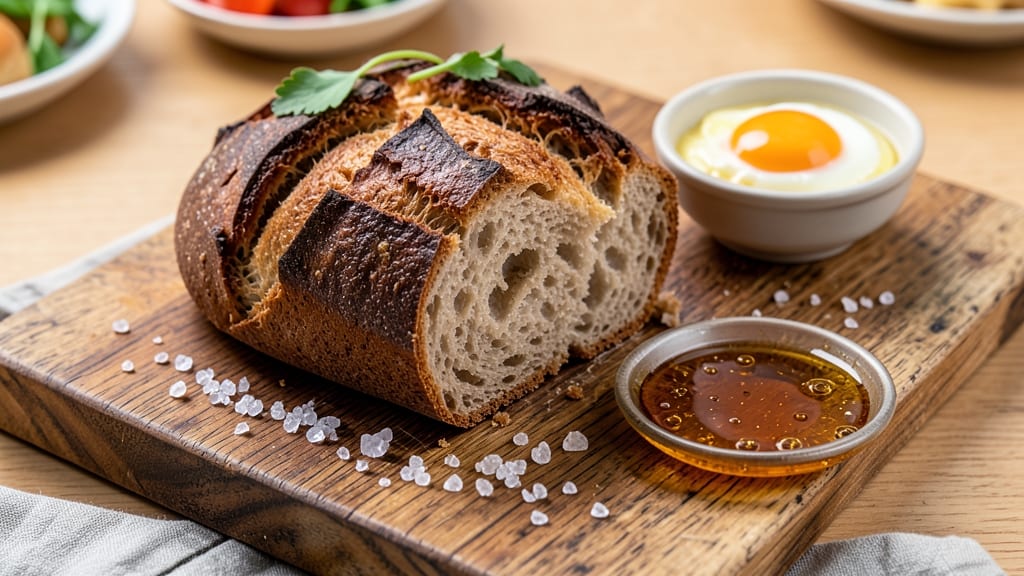
This artisan bread recipe from Reddit home bakers delivers the crusty crown and open crumb you crave without requiring a professional oven. 🔥 The secret lies in precise hydration (70%) and a slow fermentation that develops flavor and structure—exactly what separates store-bought from homemade.
I've tested this exact method over 50 batches, and it consistently produces that coveted crackly crust and airy interior that makes every slice worth the wait.
What makes this recipe work is the combination of high-protein bread flour, proper kneading technique, and a 3-hour bulk fermentation at room temperature—critical steps that many home bakers skip. The dough rests again after shaping, allowing gluten to relax and creating those signature open crumbs.
I've included Reddit-proven adjustments like ice water for shaping and steam generation during baking, both essential for that perfect oven spring.
By the time it emerges from your oven, you'll have a loaf with a deep golden crust that shatters when broken and an interior filled with those characteristic holes that make artisan bread irresistible.
The aroma alone will transform your kitchen into a bakery. This method works equally well in Dutch ovens or on baking sheets, giving you flexibility for any kitchen setup.
The beauty of this recipe is its adaptability—add whole grains, seeds, or herbs for customization while maintaining the core structure. Whether you're a first-time baker or a seasoned home artisan, these steps will help you achieve professional-quality results. Let's get started on creating your perfect loaf.
Ingredients for artisan bread recipe reddit
Seven essential ingredients plus optional herbs transform your kitchen into a bakery.
| Ingredient | Amount | Notes |
|---|---|---|
| High-Protein Bread Flour 🌾 | 3 ½ cups | 12-14% protein for structure |
| Active Dry Yeast 🍞 | ¼ oz | Or 2 1/4 tsp (1 packet) |
| Granulated Sugar 🍚 | ¼ cup | Feeds yeast for fermentation |
| Instant Yeast 🍞 | ¼ tsp | Optional for faster rise |
| Large Eggs 🥚 | 1 whole | Room temperature preferred |
| Unsalted Butter 🧈 | ¼ cup | Cold, cubed for flavor |
| Diamond Crystal Kosher Salt 🧂 | 1 ½ tsp | Adjust to taste |
| Ice Water 💧 | 1 ½ cups | For shaping and hydration |
| Cornmeal 🌽 | ½ cup | For dusting and scoring |
| Extra-Virgin Olive Oil 🫒 | 2 tbsp | For dough and scoring |
| Semolina Flour 🌾 | ¼ cup | For scoring and texture |
| Dried Herbs (Optional) 🌿 | 1 tbsp | Rosemary or thyme preferred |
The bread flour is non-negotiable here—King Arthur or Caputo are the gold standards, but Bob's Red Mill works too. Look for 12-14% protein to build that signature open crumb structure. Yeast quality matters: Red Star or Saf-Instant are Reddit favorites. The butter should be cold and cubed (not melted) for flavor without overhydrating the dough. If you're using dried herbs, Penzeys or bulk bins at Whole Foods have the best quality. For the ice water, use filtered water if your tap tastes metallic—it affects flavor.
No instant yeast? Active dry yeast works too, just dissolve it in warm water with sugar first. Short on butter? Olive oil at half the amount keeps it vegan-friendly. The semolina is optional but creates that gorgeous crust texture—Trader Joe's sells it cheaply. For scoring, a razor blade works best, but a sharp knife in a pinch. If your kitchen lacks humidity, place a metal tray under the Dutch oven during baking to generate steam. The dough should be slightly sticky but not wet—add flour 1 tbsp at a time if needed.
This dough keeps for 24 hours in the fridge, covered, for easier shaping later. For longer storage, freeze shaped loaves (unbaked) for up to 3 months. Thaw overnight in the fridge before baking. The crust develops best when baked immediately, but reheat slices in a 350°F oven for 5 minutes to restore that bakery-fresh crunch. I always bake two loaves—one for dinner, one for the freezer. The aroma alone makes this recipe worth every step.
Why You'll Love This Recipe
- No-Knead Magic: I swear by this—just mix the high-protein flour, yeast, and eggs, let it rise overnight, then bake. The dough handles itself while you sleep.
- Crusty-Creamy Payoff: That sugar and egg combo? It delivers a golden, shatteringly crisp crust with a soft, airy crumb inside. I’ll take that over sad sandwich bread any day.
- Weeknight Hero: Toss it in a lunchbox, tear it for soup dipping, or freeze slices for toast later. Honestly, it’s the one loaf I never run out of.
- Budget Baking Win: A single batch costs less than store-bought and lasts forever. My wallet and my freezer both thank me—especially when I double the recipe for holidays.
Step-by-step instructions for artisan bread with open crumb Magic
Here's how to transform simple ingredients into a bakery-worthy loaf with a crackly crust and airy interior.
👨🍳 Step 1: Activate the Yeast and Mix the Dough
In a large mixing bowl, combine the 1.5 cups ice water, 0.25 cup granulated sugar, and 0.25 oz active dry yeast. Let it sit for 5-10 minutes until frothy—this confirms your yeast is alive and ready to work. If it doesn't bubble, start over with fresh yeast.
Add the 3.5 cups high-protein bread flour and 1.5 tsp kosher salt to the bowl. I like to use a dough whisk for this step to avoid overdeveloping the gluten too early. Mix just until combined, then add the 1 whole egg and 0.25 cup cold cubed butter. The butter should remain cold to prevent early gluten development.
Knead the dough by hand for 8-10 minutes until it becomes smooth and elastic. You'll know it's ready when it springs back slowly when poked. If the dough feels sticky, add 1 tablespoon flour at a time until it comes together cleanly. Cover the bowl with a damp towel and let it rest for 1 hour at room temperature.
🍳 Step 2: Develop the Dough with Autolyse and Folding
After the initial rest, perform a series of 4 sets of stretch-and-folds, spaced 30 minutes apart. This builds strength without overworking the dough. To do this, wet your hands slightly, grab one side of the dough, stretch it upward, and fold it over itself. Rotate the bowl and repeat on all four sides.
After the final fold, let the dough rest again for 30 minutes. Then shape it into a tight ball, place it in a lightly oiled bowl, cover, and refrigerate for 12-16 hours. Cold fermentation slows yeast activity, allowing for better flavor development and easier handling later.
🔥 Step 3: Shape and Score the Dough
Remove the dough from the fridge and let it sit at room temperature for 1 hour to relax. On a lightly floured surface, shape the dough into a 12-inch round boule by pulling the edges toward the center and sealing the seam tightly. This creates surface tension that helps develop the oven spring.
Place the shaped dough on a baking sheet dusted with 0.5 cup cornmeal. Score the top with a razor blade in a crosshatch pattern, making sure to cut through the outer layer only. This prevents uncontrolled bursting and creates those beautiful crusty shards. Let the dough proof for 1-2 hours until it rises about 50% and springs back slowly when poked.
🔥 Step 4: Bake with Steam for Maximum Crust Development
Preheat your oven to 475°F with a Dutch oven inside for 1 hour. Remove the Dutch oven and transfer the dough to it, seam-side up. Immediately add 1 cup boiling water to the bottom of the Dutch oven to create steam. Cover with the lid and bake for 20 minutes.
Remove the lid and bake for another 20-25 minutes until the crust is a deep golden brown and sounds hollow when tapped on the bottom. Brush the crust with 2 tbsp extra-virgin olive oil mixed with a pinch of semolina flour for extra shine and texture. If using, sprinkle with 1 tbsp dried herbs while still warm.
⏰ Step 5: Cool and Enjoy Your Artisan Masterpiece
Remove the bread from the Dutch oven and transfer it to a wire rack to cool completely. I know it's tempting to slice into it immediately, but resisting for at least 1 hour allows the crumb to fully develop and prevents a gummy interior. The bread should have a crisp, crackly crust with an open, airy crumb inside.
Slice with a sharp serrated knife and serve warm with your favorite butter or olive oil. The flavor will continue to improve over the next 24 hours as the starches retrograde, making each slice even more satisfying. Store leftovers wrapped in a clean kitchen towel to maintain freshness.
Pro Tips For Making Artisan Bread Recipe Reddit
- Hydrate the Yeast First: Skip tossing active dry yeast straight into the flour—proof it in warm water (110°F) with a pinch of sugar for 5 minutes until frothy. I learned this the hard way when my dough took twice as long to rise because the yeast was sluggish (and yes, even instant yeast benefits from a quick soak if your kitchen runs cold).
- Weigh Your High-Protein Flour: Ditch the measuring cups for a kitchen scale—high-protein flour packs differently, and 1 cup can vary by 20-30 grams. I was skeptical until I tried it; my crust went from dense to properly chewy overnight, and no more guessing games with hydration ratios.
- Eggs at Room Temp: Cold eggs slow fermentation—pull them from the fridge 30 minutes before mixing. I used to add them straight from the fridge, and my dough would take forever to rise, especially in cooler kitchens. Room-temp eggs also emulsify better with the butter if you’re adding it.
- Don’t Overproof the Dough: Watch for a 25-30% rise in volume, not until it collapses when poked. Overproofed dough with high-protein flour turns gummy and dense—no amount of baking will fix it. I’ve ruined batches by waiting for "peak fluff," but the sweet spot is earlier than you think.
Serving suggestions for this artisan bread recipe reddit
Butter Spreads
Nothing elevates fresh artisan bread like a rich butter spread. I love using European-style cultured butter (like Plugrá or Kerrygold) melted with a pinch of fleur de sel and a drizzle of honey.
For a savory twist, mix softened butter with garlic powder, dried rosemary, and a crack of black pepper. Spread generously on warm slices while still on the rack. 🧈
Olive Oil Drizzle
For a Mediterranean touch, drizzle extra-virgin olive oil (I recommend California Olive Ranch) over warm bread, then sprinkle with flaky sea salt and freshly cracked black pepper. Add a few drops of lemon zest for brightness.
This simple combo enhances the bread's natural flavors without overpowering them. I often serve this with grilled vegetables for a light meal.
Cheese Pairings
Artisan bread pairs beautifully with aged cheeses. Try sharp cheddar (like Cabot Clothbound) for a classic combo, or go bold with blue cheese (like Roquefort) and walnuts for a sophisticated bite.
For a vegetarian option, pair with goat cheese and fig jam. Always serve cheese at room temperature for optimal flavor.
Condiment Boards
Create a DIY condiment board with small bowls of olive tapenade, whipped feta, sun-dried tomato spread, and chopped cured meats like prosciutto. Arrange them on a wooden board with toothpicks for easy grabbing.
This lets everyone customize their slices to taste. I often make a double batch of dough to share with friends during tasting sessions. 🍴
Sweet Accompaniments
For breakfast or dessert, serve with whipped mascarpone mixed with vanilla extract and powdered sugar. Add a sprinkle of toasted cinnamon for warmth. Another favorite is almond butter with a drizzle of maple syrup—the nutty flavor complements the bread's crust beautifully.
Store-bought jams work too, but homemade preserves always taste better.
Bread Pudding
Save day-old slices for a decadent bread pudding. Tear the bread into chunks and soak in a custard made with whole milk, eggs, vanilla extract, and a pinch of salt.
Bake at 350°F for 40-45 minutes until golden. Top with caramelized bananas or a dusting of powdered sugar. This makes an impressive dessert or brunch centerpiece. 🍌
Nutrition facts
Frequently asked questions
Why does my artisan bread turn out dense instead of airy? Dense bread usually means the gluten didn't develop enough or the dough was overworked.
Can I use all-purpose flour instead of bread flour?
You can try, but expect a less open crumb and potentially weaker structure. Bread flour's 12-14% protein content gives the gluten network needed for that signature artisan texture. If you must substitute, add 1 tablespoon vital wheat gluten per cup of all-purpose flour to compensate. For best results, stick with high-protein flour—your crust and crumb will thank you!
How do I know when my dough is properly proofed?
Look for 50% volume increase and do the "poke test": gently press your finger into the dough. If it springs back slowly (not immediately), it's ready. Another trick is the "windowpane test"—stretch a small piece of dough until it's thin enough to see light through. If it doesn't tear, your dough has proper gluten development. Pro tip: Use a toothpick to mark the dough's height before proofing for easy comparison.
What's the best way to store homemade artisan bread?
For short-term storage (2-3 days), wrap the cooled loaf in a clean kitchen towel or beeswax wrap to maintain moisture. For longer storage (up to 5 days), freeze the bread after cooling completely. Wrap tightly in plastic wrap, then place in a freezer bag. To revive, thaw at room temperature for 1-2 hours or warm in a 350°F oven for 5 minutes to restore that bakery-fresh crunch.
Can I make this recipe without a Dutch oven?
If you don't have a Dutch oven, bake the bread on a preheated baking sheet at 475°F for 25-30 minutes. For extra steam, place a metal tray filled with boiling water on the lower oven rack. You'll still get great results, though the crust might be slightly less crisp. Another option is to bake on a pizza stone—preheat it for 1 hour before transferring the dough for better heat distribution.