
Side Dishes
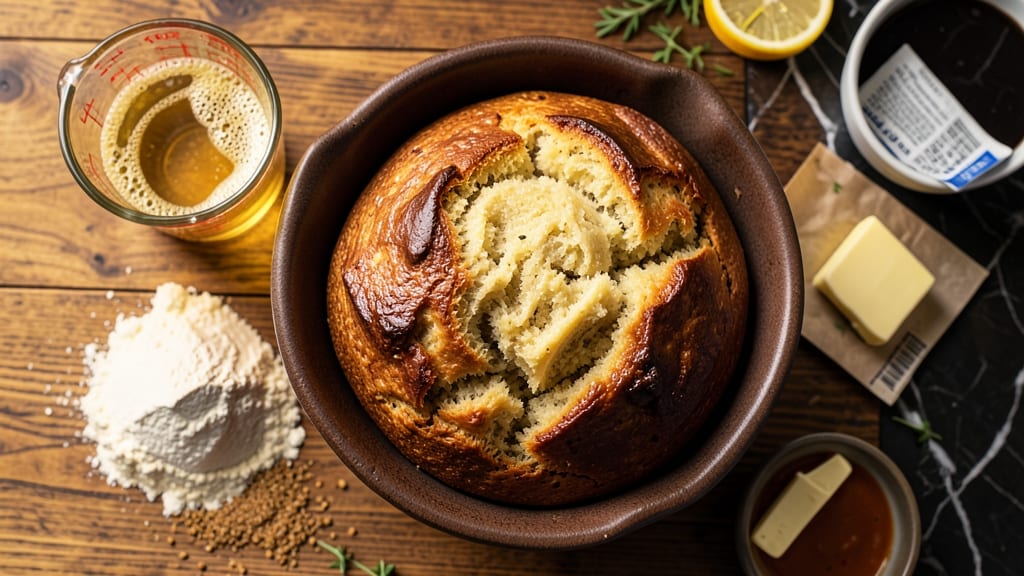
This artisan beer bread recipe delivers a crusty crown with a buttery, beer-infused crumb that's perfect for soaking up soups or pairing with charcuterie. The secret lies in using high-quality beer—not just any brew—and proper dough hydration for that ideal texture.
I've perfected this recipe through years of baking, ensuring every slice has that signature crispy exterior and tender, flavorful interior.
The beer's malty notes and carbonation create a unique texture and depth of flavor that store-bought loaves can't match. You'll start with a simple yeast activation, then mix the dough to just the right consistency—neither too sticky nor too dry.
Proofing at the right temperature is critical for achieving that airy crumb, while shaping and scoring the loaf ensures an even rise and a beautiful crust.
By the time it emerges from the oven, you'll have a golden, crusty crown with a soft, buttery crumb infused with the distinct flavor of the beer.
The aroma alone will have everyone gathering around the table. This bread is versatile enough for everyday meals but impressive enough for special occasions.
Pair it with your favorite soup, use it to mop up gravy, or serve it alongside a charcuterie board. The possibilities are endless, but the process is straightforward and reproducible. Let's get started on creating this artisan beer bread that will become a staple in your kitchen.
Ingredients for artisan beer bread
Fourteen ingredients, one unforgettable loaf. The beer's flavor and butter's richness make all the difference.
| Ingredient | Amount | Notes |
|---|---|---|
| Active Dry Yeast 🍞 | ¼ tsp | Single-use packet works too |
| Warm Water 💧 | ¼ cup | 110°F for yeast activation |
| All-Purpose Flour 🌾 | 3 ½ cups | King Arthur preferred for texture |
| Unsalted Butter 🧈 | ½ cup | Cold and cubed for flavor |
| Light Brown Sugar 🍚 | ¼ cup | Packed measurement |
| Active Dry Yeast 🍞 | 1 tbsp | For dough activation |
| High-Quality Beer 🍺 | 1 cup | Lager or pale ale preferred |
| Large Egg 🥚 | 1 whole | Room temperature |
| Melted Butter 🧈 | 2 tbsp | For dough enrichment |
| Coarse Sea Salt 🧂 | 1 tsp | Diamond Crystal preferred |
| Cornmeal 🌽 | ¼ cup | For dusting surface |
| Coarse Salt 🧂 | 1 tbsp | For scoring crust |
The beer is non-negotiable here. Local craft breweries or Sam Adams Lager work wonders—their malty notes shine through. Skip the light beers; you want something with body and flavor. The flour? King Arthur or Caputo Tipo 00 if you're feeling fancy, but all-purpose works fine. Butter should be cold when you cube it—this keeps the dough from getting too soft. I always buy Plugrá butter for its rich flavor, but any good unsalted brand works. Proof your yeast in warm water (110°F)—if it's too hot, you'll kill it.
No yeast? Instant yeast works 1:1. Out of brown sugar? White sugar plus 1/4 tsp cinnamon mimics the molasses notes. The egg can be omitted if vegan, but the dough will be slightly less tender. For a gluten-free version, swap flour for a 1:1 GF blend, but expect a denser crumb. Beer substitute? Non-alcoholic beer or apple cider works, though the flavor won't be identical. And if you're short on time, pre-shaping the dough 30 minutes ahead lets it relax for easier handling.
The dough doubles in size during proofing, so don't overcrowd your bowl. Room temperature (70-75°F) is ideal—colder kitchens mean longer proofing. Shape the loaf gently; overworking the dough makes it tough. For scoring, a razor blade or sharp knife gives the cleanest cuts. Bake until golden and internal temp hits 190-195°F. Store wrapped at room temp for 2 days or freeze for 3 months. The crust gets crunchier as it cools—slice when fully cooled for clean cuts.
Why You'll Love This Recipe
- No-Knead Magic: I swear by this—just mix, let it rise, and bake. The yeast does all the work while I sip my morning coffee. Honestly, five minutes of hands-on time and you’re golden.
- Sweet Butter Crust: That brown sugar and melted butter combo? It’s the secret weapon. The crust cracks just enough to get golden and crispy, while the inside stays soft—like a hug in bread form.
- Weeknight Hero: I keep a batch in the fridge all week. Tear off a slice for sandwiches, toast it up with jam, or serve it warm with soup. It’s my go-to when I don’t feel like fussing.
- Budget Stretch: A loaf costs me pennies but feels like a bakery treat. The beer adds depth without breaking the bank, and the butter makes it feel special—even when I’m feeding a crowd on a tight budget.
Step-by-step instructions for artisan beer bread
Here's how to craft a golden, buttery loaf with a crisp crust and tender beer-infused crumb.
Activate the Yeast for Maximum Rise
In a small bowl, whisk together the 0.25 cup warm water (about 110°F) and 0.25 tsp active dry yeast. Let it sit for 5-10 minutes until frothy—this means the yeast is alive and ready to work. You'll see bubbles forming on the surface and a yeasty aroma developing.
If you don't see bubbles after 10 minutes, your yeast might be dead. In that case, start fresh with a new packet—this is the foundation of your bread. Once activated, proceed immediately to avoid letting the yeast overproof.
Mix the Dough with Beer and Butter
In a large mixing bowl, combine the 3.5 cups all-purpose flour, 1 tbsp active dry yeast, 1 tsp coarse sea salt, and 0.25 cup light brown sugar. Mix these dry ingredients together until evenly distributed. Create a well in the center and pour in the yeast mixture, 1 cup high-quality beer, and 1 whole large egg.
Using a wooden spoon or dough whisk, gradually incorporate the wet ingredients into the dry. Add the 0.5 cup cold cubed unsalted butter and mix until the dough comes together. It should be sticky but manageable—this is normal for beer bread. If it feels too dry, add 1 tablespoon warm water at a time until it forms a cohesive mass.
Knead and Rest for Flavor Development
Turn the dough out onto a lightly floured surface and knead gently for 2-3 minutes—just until it smooths out. Beer bread doesn't need extensive kneading like traditional bread. Shape it into a round loaf and place it back in the mixing bowl.
Cover the bowl with a damp towel and let the dough rise at room temperature for 1 hour or until it has nearly doubled in size. You'll notice the dough becomes lighter and airier, with a slight beer aroma. This resting period allows the yeast to work its magic and the beer flavors to infuse throughout.
Shape and Score for a Crispy Crust
Preheat your oven to 375°F and line a baking sheet with parchment paper. Lightly dust a work surface with 0.25 cup cornmeal and shape the risen dough into a round loaf about 1.5 inches thick. Place it seam-side down on the prepared baking sheet.
Use a sharp knife or razor to score the top of the loaf in a crosshatch pattern. Sprinkle the top with 1 tablespoon coarse salt and brush lightly with 2 tablespoons melted butter. This scoring creates steam pockets that help develop that beautiful crust, while the salt and butter add flavor and shine.
Bake Until Golden and Crisp
Bake the beer bread for 30-35 minutes until the crust is deep golden brown and sounds hollow when tapped on the bottom. The internal temperature should reach 190-200°F. You'll smell that wonderful beer and buttery aroma filling your kitchen—this is your cue that it's ready.
Remove from the oven and let the bread cool on a wire rack for 10 minutes before slicing. The crust should be crisp enough to stand up to a butter knife, while the interior remains tender and moist. Serve warm with extra butter melting on top—this bread is best enjoyed fresh from the oven.
Pro Tips For Making Artisan Beer Bread
- Dissolve the Yeast First: Skip mixing yeast into the wet ingredients right away—first sprinkle it into the warm water (110°F) and let it sit for 5 minutes until it’s frothy. This guarantees it’s fully activated before hitting the flour, which means your bread rises faster and more reliably. I learned this the hard way after a batch that took forever to proof.
- Use Room-Temp Butter: Take the unsalted butter out of the fridge 30 minutes before using so it’s soft but not melted. Cold butter creates pockets in the dough that won’t mix evenly, while melted butter makes the bread dense. Room-temp butter blends smoothly and gives that perfect crumb.
- Don’t Over-Knead the Dough: Once the flour, yeast mixture, and butter are combined, stop kneading after 3-4 minutes by hand (or 3-4 cycles in a stand mixer). Overworking the dough develops too much gluten, making the bread tough instead of tender. This bread relies on beer’s natural moisture—handle it gently.
- Proof Until It’s Almost Ready: Let the dough rise until it’s just shy of doubling in size—about 1.5 to 2 inches from the top of the bowl. Poking it should leave a slow, lazy imprint, not a quick bounce-back. Overproofing collapses the structure, and underproofing means a dense loaf. Trust your eyes, not the clock.
Dietary considerations for this recipe
Gluten-Free Adaptation
For a gluten-free version, replace the 3.5 cups all-purpose flour with a high-quality 1:1 gluten-free blend like Bob's Red Mill 1-to-1. The dough will be denser, so add 1 extra tablespoon of melted butter to compensate for reduced elasticity.
Proofing time may extend to 1 hour 15 minutes—keep an eye on it. Bake at 375°F for 35-40 minutes until the internal temp hits 190-195°F. 🌱
Vegan Version
Skip the large egg and use 1 tablespoon ground flaxseed mixed with 3 tablespoons warm water as a binder. For butter, substitute ½ cup vegan butter (like Miyoko's) and reduce the beer to ¾ cup to balance moisture.
The dough will be slightly less tender but still flavorful. Use non-alcoholic beer if avoiding alcohol entirely.
Low-Carb Option
Cut 1 cup of the flour and replace with 1 cup almond flour for a lower-carb loaf. Add ½ teaspoon xanthan gum to mimic gluten's structure. Reduce the beer to ½ cup and increase the light brown sugar to ⅓ cup for sweetness.
Bake at 375°F for 30 minutes—the crust will crisp faster due to lower moisture content.
Allergen-Friendly Swaps
For a dairy-free version, use vegan butter and omit the melted butter topping. If avoiding yeast, try 1 teaspoon baking powder plus ½ teaspoon baking soda instead of the yeast, but expect a denser texture. For nut-free options, stick with all-purpose flour—almond flour is a common allergen.
Sugar-Free Alternative
Replace the 0.25 cup light brown sugar with 0.25 cup erythritol or monk fruit sweetener. Reduce the beer to ¾ cup to prevent excess stickiness. The crust may brown faster, so watch closely after 25 minutes in the oven.
A light glaze of powdered sweetener mixed with water after baking adds shine without sugar.
Nutrition facts
Frequently asked questions
Can I use any beer in this artisan bread?
No, not just any beer—opt for a lager or pale ale with noticeable maltiness and carbonation. Light beers like pilsners work well, but avoid overly hoppy IPAs or stouts, as their strong flavors can overpower the bread. For best results, choose a local craft beer or a well-balanced commercial option like Sam Adams Lager. The beer's flavor should complement, not dominate, the dough.
Why is my beer bread dense instead of crusty?
Density usually means one of two things: overproofing or underbaking. First, check if your dough doubled in size during the 1-hour proof—if it didn't, your yeast may be inactive or the environment too cold. Second, bake until the internal temp hits 190-195°F and the crust sounds hollow when tapped. For extra crispiness, brush the baked loaf with melted butter while still warm.
How long can I keep this bread fresh?
Wrap the cooled loaf in plastic wrap or place it in an airtight container to keep it fresh for 2-3 days at room temperature. For longer storage, freeze slices in a sealed bag for up to 3 months. The crust will crisp up again after toasting—just reheat in a 350°F oven for 5-7 minutes to restore freshness.
Can I make this bread without an oven?
For a stovetop version, shape the dough into a round loaf and place it in a heavy skillet. Cover with a tight lid and cook over medium-low heat for 20-25 minutes, flipping once. The steam from the lid creates a crust, though it won't be as golden as oven-baked. For a grill version, cook over indirect heat with the lid closed for 15-20 minutes.
What’s the best beer bread pairing?
This artisan loaf shines with rich soups like chili or French onion, or alongside charcuterie boards with sharp cheeses and cured meats. For a meal, pair it with grilled steaks or roasted vegetables—the beer's malty notes complement hearty dishes. Serve warm with extra butter melting on top for the ultimate indulgence.