
Side Dishes
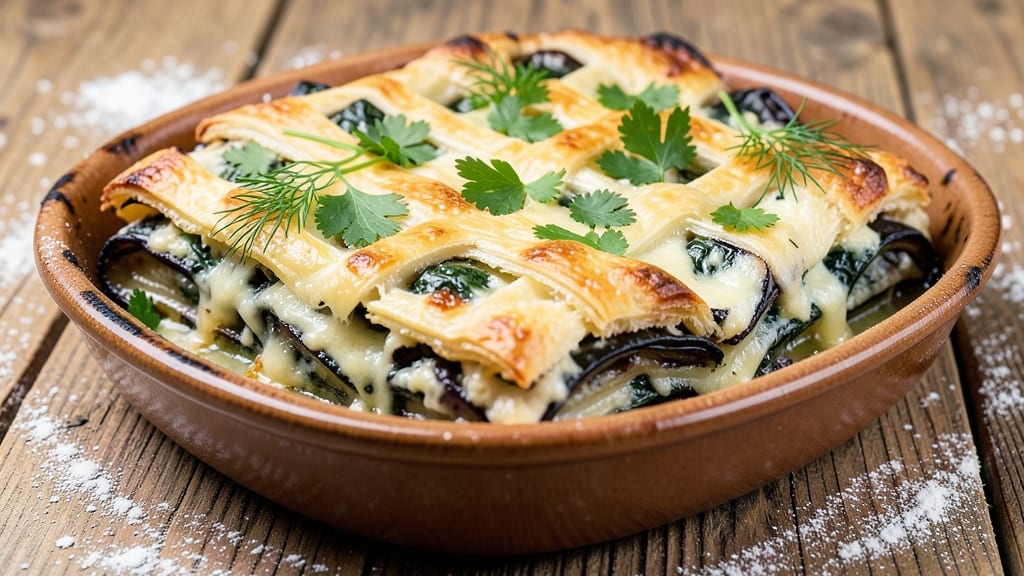
This Armenian bread matnakash recipe brings the heart of Armenian cuisine to your kitchen with its rich, savory layers of eggplant, melted cheese, and fragrant herbs. 🌟 The dish is traditionally served warm with crusty bread, where the eggplant becomes tender and the cheese stretches into golden, gooey perfection.
What makes this recipe special is its simplicity—just a few ingredients, but each plays a crucial role in creating a dish that’s both comforting and impressive.
The magic happens in the layering: thinly sliced eggplant, a generous layer of sulguni or mozzarella cheese, and a sprinkle of fresh herbs like dill or parsley. The dish bakes until the cheese is bubbling and the eggplant is just tender enough to hold its shape.
This recipe delivers restaurant-quality results with minimal effort, making it perfect for a weeknight dinner or a special occasion.
What you’ll love is the way the flavors meld together—creamy cheese, earthy eggplant, and bright herbs—all baked to golden perfection. The dish is served warm, often with a side of crusty bread to soak up every last bit of that delicious cheese sauce.
It’s a dish that feels like a hug, both in flavor and in tradition.
Once you try this matnakash, you’ll understand why it’s a staple in Armenian homes. The combination of textures and flavors makes it impossible to resist. Ready to bring a taste of Armenia to your table? Let’s get started!
Ingredients for armenian bread matnakash
Just 12 ingredients transform into layers of cheesy, herby eggplant perfection.
| Ingredient | Amount | Notes |
|---|---|---|
| Eggplant 🍆 | 1 ½ lb | Medium-sized, sliced 1/4-inch thick |
| Sulguni Cheese 🧀 | 12 oz | Or substitute mozzarella cheese |
| Fresh Dill 🌿 | ¼ cup | Chopped, stems removed |
| Fresh Parsley 🌿 | ¼ cup | Chopped, stems removed |
| All-Purpose Flour 🌾 | 2 cups | Plus 1 tbsp for dusting |
| Active Dry Yeast 🍞 | ¼ tsp | Or 1 packet instant yeast |
| Warm Water 💧 | ½ cup | 110°F for activating yeast |
| Olive Oil 🫒 | ¼ cup | Extra-virgin preferred |
| Salt 🧂 | 1 ½ tsp | Kosher or sea salt |
| Garlic Cloves 🧄 | 2 cloves | Minced for flavor |
| Egg 🥚 | 1 whole | For dough binding |
| Butter 🧈 | 2 tbsp | Melted, for brushing |
The eggplant is the star—firm, medium-sized ones hold their shape best. Trader Joe's or your local Armenian market usually have the best selection. Look for eggplants with smooth, glossy skin and no soft spots. If you can't find sulguni, low-moisture mozzarella works perfectly—just shred it yourself. The cheese should be fresh, not pre-shredded (that stuff gets gummy). For the herbs, fresh dill and parsley make all the difference—dried won't give that bright Armenian flavor. If you're short on time, freeze the chopped herbs in ice cube trays for later use.
No sulguni? Feta or halloumi can work in a pinch, but they have different textures. The yeast needs to be active dry or instant—check the expiration date, it goes bad fast. For the olive oil, extra-virgin gives the best flavor, but regular works too. The dough should be soft but not sticky—add a splash more water if needed. If you're making this ahead, prep the eggplant and cheese filling first, then assemble just before baking. The garlic can be roasted for a sweeter flavor—just toss the minced cloves with a drizzle of olive oil and bake at 375°F for 10 minutes before using.
Assemble the matnakash up to 24 hours ahead—it actually tastes better the next day. Wrap tightly in plastic wrap and refrigerate. Bake straight from the fridge (no need to thaw). The baked matnakash keeps for 3 days in the fridge, but it's best served warm. For leftovers, reheat in a 350°F oven for 10-15 minutes covered with foil to prevent drying. The crust gets crispier when reheated—trust me on this. Store any extra cheese in an airtight container with a paper towel on top to absorb moisture.
Why You'll Love This Recipe
- One-Bowl Miracle: I swear by this—no rolling, no fuss. Just mix the dough, let it rest while you roast the eggplant, and fold in that sulguni cheese like you’re tucking in a cozy blanket. Twenty minutes later, you’ve got dinner on the table without a single dirty bowl to scrub.
- Cheese-Packed Magic: That sulguni melts into gooey perfection, while the eggplant soaks up all the herby brightness from the dill and parsley. Honestly, the first bite makes me forget it’s technically a "vegetable dish"—it’s just comfort in bread form.
- Picnic or Potluck Star: Between us, this is my go-to for gatherings. It’s sturdy enough to pack, feeds a crowd without breaking the bank, and those crispy edges? Everyone reaches for seconds. (Yes, even my picky uncle.)
- Budget-Friendly Leftovers: Eggplant stretches far, sulguni isn’t splurge cheese, and the dough uses basic flour. The best part? It reheats like a dream—toss it in the oven for 10 minutes, and it’s fresh again. My wallet and my lunchbox thank me.
Step-by-step instructions for Armenian bread matnakash
Here's how to craft these golden, cheesy flatbreads with crispy edges and gooey centers.
👨🍳 Step 1: Prepare the Eggplant Filling
Preheat your oven to 400°F and line a baking sheet with parchment paper. Slice the 1.5 lb eggplant into ¼-inch thick rounds—you should get about 12-15 slices. Brush both sides generously with the 0.25 cup olive oil, then sprinkle lightly with ½ tsp salt.
Arrange the eggplant slices in a single layer on the baking sheet, leaving ½-inch between each. Bake for 15-20 minutes until they turn golden brown and feel tender when pierced with a fork. Let them cool completely before handling—they'll be fragile when hot.
While the eggplant bakes, mix the 12 oz sulguni cheese (or mozzarella) with the 0.25 cup chopped dill, 0.25 cup chopped parsley, 2 cloves minced garlic, and 1 tsp salt in a bowl. This herby cheese filling is what makes matnakash irresistible.
👨🍳 Step 2: Make the Dough and Assemble
In a large bowl, combine the 2 cups all-purpose flour and 1.5 tsp salt. Make a well in the center and add the 0.25 tsp active dry yeast. Pour in the 0.5 cup warm water (about 110°F) and 0.25 cup olive oil, then mix until a shaggy dough forms.
Knead on a lightly floured surface for 5-7 minutes until smooth and elastic. If the dough feels sticky, add just enough flour to handle it easily. Place it in a lightly oiled bowl, cover with a damp towel, and let rise in a warm place for 1 hour or until doubled in size.
Once the eggplant is cool, spread about 1 tbsp of the cheese mixture onto each slice. Roll out the risen dough on a floured surface to about ⅛-inch thickness, then cut into 4-inch circles using a round cutter or glass.
🥘 Step 3: Layer and Proof the Dough
Place one eggplant slice on each dough circle, then top with another dough circle. Press gently around the edges to seal, creating a pocket for the filling. Place the assembled matnakash on a floured baking sheet, cover with a towel, and let proof for 20-30 minutes until puffy.
Here's the thing—don't skip the proofing. This resting time lets the dough relax and rise slightly, ensuring those beautiful puffs when baked. If your kitchen is cold, place the tray near a warm spot like the oven with the light on.
🔥 Step 4: Bake to Golden Perfection
Preheat your oven to 375°F with a baking stone or inverted baking sheet inside. Brush the tops of the matnakash with the 2 tbsp melted butter, then bake for 20-25 minutes until golden brown and the cheese is bubbling inside.
I like to rotate the tray halfway through baking for even browning. The edges should be crispy while the centers remain soft and cheesy. If they brown too quickly, tent with foil to prevent burning.
Remove from the oven and let cool for 5 minutes before serving. The cheese should be gooey and stretchy—this is the true test of a perfect matnakash. Serve warm with a simple salad or as part of a mezze spread.
Pro Tips For Making Armenian Bread Matnakash
- SALT THE EGPLANT FIRST: I learned this the hard way—skip salting the eggplant slices before baking, and they’ll turn bitter. Sprinkle them with 1 teaspoon of salt per pound, let sit 20 minutes, then pat thoroughly dry. This draws out moisture so the cheese doesn’t turn greasy when you bake it.
- CHOP CHEESE SMALLER THAN YOU THINK: Sulguni melts differently than feta or mozzarella—it stretches and can get rubbery if chunks are bigger than ½ inch. Pulse it in a food processor for 3 seconds, then mix in herbs by hand. The result? Creamy, even pockets of flavor in every bite.
- DON’T OVERMIX THE DOUGH: This isn’t brioche—handle the flour, eggplant purée, and water like you’re folding in a nervous cat. Overworking it makes the bread dense and chewy. Mix just until combined, then rest it 10 minutes before shaping. Your future self will notice the difference.
- BAKE UNTIL GOLDEN, NOT JUST SET: I used to pull matnakash out when the edges looked done, only to have the center stay doughy. Bake until the crust is deep golden-brown and the internal temp hits 190°F—yes, it’ll look overdone, but it stays warm and crisp for hours. Trust the color.
Perfect pairings for this dish
Traditional Armenian Sides
Serve matnakash with lavash bread—the thin, crispy flatbread that’s a staple in Armenian cuisine. I like to warm the lavash in a dry skillet for 20 seconds per side to enhance its crunch. The bread soaks up the melted cheese beautifully, creating a perfect bite.
For extra authenticity, add a side of tarator sauce—a refreshing yogurt and cucumber dip that balances the richness of the matnakash. 🌟
Herb-Infused Salads
Brighten your meal with a dill and mint salad—toss 4 cups chopped romaine, ¼ cup chopped dill, ¼ cup chopped mint, and 2 tbsp lemon juice with 3 tbsp olive oil. The herby flavors complement the eggplant and cheese perfectly.
Another great option is armenian cucumber salad—slice 2 large cucumbers and toss with 1 tbsp vinegar, 1 tsp sugar, and 1 tbsp chopped parsley. This adds a refreshing crunch to the meal.
Warm Dips and Spreads
No Armenian meal is complete without a warm dip. Try spicy walnut paste (vosp)—blend 1 cup walnuts, 1 garlic clove, 1 tbsp red pepper flakes, and 2 tbsp lemon juice until smooth. Serve it with lavash for dipping.
For a creamy option, whip ½ cup yogurt with 1 tbsp chopped dill, 1 tsp garlic powder, and a pinch of salt. This tangy dip cuts through the richness of the matnakash. ✨
Beverage Pairings
Pair your matnakash with Armenian white wine like Artsakh white or Voskehat—their crisp acidity cleanses the palate between bites. For a non-alcoholic option, try Ayran, a yogurt-based drink made with 1 cup yogurt, 1 cup cold water, and a pinch of salt.
The cool, creamy texture contrasts perfectly with the warm, cheesy bread. If you prefer beer, a light lager like Ararat keeps the meal refreshing without overpowering the flavors.
Sweet Endings
Finish your meal with Armenian baklava—layers of phyllo dough, nuts, and honey syrup that add a sweet contrast to the savory matnakash. For a lighter option, serve fresh figs with a drizzle of honey.
The natural sweetness balances the salty, herby flavors of the dish. If you want something warm, try Armenian coffee (kahve)—a strong, cardamom-spiced brew that’s a cultural staple. 💛
Nutrition facts
Frequently asked questions
Can I make matnakash without eggplant?
While eggplant is traditional, you can substitute zucchini or sweet potato for a similar texture. Slice them ¼-inch thick and roast until tender. The flavor will differ slightly, but the cheesy bread structure will still work beautifully. For a vegan version, use tofu or mushrooms instead of cheese.
Why does my dough not rise properly?
Cold water or old yeast are the most common culprits. Always use warm water (110°F) and check your yeast's expiration date. If your kitchen is cold, place the dough bowl near a warm spot (like the oven with the light on). Also, make sure you're using active dry yeast or instant yeast—not baking powder!
How do I store leftover matnakash?
Wrap individual pieces tightly in plastic wrap and store in an airtight container for up to 3 days. For longer storage, freeze for up to 1 month. To reheat, bake at 350°F for 10-15 minutes covered with foil to keep it moist. The crust gets extra crispy when reheated—perfect for sandwiches!
What's the best cheese substitute if I can't find sulguni?
Low-moisture mozzarella works best—shred it yourself for optimal texture. Other good options include feta or halloumi, though they'll give slightly different results. For a dairy-free version, try nutritional yeast mixed with vegan cheese shreds—just expect less meltiness. Always shred your own cheese!
Can I make matnakash ahead of time?
Assemble the matnakash up to 24 hours ahead and refrigerate. Bake straight from the fridge—no need to thaw. The flavors actually develop better overnight. For make-ahead prep, bake the eggplant and make the cheese filling first, then assemble and proof just before baking. Store unbaked matnakash in the fridge for up to 2 days.