
Desserts
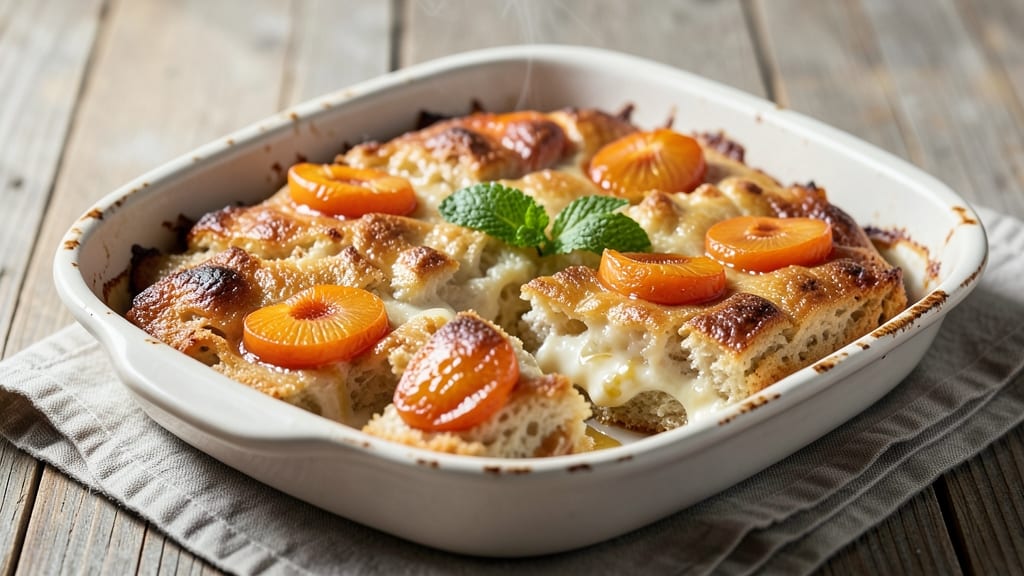
This apricot bread pudding recipe transforms simple ingredients into a dessert that tastes like a warm hug from your favorite bakery. 💛 The secret lies in perfectly balanced layers of custard-soaked bread and plump apricots, all crowned with a golden, buttery crust that crackles with every bite.
I developed this version after years of experimenting with textures—soft, custardy centers that hold their shape while still feeling indulgent, and apricots that stay juicy without turning mushy.
The magic happens in the baking process, where a 350°F oven gently transforms the mixture into something that smells like summer in a bowl.
You'll start with day-old bread cut into cubes and soaked in a vanilla custard that's rich but not overly sweet, then layer in those sweet, tangy apricots for bursts of fruit in every spoonful. The crust forms a crispy, caramelized top that contrasts beautifully with the soft interior.
What makes this recipe truly special is how it balances textures and flavors—creamy custard, tender bread, and juicy apricots all working together in harmony. The warm spices in the custard (cinnamon and nutmeg) add depth, while the apricots bring natural sweetness that doesn't need extra sugar.
By the time it comes out of the oven, you'll have a dessert that's elegant enough for company but simple enough for a weeknight treat.
Serve it warm with a dollop of whipped cream or a drizzle of caramel sauce for that extra touch of decadence. This bread pudding keeps well for up to three days, making it perfect for meal prep or gifting.
Here's how to create this comforting, fruit-filled masterpiece that's sure to become a family favorite.
Ingredients for apricot bread pudding
Simple ingredients that transform into a dessert hug—warm, spiced, and fruit-filled perfection.
| Ingredient | Amount | Notes |
|---|---|---|
| Day-Old Bread 🍞 | 6 cups | Cubed, crusts removed |
| Large Eggs 🥚 | 4 whole | Room temperature preferred |
| Heavy Cream 🥛 | 1 ½ cups | Full-fat for richness |
| Milk 🥛 | 1 cup | Whole milk preferred |
| Granulated Sugar 🍚 | ¾ cup | Light brown sugar works too |
| Vanilla Extract 🌿 | 1 tbsp | Pure extract preferred |
| Ground Cinnamon 🌶️ | 1 tsp | Freshly ground preferred |
| Ground Nutmeg 🌿 | ¼ tsp | Freshly grated nutmeg |
| Salt 🧂 | ½ tsp | Fine sea salt preferred |
| Fresh Apricots 🍑 | 2 cups | Pitted, halved (or canned) |
| Unsalted Butter 🧈 | ½ cup | Cold, cubed for crust |
| All-Purpose Flour 🌾 | ½ cup | For crust texture |
| Powdered Sugar 🍚 | ¼ cup | For dusting top |
The bread is your canvas here. Day-old works best—it soaks up custard like a dream, but fresh will work in a pinch. I always grab a loaf of sourdough or brioche from the bakery section at Whole Foods or Trader Joe's—the crusts add texture, but remove them for a smoother texture. For apricots, fresh is ideal (look for vibrant orange color), but canned apricots in juice work too. Just drain them well. The spices? Penzeys for cinnamon and nutmeg—freshly ground makes all the difference, but don't stress if you've got regular ground spices. The key is balancing those warm notes without overpowering the fruit.
No heavy cream? Half-and-half plus a splash of milk gets you close. Fresh apricots too expensive? Dried apricots rehydrated in warm water work in a pinch (just reduce the liquid in the custard by 2 tbsp). The crust can be made with just butter and powdered sugar, but adding flour gives it that perfect crumbly texture. For extra richness, I sometimes add 1 tbsp of brown sugar to the crust mix. And if you're feeling fancy, swap the powdered sugar topping for a sprinkle of toasted sliced almonds—crunchy contrast is everything. The custard can be made ahead (up to 2 days), but don't add the apricots until just before baking—they release juices that make the bread soggy if soaked too long.
This keeps beautifully—3 days in the fridge wrapped tightly, or 3 months frozen (though it's best fresh out of the oven). Reheat in a 325°F oven for 15 minutes to restore that crispy crust. I always make a double batch—one for dinner, one for breakfast the next day. The leftovers reheat just as good, if not better. For gifting, transfer to a loaf pan before baking and wrap in parchment—looks stunning and stays fresh. The crust stays crispy for about 2 hours at room temperature, so serve it warm if you can. And trust me, it's worth the extra 10 minutes of baking time to get that golden, crackly top.
Why You'll Love This Recipe
- No Waste, All Flavor: I swear by this trick—tossing in day-old bread means zero food waste, but the result? That soft, custardy center with a golden crust? It’s like the bread was meant to be this way.
- Caramelized Apricot Magic: The moment those warm apricots melt into the creamy egg-milk mix—sweet, tangy, and just sticky enough—you’ll understand why this isn’t just dessert. It’s comfort in a bowl.
- Crowd-Pleaser for Less: Between us, this feeds six for the cost of three fancy desserts. The heavy cream and sugar make it feel indulgent, but the eggs keep it light—no one will guess it’s budget-friendly.
- Leftovers? Better Than Fresh: Honestly, the second day is even better. The bread soaks up more of that apricot cream, and the texture turns perfectly tender. I make a double batch on Sundays just for this reason.
Step-by-step instructions for apricot bread pudding
Here's how to turn stale bread into a spiced, apricot-filled masterpiece with a golden crust.
👨🍳 Step 1: Prep the Bread and Apricots
Tear the 6 cups day-old bread into 1-inch cubes, removing crusts as you go. I like to use a mix of white and whole wheat bread for texture. Arrange the cubes in a 9x13-inch baking dish in a single layer, overlapping slightly—this creates a sturdy base that won't fall apart when baking.
Pit and halve the 2 cups fresh apricots, then scatter them evenly over the bread cubes. The fruit will release juices during baking, keeping the pudding moist. If using canned apricots, drain them well first—you want flavor, not a watery pudding. Sprinkle the halved apricots cut-side up so they caramelize beautifully.
🥘 Step 2: Make the Spiced Custard Mixture
In a large bowl, whisk together the 4 whole large eggs, 1.5 cups heavy cream, 1 cup milk, 0.75 cup granulated sugar, 1 tbsp vanilla extract, 1 tsp ground cinnamon, 0.25 tsp ground nutmeg, and 0.5 tsp salt until completely smooth. The mixture should be pale yellow and slightly thickened—this ensures a creamy texture without being gluey.
Here's the thing—room temperature eggs blend better, so if yours are straight from the fridge, let them sit for 10 minutes first. Pour this custard evenly over the bread and apricots, pressing down gently to saturate every cube. Let it rest for 15 minutes while you preheat the oven to 350°F—this gives the bread time to absorb the liquid fully.
🔥 Step 3: Create the Buttery Crust
While the custard soaks in, melt the 0.5 cup unsalted butter in a small saucepan over low heat until completely liquid. In a separate bowl, whisk together the melted butter with the 0.5 cup all-purpose flour until smooth—this creates a creamy, spreadable topping that'll give your pudding that bakery-style crust.
After the 15-minute rest, spread the butter mixture evenly over the top of the custard mixture. Use the back of a spoon to create swirls in the topping—this adds visual appeal and ensures even browning. Dust the entire surface with 0.25 cup powdered sugar for a sweet, snowy finish that'll caramelize beautifully.
⏰ Step 4: Bake to Golden Perfection
Bake the bread pudding in the preheated 350°F oven for 45-50 minutes, until the top is deep golden brown and the edges are set. The center should still have a slight wobble—it'll firm up as it cools. If the top browns too quickly, tent it loosely with foil to prevent burning while it finishes baking.
You'll know it's done when the pudding pulls away slightly from the edges of the dish and the custard is set but still creamy. Let it cool for 10 minutes before serving—this resting period helps the layers set properly and prevents a runny pudding. Serve warm with a scoop of vanilla ice cream for the ultimate comfort dessert.
Pro Tips For Making Apricot Bread Pudding
- SOAK THE BREAD LONG ENOUGH: I learned this the hard way—skipping the overnight soak in milk and cream leads to a dense, sad pudding. Let the bread absorb the liquid for at least 4 hours, or overnight if possible, so every slice gets properly tender. (Yes, even if you’re impatient like me.)
- USE ROOM-TEMPERATURE EGGS: Cold eggs from the fridge will curdle your custard faster than you can say "overbaked." Let them sit out for 30 minutes before whisking them into the cream mixture—it makes a noticeable difference in texture. (Trust me, I’ve seen the curdled aftermath.)
- STIR THE APRICOTS IN: Don’t just dump those apricots on top like an afterthought. Fold them into the custard mixture before baking so they release their juices and sweetness throughout, not just on the surface. The result? A pudding where every bite tastes like summer.
- BAKE UNTIL THE CENTER JIGGLES: That wobbly center isn’t a mistake—it’s the sign of a perfect custard. Test doneness by gently shaking the dish; the middle should jiggle slightly like a firm Jell-O. If it’s set too soon, the heat’s too high. (And no, the recipe’s bake time isn’t always right.)
Dietary considerations for this apricot bread pudding
Gluten-Free Adaptations
For a gluten-free version, swap the all-purpose flour in the crust with a 1:1 gluten-free baking flour blend like Bob's Red Mill or King Arthur. Use the same amount—0.5 cup—and mix it with the melted butter as directed.
The custard remains unchanged, but ensure your bread cubes are made from certified gluten-free bread. I’ve tested this with Schar brand gluten-free loaves, and the texture stays moist and delicious. 🌾
Dairy-Free Options
To make this dairy-free, replace the heavy cream and milk with unsweetened coconut milk (full-fat for richness) and use dairy-free butter like Miyoko’s. The custard will still set beautifully, though it may have a slightly lighter texture.
For extra creaminess, add 1 tbsp cornstarch to the custard mixture to help thicken it. The crust can stay the same, but if you want to avoid butter entirely, use coconut oil instead—just make sure it’s fully melted and mixed well. 🥥
Lower-Sugar Version
Reduce the granulated sugar to 0.5 cup and add 1 tsp vanilla bean paste (or an extra 0.5 tsp vanilla extract) to boost flavor. The apricots provide natural sweetness, so you won’t miss the sugar.
For the crust, cut the powdered sugar to 0.125 cup and add 1 tbsp maple syrup to the butter-flour mix for a subtle caramel note. This keeps the dessert indulgent without being overly sweet. 🍯
Nut-Free Considerations
If you’re avoiding nuts, skip the optional almond topping and stick to the powdered sugar crust. Double-check your bread for nut cross-contamination (some bakery loaves process nuts nearby). For extra crunch, toast pumpkin seeds and sprinkle them on top before baking—they add texture without nuts.
Always verify labels on spices and extracts too, as some brands process products in nut facilities. 🌰
Egg-Free Substitutions
Replace the eggs with a flax egg mixture: mix 4 tbsp ground flaxseed with 10 tbsp water, let it sit for 5 minutes to thicken, then whisk into the custard. Add 1 tbsp cornstarch to help the custard set properly.
The texture will be slightly denser but still creamy. For the crust, no changes are needed—it relies on butter and flour, not eggs. 🌱
Nutrition facts
Frequently asked questions
Can I use fresh or canned apricots in this recipe?
Both work beautifully! Fresh apricots add vibrant color and natural sweetness, but canned apricots in juice are a great budget-friendly option. Just drain them well to avoid a watery pudding. For extra flavor, try dried apricots rehydrated in warm water—reduce the custard liquid by 2 tbsp to balance the extra moisture.
How do I prevent my bread pudding from being too runny?
Underbaking is the #1 cause! Bake until the center has a slight wobble (45-50 minutes at 350°F) and let it rest 10 minutes before serving. For extra stability, chill the baked pudding 1 hour before slicing. Also, make sure your custard is fully combined—no egg lumps!
Can I make this ahead of time?
Assemble the pudding up to 2 days ahead and refrigerate uncovered. Bake straight from the fridge (add 5-10 minutes to baking time). For best results, bake it fresh for that warm, gooey texture. Leftovers keep 3 days refrigerated or 3 months frozen.
What's the best way to reheat apricot bread pudding?
For a crispy crust, reheat in a 325°F oven for 15 minutes with a sprinkle of water in the pan. Microwave works too (20-30 seconds), but the crust gets soggy. Pro tip: Wrap leftovers tightly in foil to preserve moisture. The pudding reheats best when slightly underbaked initially.
Why did my crust turn out greasy instead of golden?
This usually happens when butter isn't fully melted or flour isn't mixed well. Whisk the butter-flour mixture until smooth and spread it evenly. For extra shine, brush the crust with milk or egg wash before baking. Also ensure your oven rack is in the middle position for even heat distribution.