
Side Dishes
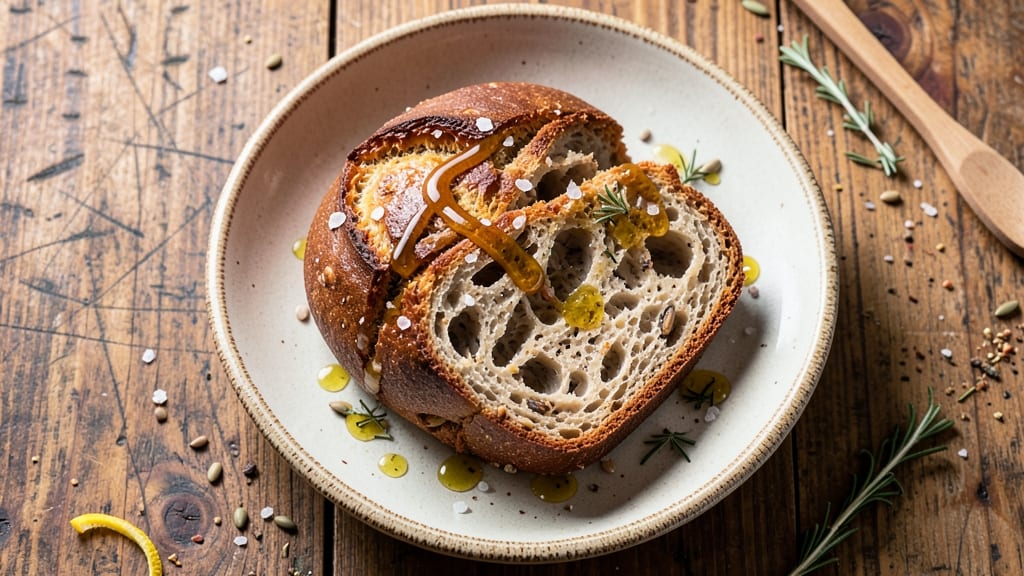
This einkorn bread recipe brings ancient grains into your kitchen with a nutty depth and crusty crunch that modern wheat simply can't match. The secret lies in einkorn's unique protein structure, which creates a tender yet sturdy crumb and an irresistible golden crust—no fancy equipment required.
I've perfected this version after years of experimenting with traditional sourdough techniques, ensuring every bite delivers that authentic ancient grain flavor.
The beauty of einkorn lies in its simplicity: just four core ingredients transform into a loaf that's both rustic and refined. Unlike modern wheat, einkorn develops flavor naturally through proper fermentation, creating that signature nutty complexity without needing added sweeteners or fats.
The dough comes together in under 10 minutes, but the real magic happens during the slow fermentation—where the gluten develops just enough structure for that satisfying crunch.
What you'll end up with is a loaf with an irresistibly crisp exterior that shatters when sliced, revealing a tender crumb with subtle nutty undertones. The aroma alone—warm, earthy, and slightly sweet—will have your kitchen smelling like a Mediterranean bakery.
This bread pairs beautifully with soups, olive oil, or simply toasted with butter for breakfast.
Whether you're new to ancient grains or a seasoned baker, this recipe delivers professional-quality results with minimal effort. The key techniques—proper hydration, controlled fermentation, and steam baking—are all explained in simple terms. Let's get started on this journey back to ancient baking traditions.
Ingredients for ancient grains einkorn bread
Four core ingredients transform into rustic einkorn bread with nutty depth and irresistible crust.
| Ingredient | Amount | Notes |
|---|---|---|
| Einkorn Flour 🌾 | 3 ½ cups | Organic preferred for best flavor |
| Active Dry Yeast 🍞 | 0.03 oz | Or 1 packet (2.5g) |
| Warm Water 💧 | 1 ¼ cups | 105°F for ideal yeast activation |
| Sea Salt 🧂 | 1 ½ tsp | Diamond Crystal preferred |
| Olive Oil 🫒 | 1 tbsp | Extra-virgin for richness |
| Honey 🍯 | 1 tsp | Optional for slight sweetness |
| Cornmeal 🌽 | ¼ cup | For dusting and steam baking |
| Ice Water ❄️ | ½ cup | For final dough adjustment |
Einkorn flour is the star here—Bob's Red Mill or King Arthur are my go-tos for consistent quality. The yeast should be fresh; if it's been sitting in your pantry for months, test it first (proof in warm water with sugar). For the water, use a thermometer—105°F is perfect for activating the yeast without killing it. If you can't find einkorn flour, whole wheat pastry flour mixed with all-purpose (70/30 ratio) works in a pinch, though the flavor won't be identical. The olive oil adds richness, but if you're avoiding oil, melted butter or coconut oil are great substitutes.
No honey? Maple syrup or agave work just as well for that subtle sweetness. The cornmeal is non-negotiable for the steam baking—it creates that signature crisp crust. If you're baking in a Dutch oven, skip the extra cornmeal on the baking sheet. For the ice water, grab a small bowl and freeze it overnight—no need for actual ice cubes. The dough will feel sticky, but resist the urge to add more flour; einkorn needs hydration to develop its signature texture. If your kitchen is humid, reduce the ice water by 2 tbsp—the dough shouldn't stick to your fingers when handled.
This dough ferments best at room temperature (70-75°F)—if your kitchen is cooler, place it near a warm spot. Shape the loaf gently; einkorn is delicate. For the crust, spray the oven walls with water before baking to create steam. The bread keeps well wrapped at room temperature for 2 days or frozen for 3 months. Toast slices for maximum crunch—the crust gets even better the next day. Leftovers? Toss them in a toaster oven at 350°F for 5 minutes to revive that bakery-fresh aroma.
Why You'll Love This Recipe
- Four-Ingredient Magic: The yeast, salt, and olive oil are the only extras—no fancy mixers or additives. Honestly, I’ve made bread with twice as many ingredients that still felt like a chore.
- Nutty, Toasty Crunch: That einkorn flour? It’s got a deep, almost hazelnut warmth that turns every slice into something special. The crust gets a golden crackle, and the inside stays tender—no dry, sad loaves here.
- Weeknight Workhorse: Toss it with soup, charcuterie, or even just butter—it’s the one bread that never feels out of place. I’ve used it for breakfast toast, dinner sides, and even as a makeshift plate for sandwiches.
- Budget-Friendly Staple: A single batch feeds my family for days, and einkorn flour lasts longer than white flour. Between us, this is the bread that actually saves me money while tasting like I spent hours baking.
Step-by-step instructions for ancient grains einkorn bread
Here's the method that delivers authentic einkorn flavor with a perfect crust every time.
Activate the Yeast with Warm Water and Honey
In a medium bowl, combine the 1.25 cups warm water (about 105°F) with the 1 tsp honey and 0.03 oz active dry yeast. Let it sit for 5-10 minutes until it becomes frothy and bubbly. This confirms your yeast is active—if nothing happens after 15 minutes, start over with fresh yeast.
The honey not only feeds the yeast but also adds subtle sweetness that complements einkorn's nutty depth. I like to use a digital thermometer to check the water temperature—too hot and you'll kill the yeast; too cool and it won't activate properly.
Mix the Dough with Einkorn Flour and Olive Oil
In a large bowl, whisk together the 3.5 cups einkorn flour and 1.5 tsp sea salt. Create a well in the center and pour in the yeast mixture along with the 1 tbsp extra-virgin olive oil. Using a wooden spoon, stir until a shaggy dough forms—this takes about 2-3 minutes of vigorous mixing.
Einkorn flour is more absorptive than modern wheat, so don't be surprised if the dough feels dry at first. The olive oil helps create a tender crumb while adding rich flavor. Once the dough comes together, let it rest for 5 minutes before kneading—this prevents gluten from developing too quickly.
Develop the Dough with Minimal Handling
Turn the dough onto a lightly floured surface and knead gently for 5-7 minutes until smooth and elastic. Einkorn develops gluten more slowly than modern wheat, so resist the urge to overwork it—just until it passes the "windowpane test" (stretch a small piece until it's translucent).
Shape the dough into a loose round and place it back in the bowl. Cover with a damp towel and let it rise at room temperature for 1-2 hours, or until doubled in size. The slower rise enhances einkorn's natural flavor without overproofing the delicate gluten structure.
Shape and Proof the Loaf for Maximum Crust
Punch down the dough and shape it into a round boule or oval batard. Place it seam-side up on a parchment-lined baking sheet, lightly dusted with 0.25 cup cornmeal. Cover again and let it proof for 30-45 minutes until it springs back slowly when poked.
The cornmeal creates steam during baking, which develops that coveted crispy crust. I like to use a digital scale for shaping—aim for 1.5-2 pounds per loaf to ensure proper oven spring. The proofing stage is critical: underproofed bread collapses, while overproofed bread loses structure.
Bake with Steam for Crusty Perfection
Preheat your oven to 425°F with a Dutch oven inside for 30 minutes. Remove the Dutch oven and transfer the shaped dough into it. Immediately pour 0.5 cup ice water into the bottom of the Dutch oven to create steam—this is essential for einkorn's crust development.
Bake covered for 25 minutes, then remove the lid and bake for another 15-20 minutes until the crust is deep golden brown and sounds hollow when tapped. The internal temperature should reach 205-210°F at the center. Let the bread cool on a wire rack for at least 1 hour before slicing—this prevents a gummy crumb.
Pro Tips For Making Ancient Grains Einkorn Bread
- Use Lukewarm Water: Einkorn yeast is picky—too hot and it dies, too cold and it sleeps forever. Fill your bowl with water, let it sit for 5 minutes after boiling, then test with your wrist: it should feel like a warm bath, not a sauna. I learned this the hard way after watching my first batch of dough take three hours to rise.
- Autolyse First: Mix the einkorn flour and warm water, then let it sit for 30 minutes before adding yeast or salt. This step hydrates the flour fully, making the dough easier to handle and giving you a lighter crumb. Sounds weird, but it works—my dough went from dense to airy overnight.
- Skip the Over-Kneading: Einkorn dough is sticky and tough to work with, but you don’t need to knead it like modern wheat. Just do 5 minutes of gentle stretching and folding—enough to develop gluten without exhausting yourself. Over-kneading turns it gummy, and nobody wants that.
- Proof in a Warm Spot: Your oven’s lightbulb or a turned-off broiler set to 80°F (27°C) is your friend here. Einkorn rises slower than regular flour, so give it 1.5–2 hours until it’s puffy but not doubled—it’ll keep going. I was skeptical until I tried it; now I never proof it on the counter again.
Regional styles of this recipe
Mediterranean Origins
Einkorn bread traces back over 10,000 years to the Fertile Crescent, where ancient farmers first cultivated this hardy grain. The Mediterranean region—particularly Italy, Greece, and Turkey—preserved einkorn traditions long after modern wheat took over.
In Southern Italy, einkorn was called "farro piccolo" (little spelt), baked into rustic loaves for peasant families. The nutty flavor comes from its high protein content and unique gluten structure, which creates that signature tender-yet-crisp texture. 🌾
Italian Rustic Style
Italian bakers often shape einkorn into free-form loaves with a thick, irregular crust—no fancy molds needed. For an authentic touch, add 1 tbsp whole fennel seeds to the dough for an anise-like aroma (toast them first in a dry pan).
The Italians also use less yeast (just 0.02 oz) to slow fermentation, letting the grain's natural flavors develop fully. Serve with extra-virgin olive oil and aged balsamic vinegar for a true Tuscan experience.
Middle Eastern Twist
In Lebanon and Syria, einkorn was mixed with freekeh (green wheat) for a nutty, smoky bread. For this variation, replace 0.5 cup einkorn flour with freekeh flour and add 1 tsp ground cumin to the dough.
Bake in a clay pot if possible—it retains moisture better and enhances the earthy flavors. The result? A denser, heartier loaf perfect for dipping in garlic yogurt sauce or za'atar-spiced olive oil.
Nordic Crispy Crust
Scandinavian bakers take einkorn bread to the next level by soaking the dough overnight in buttermilk for extra tang. Replace the water with 1 cup buttermilk and add 1 tbsp malt powder (or 1 tbsp brown sugar) to feed the yeast slowly.
After shaping, brush the loaf with melted butter before baking for a shatteringly crisp crust. This version pairs beautifully with smoked salmon or cranberry compote—a Nordic favorite.
Modern American Adaptations
In the U.S., einkorn bread has evolved into sandwich loaves and baguettes, often with added seeds (sunflower, flax) for extra crunch. For a seed-studded version, sprinkle 2 tbsp mixed seeds on top before baking. Many American bakers also use poolish (a pre-ferment) for a lighter crumb.
Try mixing 1 cup einkorn flour with 1 cup all-purpose flour for a hybrid loaf that’s easier to slice—great for grilled cheese or avocado toast.
Fermentation Secrets
The key to regional success lies in fermentation time. In cool climates (like Scandinavia), ferment dough for 6-8 hours at room temp to develop deep flavor. In warm climates (like Italy), keep it to 2-3 hours to prevent overproofing.
For a wild yeast version, replace commercial yeast with 1 cup einkorn sourdough starter—this takes 12-24 hours but yields a tangy, complex loaf. 💡
Nutrition facts
Frequently asked questions
Can I substitute einkorn flour with regular flour?
While you can use a 70/30 mix of whole wheat pastry flour and all-purpose flour, the texture and flavor won't be identical. Einkorn's unique protein structure creates that signature tender-yet-crisp crumb. For best results, stick with certified organic einkorn flour from brands like Bob's Red Mill or King Arthur. The nutty depth comes from the grain itself—no substitute can fully replicate it!
Why does my einkorn dough feel so sticky?
Einkorn flour absorbs more moisture than modern wheat, creating a naturally sticky dough. This is normal and essential for developing its signature texture! Resist adding extra flour—it prevents proper gluten formation. Wet your hands slightly when handling the dough, and use ice water (not flour) to adjust consistency if needed. The stickiness actually helps create that irresistible crust.
How do I know when the bread is fully baked?
Look for three signs: deep golden brown crust, a hollow sound when tapped on the bottom, and an internal temperature of 205-210°F. The crust should shatter slightly when sliced, not be gummy. If unsure, bake 5 more minutes—einkorn bread continues cooking slightly after removal. Let it cool completely before slicing to prevent a dense crumb.
Can I make this bread without a Dutch oven?
Yes! Create steam by placing a metal bowl of boiling water on the oven rack below your baking sheet. For extra crispness, spray the oven walls with water when you put the bread in. If using a baking sheet, dust it heavily with cornmeal and bake at 450°F for 5-10 minutes longer. The crust won't be as dramatic, but the flavor will still be excellent.
How should I store einkorn bread for maximum freshness?
Wrap cooled bread tightly in beeswax wrap or foil to lock in moisture. Store at room temperature for 2 days or freeze for 3 months. For best texture, toast slices before serving—this revives the crust. If storing longer than 2 days, freeze half the loaf. The bread actually improves overnight as the starches firm up!