
Side Dishes
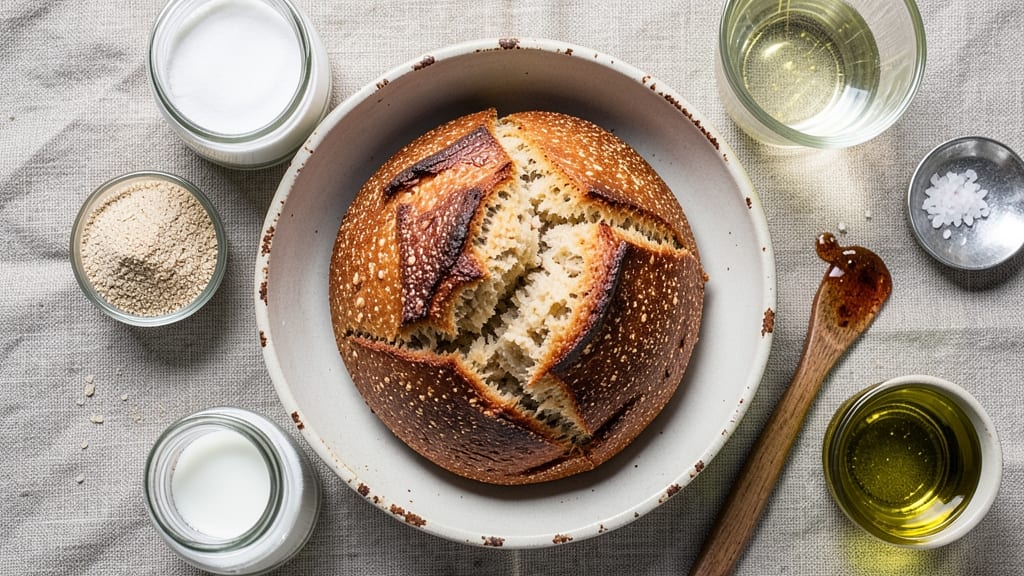
This almond flour artisan bread recipe delivers a gluten-free loaf with a shatterproof crust and airy crumb—something I perfected after years of experimenting with plant-based baking.
The secret lies in proper hydration and gentle handling, which transforms dense almond flour into a bread that rivals traditional wheat-based loaves in texture and flavor. What makes this recipe work is the balance of moisture and structure, ensuring your bread bakes up tall with an irresistible nutty aroma.
The process begins with a wetter-than-usual dough that relies on xanthan gum to mimic gluten's binding properties, while psyllium husk adds just enough chewiness.
Unlike store-bought gluten-free breads, this recipe avoids gums and starches that create a rubbery texture—what you'll get instead is a loaf with a crisp, golden crust and a tender, slightly crumbly interior that's perfect for toast or sandwiches.
The key is patience during proofing and baking, which develops that signature artisan texture.
By the time your bread emerges from the oven, you'll have a loaf that's shatterproof yet tender, with a rich almond flavor that pairs beautifully with soups, charcuterie boards, or simply slathered with vegan butter.
The crust develops a satisfying crackle, while the interior remains moist enough to hold up to hearty fillings. This isn't just gluten-free—it's a bread that stands on its own, proving plant-based baking can achieve restaurant-quality results at home.
Whether you're baking for dietary needs or simply love the nutty depth of almond flour, this recipe delivers a loaf that's worth the effort. The method is straightforward but requires attention to detail—hydration, proofing times, and baking temperature all play critical roles in achieving that perfect texture.
Let's get started on creating your own artisan-quality gluten-free bread.
Ingredients for almond flour artisan bread
The right ingredients transform almond flour into a shatterproof loaf with restaurant-quality texture.
| Ingredient | Amount | Notes |
|---|---|---|
| Almond Flour 🌰 | 3 cups | Superfine, blanched preferred |
| Psyllium Husk Powder 🌿 | 1 ½ tbsp | Pure, unsweetened variety |
| Xanthan Gum 🧪 | ½ tsp | Pure, food-grade |
| White Vinegar 🍶 | ½ cup | Distilled, for acidity |
| Water 💧 | 1 ¼ cups | Room temperature preferred |
| Salt 🧂 | 1 ½ tsp | Fine sea salt preferred |
| Maple Syrup 🍁 | 2 tbsp | Pure, grade B preferred |
| Olive Oil 🫒 | ¼ cup | Extra-virgin for richness |
| Active Dry Yeast 🍞 | 1 ½ tsp | Freshly opened packet |
| Brown Sugar 🍚 | 1 tbsp | Light, for crust color |
| Sesame Seeds 🌻 | 1 tbsp | Toasted, for topping |
| Poppy Seeds 🌱 | 1 tbsp | For decorative finish |
Almond flour makes or breaks this recipe—Bob's Red Mill or Anthony's Goods are the gold standard for super-fine grind. The psyllium husk? Now Foods or Nutrabio brands work best, but any pure powder will do. Xanthan gum is non-negotiable for gluten-free structure—Bob's Red Mill makes a reliable version. For the yeast, grab Saf-Instant from the baking aisle—it's the most consistent brand. Toast your sesame and poppy seeds in a dry pan for 30 seconds before using—they'll add crunch and flavor to the crust.
No psyllium husk? Flaxseed meal at double the amount works in a pinch, though texture will be slightly denser. Substituting almond flour with sunflower seed flour at half the quantity keeps it gluten-free but changes the nutty profile. Vinegar can be swapped for lemon juice at equal measure, but maple syrup is tricky—agave nectar is the closest alternative. Olive oil? Avocado oil works too, but it lacks the fruity depth. The yeast is the only ingredient here that needs to be fresh—if your packet's past its expiration, toss it. For a richer crust, brush the baked loaf with melted vegan butter mixed with a pinch of salt.
This dough needs time—at least 2 hours of proofing at room temperature. Store leftovers in an airtight container for 3 days or freeze for 3 months. To revive frozen bread, wrap it in a damp towel and warm in a 200°F oven for 10 minutes. The crust stays crisp for 2 days if kept sealed, but the interior softens beautifully when toasted. For extra crunch, sprinkle more seeds on top before baking—everything bagel seasoning works great too.
Why You'll Love This Recipe
- No-Fuss Mixing: I swear by the 5-minute stir—just almond flour, psyllium husk powder, and a splash of vinegar. The xanthan gum does all the heavy lifting, so I don’t even need to knead or worry about gluten.
- Nutty Crust, Soft Core: That first bite? Buttery almond warmth with a crackly exterior—like a cross between sourdough and a fancy biscuit. Honestly, the vinegar’s tang cuts through the richness just enough to make it ridiculously satisfying.
- Meal Prep MVP: Slices perfectly for toast, sandwiches, or charcuterie boards—no soggy bread here. I bake a loaf on Sundays and still have crusty pieces by Friday, even with my family’s "emergency snack" habits.
- Budget-Friendly Luxury: Uses pantry staples and stretches far—one batch feeds my household for days. Plus, the psyllium husk powder is cheap and makes the texture chef’s kiss without fancy ingredients. (Yes, even on a Tuesday night.)
Step-by-step instructions for gluten-free almond flour bread
This method delivers a shatterproof crust and tender crumb—perfect for gluten-free baking.
Activate the Yeast and Prepare the Wet Ingredients
In a small bowl, combine the 1.25 cups water, 1.5 tsp active dry yeast, and 1 tbsp brown sugar. Let it sit for 5-10 minutes until frothy—this confirms the yeast is alive. Meanwhile, in a separate bowl, whisk together the 0.5 cup white vinegar, 0.25 cup olive oil, 2 tbsp maple syrup, and 1.5 tsp salt. The vinegar will create a slight curdling effect, which is normal and helps develop structure in the gluten-free dough.
I always test the yeast first—if it doesn’t foam, your bread won’t rise properly. The vinegar and olive oil combo adds moisture and richness, while the maple syrup contributes subtle sweetness and helps with browning. This mixture should be thick but pourable, not watery.
Combine Dry Ingredients and Hydrate the Dough
In a large mixing bowl, whisk together the 3 cups almond flour, 1.5 tbsp psyllium husk powder, and 0.5 tsp xanthan gum. The psyllium husk is crucial here—it mimics gluten’s elasticity, while the xanthan gum adds binding power. Gradually pour in the wet ingredients while mixing with a wooden spoon or silicone spatula until a thick, shaggy dough forms.
At this stage, the dough will look dry and crumbly, but don’t panic—this is normal for almond flour-based recipes. The psyllium husk needs time to absorb moisture and activate. Let the dough rest for 5 minutes while you prep your baking pan. This brief rest helps the ingredients meld before shaping.
Shape and Proof the Dough
After resting, wet your hands with water and gently shape the dough into a 9x5-inch loaf pan, pressing firmly to eliminate air pockets. The dough should stick slightly to your fingers—this indicates proper hydration. Sprinkle 1 tbsp sesame seeds and 1 tbsp poppy seeds evenly over the top for texture and decoration.
Cover the loaf pan tightly with plastic wrap and let it proof at room temperature for 1-2 hours, or until the dough has risen about 50% above the pan’s rim. Here’s the thing—gluten-free dough rises differently than wheat-based dough. It won’t double in size, but it should visibly expand and feel slightly springy when pressed gently with a finger. If your kitchen is cold, proofing may take longer.
Bake for a Shatterproof Crust
Preheat your oven to 350°F and place a small baking dish on the lower rack to create steam. This steam is key for that artisan bread texture. Bake the loaf for 45-55 minutes, until the internal temperature reaches 205-210°F and the crust is deep golden brown. Tap the loaf lightly—it should sound hollow when done.
I’ve found that baking time varies slightly based on oven calibration. If the top browns too quickly, tent loosely with foil after 30 minutes to prevent over-browning while ensuring the center cooks through. The bread should have a crisp, shatterproof crust that snaps when broken, with a tender, slightly dense crumb inside.
Pro Tips For Making Almond Flour Artisan Bread
- STIR LIKE YOU MEAN IT: Mix the wet ingredients—vinegar, water, and psyllium husk powder—until the psyllium forms a thick, stretchy gel that holds together when you pull your spoon away. I used to give it half-hearted stirs, and the dough always ended up gummy or crumbly. This step is the bread’s backbone, so don’t skimp on the elbow grease.
- WEIGH THE ALMOND FLOUR: Scooping almond flour from the bag is a disaster waiting to happen—it’s light, fluffy, and lies to you about volume. Use a kitchen scale for precision; 1 cup of almond flour isn’t always 100 grams. After overpacking my first loaf (thank you, dense dough), I learned to measure by weight—now my bread rises consistently.
- DON’T OVERMIX THE DOUGH: Once you fold in the almond flour and xanthan gum, stop stirring the second everything comes together. Overworking it develops gluten-like toughness, and this bread isn’t trying to be a baguette. A few gentle folds with a spatula are enough—any more, and you’ll end up with a dense, chewy brick instead of a light, airy loaf.
- LET IT REST—EVEN IF YOU HATE WAITING: After shaping, cover the dough and let it sit for at least 30 minutes (yes, even if you’re staring at the clock). This relaxes the psyllium and xanthan gum, which otherwise shrink aggressively in the oven. I skipped this once and got a sad, collapsed loaf. Trust the process—your bread will thank you with a better rise and crumb.
Wine and beer pairings for these flavors
Wine Pairings
This nutty, dense almond flour bread pairs beautifully with crisp, dry whites that cut through its richness. A Sauvignon Blanc from New Zealand—like Cloudy Bay—brings bright citrus and herbal notes that complement the almond flavor without overpowering it.
The acidity in these wines helps balance the bread’s natural sweetness from the maple syrup. 🍷
Light-Bodied Reds
For a red wine option, go for a Pinot Noir with delicate fruit flavors and low tannins. Look for a Willamette Valley bottle like Domaine Serene—its red berry notes and silky texture won’t compete with the bread’s nutty depth.
The wine’s earthiness actually enhances the almond flour’s natural richness, creating a harmonious pairing.
Sparkling Options
If you prefer something bubbly, a dry Prosecco or Italian sparkling wine like La Marca works wonderfully. The effervescence cleanses your palate between bites, while the crisp acidity balances the bread’s density. This pairing is especially refreshing when serving with charcuterie or vegan cheese boards.
Beer Pairings
A Belgian witbier like Hoegaarden or Stella Artois (for a more approachable option) pairs surprisingly well. The coriander and citrus notes in witbiers mirror the almond flour’s nutty profile, while the light maltiness complements the bread’s subtle sweetness.
For a darker option, try a German Pilsner—its herbal and hoppy characteristics provide a nice contrast. 🍺
Avoid Heavy Options
Skip heavy, oaky whites like Chardonnay or bold reds like Cabernet Sauvignon—they’ll overwhelm the bread’s delicate texture and nutty flavor. Similarly, avoid sweet dessert wines or high-alcohol beers, as they’ll clash with the bread’s clean, crisp profile. The goal is to highlight the bread’s natural qualities, not mask them.
Nutrition facts
Frequently asked questions about almond flour artisan bread
Why does my almond flour bread turn out dense instead of light?
Almond flour absorbs more moisture than wheat flour, so proper hydration is key. Use 1.25 cups water and let the dough rest for 5 minutes before shaping—this helps the psyllium husk activate fully. Overmixing or skipping the proofing step can also create density. The bread should have a slightly crumbly yet tender interior, not rock-hard.
Can I make this bread without psyllium husk?
Yes, but texture will differ. Replace 1.5 tbsp psyllium husk with 3 tbsp flaxseed meal mixed with 9 tbsp water (let it gel for 10 minutes). The bread will be denser but still delicious. Psyllium creates that signature artisan chewiness, so expect a more cake-like crumb without it.
How do I store this gluten-free bread to keep it fresh?
Wrap cooled bread tightly in plastic wrap or an airtight container to preserve moisture. Store at room temperature for 3 days, or freeze for up to 3 months. To revive frozen bread, thaw in a 200°F oven for 10 minutes wrapped in a damp towel. The crust stays crisp for 2 days if sealed properly.
Why does my almond flour bread crack on the top but still feel underbaked?
This happens when the exterior browns too quickly while the center stays cool. Lower your oven temp to 325°F and bake for 10-15 minutes longer, or tent with foil after 30 minutes. The internal temp should reach 205-210°F. A baking dish on the lower rack creates steam for even browning.
Can I use this dough to make rolls instead of a loaf?
Divide the dough into 6 equal portions and shape into balls. Place on a parchment-lined baking sheet, cover, and proof for 1 hour. Bake at 350°F for 20-25 minutes until golden. Brush with olive oil after baking for extra shine. Rolls will have a softer crust but maintain the same tender interior.