
Desserts
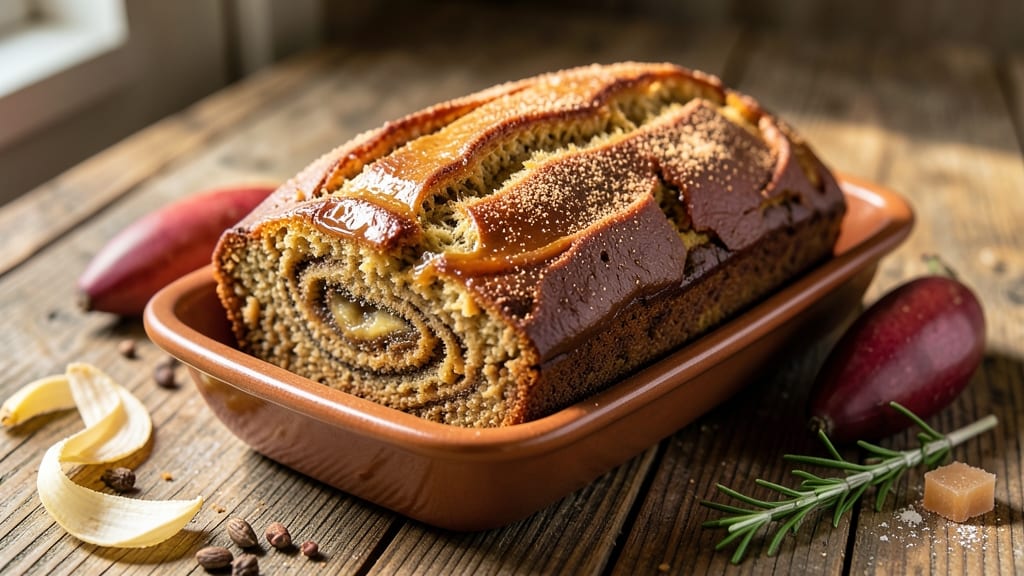
This African banana bread recipe transforms ripe plantains into a moist, fragrant loaf with swirls of caramelized sweetness that taste like sunshine in every bite. 🌟 The secret lies in blending plantains with traditional banana bread ingredients, creating a tender crumb that stays fresh for days.
Unlike conventional banana bread, this version uses plantains for natural sweetness and a denser texture, while warm spices like cinnamon and nutmeg add depth that feels distinctly African.
The magic happens when you steam the plantains first—this softens them into a smooth, custard-like consistency that blends seamlessly with the batter. No food processor? No problem. A simple masher works just as well, and the result is a bread that’s foolproof for beginners but impressive enough for gatherings.
The swirls of plantain puree create beautiful marbling, making it as visually appealing as it is delicious.
What sets this apart is the balance of flavors: the caramelized plantains contrast perfectly with the subtle warmth of cinnamon, while a touch of vanilla rounds out the taste. The bread emerges from the oven with a golden crust and a velvety interior that’s neither too sweet nor too heavy.
It’s the kind of dessert that disappears quickly—perfect for breakfast, brunch, or an after-dinner treat.
For those who love variations, try adding a pinch of cardamom for an exotic twist or swapping butter for coconut oil to make it vegan. The recipe scales easily, so double it for holiday baking or share it as a gift—every slice tells a story of tradition and warmth.
Ready to bake?
Ingredients for african banana bread
Transform ripe plantains into a fragrant, moist loaf with caramelized swirls that capture African warmth and tradition.
| Ingredient | Amount | Notes |
|---|---|---|
| Ripe Plantains 🍌 | 2 cups | Steamed and mashed smooth |
| All-Purpose Flour 🌾 | 2 ½ cups | Sifted for light texture |
| Granulated Sugar 🍚 | 1 cup | Brown sugar for depth |
| Unsalted Butter 🧈 | ½ cup | Cold, cubed for creaming |
| Large Eggs 🥚 | 2 whole | Room temperature |
| Pure Vanilla Extract 🌿 | 1 tbsp | High-quality Madagascar |
| Ground Cinnamon 🌶️ | 1 ½ tsp | Toasted for aromatic punch |
| Ground Nutmeg 🌿 | ½ tsp | Freshly grated preferred |
| Baking Soda 🧂 | 1 tsp | Freshly opened |
| Salt 🧂 | ½ tsp | Fine sea salt |
| Milk 🥛 | ½ cup | Whole milk preferred |
| Plantain Puree 🍌 | 1 cup | Reserved for swirls |
The plantains are the heart of this recipe—ripe but not overripe, with blackened skin and slightly soft flesh. Look for them in the produce section at Whole Foods or African specialty markets, where they're often sold in bulk. If you can't find ripe ones, steam them yourself for 15 minutes until tender. The butter should be cold and cubed for proper creaming, and the vanilla extract should be pure Madagascar for that rich, floral aroma. Diamond Crystal baking soda is ideal here—it's twice as potent as other brands, so measure carefully.
No ripe plantains? Substitute with mashed ripe bananas—though the flavor will be subtly different. Want extra richness? Swap butter for coconut oil to make it vegan-friendly. The cinnamon and nutmeg are non-negotiable for that African warmth, but if you're feeling adventurous, add a pinch of cardamom for an exotic twist. For the swirls, reserve 1 cup of the plantain puree before mixing with the batter—this creates those beautiful marbled patterns. If your batter seems too thick, add milk 1 tbsp at a time until it reaches a smooth, pourable consistency.
This bread keeps beautifully for 3-4 days at room temperature, wrapped in a beeswax wrap to maintain moisture. For longer storage, slice and freeze portions—they reheat perfectly in the toaster. The plantain swirls caramelize further when reheated, so microwave for 10 seconds to revive that warm, fragrant aroma. Double the recipe for holiday baking—it's a crowd-pleaser that disappears quickly, and every slice carries that story of tradition and warmth.
Why You'll Love This Recipe
- Here’s what sold me: the sugar caramelizes just enough to balance the plantains’ natural stickiness. No cloying sweetness—more like a grown-up dessert that still feels like a treat. (Yes, even on a Tuesday night.)
- No Chopping Needed: I’ll admit, I’m not the world’s best chopper—but this bread only needs mashed plantains. Just peel, squish, and mix. That’s it. The ripe fruit breaks down like buttercream, so no tiny hands or sharp knives required.
- Sweet Without Overdoing It: Here’s what sold me: the sugar caramelizes just enough to balance the plantains’ natural stickiness. No cloying sweetness—more like a grown-up dessert that still feels like a treat. (Yes, even on a Tuesday night.)
- Leftovers That Last: Between us, this bread stays moist for days. I’ve wrapped slices in foil and tossed them in my lunchbox for work—no sad, dried-out edges. The butter keeps it rich, so it’s basically a free breakfast upgrade.
Step-by-step instructions for African banana bread
Here's the precise method for achieving that signature moist crumb and rich plantain swirl.
👨🍳 Step 1: Prepare the Plantain Puree and Swirl Mixture
Start by steaming the 2 cups of ripe plantains until tender - about 10-12 minutes in a steamer basket over boiling water. The plantains should yield easily when pierced with a fork. Mash them smooth using a potato masher or fork, then press through a fine-mesh sieve to create the 1 cup of plantain puree reserved for swirls.
In a small bowl, combine the remaining mashed plantains with 1 cup granulated sugar, 1.5 teaspoons ground cinnamon, and 0.5 teaspoon ground nutmeg. Set aside - this will create those signature caramelized swirls throughout the bread. The sugar will draw out moisture from the plantains, creating a thick, syrupy mixture perfect for swirling.
🍳 Step 2: Cream Butter and Sweeteners for Light Texture
In a stand mixer fitted with the paddle attachment, beat the 0.5 cup unsalted butter (cold and cubed) with the 1 cup granulated sugar on medium speed for 3-4 minutes until light and fluffy. You'll see the mixture nearly double in volume and become pale in color - this incorporates air that creates the bread's signature tender crumb.
The butter should be completely creamed with no visible lumps, and the sides of the bowl should be clean. This step is crucial - under-creaming leads to dense bread. Add the 2 whole large eggs one at a time, mixing just until incorporated after each addition. Scrape down the sides of the bowl as needed to ensure even mixing.
👨🍳 Step 3: Combine Dry Ingredients and Wet Components
In a separate bowl, whisk together the 2.5 cups all-purpose flour, 1 teaspoon baking soda, 0.5 teaspoon salt, remaining 1.5 teaspoons cinnamon, and 0.5 teaspoon nutmeg. Sift the dry ingredients directly into the wet mixture to prevent gluten development that would make the bread tough.
With the mixer on low speed, gradually add the 0.5 cup milk and 1 tablespoon pure vanilla extract until just combined. The dough will be thick and sticky - this is normal. Avoid overmixing which develops gluten. The batter should be smooth with no visible flour streaks but still slightly lumpy in texture.
🥘 Step 4: Layer and Swirl for Signature Appearance
Preheat your oven to 350°F and grease a 9x5-inch loaf pan thoroughly with butter. Pour half of the batter into the prepared pan, spreading it evenly. Drop spoonfuls of the plantain-sugar mixture evenly over the batter, then gently swirl with a knife to create marbled patterns. Add the remaining batter and repeat the swirling process.
For best results, use a butter knife to create gentle swirls rather than deep cuts. The plantain mixture should be distributed evenly throughout the batter. Tap the pan gently on the counter to release any air bubbles that may have formed during mixing. This layering creates those beautiful caramelized swirls while maintaining the bread's moist texture.
🔥 Step 5: Bake to Golden Perfection and Rest Properly
Bake for 50-55 minutes until a toothpick inserted in the center comes out clean with just a few moist crumbs clinging to it. The top should be golden brown with no raw batter visible. If the top browns too quickly, tent loosely with aluminum foil after 30 minutes to prevent over-browning while maintaining even cooking.
Remove from the oven and let cool in the pan for 10 minutes before transferring to a wire rack to cool completely. This resting period allows the moisture to redistribute throughout the bread, preventing a gummy texture. The bread will be slightly underdone at the center when first removed from the oven - this ensures maximum moisture retention as it cools.
Pro Tips For Making African Banana Bread
- CHAR THE PLANTAINS FIRST: Skip the raw plantain shortcut—boil or steam them for 10-12 minutes until fork-tender. I learned this the hard way: raw plantains turn your bread dense and chewy. The slight caramelization from cooking also adds depth that raw slices just can’t match.
- USE COLD BUTTER FOR LAYERS: Cream your unsalted butter cold, then add sugar gradually. This creates tiny air pockets that lighten the crumb—no need for fancy mixers. I was skeptical until I tried it: the texture went from heavy to fluffy overnight.
- DON’T OVERMIX THE BATTER: Stir just until the flour disappears—overmixing develops gluten, which makes this bread tough. Fold in the mashed plantains gently; they’re fragile, and rough handling turns them into mush. Trust the process—your future self will thank you.
- TEST DONENESS WITH A TOOTHPICK: The bread’s dark crust hides a moist center—insert a toothpick into the thickest part. A few moist crumbs are fine, but liquid batter means more baking time. I’ve seen this bread collapse when pulled too soon, and it’s a mess.
Best sauces and condiments for this dish
Caramelized Honey Glaze
Drizzle warm African banana bread with a simple caramelized honey glaze made from ¼ cup honey, 1 tbsp unsalted butter, and a pinch of sea salt. Heat in a small saucepan over low heat for 3-4 minutes, stirring constantly, until smooth and slightly thickened.
Brush onto warm slices for a glossy finish that enhances the plantain sweetness. 🍯
Spiced Whipped Cream
Whip ½ cup heavy cream with 1 tbsp powdered sugar, ½ tsp vanilla extract, and a pinch of cinnamon until soft peaks form. This light, aromatic topping balances the bread’s richness and adds a touch of elegance to your presentation.
Store in the fridge for up to 3 days in an airtight container.
Chocolate-Dipped Edges
Melt ½ cup dark chocolate (70% cocoa) with 1 tbsp coconut oil in a double boiler, then dip the edges of each slice into the chocolate. Let set on parchment paper for 10 minutes before serving. The bitterness of the chocolate contrasts beautifully with the bread’s caramelized plantain swirls. 🍫
Coconut Whipped Cream
For a tropical twist, whip ½ cup coconut cream (chilled overnight) with 1 tbsp powdered sugar and ½ tsp vanilla extract until fluffy. The subtle coconut flavor complements the plantains and adds a creamy texture. This version is naturally dairy-free and pairs perfectly with vegan adaptations of the bread.
Citrus Zest Garnish
Brighten each slice with a sprinkle of lemon or orange zest before serving. The citrus oils cut through the richness of the plantain and butter, adding a refreshing contrast. Use a fine grater for 1 tsp zest per loaf—just enough to enhance, not overpower.
Store zest in the freezer for up to 2 weeks in an airtight container.
Peanut Butter Swirl
For a savory-sweet twist, mix ¼ cup creamy peanut butter with 1 tbsp honey and swirl into the batter before baking. The peanut butter adds protein and a nutty depth that pairs wonderfully with the caramelized plantains.
This variation is especially popular in West African households and adds a unique texture contrast. 🥜
Nutrition facts
Frequently asked questions
Can I substitute plantains with regular bananas?
Yes, but the flavor and texture will differ slightly. Use 2 cups of mashed ripe bananas instead of plantains, though the bread may be less dense and slightly sweeter. For a closer result, add 1 tablespoon of brown sugar to compensate for the reduced natural sweetness from plantains. The swirl technique remains the same, but bananas won't caramelize as dramatically.
Why does my African banana bread turn out dense?
Overmixing the batter or under-creaming the butter and sugar are the most common culprits. Ensure you cream the butter and sugar for 3-4 minutes until light and fluffy, and mix the wet and dry ingredients just until combined. Also, make sure your plantains are fully steamed and mashed smooth—lumpy puree can weigh down the texture.
How do I make this recipe vegan?
Swap the butter for ½ cup coconut oil (melted and cooled), use flax eggs (2 tbsp ground flaxseed + 6 tbsp water per egg), and replace milk with ½ cup almond or oat milk. The coconut oil adds richness, while the flax eggs help bind the batter. Taste the batter before baking—you may need to add 1-2 tbsp extra sugar to balance the plantain sweetness.
Can I bake this in a different pan size?
Yes, but adjust the baking time. For a 9x9-inch square pan, bake for 40-45 minutes at 350°F, and for a 8x4-inch loaf pan, use 55-60 minutes. The key is checking doneness with a toothpick—it should come out clean with a few moist crumbs. The swirls may spread more in wider pans, so use a knife to create deeper grooves before baking.
What’s the best way to store leftovers?
Wrap the bread tightly in plastic wrap or store it in an airtight container at room temperature for 3-4 days. For longer storage, slice and freeze portions on a tray before transferring to a freezer bag—this prevents sticking. Reheat slices in the toaster or microwave for 10-15 seconds to restore freshness. The plantain swirls caramelize further when reheated!